
WASHINGTON, D.C. (7News) — Teen takeovers have sparked concern across the region, with large groups of young people gathering in public spaces — sometimes leading to disruption, safety concerns, and calls for tougher consequences.
But one mental health expert says communities may need to look beyond punishment to understand why teens are showing up in the first place.
“At Newport, we always want to work with families to help them identify what’s the underlying motives for their behaviors,” said Leigh McInnis, Virginia Executive Director of Newport Healthcare.
SEE ALSO | DC curfews pushed large groups into local neighborhoods, some residents say
McInnis says many teens are motivated by the same things young people have wanted for generations: connection, fun, attention, meaning, and a sense of control.
“Teens want connection, they want fun, they want some power and control,” McInnis said. “They want to be able to have meaning, and they want to stand out.”
She says social media can make these events feel more exciting and can quickly amplify the attention around them. McInnis said when teens see the reaction these gatherings get online or in the community, it can reinforce the behavior.
“If I’m creating disruption in the community, then in a sense I do have power and control over the reactions that I’m getting and the attention that I’m getting,” she said.
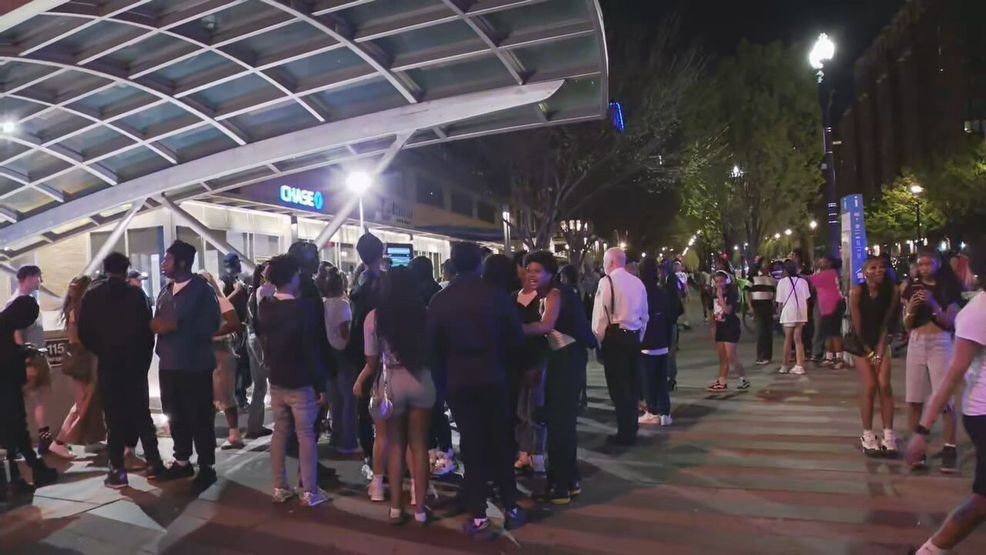
Metropolitan Police Department arrested eight teens Saturday night, April 4, 2026, after responding to several fights in the Southwest Waterfront neighborhood of Washington, D.C., between 8:30 p.m. and 10 p.m. (DJ McCathran/7News)
The debate has also raised questions about whether communities are offering enough safe spaces and activities for teens, especially in the evening hours.
McInnis says families and communities both have a role to play.
SEE ALSO | ‘Late Night Hype’ returns to DC, providing an alternative to teen takeovers
“Families and communities play a big role in preventing disruptive activities of teenagers in the community,” she said. “Engage in conversation, highlight safety risks, communicate potential concerns, and also provide alternatives.”
That could mean later community programming, pop-up events, or other supervised opportunities for teens to connect in safer ways.
“If the community centers are closing at five or six o’clock at night, you’ve got hours after that where there could be potential opportunities for connection, community engagement, and fun,” McInnis said.
Some leaders have called for tougher penalties for teens involved in these gatherings — and in some cases, consequences for parents. But McInnis cautions that criminalization alone may backfire.
“Oftentimes it does the opposite of the intended outcome,” she said. “It’s creating more distance between the community and the teens, parents and teens, families and teens, than it is bringing them together.”
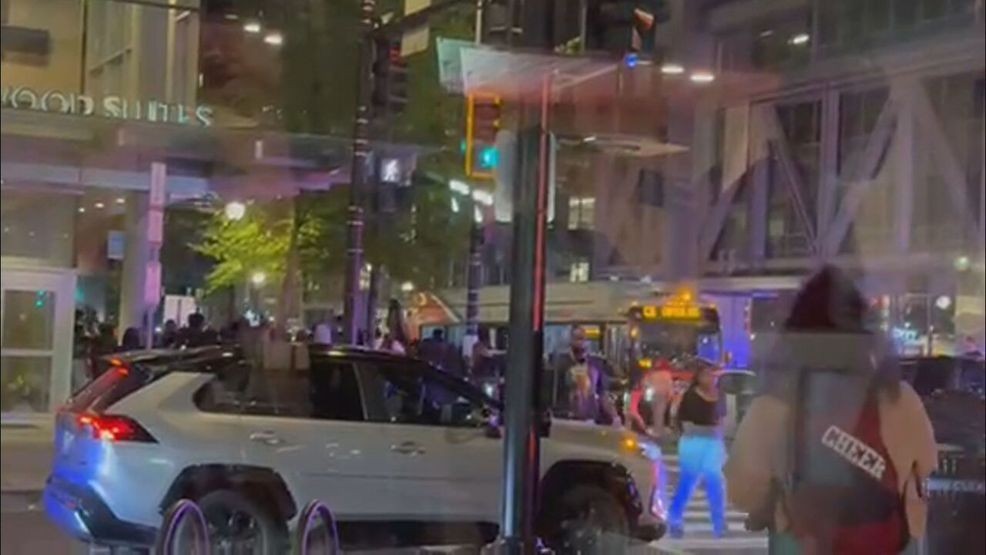
Elissa De Souza, a Navy Yard resident, captured video of a large crowd of teens in Navy Yard on April 11, 2026. (Credit: Elissa De Souza)
McInnis said accountability still matters if teens are breaking the law or engaging in dangerous behavior. But she says the response should also recognize that young people are often seeking belonging.
“We have to keep in mind that these are youth and they do have underlying intentions that are positive of wanting to connect and have fun and engage and stand out,” she said.
SEE ALSO | DC teens tell city leader what’s causing takeovers and how they’re missing the mark
For parents, McInnis recommends starting with direct but nonjudgmental conversations.
She says some families have watched videos or news coverage of teen takeovers with their children and used that as a starting point to ask questions: Have you heard of this? Have you been invited? What could happen if you went?
“If a child feels like they are not accepted in the home, they’re going to seek that acceptance elsewhere,” McInnis said.
That does not mean parents have to approve every decision their teen makes, she said. But teens need to feel safe talking through choices and consequences before they are in a risky situation.
For communities, McInnis says the goal should be to act early, not just respond after something happens.
“As proactive as we can be, and when we’re reacting, to just keep in mind that these are kids,” she said.
Her advice to parents and community leaders: lead with curiosity, create alternatives, and address the need for connection before it turns into chaos.
“Really just trying to understand versus to react,” McInnis said.