
Gorillaz bassist Seye Adelekan speaks to Clash about his new interview series with mental health charity Music Minds Matter.
Seye Adelekan’s story is one that exemplifies the duality of a career in music. He’s experienced the euphoria of performing on the world’s biggest stages as bass player in Gorillaz/Damon Albarn’s live band, but he’s also quietly navigated the personal challenges that often come with life on the road.
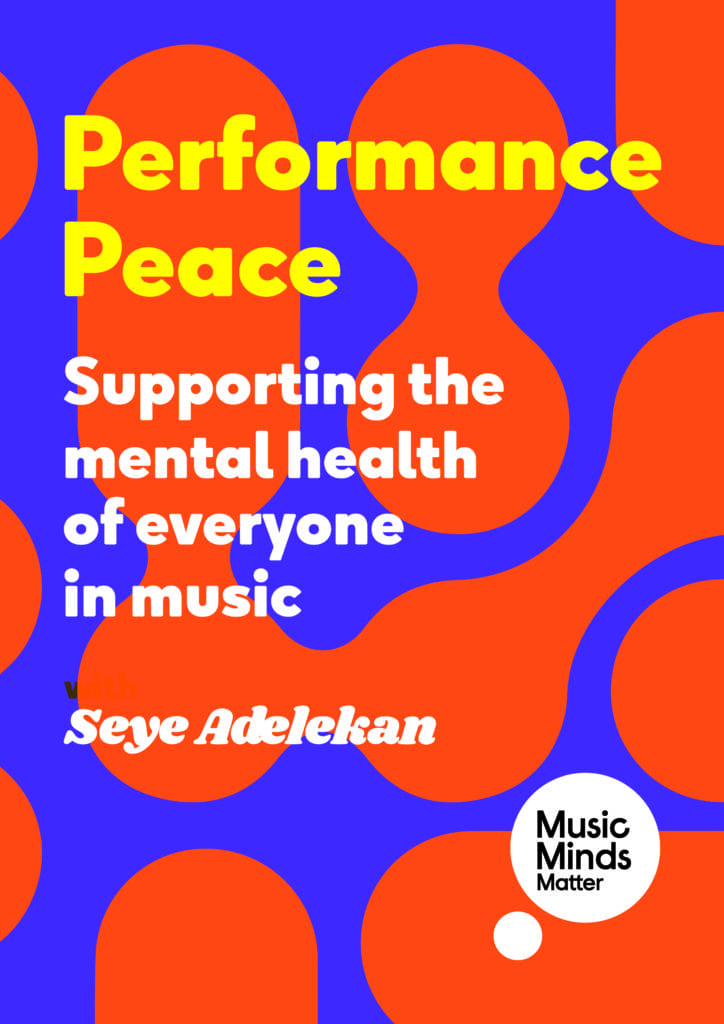
Now, with Performance Peace, his new interview series created in partnership with mental health charity Music Minds Matter, Seye is opening up those conversations, talking to other musicians and industry professionals to explore what it really takes to find balance, purpose, and peace in a creative life.
Speaking exclusively with Clash to launch the series, Seye explains why he feels now is the time to talk about mental health in music and what made him decide to partner with Music Minds Matter.
—
—
What inspired you to create Performance Peace, and why did you feel now was the right time to start these conversations?
I love my job and I love the people that I do it with, but I think those working in music are some of the most vulnerable to mental health problems – almost more than any other industry. Having spent a lot of time in therapy and a lot of time in rehab and just on a side of internal inspection, I think I’d like to open the floor up to other people to have these conversations and not even necessarily in a dark corner or a heavy-handed way. I want to be a part of shining a light on these issues as I think they’re super important.
The series brings together voices from across the music world – not just artists. Why was it important to you to include managers, crew, and others behind the scenes?
I wanted to open the floor up to other people in the music industry. I say life is a team sport all the time and to the end – no great show gets put on by just an artist. It takes teams of people to do anything great and that’s everything from Gorillaz shows to your local bar that has a local front of house engineer, you know? Everybody is affected by everybody else and I just love to hear the stories of other people in the music industry who have things to tell. The first season is mainly artists but then we’re going to get deeper into it with people from other sides of the industry. I’m super excited.
You’ve said the show is about “talking about all of it – the brutal and the beautiful.” What kind of honesty are you hoping to bring out in your guests?
I personally want to bring out the sort of small choir things. I think we have seen a lot of artists talk about really traumatic, really huge moments, but I actually think it’s often the things that you don’t expect that can be challenging. For example, for me, it’s being sad as a sober person that I fear because that’s an obvious land mine. Like, how does one celebrate now that I’m sober and touring, you know? These are the sorts of things and insights that I think you can learn when you have an honest conversation with someone in a relaxed environment, so I’d like to also shed light on how fun it is and how great it is and how it’s not just pain to be an artist.
The first episode focuses on your own story. How did it feel turning the camera on yourself and being that vulnerable?
In many ways I am a paid attention seeker, so not too weird. I talk about these things a lot, so I’m actually quite relaxed about having my story out there. I have to lead by example so if I’m willing to do it then I’m probably better able to create a space that is safe for other people to do the same. I think it’s only fair for the light to be shone on me first, then I get out of the way.
From your perspective, how has the conversation around mental health in music changed in recent years – and where does it still need to go?
I’m delighted to say that I think the conversation has been getting deeper and more candid in the music industry. It’s brilliant to hear people talking about the pitfalls but also talking about the triumphs in their lives and to show that there’s a different path other than the sort of damaged, romantic rock ‘n’ roller. I still think there is a lot of work to be done in particular with a men’s vulnerability and with the unfortunate rise of suicide and homelessness amongst young people and in particular musicians who just have such sort of vagrant and unpredictable lifestyles. I think a lot of work and a lot of attention still needs to be brought to these sorts of issues and hopefully opening up about the whole spectrum of mental health issues and the help that’s out there will start making a dent.
Performance Peace was made with Music Minds Matter – how did that partnership shape the project and its message?
I love the people at Music Minds Matter. They care so much. They have been so generous with their time and effort and their office space where we shoot and just producing and facilitating this amazing partnership that we have. I think the work that they do is so amazing and so far-reaching and hopefully together we can lift these issues and highlight the help that’s out there to even higher heights.
You’ve had such a diverse musical journey – from Gorillaz to your solo work. How do those different creative spaces influence your wellbeing and sense of purpose?
I’m one of the lucky few who makes his whole living from music alone and I’m grateful to be able to do such a wide spectrum of different things. I think it allows me to express so many different sides of myself and I think that is one thing that creative people – in particular musicians – in this day and age need to be able to do. You need to be able to find different avenues of income but also different avenues of expression because it’s never been easier to make music but never been harder to make a living from it and I think you need to find ways of not just making money but also expressing the things that you need to and live a satisfying creative life.
What do you hope people take away from Performance Peace – both within the industry and outside of it?
I hope people find these conversations entertaining but also intriguing and also informative but not too serious. I think a lot of the chats around mental health can often be so sombre and sometimes even a bit too personal. I’m not trying to trauma bond, I’m trying to lift the curtain. I think these conversations will be the right amount of deep and introspective, but you’ll leave with a smile. You won’t leave the conversations feeling super heavy. I think you’ll be able to walk out of them feeling better than before.
Can you give us a hint of who’s coming up in future episodes?
We have such a cool range of people – an embarrassment of riches if you will. We have Mercury Prize-winners, prolific performers and pioneering women. It’s going to be a great season.
—
Words: Patrick Fennelly
Photo Credit: Laura Beckerdite