
Your support helps us to tell the story
From reproductive rights to climate change to Big Tech, The Independent is on the ground when the story is developing. Whether it’s investigating the financials of Elon Musk’s pro-Trump PAC or producing our latest documentary, ‘The A Word’, which shines a light on the American women fighting for reproductive rights, we know how important it is to parse out the facts from the messaging.
At such a critical moment in US history, we need reporters on the ground. Your donation allows us to keep sending journalists to speak to both sides of the story.
The Independent is trusted by Americans across the entire political spectrum. And unlike many other quality news outlets, we choose not to lock Americans out of our reporting and analysis with paywalls. We believe quality journalism should be available to everyone, paid for by those who can afford it.
Your support makes all the difference.Read more
Reopening schools during the Covid pandemic significantly improved kids’ mental health, Harvard researchers said Tuesday, leading to declines in diagnoses of anxiety, depression and ADHD and a drop in related health care spending.
Analyzing the health data of more than 185,000 California schoolchildren from 24 counties, the researchers compared the students’ mental health at the pandemic’s start in March 2020, when schools closed, to when schools reopened in June 2021.
The analysis of students between the ages of five and 18 years old revealed that the benefits of schools reopening were mostly shown in girls, potentially helping to explain recent and poor academic performance among older girls.
“This was one of our most striking findings,” health economist Pelin Ozluk, one of the study’s authors, said in a statement, “underscoring how essential school-based social environments are for girls’ wellbeing.”
The study also found that the percentage of children with a mental health diagnosis increased from 2.8 percent to 3.5 percent between 2020 and 2021; however, children whose schools reopened had decreased diagnoses.
open image in gallery
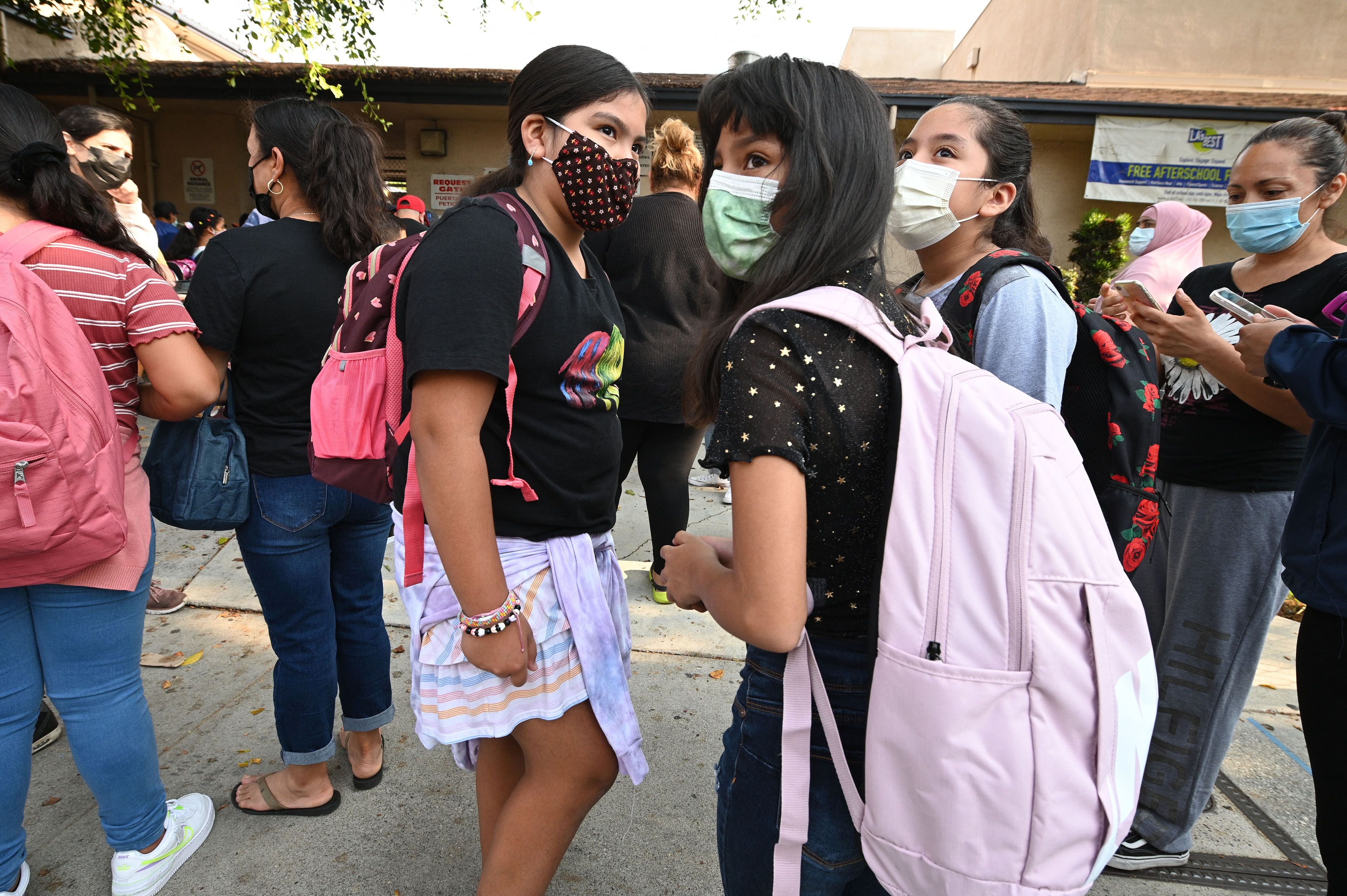
Students and parents arrive masked for the first day of the school year at Grant Elementary School in Los Angeles, California, in August 2021. After schools reopened amid the Covid pandemic, the likelihood a child would be diagnosed with a mental health condition fell 43 percent within just nine months (AFP via Getty Images)
Nine months after a school reopened, a child’s likelihood of being diagnosed with a mental health condition plummeted by 43 percent compared to before schools reopened.
And health care spending associated with mental health diagnoses also fell. Non-drug medical spending decreased by 11 percent, psychiatric drug spending fell by eight percent and spending on ADHD drugs decreased by five percent.
While the study did not determine the cause of their findings, the researchers suggested that changes in social interaction, sleep, screen time, degraded diets, learning difficulties, less access to mental health services available through schools and family hardship all could have played a role.
“Our results provide solid evidence to parents, educators, and policymakers that in-person school plays a crucial role in kids’ wellbeing,” Professor Rita Hamad, another of the study’s authors, said.
“The findings offer lessons for future public health emergencies and provide insight into why mental health worsened for children during the pandemic.”

open image in gallery
Cheerleaders from South El Monte High School walk past the school buses in August 2021 in El Monte, California. Harvard researchers say more needs to be done to determine how schools reopening during the Covid pandemic affected marginalized students (AFP via Getty Images)
Still, the researchers noted there were several limitations to the study. The data, which incorporates 224 school districts and an equal number of boys and girls, only included children in relatively higher-income areas who had in private health insurance.
It did not take race and ethnic background into account.
The authors said that more research is needed to determine how school reopenings during the pandemic affected the mental health of marginalized groups.
The findings build on years of research showing declines in the mental health of America’s youth, including how the pandemic worsened the crisis.