
A mental-health support group for men in southeastern Manitoba is expanding to Steinbach after a successful first 18 months.
Jeremy Wiens, who organized the Southeast Men’s Group, says the peer-support group has grown more than expected since its first meeting in Ste. Anne in October 2024.
Wiens, who is also a town of Ste. Anne councillor, says he and co-founder Ryan Pasieczka would have deemed the first SMG meeting a success if five men had showed up.
“We had 26 guys out that night,” Wiens said. “The conversation started immediately around suicide, around loneliness, isolation, depression, addiction. We were like, ‘OK, we hit a chord here.’”
Wiens says he faced his own mental health struggles while experiencing divorce, and found getting support a challenge.
He saw resources for women, children and men experiencing addictions in rural communities.
“But men who are just struggling with day-to-day life, there’s just a gap there and nothing was around,” Wiens said. “I got myself to a better place and where I’m actually able to be part of the community and actually give back.”
Wiens thought peer-to-peer support would be a good way to connect with others who are struggling.
“We’re not professionals,” Wiens said. “We’re just guys who show up for each other.”
Wiens says men are often hesitant to meet one-on-one for coffee and a conversation before they decide to join the group, something he attributes to the stigma he faced when he talked about seeing a psychologist to deal with his problems.
Mental health resources
Teresa Dukes, CEO of the Canadian Mental Health Association in Manitoba, says grassroots initiatives such as this are exciting to see, especially in rural communities.
She says men often deal with high levels of stress and depression, but lack sufficient social support.
Increased feelings of isolation and lack of access to resources are just a few barriers men might encounter, Dukes says, adding economic stress in agricultural communities can also affect mental health.
“Men don’t typically reach out until they’re in crisis — that’s kind of the worst time to reach,” Dukes said. “Ideally, you’re meeting much earlier and you’re meeting them in a place, a space, that is comfortable so that they’ll actually engage in conversations.”
She says peer-support groups are able to tap into what’s needed to reach a particular group of men.
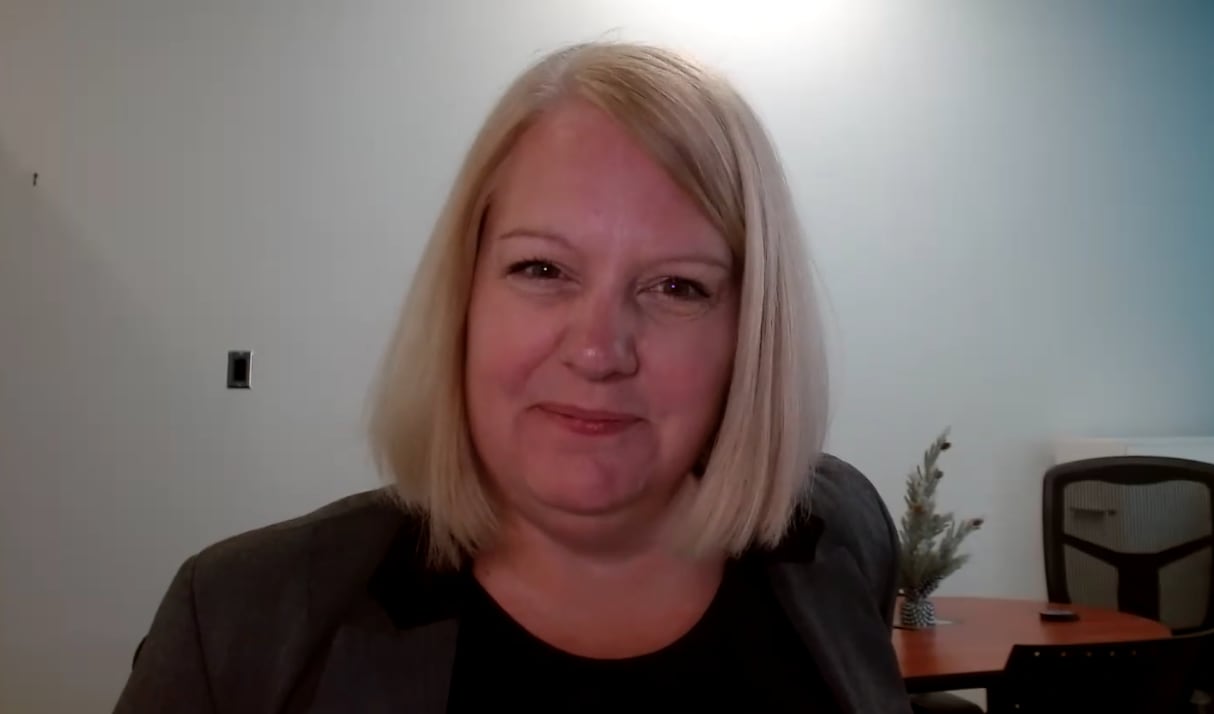 Teresa Dukes, CEO of the Canadian Mental Health Association in Manitoba, says grassroots initiatives such as the Southeast Men’s Group are exciting to see, especially in rural communities where resources are lacking. (Zoom)
“The idea that you’ve opened up space to connect with other people is probably one of the most significant factors that will reduce depression and other kinds of mental health challenges that people might be experiencing,” Dukes said.
In rural communities, she says, men might be reluctant to share their problems out of fear their struggles will be shared with others or spread in the form of rumours.
“There’s a cultural component to it where men are often told to just push through, or pull up your bootstraps and make it through,” Dukes adds.
SMG brings in speakers, including therapists and counsellors, as part of their meetings, Wien says, adding that breaking into smaller groups where participants can talk about their struggles or what they learned from the presenter is also helpful.
“When you hear guys that are just stepping up improving their lives, that’s just an amazing feeling to know that, ‘Hey, I played a small part of that,’” Wiens said. “Seeing them put in the work, that’s an incredible feeling.”
On average, between 20 to 30 men show up to each meeting, Wiens says, with some travelling more than an hour to attend.
Wiens said members expressed interest in the group branching out to more communities, so the group is expanding into Steinbach.
SMG is funded by the community, Wiens says, including donations and concerts put on to raise funds.
The first meeting at the Southeast Event Centre will take place March 3 from 7 p.m. to 9 p.m.
Subsequent meetings will take place the first Tuesday of each month, with Ste. Anne meetings continuing on the third Tuesday of each month.
“It’s OK to not be OK, but it’s not OK to stay there,” Wiens said. “Reach out, you’re not alone.”