
Puhimec/Getty Images
We may receive a commission on purchases made from links.
When anxiety begins to creep in, it can be useful to have a go-to calming ritual. Racing thoughts, physical tension, trouble sleeping, or feeling uneasy are just a few ways anxiety surfaces. While tea isn’t a cure-all, many mental health professionals see it as a comforting, accessible tool to help the nervous system slow down.
To find out which teas are best for soothing anxiety, we spoke with Sam Zand, DO, founder and psychiatrist at Anywhere Clinic; Simon Faynboym, MD, medical director and psychiatrist at Neuro Wellness Spa; Krista Walker, LCSW, JD, clinical director at The Ohana Hawaii Treatment Center; and Katherine Berko, LCSW, founder and psychotherapist at K Berko Therapy.
Across the board, their recommendations consistently focused on caffeine-free herbal teas. “I like to think of tea as a transitional object that patients can turn to every day, the way a child might cuddle with a teddy bear when asleep,” Berko says. “A cup of calming tea before bed or first thing in the morning can really help someone feel safe.” These are seven soothing anti-anxiety teas that can complement professional care.
1. Chamomile tea
Oleksii Kriachko/Getty Images
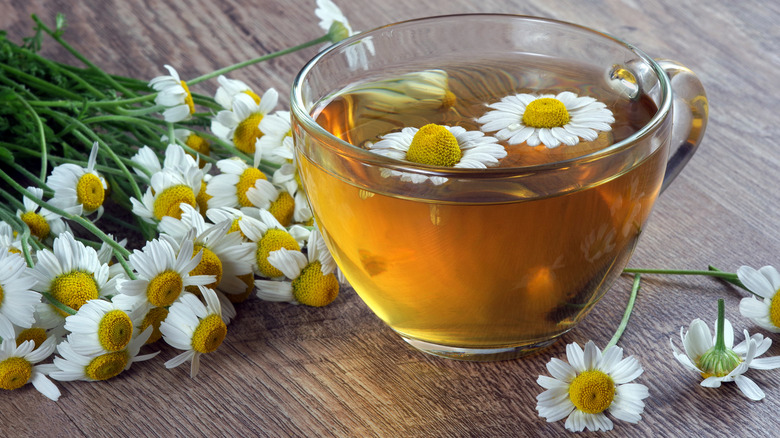
When people try tea for anxiety for the first time, clinicians often recommend chamomile for its wide availability and sleep-supportive properties. Krista Walker says that there are several teas that can help relieve at least some level of anxiety and highlights chamomile as one of the best. “Calming teas generally have herbs or adaptogens that affect the nervous system,” she says. “The soothing effect they offer can give your body a chance to catch its breath, [allowing] you to actually calm your thoughts and let your body sort of sink into the sofa. If intrusive or busy thoughts are keeping [you] up, chamomile is a great choice for promoting sleep.”
Sam Zand recommends Traditional Medicinals Organic Chamomile Tea, available on Amazon. “When recommending brands, I look for a quality ingredient list and minimal additives,” he says. Simon Faynboym agrees and also gravitates toward Traditional Medicinals. “[Chamomile tea] offers a gentle introduction without significant interaction risks for most people,” he says. Beyond its anti-anxiety effects, chamomile tea is an excellent way to help you drink more water and stay hydrated.
2. Lemon balm tea
Fuzull Hanum/Shutterstock
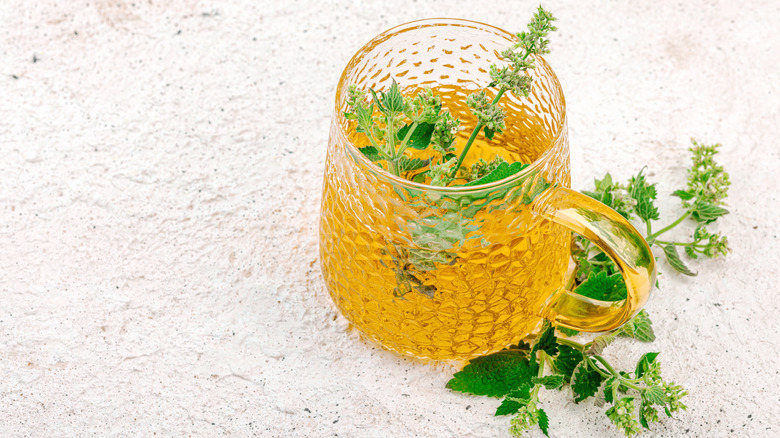
Lemon balm tea is another drink that can decrease anxiety without making you feel groggy. “For racing thoughts, I suggest lemon balm […], which supports cognitive calming without heavy sedation,” says Simon Faynboym.
Krista Walker also likes lemon balm tea as part of an evening routine. “If you’re just looking for something to unwind with at night while watching television, lemon balm can be very gentle and effective,” she says. Walker also gives some tips for drinking herbal tea at nighttime. “I generally recommend starting tea two hours before you want to unwind or fall asleep,” she says. “Drinking a cup of tea right before bed can backfire because your sleep might be interrupted if you fall asleep on a full bladder.”
While lemon balm tea is easy to find at grocery stores, you could opt to craft a tea garden right in your own kitchen. No need to tend to an outdoor setup — you can take care of the leaves right on your windowsill.
3. Passionflower tea
Esin Deniz/Shutterstock
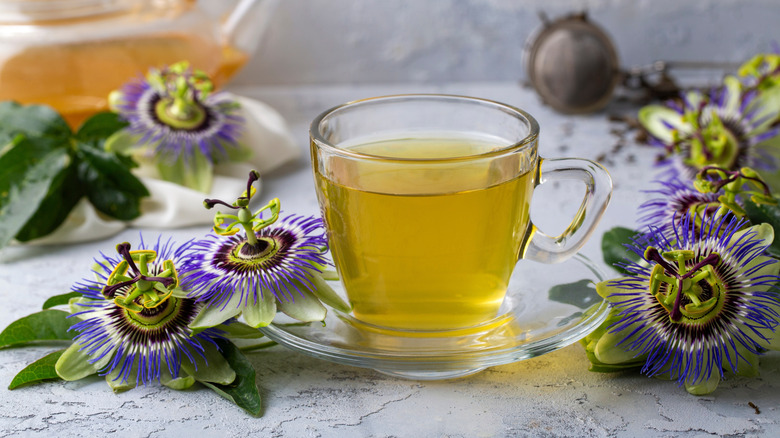
Passionflower tea is a sweet, grassy-tasting beverage that can be very comforting when experiencing anxiety. It is one of the teas that Sam Zand recommends as it can “support us by gently lowering nervous system triggers.”
Simon Faynboym also mentions that passionflower can be “helpful due to [its] muscle relaxing [properties], allowing for better sleep.” Faynboym explains why these herbs can be so effective: “Calming teas typically contain compounds that reduce sympathetic nervous system arousal and/or lower cortisol signaling.”
When brewing a calming cup of tea, it’s important to get the desired strength without it turning bitter. Herbal teas, like passionflower, can be steeped for longer, around five minutes. Zand informs us that Traditional Medicinals Organic Nighty Night Tea, available from Amazon, contains passionflower alongside chamomile. “The passionflower works with GABA receptors, making neurons less likely to fire, and in turn calms the brain and anxiety we hold, especially before sleep,” he says.
4. Lavender tea
yanishevska/Shutterstock
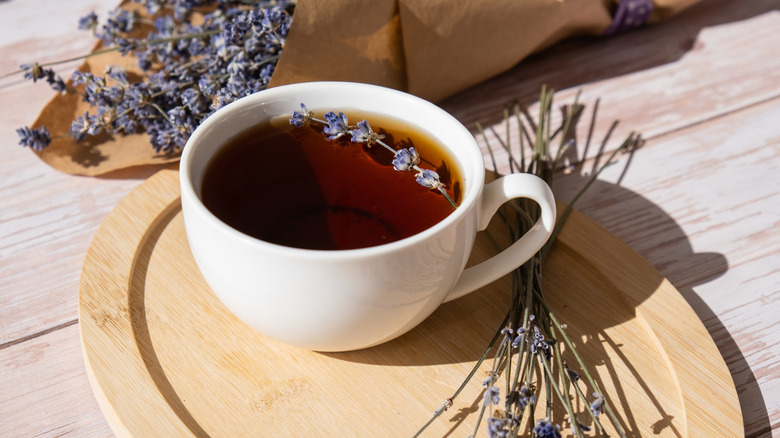
All four of our experts named lavender tea as one of the best options for soothing anxiety. Lavender has a deep floral, earthy flavor, and its strength can be adjusted depending on how long it’s brewed.
Katherine Berko favors Yogi Honey Lavender Stress Relief Tea, available on Amazon. “Every tea bag has an uplifting, inspirational quote on it, which can feel really encouraging on a rough day,” she says. Berko also suggests blooming teas for people who want to slow down and practice mindfulness. “You can order a blooming tea, made of tight little buds that quite literally open up into a flower when you pour hot water over them,” she says. Berko cautions that some blooming teas contain caffeine, so check the ingredient label when sourcing these.
Caffeine is a common concern when choosing a tea for anxiety. Sam Zand says that one mistake people can make is “unknowingly consuming tea with caffeine, especially before sleep, as this can worsen anxiety.” Simon Faynboym agrees and particularly warns against black teas or green teas, which both naturally contain caffeine.
5. Tulsi tea
Ninetechno/Getty Images
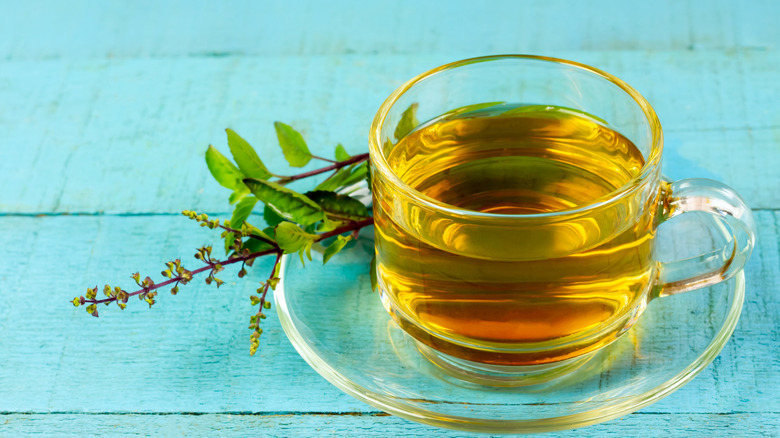
Tulsi tea, also referred to as holy basil tea, is often recommended for its stress-relieving properties. Simon Faynboym recommends tulsi tea for anxiety because there is “mild evidence for calming the nervous system without causing sedation.” Faynboym prefers teas with single-herb ingredients and emphasizes that sourcing and transparency matter more than marketing claims. “Blends from brands such as Traditional Medicinals or Pukka can be considered because they are standardized and consistent in strength,” Faynboym says.
Pukka Organic Tulsi Clarity Tea and Traditional Medicinals Tulsi and Ginger Tea are both available on Amazon and have slightly different flavor profiles, depending on whether you prefer something that strictly tastes of basil or you want a bit of soothing spice.
Brewing a hot cup of tea isn’t the only way to enjoy a taste of tulsi. In the summertime, using tea is a creative way to add flavor to your ice cubes. Basil’s earthiness is the perfect addition to a glass of lemonade or iced tea.
6. Ashwagandha tea
Krista Walker and Sam Zand both recommend ashwagandha tea for anxiety reduction. “For people who are looking for some anxiety relief while experiencing stress and fatigue, ashwagandha teas can be pretty powerful,” Walker says. She also mentions the importance of easing into herbal teas. “When someone is trying tea for anxiety for the first time, I recommend starting slowly,” she says. “Only steep the bag or loose leaves for 30 seconds or so to just see how you tolerate the blend.”
Zand recommends Yogi Relaxed Mind Tea, available on Amazon. “The tea is caffeine-free and has ashwagandha, helping promote that calm without necessarily feeling sleepy — though it can help support [sleep],” he says. “This tea is an organic, cost-effective option with high-quality ingredients.” A quick tip: If you’d like to give your ashwagandha tea a silky, sweet boost, try adding a bit of coconut oil for a nutty flavor.
7. Peppermint tea
Sonja Rachbauer/Shutterstock
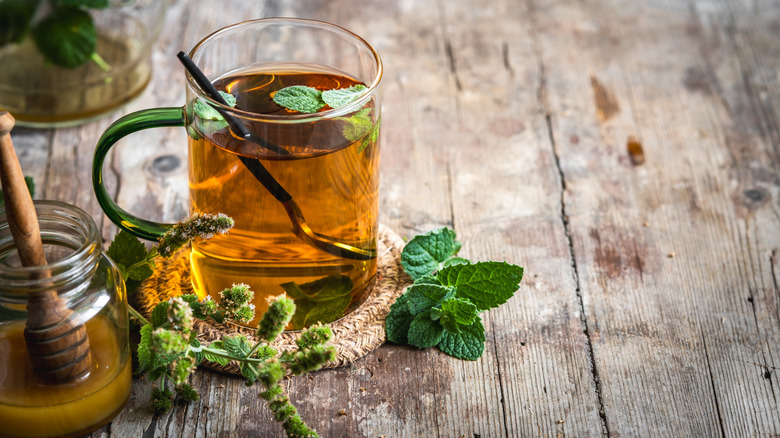
Peppermint tea is often used to naturally soothe anxiety and is one tea that Katherine Berko regularly recommends to patients. “I’ll often suggest chamomile tea or mint tea, because these flavors can be found in every grocery store and are often already in the cupboard,” she says. She notes that peppermint can be especially helpful when anxiety shows up physically. “When I sip these before bed, I really do sleep deeper and peppermint is known to naturally soothe an upset stomach, which can be a symptom of anxiety.”
Berko recommends two brands: Stash Premium Herbal Peppermint Tea and Harney & Sons Peppermint Herbal Tea, which are both available on Amazon. (Or, you can likely find tasty mint tea at your local Middle Eastern grocery store.) Berko encourages people to think of tea as a supportive tool rather than a quick fix. “If someone gives you a cup of tea to sip during a panic attack, the panic attack won’t instantly stop,” she says. “[Tea can] remind someone to slow down and savor the moment, and it can have relaxing physiological effects, but it shouldn’t replace therapy.”
Berko also offers a soothing mantra from the late Buddhist monk Thich Nhat Hanh that anxiety sufferers can repeat while sipping tea: “Smile to the cloud in your tea.” She says the phrase can help ground people in the moment and reinforce a sense of connection.