
When it comes to mental health, the math is sobering as the 2026 Winter Olympics approach.
About half of the U.S. Olympians and U.S. Paralympians set to compete at the Milano Cortina Games will not be at their best mentally, according to Jonathan Finnoff, chief medical officer of the United States Olympic & Paralympic Committee (USOPC).
Advertisement
“Going into the Games, we know that 50 percent of Olympic athletes and 60 percent of Paralympic athletes are going to report some symptoms of mental health concern,” Finnoff said in October at the Team USA Media Summit in New York.
So is the USOPC prepared to support those athletes? (The U.S. Olympic team is comprised of 232 athletes and the final U.S. Paralympic team will be announced March 2.)
Finnoff said the USOPC has built “an incredibly robust program.” He noted the hiring of 16 dually certified mental health and mental performance providers, virtual consultation services with more than 500 psychological services professionals and several ways to assess athletes for mental health needs.
Advertisement
But at times, the USOPC’s mental health program has drawn more scrutiny than praise.
Get Olympics updates in your texts! Join USA TODAY Sports’ WhatsApp Channel
1 / 16
After the Games: Abandoned, decaying Olympic venues around the world
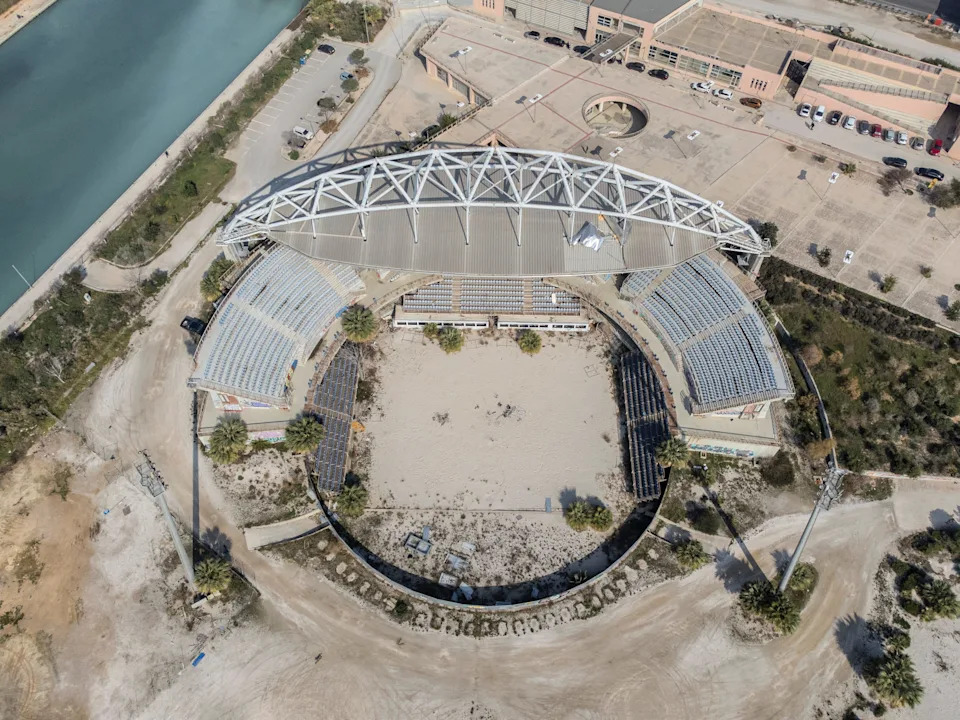
This photograph, taken on February 19, 2024, shows the abandoned beach volleyball stadium at the Faliro Olympic coastal zone in Athens. Used sparingly in the last 20 years, the fate of Greece’s 2004 Olympic venues is emblematic of the country’s long-running failure to capitalize on the legacy of a Games that cost 8.5 billion euros ($9.1 billion), according to the Greek finance ministry.
1 / 16
After the Games: Abandoned, decaying Olympic venues around the world
This photograph, taken on February 19, 2024, shows the abandoned beach volleyball stadium at the Faliro Olympic coastal zone in Athens. Used sparingly in the last 20 years, the fate of Greece’s 2004 Olympic venues is emblematic of the country’s long-running failure to capitalize on the legacy of a Games that cost 8.5 billion euros ($9.1 billion), according to the Greek finance ministry.
2 / 16
After the Games: Abandoned, decaying Olympic venues around the world
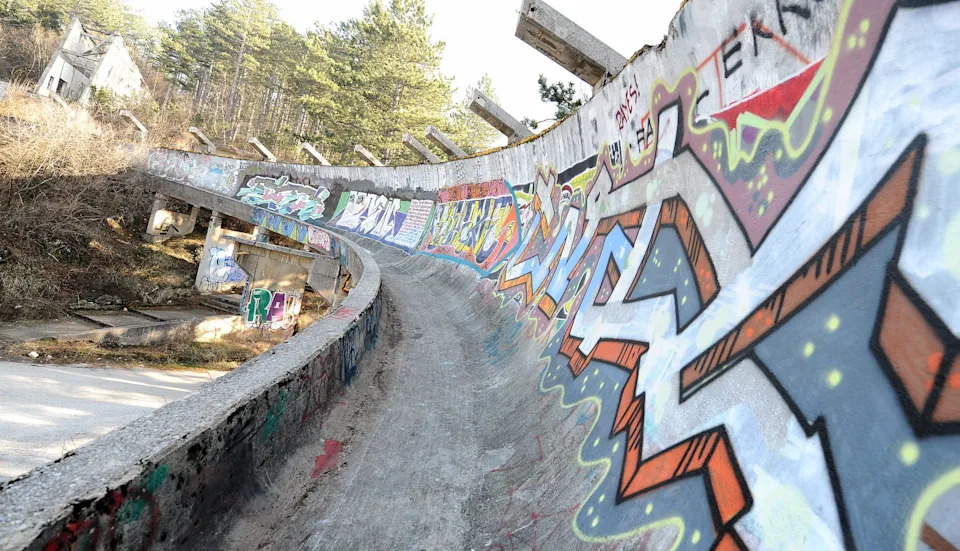
Sarajevo’s abandoned Sarajevo’s bobsleigh track near Sarajevo. Built and used as an Olympic venue during Sarajevo’s 1984 Winter Olympic Games, the track was heavily damaged during Bosnia’s 1992-95 war. It was never rebuilt, and its large concrete fragments remain a memento of the past and a training ground for young generations of graffiti artists.
3 / 16
After the Games: Abandoned, decaying Olympic venues around the world
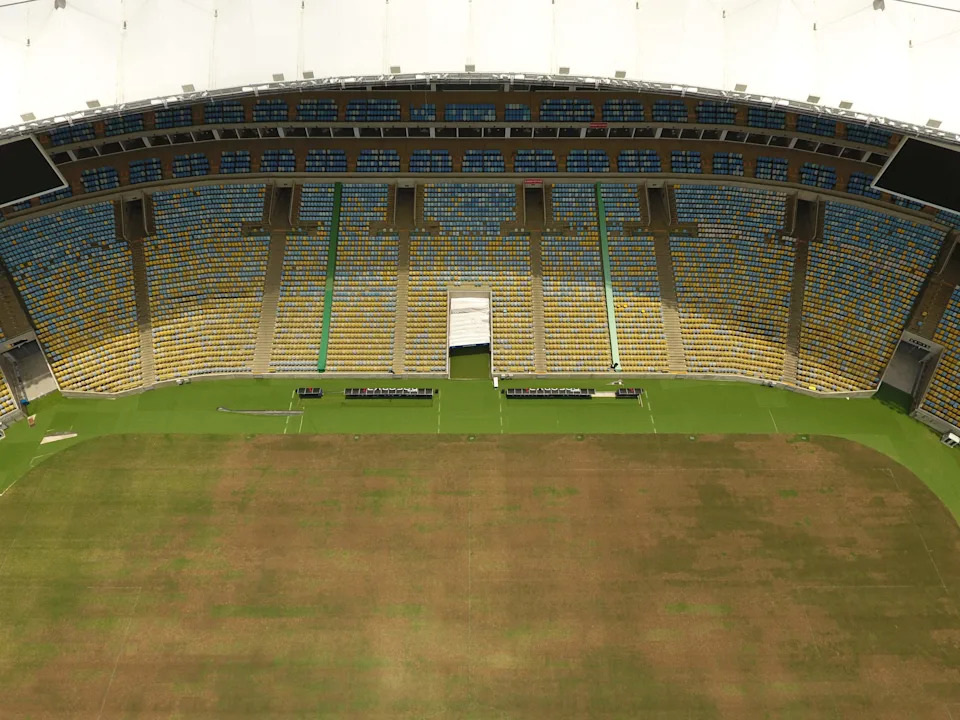
A view of the world-famous Maracana Stadium in Rio de Janeiro on Jan. 18, 2017. After playing a key role in the 2014 World Cup and 2016 Olympic Games, hosted by Brazil, the iconic Maracana Stadium has fallen into a state of abandonment due to a contract dispute and is closed to tourists.
4 / 16
After the Games: Abandoned, decaying Olympic venues around the world
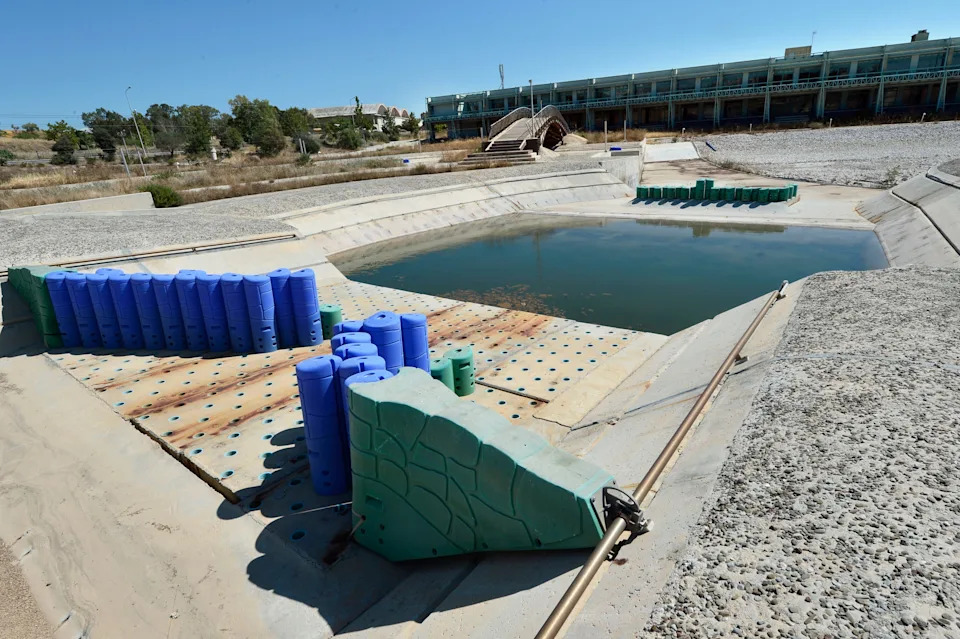
General view of the Olympic Canoe/Kayak Slalom Center at the Helliniko Olympic Complex in Athens, Greece, on July 31, 2014. Twenty years ago the XXVIII Olympiad was held in Athens from the 13th – 29th August with the motto “Welcome Home”. The cost of hosting the games was estimated to be approximately 9 billion euros, with most sporting venues built specifically for the games. Due to Greece’s economic frailties post-Olympic Games, there has been no further investment, and most of the newly constructed stadiums are now abandoned.
5 / 16
After the Games: Abandoned, decaying Olympic venues around the world
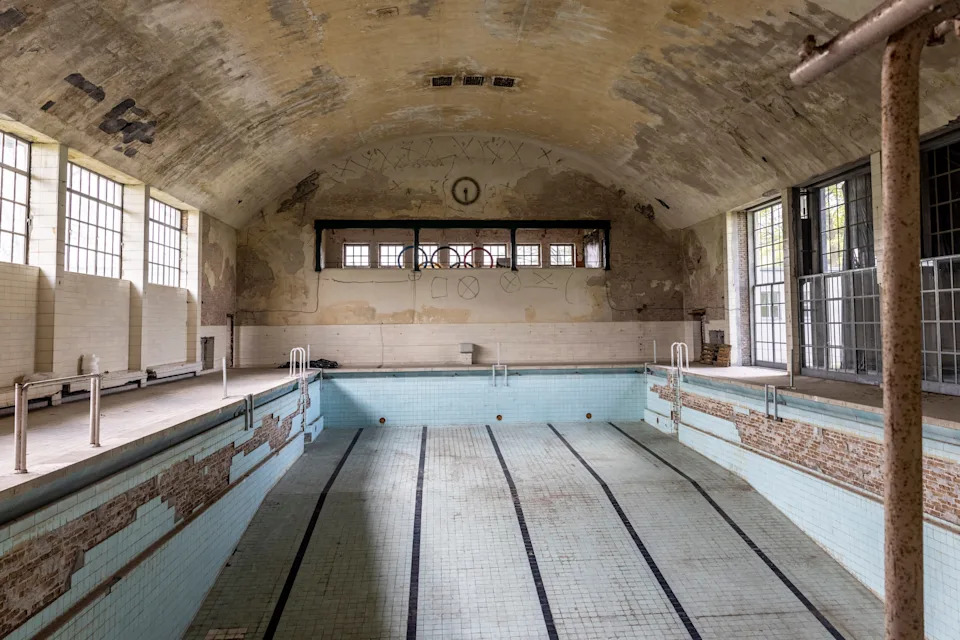
A swimming pool lies abandoned in the former swim hall at the 1936 Berlin Olympic Village site on May 17, 2021, in Elstal, Germany. A German real estate developer, Terraplan, is constructing and renovating buildings on a large portion of the former Olympic Village site. Local authorities hope this is the first investor commitment phase to develop the entire site. Built for the 1936 Berlin Olympics, the village later served as an infantry school for the Nazi-era Wehrmacht and a military hospital during World War II. After the war, the Soviet Army took it over as a military base and a training facility for its Olympic athletes. Several original buildings still stand at the site, including housing for athletes, a swimming hall, a gym, other training facilities, and a theatre.
6 / 16
After the Games: Abandoned, decaying Olympic venues around the world
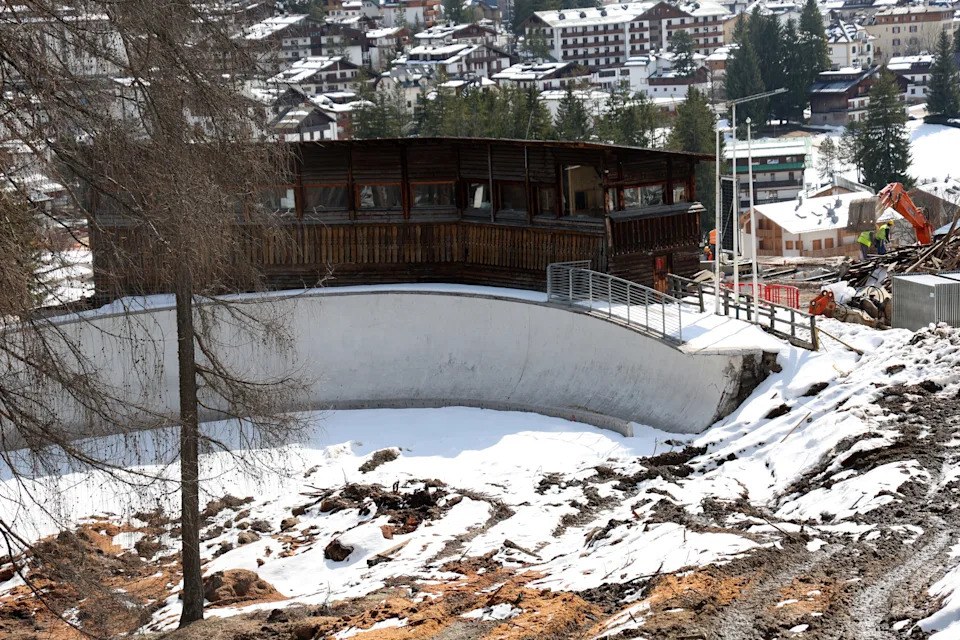
The abandoned Eugenio Monti Olympic bobslight track covered in snow on March 15, 2024 in Cortina d’Ampezzo, Italy.
7 / 16
After the Games: Abandoned, decaying Olympic venues around the world
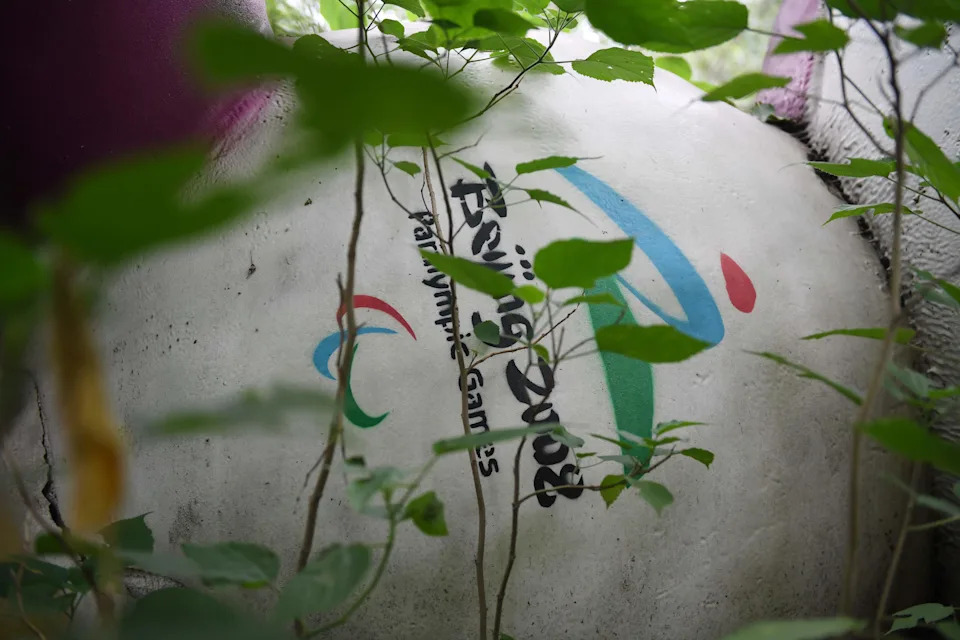
This photo taken on July 20, 2018, shows Fu Niu Lele, the mascot for the 2008 Beijing Paralympic Games, lying amongst trees behind an abandoned, never-completed mall in Beijing, China.
8 / 16
After the Games: Abandoned, decaying Olympic venues around the world
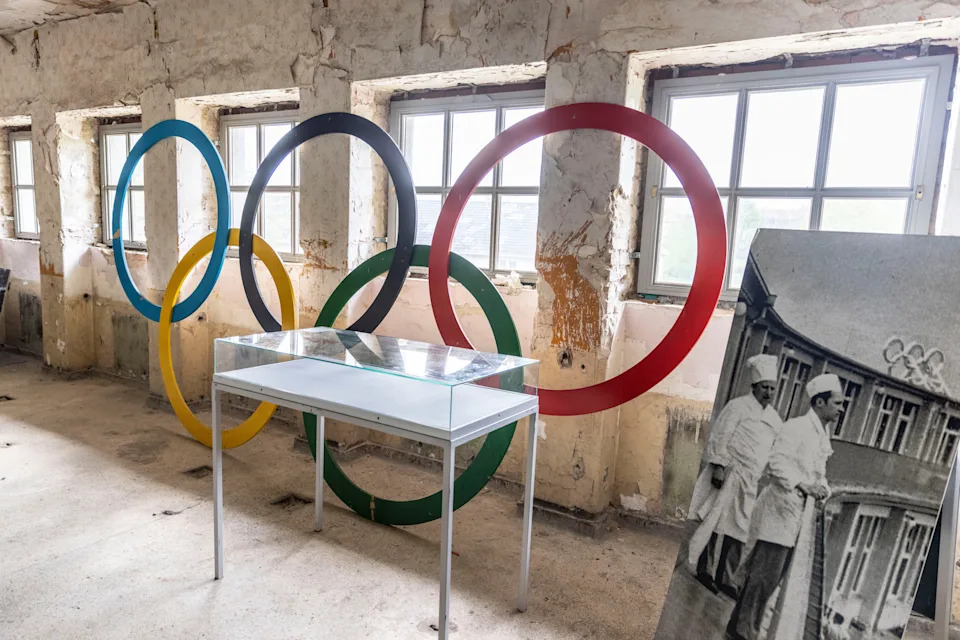
A set of Olympic rings in abandoned former swim hall at the site of the 1936 Berlin Olympic Village on May 17, 2021, in Elstal, Germany. Built for the 1936 Berlin Olympics the village later served as an infantry school for the Nazi-era Wehrmacht and a military hospital during World War II. After the war the Soviet Army took it over as a military base and also as a training facility for its own Olympic athletes.
9 / 16
After the Games: Abandoned, decaying Olympic venues around the world
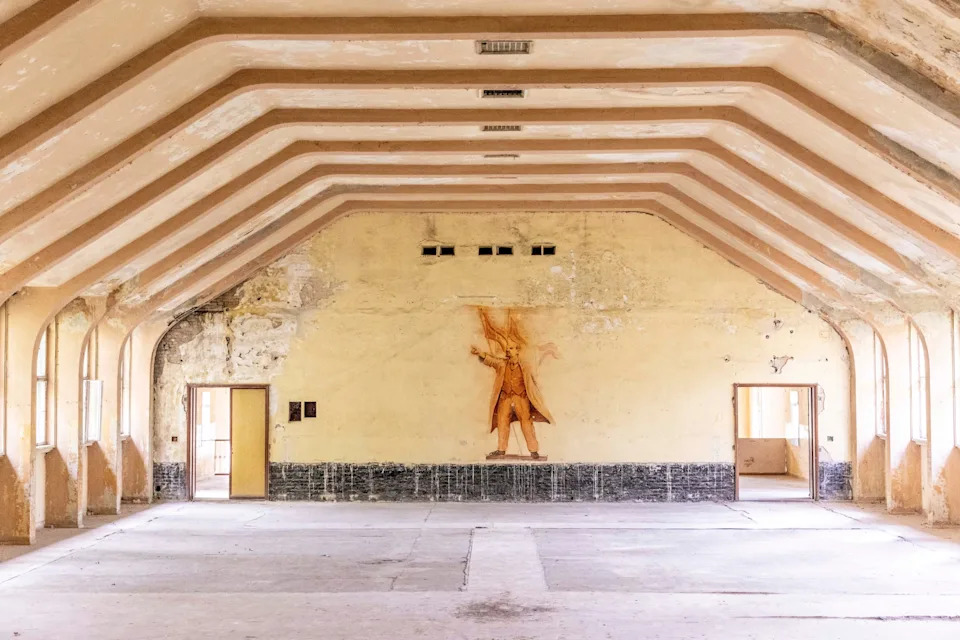
A drawing of Russian revolutionary leader Vladimir Ilyich Lenin can be seen on the wall of the main amphitheatre in the abandoned Hindenburghaus facility where functions and cultural shows were staged at the site of the 1936 Berlin Olympic Village on May 17, 2021 in Elstal, Germany.
10 / 16
After the Games: Abandoned, decaying Olympic venues around the world
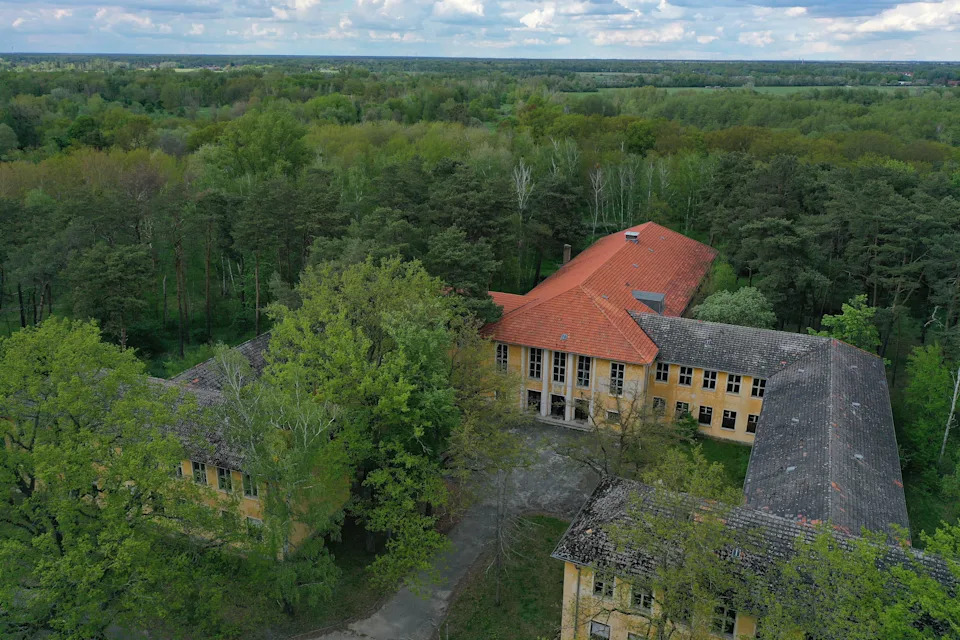
In this aerial view the abandoned Hindenburghaus facility at the site of the 1936 Berlin Olympic Village on May 17, 2021 in Elstal, Germany.
11 / 16
After the Games: Abandoned, decaying Olympic venues around the world
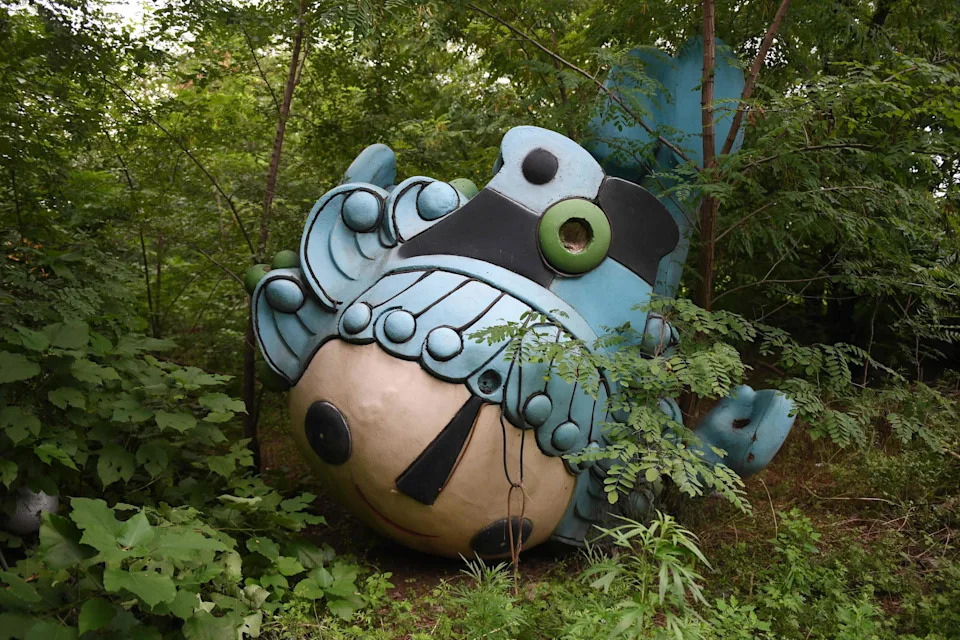
This photo taken on July 20, 2018 shows Beibei, one of five mascots for the 2008 Beijing Olympic Games, lying amongst trees behind an abandoned, never-completed mall in Beijing, China.
12 / 16
After the Games: Abandoned, decaying Olympic venues around the world
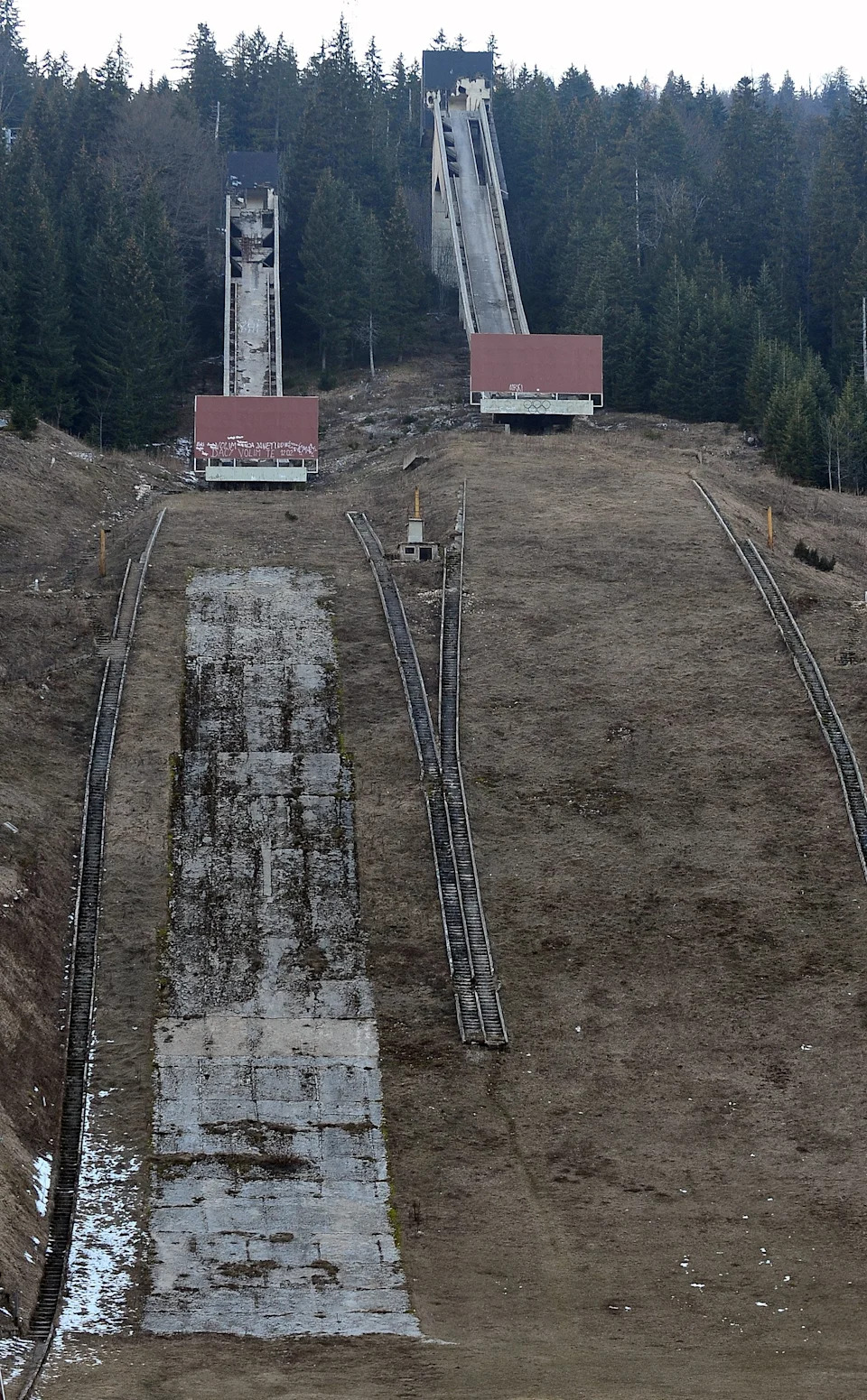
A picture taken on February 5, 2014 shows Sarajevo’s abandoned ski jumping venue at Mt. Igman near Sarajevo, Bosnia and Herzegovina.
13 / 16
After the Games: Abandoned, decaying Olympic venues around the world
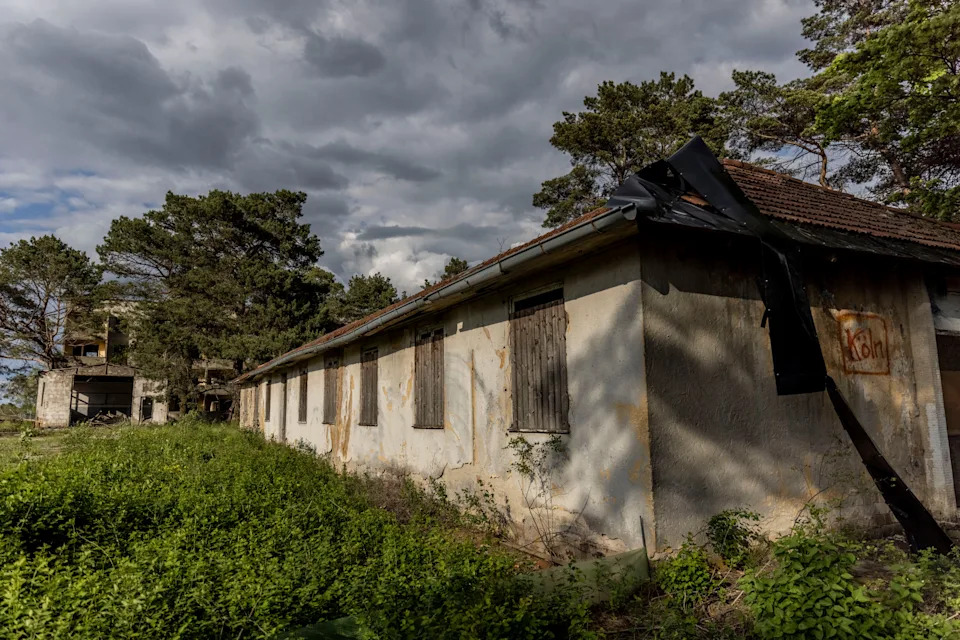
Original, abandoned houses for athletes marked with their housing complex names stand at the site of the 1936 Berlin Olympic Village on May 17, 2021, in Elstal, Germany.
14 / 16
After the Games: Abandoned, decaying Olympic venues around the world
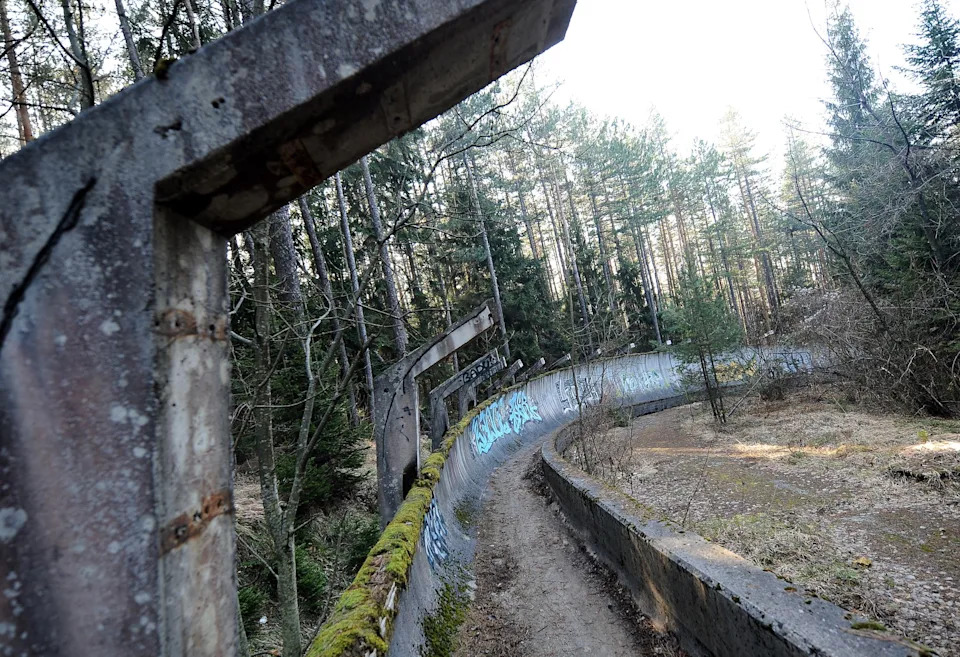
A picture taken on February 5, 2014 shows an abandoned bob sleigh track near Sarajevo, Bosnia and Herzegovina. Built and used as an Olympic venue during Sarajevo’s 1984 Winter Olympic Games, the track was heavily damaged during Bosnia’s 1992-95 war. It was never rebuilt and it’s large concrete fragments remain standing as a memento of past and training ground for young generations of graffiti artists.
15 / 16
After the Games: Abandoned, decaying Olympic venues around the world
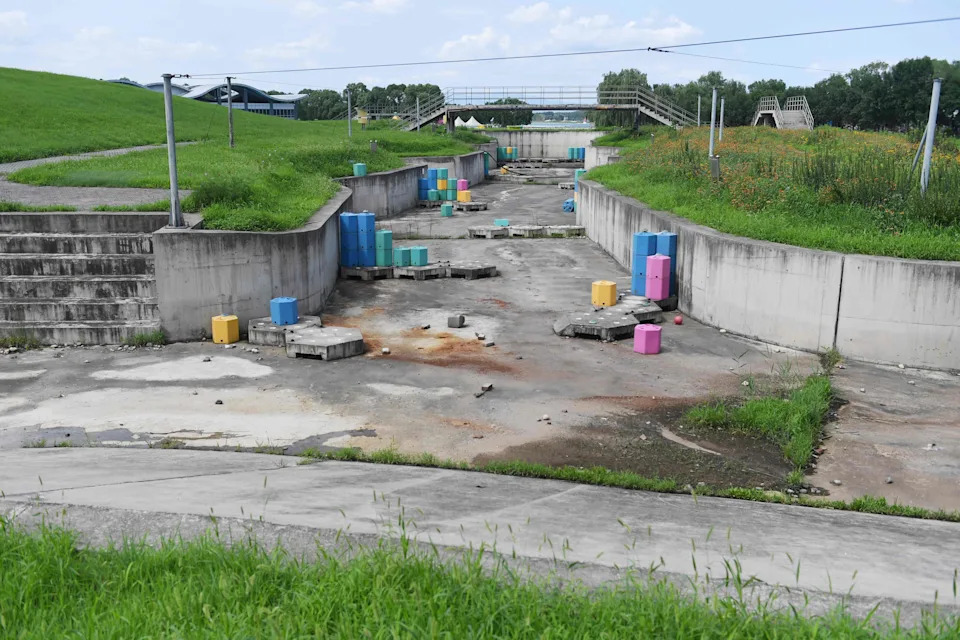
This photo taken on July 25, 2018, shows the whitewater kayaking stadium built for the 2008 Beijing Olympic Games, in Beijing, China.
16 / 16
After the Games: Abandoned, decaying Olympic venues around the world
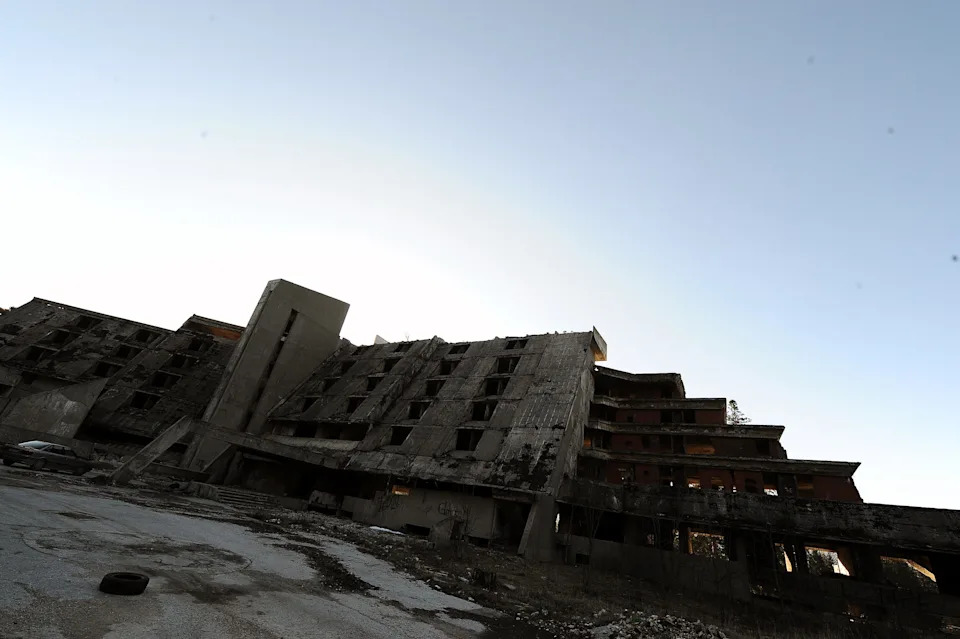
A picture taken on February 5, 2014 shows an olympic hotel at mount Igman near Sarajevo, Bosnia and Herzegovina. Built overlooking one of Olympic venues at Mount Igman and used for competitors accomodation during Sarajevo’s 1984 Winter Olympic Games, the hotel was heavily damaged during Bosnia’s 1992-95 war and was never to be repaired.
The Borders Commission, created by the USOPC in 2018, concluded in a 2019 report that mental health care can and must be expanded. And Michael Phelps, the legendary swimmer who retired in 2016 as the most decorated Olympian in history, has talked openly about his own mental health struggles and repeatedly criticized the USOPC.
Advertisement
“I can honestly say, looking back on my career, I don’t think anybody really cared to help us,” Phelps said in “The Weight of Gold,” a documentary released in 2020 about mental health challenges faced by Olympic athletes.
Simone Biles impact
At the 2021 Olympics in Tokyo, what happened out of competition was no less important than what happened during competition.
In a shocking moment, Simone Biles withdrew from the final individual all-around women’s gymnastics competition. The American superstar later explained she’d suffered from “the twisties,” a mental block that leaves a gymnast unable to safely complete twisting skills.
Advertisement
Biles opened up and sparked a conversation about mental health. Tennis star Naomi Osaka and sprinter Noah Lyles also opened up as the talk about mental health issues continued.
In time, the USOPC took action.
The USOPC said that between the Tokyo Olympics in 2021 and the Paris Olympics in 2024, it increased the number of licensed psychologists on its staff to 15 from six.
Advertisement
“When Biles walked off the floor in the middle of the gymnastics team final at the Tokyo Games, it created a powerful paradigm shift throughout the sports world and beyond,” the USOPC stated in its 2021 Impact Report.
In 2021, the USOPC announced a $1.5 million donation from the Rieschel Family Foundation for mental health support. At the Team USA Media Summit in October, the USOPC again mentioned donations received for mental health services.
“We’re really, really focused on it,” Finnoff said, “and we’re lucky this has been something that the leadership and, frankly, the public and all of our partners have really focused on is the health and mental well-being of Team USA athletes.”
Advertisement
A place of aimlessness
Nick Goepper, an American freestyle skier who is preparing for the Milano Cortina Games and his third Winter Olympics, has struggled with mental health issues.
“Thankfully, the USOPC has amazing resources for us now in terms of the mental health stuff, which has gotten way better over the last 10 years,” Goepper said.
With Biles, Osaka and Lyles watching their Winter Olympic counterparts, Goepper carries the torch for athletes trying to end the stigma around mental health issues. Since his Olympic career began, Goepper has said he has been to rehab for substance abuse and experienced depression, panic attacks and suicidal thoughts.
Advertisement
Listen and watch our Olympics podcast Milan Magic wherever you get your podcasts! Apple | Spotify | YouTube
“I’d say over the last 10 years I’ve experienced some high highs and low lows,” Goepper said in October at the Team USA Media Summit. “Specifically after the 2014 Games and the 2018 Games, I kind of found myself in a place of aimlessness. And sort of lost, like, ‘What’s my purpose, what am I doing?’ And these kind of existential questions when you’re living in this tiny vacuum after you do the coolest thing you’re ever going to do in your life.
“So I think it’s important to take care of your mental health or else you’ll find yourself in mental hell.”
Advertisement
From good to great
The USOPC’s corporate partners, which included Coca-Cola, Samsung and Visa, are not forking over tens of millions of dollars to have the most well-adjusted and mentally sound athletes in the world.
Medal count is important.
But the USOPC has experienced a shift over the past five years, providing services for mental performance and mental health, said Jessica Bartley, senior director of psychological services for the USOPC.
Bartley said she was hired about five years ago and “we were really focused on mental performance. We also really needed to be aware of mental health. And there was a lot shifting during that time.”
Advertisement
All of the USOPC’s providers are licensed in mental health and certified in mental performance, Bartley said. She also said there were 1,200 mental health sessions with Team USA athletes during the 2024 Olympics in Paris.
“We actually coded every single session in Paris, the majority of our sessions were actually mental performance,” she said. “We’re often really pushing athletes to go (from) good to great, and there was a lot of life issues that came up.
“We had people that were going through real life issues, and we’ve had competitions where somebody actually experienced a miscarriage or they lost someone. And so we also are trained in the life issues as well.”
This article originally appeared on USA TODAY: How US Olympic team has evolved mental health services for athletes