
Hannah Dellenbach is used to being met with confusion when she tells people she’s a recreational therapist. In fact, she didn’t know about the field herself until two years into her bachelor’s degree at the University of Utah, when she started having second thoughts about her psychology major. She wanted to practice clinical psychology but realized that her current major wouldn’t allow her to work in the field without a graduate degree.
After her mom suggested looking into the recreational therapy (RT) program at the U’s College of Health, Dellenbach decided it was a perfect fit. Unlike more traditional therapies, RT makes fun central to patients’ recovery, allowing them to reconnect with activities they’re passionate about.
RT is fun and full of purpose
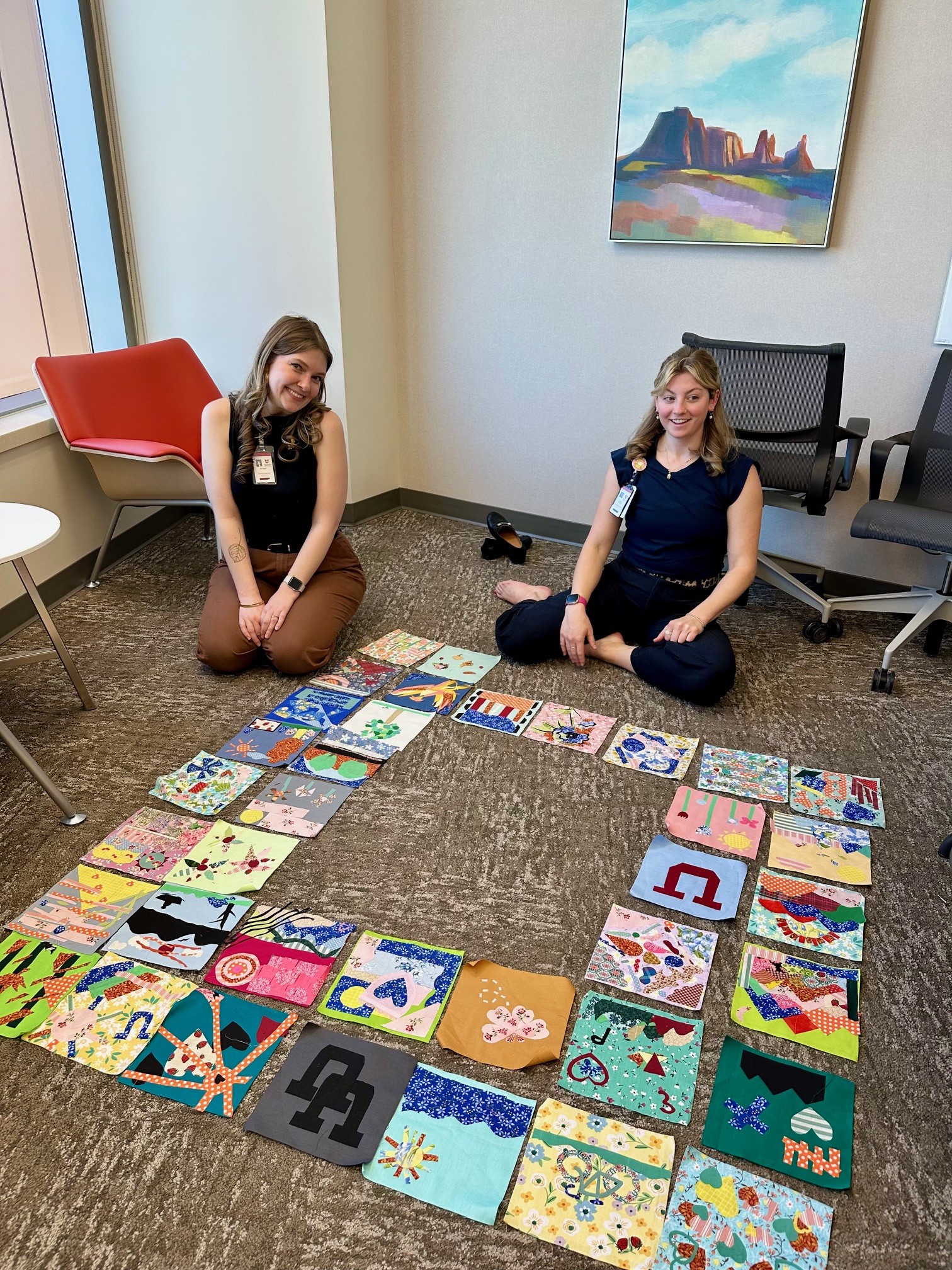 Still, RT isn’t just about having a good time. Activities are designed to meet each patient’s unique health care goals, often complementing other forms of therapy they’re receiving. “I always tell people individual therapy is where you learn skills, and you learn things about yourself,” says Dellenbach. “Recreational therapy is where you go to practice them.”
For example, Katy Mayer, a U graduate who practices at the Craig H. Neilsen Rehabilitation Hospital, uses RT to help patients with neurological injuries regain various functional, emotional, and cognitive skills. When one patient felt overwhelmed with emotions after an injury, Mayer asked her to spell out her emotions using lettered tiles.
“While she was filling those out, I connected them using other feelings and experiences,” says Mayer. “She spelled out ‘fearfulness,’ and I used the ‘a’ of that to put ‘happiness.’ And so we sort of talked about how you can experience a multitude of emotions at the same time.”
As Mayer explains, this activity served a few different purposes. Along with helping the patient process her emotions, the activity gave her practice with motor skills, letter recognition, and social communication.
“I think for folks who enjoy helping people, RT is a really great fit,” says Holly Badger, the Expressive Therapies Manager at the U’s Huntsman Mental Health Institute (HMHI).
RT grads can practice with just a bachelor’s degree
RT is incredibly fulfilling, she says, and students can enter the field as soon as they graduate with a bachelor’s degree. Badger adds that about 85% of her RTs are U alumni, since U grads make great hires.
This is because the U’s RT program prepares students to take the national RT certification exam and become licensed to practice in Utah once they graduate. It also equips them with the skills needed to work in the field.
“Every course that I’ve taken has really applied to how I work as a professional,” says Dellenbach, now an RT at HMHI.
Students learn medical terminology needed to read and document medical notes, along with business skills, like how to bill insurance for their services. Students also gain real-world experience every semester by shadowing real recreational therapists to learn about interventions used in practice.
Mayer and Dellenbach both add that the RT program’s strong network of connections made it easy to find work after graduation. Students are given an American Therapeutic Recreation Association membership, allowing them to start forming professional connections while still in school.
Dellenbach found her current position when an HMHI staff member connected with the program was looking for students to work at its ropes course over the summer. That job eventually led to a full-time position.
“It was a good transition for me because I already knew what it was like to work there,” Dellenbach notes.
Now, Dellenbach spends her days using activities ranging from yoga to balloon games to support patients’ mental health recovery. “It’s very interactive, very fun, and very engaging,” she says. “And it feels very meaningful and very focused as well.”
“I’ve talked to some friends who graduated in psychology, and they’re doing great things,” she adds. “But I’m definitely getting paid more than I would’ve majoring in psychology. I’m also getting a lot more patient exposure.”
RT is a springboard to other careers in healthcare
After graduation, most RT students work in behavioral or mental health facilities, where, Badger explains, there’s high demand for RTs. However, the degree is also highly applicable to other healthcare fields.
According to Melissa Zahl, Director of Undergraduate Studies for the RT program, some graduates go to medical school to become physicians. Others go into occupational therapy or public health, or they might apply their skills in research.
Mayer says she may eventually go to grad school for another health care discipline. For now, she says, “I want to be here, because it’s just so wonderful… It’s really rewarding to encourage patients to pursue new leisure pursuits or interests and also have fun while I’m doing it.”
“I think RT is a really incredible career for somebody who wants to have fun but in a meaningful way,” adds Dellenbach. “There aren’t many jobs out there like that.”