
Farmer Keith Cowen was alone on his remote New South Wales property when he suffered a heart attack eight years ago.
It was five hours before he got from his Weethalle farm to an operating table in Wagga Wagga to have a stent put in.
The delay in treatment led to a second diagnosis, heart failure.
“I would have to give up farming, I could no longer work and I was basically preparing myself for the end — I was quite determined to pursue having a heart transplant,” Mr Cowen said.
Three years ago, he matched a donor.
But he needed more help to be eligible.
Loading…
“To be able to have a heart transplant, I had to come up with a list of people who would help me through the four months that I lived in Sydney — you can’t be left on your own,” Mr Cowen said.
After starting a Facebook group with his closest friends asking for help, he had four months worth of assistance within two days.
His transplant was successful, but it got him thinking about how many men in regional communities might not be so well-supported in a time of need.
“I thought, how lucky am I to have such close connections, and how sad is it that so many men don’t and they can’t even come up with a couple of weeks of support,” Mr Cowen said.
“That was kind of heartbreaking to think there are men out there like that.”
Determined to ensure other men could foster the same kind of friendships and connections, he started a Men’s Table in Griffith, where he now resides.
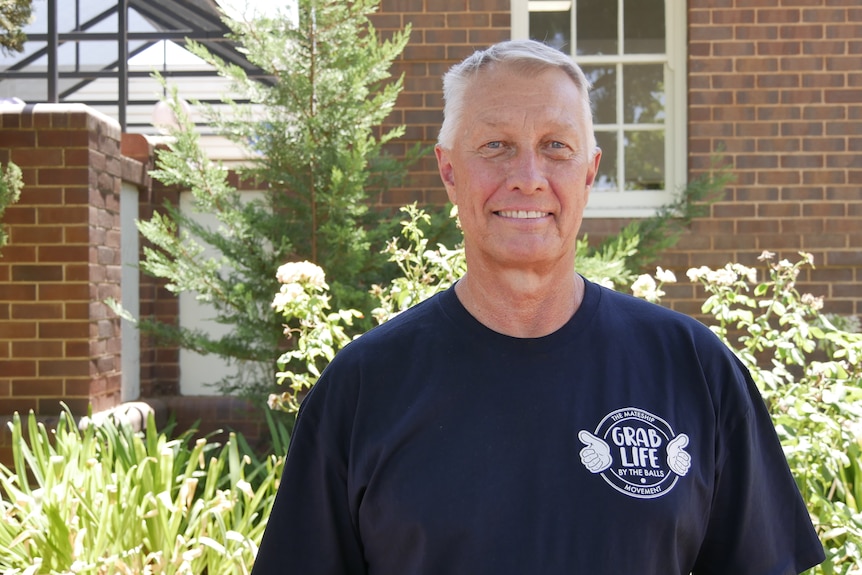
Keith Cowen says loneliness is a struggle for a lot of men in regional areas. (ABC Riverina: Nicola Ceccato)
The group is in line with the national not-for-profit organisation The Men’s Table, which consists of a group of men coming together once a month to have intentional discussions about life over dinner.
He also reached out to Grab Life by the Balls, a charity that organises social events to improve male mental health and wellbeing through mateship, and recently started a Griffith group.
“What helps men more than anything else is to have three to five close friends they can call on when they’re in trouble,” he said.
Combating loneliness
According to Ending Loneliness Together, a group of organisations addressing loneliness in Australia, men are 1.5 times more likely to experience persistent social isolation than women.
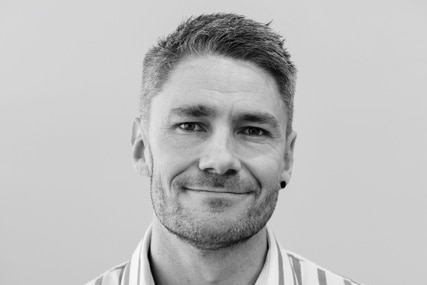
Carl Nelms says social connection is important. (Supplied: Carl Nelms)
Lead psychologist and founder of Blokes Psychology, Carl Nelms, said casual mateship networks like Grab Life by the Balls could be quite successful in helping men.
“If there’s a connection there, there’s camaraderie as well,” he said.
“It can enable people to just live a happier and better-quality life if they’re feeling socially connected and supported.”
Mr Nelms said a lack of targeted services for men and understanding about how the male brain worked were barriers to accessing support.
“For many men, they’re still largely expected to or expect themselves to be the provider — so if they’re taking time out of their schedule to seek support themselves, unfortunately, things have to be pretty dire to do so,” Mr Nelms said.
Grab Life by the Balls founder Sam Parker said the issues inspired him to start his charity.
Charity for change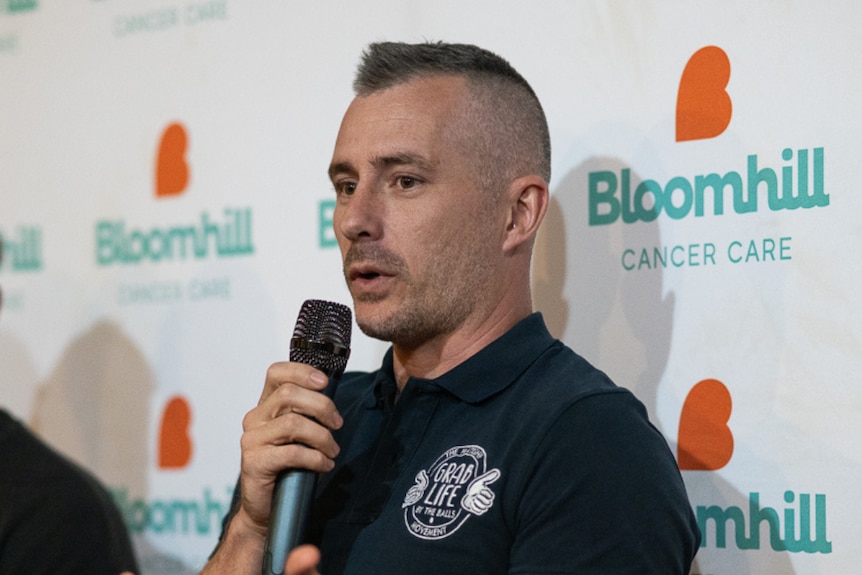
Sam Parker is passionate about supporting men and combating male loneliness. (Supplied: Sam Parker)
Originally from the Leeton area in the western Riverina, Mr Parker said growing up in regional NSW shaped his understanding of how mateship was key to social connection.
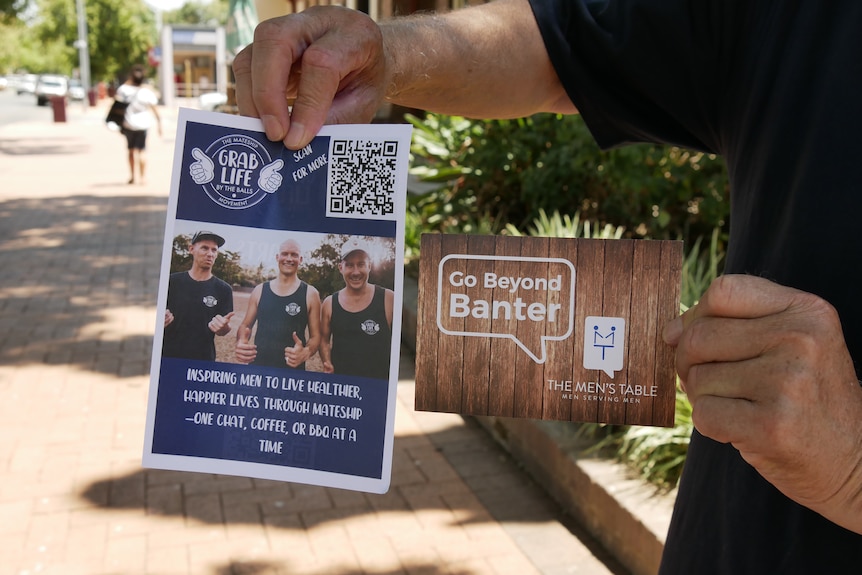
The Men’s Table and Grab Life by the Balls have made their way to the Riverina. (ABC Riverina: Nicola Ceccato)
“Work with dad having beers over the barbed wire fence … or in the shearing shed,” Mr Parker said.
“I think that instilled this blokey way of engaging people — having a casual chat and staying socially connected.”
Now in its ninth year, the charity has grown to include 25 groups from across Queensland, the ACT and regional NSW.
“I wanted to give back and do something for the community and certainly improve the outcomes in men’s mental health in regional Australia,” Mr Cowen said.
“It’s been wonderful.”