
Student mental health is declining. In 2026 the average student faces many different mental issues. Whether it be with their classes, lack of personal life outside of school, or sleep-related problems, student health is facing a massive reduction in positive emotions. But how much has mental health been declining, and what could be done about this issue?
The Journal of Affective Disorders states this on the question about student mental health: “In 2020–2021, greater than 60% of students met criteria for one or more mental health problems, a nearly 50% increase from 2013.” Now in 2026, while the decrease is far less substantial than 2013 – 2021, the state of mental health is still declining.
What are the reasons why mental health is declining, specifically? Well, Carlin James Agaromba, a student at Green River College, states, “I believe that student mental health is decreasing due to the progressive increase in the workload that students are expected to complete.”
Workloads and burnout are major reasons why students are far less mentally stable. Due to the ever-increasing competitive job market alongside higher expectations from universities and graduate schools, many programs have been loaded with more work than ever before.
Another reason for worsening mental health is the lack of time students have to invest in sleep and social activities. Increasing tuition and general prices of living in the United States have forced many students to pick up a job at the same time as classes. Along with their coursework, many students are up for hours into the night and receive less than eight hours of sleep, some students even less than six on a regular basis.
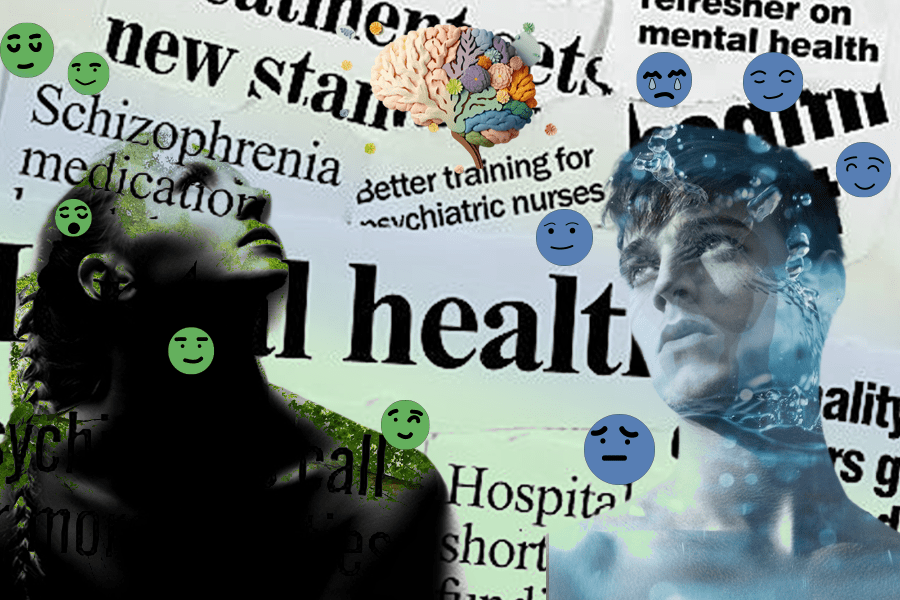 There are many stressors that go into a student’s mental health.
Finally, many friends/groups are busy on weekdays and are too tired to go out during the weekends, as they want to catch up on sleep. The problem with this separation is that this leads to social isolation and feelings of loneliness. Many people try to fix this with social media, but its overuse can cause feelings of anxiety.
Overall, there are many factors in the decline of student mental health. What can be done about this issue, though? Well, limiting social media use and setting a healthy schedule can improve students’ time management. This allows students to have more free time to spend on hobbies or with friends.
Schools could also consider excessive workloads and the optimization of learning activities. Cutting down on class activities students feel are not interesting and do not show many signs of improving skills.
Everyone should be looking to improve their mental health, and students are not an exception. Take care of your health!
Related