
Confirmed or suspected suicides accounted for more than half of all deaths in the state’s largest prison in the past two years, and amounted to one-third of all deaths in the statewide Hawaiʻi correctional system during 2024 and 2025, according to data compiled by Honolulu Civil Beat.
That data detailing the death toll from suicides in Hawaiʻi prisons and jails was drawn from autopsies and other public documents, and shows prisoners in the state system continue to have an abnormally high fatality rate from suicide.
Of particular concern is Hālawa Correctional Facility — the state’s largest prison — where confirmed or suspected suicides accounted for eight out of the 15 deaths reported there during the past two years.
By comparison, U.S. Department of Justice data shows suicides accounted for only 8% of all deaths in state and federal prisons across the country in 2019, which is the most recent data available on suicides in prisons.
“I don’t think it’s normal, and I think it’s devastating,” said Christin Johnson, oversight coordinator for the Hawaiʻi Correctional System Oversight Commission of suicides in the Hawaiʻi system. “I think any deaths in custody are absolutely devastating, but particularly deaths that potentially can be prevented.”
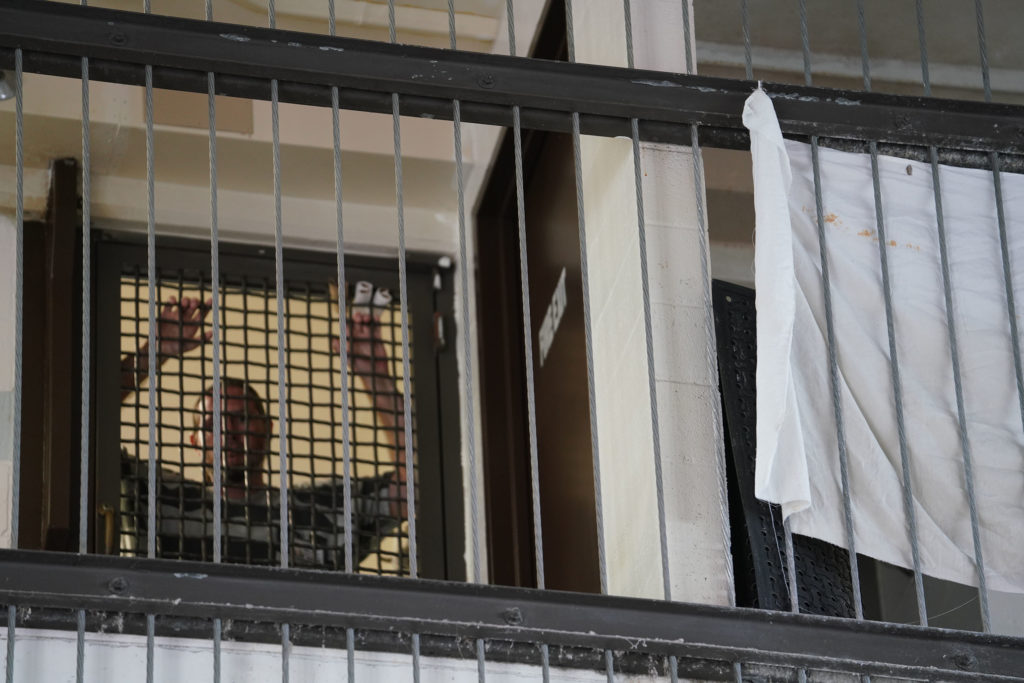 A Hālawa Correctional Facility inmate in a module in 2019. More than half of the 15 deaths in that prison in the last two years have been suicides. (Cory Lum/Civil Beat/2019)
The state has been sued repeatedly over suicides in its prisons and jails in recent years, and the Department of Corrections and Rehabilitation last year allowed national experts to inspect Hawaiʻi correctional facilities to assess the mental health services being provided to inmates.
Those experts produced a report last summer that described “atrocious” conditions for mentally ill inmates who receive inadequate treatment in understaffed facilities.
This year DCR Director Tommy Johnson is asking lawmakers for more than $2.6 million to hire nearly three dozen new health care workers including psychiatrists and nurses to improve mental health services and medical care in general as part of a settlement of the class action lawsuit.
Director Johnson told lawmakers last month he also plans to try out a new assessment algorithm to identify which inmates are at high risk for suicide, and to use ankle bracelets to electronically monitor the biometric data of at-risk prisoners to give warning if they are in crisis.
Suicides in custody “are particularly tragic because I believe some of them could be preventable,” Johnson said in an interview.
Too Many ‘Preventable’ Deaths
The data on deaths in custody for the past two years also shows another troubling pattern in the Hawaiʻi system: Deaths caused by drug overdoses, homicides and suicides amounted to half or more of the total number of fatalities during the last two years
In 2024, drug overdoses, homicides and suicides amounted to 50% of all deaths in the Hawaiʻi system jails, or eight deaths out of a total of 16 fatalities systemwide.
In 2025, fatalities from overdoses, homicides and suicides and accounted for 61% of all deaths, or 11 out of the 18 deaths in the correctional system that year.
Most of those deaths were suicides, but there were also two homicides each year in 2024 and 2025, and a total of four overdose deaths during the two years.
Michele Deitch, director of the Prison and Jail Innovation Lab at the University of Texas, said based on her experience “that is unusual. Natural deaths in custody usually account for the vast majority of deaths.”
She also said the sizable number of suicides in Hawaiʻi prisons is unusual because suicide is usually far more common in jails than in prisons.
The opposite was true in Hawaiʻi in both 2024 and 2025, when there was only one jail suicide during each of those years. Meanwhile, Hālawa prison alone had eight suspected or confirmed suicides.
Most inmates in jails are serving relatively short sentences of a year or less, or are awaiting trial. Inmates in prisons are convicted felons who are generally facing longer sentences.
“For a small jurisdiction, we do have a higher number of suicides and murders than similar-sized jurisdictions,” DCR Director Tommy Johnson said.
He said that is partly because Hawaiʻi correctional facilities are “old and antiquated,” with spaces where correctional officers cannot properly monitor the inmates.
Christin Johnson, the oversight coordinator, said part of the problem with inmate suicides can be traced back to staffing shortages in Hawaiʻi correctional facilities.
Despite aggressive efforts to recruit adult corrections officers in recent years, Tommy Johnson told lawmakers last month Hawaiʻi still had 435 vacant ACO positions at the end of November out of a total 1,535 corrections officer positions.
That works out to a vacancy rate of about 28%, but Johnson said it does not take into account officers who are absent from work for extended periods with injuries or unpaid leave under the federal Family and Medical Leave Act.
“The staffing crisis is still very, very real,” said Christin Johnson.
Hawaiʻi prisoners are often locked down in their cells for extended periods when there are too few corrections officers to operate essential posts in the facilities, she said. That can interrupt programs, recreation, family visits and other activities.
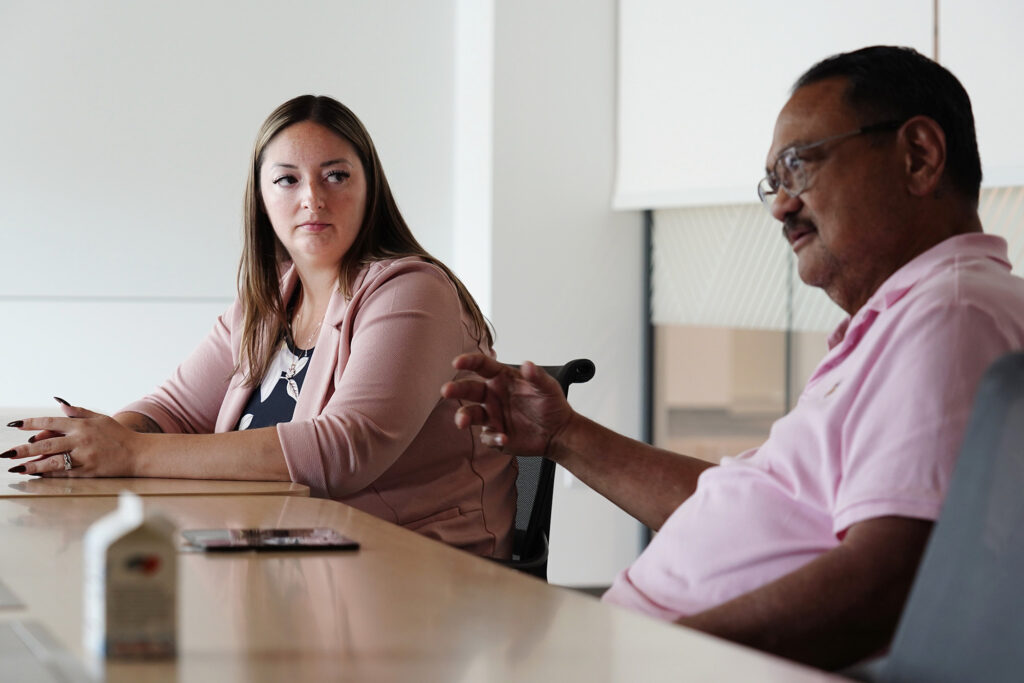 Hawaiʻi Correctional System Oversight Commission Coordinator Christin Johnson and commission Chair Mark Patterson. Johnson contends that getting inmates out of their cells for recreation, family visits or programs can help reduce the number of suicides in the Hawaiʻi correctional system. (Kevin Fujii/Civil Beat/2025)
“Out of cell time is suicide prevention,” she said. “Time outside on the recreation yard is suicide prevention. Time to sit and visit with your family, time on the phone, time in programming, in classroom, in education — all of that is suicide prevention.”
Deitch agreed. “When people are locked down without access to programs and recreation and visiting and services and all the things that go into a normal day, they’re far more likely to become isolated, depressed, anxious,” she said.
That can exacerbate mental health problems, which may help to explain Hawaiʻi’s suicide numbers, Deitch said.
More Staff And New Approaches
The Department of Corrections and Rehabilitation plans to increase its mental health staffing, and also experiment with some new tactics in an effort to reduce the number of suicides, Tommy Johnson told lawmakers last month.
Under the terms of a settlement of a class action lawsuit filed in 2019, the state is seeking 35 additional positions and $2.7 million in additional funding next year to improve mental health services in the correctional system.
Romey Glidewell, health care division administrator for DCR, told the House Finance Committee last month the new staff would include six psychiatrists, nine nurse practitioners with expertise in mental health, and 18 additional registered nurses to support the effort.
Tommy Johnson said a dozen of those positions will be used to staff an infirmary that is being created at the Oʻahu Community Correctional Center.
The department will also launch a pilot project later this month using an assessment tool fielded by Falcon Technologies to predict which inmates are at high risk for suicide, Johnson said.
The assessments would be done periodically by a psychologist to provide the department with “who we should be looking at for potential suicide risk,” he said. The department could then intervene with additional services or monitoring.
That tool has already been deployed in Michigan, Johnson said, and DCR plans to try it out initially at the Oʻahu Community Correctional Center, the Women’s Community Correctional Center in Kailua, and possibly at Hālawa. He said the pilot project would involve interviews with hundreds of inmates.
For inmates who are identified as high risk for suicide, the department may use an ankle bracelet that monitors biometric information so that prison and jail staffs would be alerted when an inmate is in some sort of crisis.
“At a minimum I think that would help us to intervene much faster,” he said, and may also allow staff to interrupt assaults. He said the department tentatively plans to request money for that equipment next year.
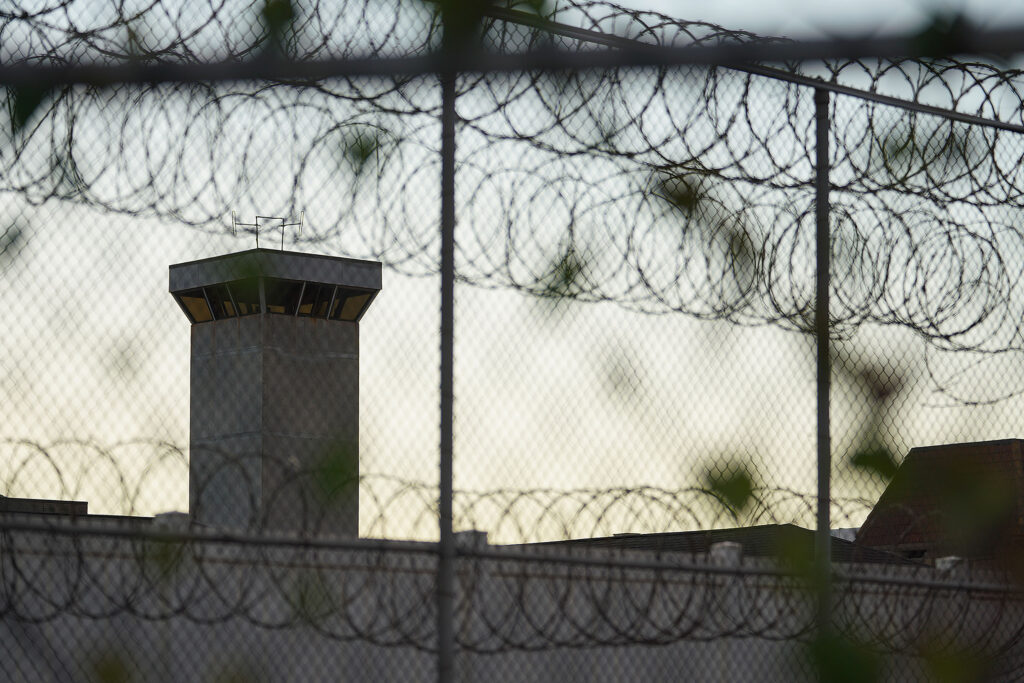 The Department of Corrections and Rehabilitation is asking for 35 new positions, including about a dozen health care workers who would staff an infirmary being created at the Oʻahu Community Correctional Center. (Cory Lum/Civil Beat/2021)
Those strategies would be an interim fix to try to limit the number of suicides in old facilities where staff do not always have a clear line of sight that allows them to closely monitor prisoners, Johnson said.
Deitch and Christin Johnson both raised concerns about that approach.
“What they’re trying to do is replace the fact that they don’t have sufficient staff to be checking on people and engaging with them and providing them with the treatment that they need,” Deitch said. She said she finds that worrisome.
“Even if you could identify that someone’s biometrics are revealing that they are in distress, that’s not providing them with the care that they need,” she said. “The danger is if that becomes a replacement for something else. I reserve judgment on it, let me put it that way.”
A Lingering Problem
But staff recruitment is a continuous struggle because Hawaiʻi’s prisons and jails are generally run down, and the jobs are not easy. Corrections work is not for everyone, Tommy Johnson said, and “I don’t think we pay corrections officers enough for the work that we ask them to do.”
“Even though we have a multi-pronged approach to recruiting and our numbers are better, I think we have to make corrections more interesting, and we have to do that by paying more money or providing a better working environment for them,” he said.
The corrections system loses a lot of medical staff to hospitals and other clinical settings because other facilities a pay better for work that is less risky and less stressful, he said.
Christin Johnson agreed. “I think the pay needs to be raised for some of these critical positions,” she said. “It does make a difference.” Upgrading the physical conditions in the prisons would also help, she said.
She said the community at large needs to pay more attention to the issues surrounding death in custody, which are traumatizing for the inmates, the staff at the facilities and the families of those who die.
“I think that deaths in custody are horrific, especially when it’s a suicide, or homicide or overdose,” Christin Johnson said. “I think that if we don’t talk about these issues more, and explore these issues more, and try to collectively figure out how to prevent these, then we’re failing. We’re failing everybody in the system.”

Sign up for our FREE morning newsletter and face each day more informed.
Sign Up
Sorry. That’s an invalid e-mail.
Thanks! We’ll send you a confirmation e-mail shortly.