
Your support helps us to tell the story
From reproductive rights to climate change to Big Tech, The Independent is on the ground when the story is developing. Whether it’s investigating the financials of Elon Musk’s pro-Trump PAC or producing our latest documentary, ‘The A Word’, which shines a light on the American women fighting for reproductive rights, we know how important it is to parse out the facts from the messaging.
At such a critical moment in US history, we need reporters on the ground. Your donation allows us to keep sending journalists to speak to both sides of the story.
The Independent is trusted by Americans across the entire political spectrum. And unlike many other quality news outlets, we choose not to lock Americans out of our reporting and analysis with paywalls. We believe quality journalism should be available to everyone, paid for by those who can afford it.
Your support makes all the difference.Read more
Nearly a quarter of parents in the United States say at least one of their children is not receiving the mental health care they need, according to Harvard researchers, exposing critical gaps to access around the country.
At least one child needed mental health care in one in five of the 173,000 households included in the new survey.
“Among these parents, 24.8 percent reported an unmet need, 16.6 percent reported difficulty in accessing care and 21.8 percent cited such difficulty as the reason their children did not receive care,” the researchers said in a study analyzing the 2023-2024 data.
The burden was disproportionately felt in households with homeschooled children. More than 30 percent of children in those homes had an unmet need for care.
“Our analysis provides timely evidence that, despite the increasing awareness of youth mental health needs, access to necessary mental health care remains a challenge for a large number of U.S. households,” Hao Yu, an associate professor at Harvard Medical School, said in a statement.

open image in gallery
Almost a quarter of U.S. parents say at least one of their children is not getting the mental health care they need, according to a new survey of data from 2023 and 2024 (Getty Images)
The burden was also greater for households with a single parent and multiple children, and in households that had no health insurance or were on Medicaid benefits.
This suggests that “Medicaid coverage may not adequately address treatment access issues,” the researchers said.
“It is concerning to see larger gaps for single-parent and multi-child households, households with homeschooled children, uninsured households and households with Medicaid,” said Alyssa Burnett, project manager at the Harvard Pilgrim Health Care Institute.
The researchers said the survey’s results provide evidence that action needs to be taken to address these barriers to access.
“Strategies such as child mental health workforce initiatives and integrating mental health care into primary care should be implemented at the state level to remove barriers to this much-needed care,” said Yu.
open image in gallery
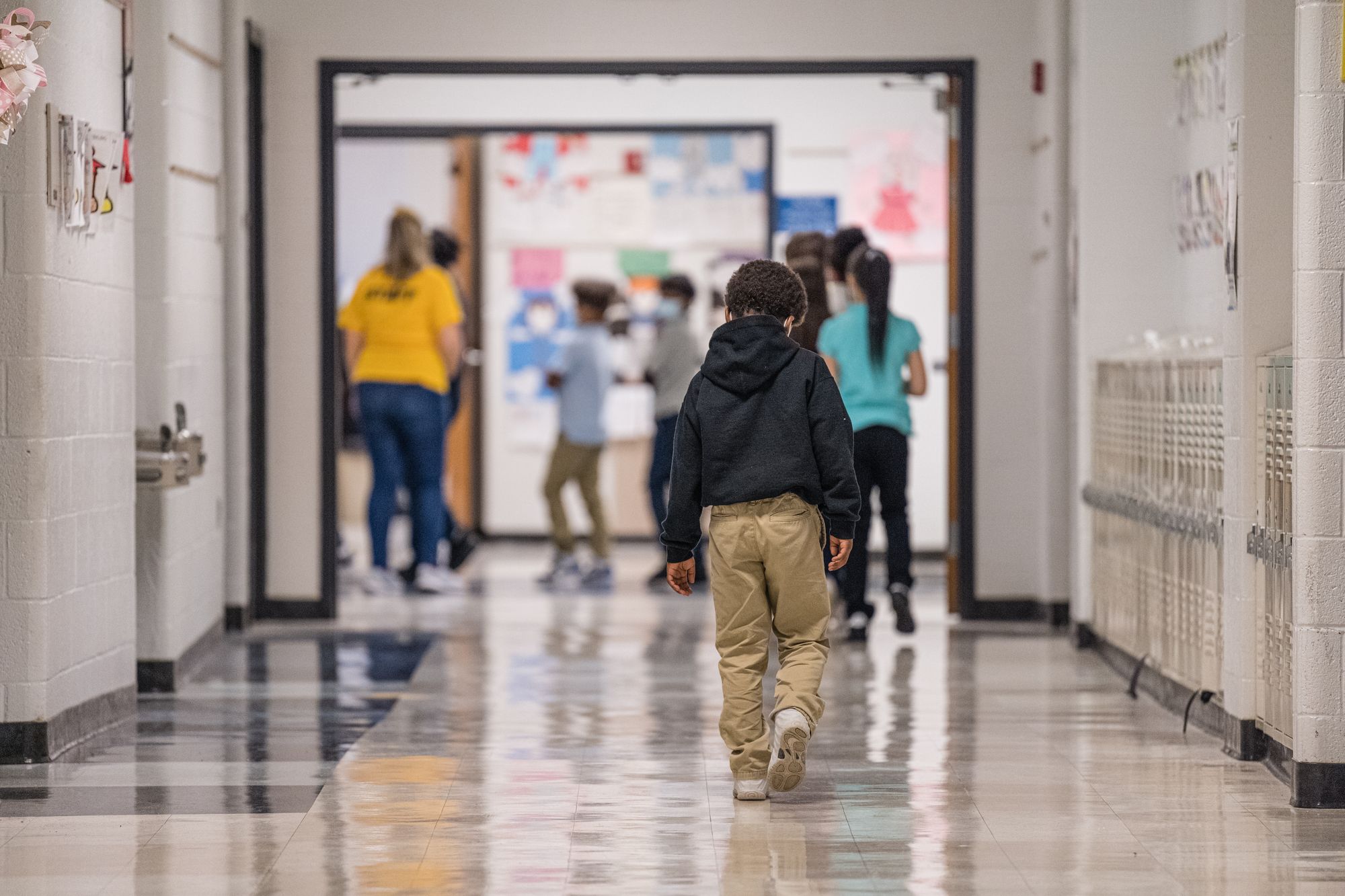
Mental health care during childhood is crucial to ensure kids have a happy and healthy life (Getty Images)
The findings build on previous research that showed families’ race and ethnicity, health insurance coverage, parental education and various socioeconomic factors are all blame.
“Being a member of non-Hispanic Black or non-Hispanic Asian and other minoritized populations was significantly associated with higher perceived difficulty accessing mental health care services,” researchers in Tennessee and Ohio wrote in 2024.
Mental health care during childhood – as children’s brains grow – is crucial to ensure a child is able to have a happy and healthy life. Treatment may include talk therapy, medication or school-based services.
One in five U.S. kids between the ages of three and 17 years old has a mental, emotional, behavioral or developmental disorder, according to the Centers for Disease Control and Prevention, up from one in seven in 2019.
Just 20 percent of those kids will receive treatment, the agency says.