
He opens up about his own addiction and how it affected every aspect of his life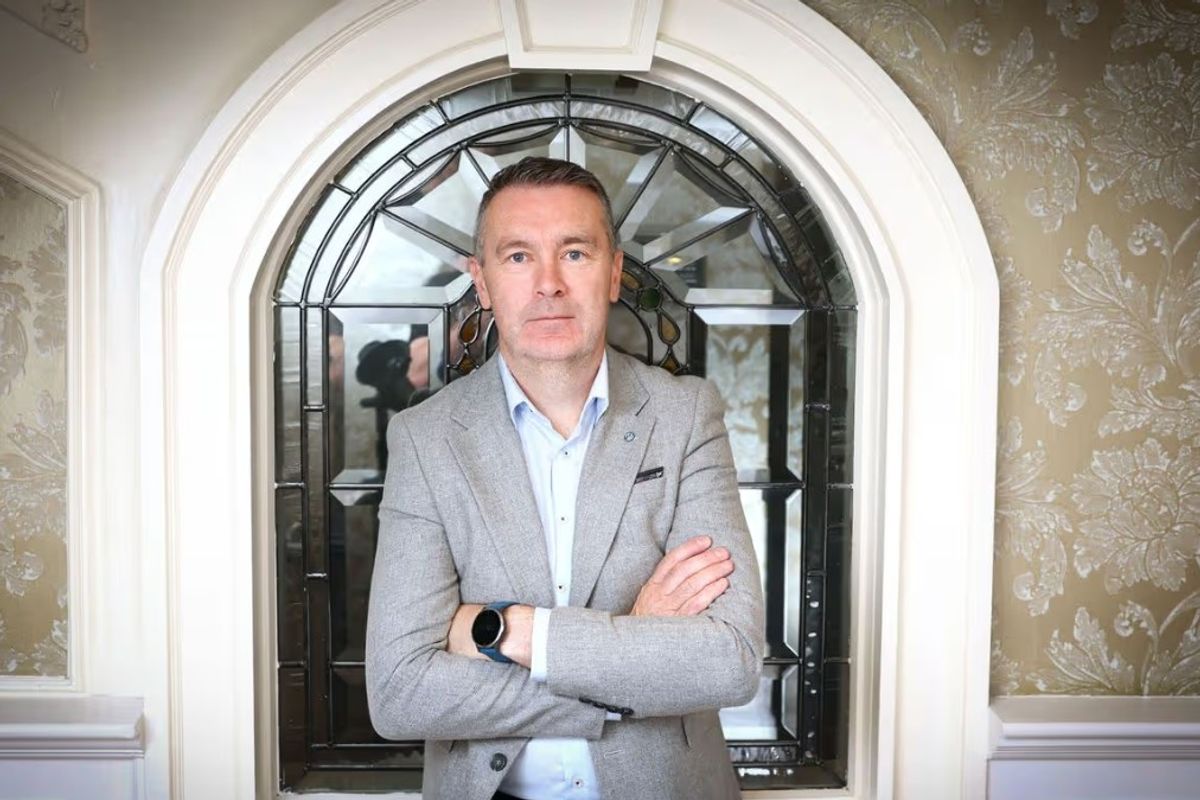
Gambling Care Ambassador Oisín McConville(Image: Marc O’Sullivan)
While there is more awareness around addiction nowadays, gambling is one addiction that many people either don’t know about, or they completely underestimate the damage it causes.
Problem gambling is a compulsion to continue gambling despite it causing negative outcomes as well as the person wanting to stop.
It can have a serious impact on the person and their loved ones and can also cause severe financial and mental health issues. ERSI research estimates that one in 30 people in Ireland are problem gamblers, and it may be even higher due to its hidden nature.
READ MORE: Belfast man calling for new wellness hub after turning life around from addictionREAD MORE: ‘Farmers need to treat their mental health as seriously as physical safety’
RSVP Live spoke to GAA legend Oisín McConville about this devastating addiction. When everyone was watching Oisín McConville winning All-Irelands, they assumed he was at the top of his game, but inside, he was seriously struggling.
At the height of his sports career, the Armagh man was battling a devastating addiction to gambling, which he says was slowly destroying him, his family and his friendships. What started off as a casual bet as a teenager spiralled into something out of Oisín’s control.
His introduction to gambling was similar to most people in Ireland: the Grand National horse race. “Everybody was having a bet. It was very acceptable. I remember walking to the bookies that day, 14 years of age,” Oisín tells RSVP.
At that time, the bookies was a smoke-filled room at the back of a pub, with a black and white TV in the corner, and Oisín was immediately drawn to it: “My first bet was 50p on a horse. I don’t remember if the horse won or lost.
“I just remember thinking, ‘This is a world that I want to be part of.’ I could sense the excitement, when I went to sleep that night, I closed my eyes and all I could hear was the noises: the commentary, the excitement, anticipation, all that. It snowballed from there.”
Over the next couple of years, Oisín fell further and further into a gambling addiction, and by the time he was 18, he was gambling every single day, with every single penny he had.
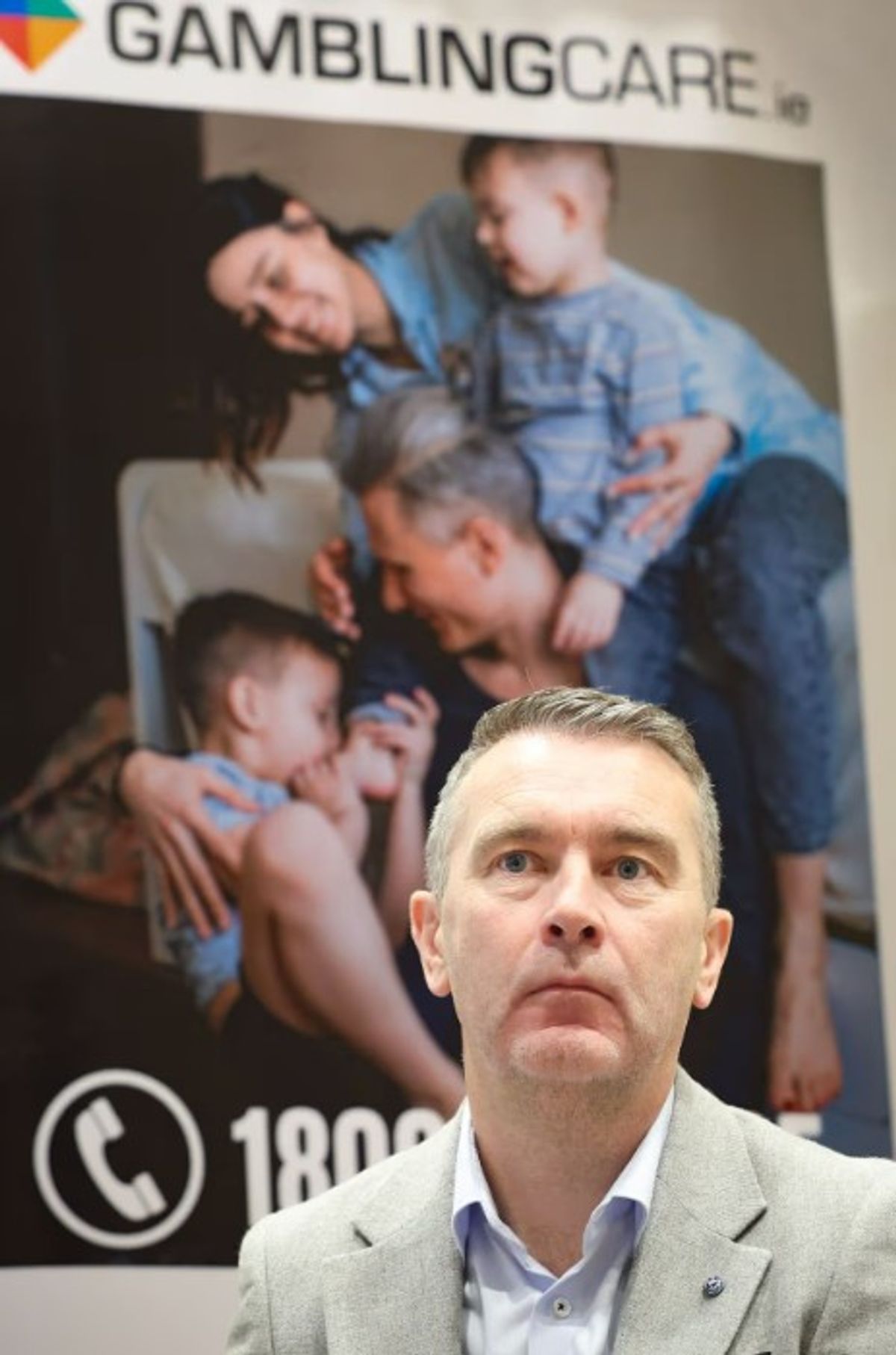
Gambling Care Ambassador Oisín McConville(Image: Marc O’Sullivan)
Was there a moment where he realised that his gambling was out of control? Oisín says there were many times when he knew things were not good, but that didn’t stop him: “I was always able to tell myself I was one big bet away from solving all my problems. There were spells where it got particularly bad, with letters coming through the door.”
He adds that gambling addiction is different to alcohol and drug addiction in that there are no physical signs: “I was playing football at a really high level, winning All-Irelands, winning All Stars. People take it for granted that everything in your life is fine.”
Oisín himself bought into this, putting on a persona so people wouldn’t look too closely. He was the happiest person in the changing room, the joker, he was full of life. However, when he was at home, he went into his bedroom and crawled under the covers, not wanting to come out.
“Gambling was affecting every aspect of my life and causing untold angst to the people around me as well, it has a knock-on effect. But when you’re in the addiction, you see very little of that. You don’t think it’s affecting anybody else, as far as you’re concerned, you are just hurting yourself.”
Oisín looked around him and saw all of his friends settling down, getting married and having children, but he says he wasn’t able to have those things because of addiction. He added that he no longer wanted the material things, like a big house, money and a fancy car that he used to crave – he wanted normality.
The Armagh man admits as a compulsive gambler, he was also a compulsive liar, and he managed to hide the truth from his family until it got to the point where that wasn’t possible. “When I eventually did ask for help, my family was stunned as to the extent of it.”
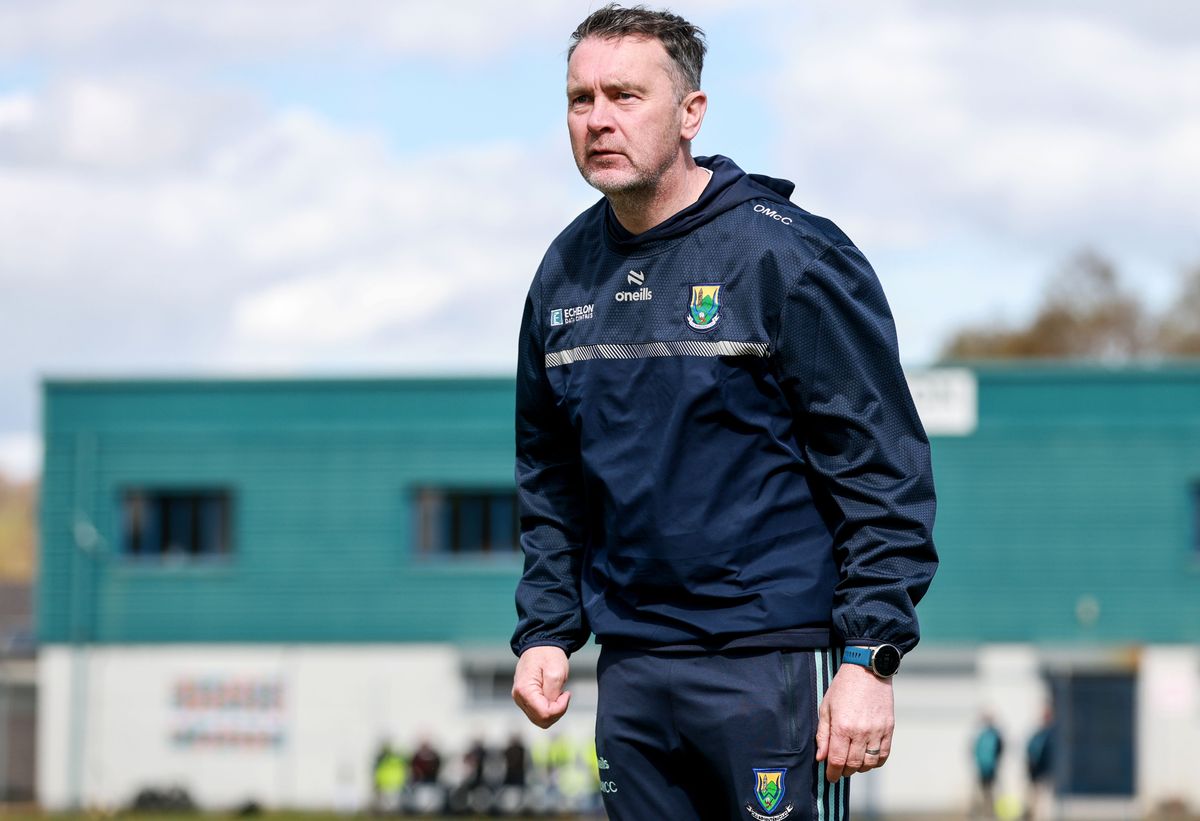
Wicklow manager Oisin McConville(Image: ©INPHO/Dan Sheridan)
Aged 29, Oisín went into residential treatment. He spent 13 weeks in the treatment centre and he learned more about addiction. He had believed that he couldn’t be an addict because he was healthy, he was playing football at a high level and was, at times, holding down a job.
“The only image of addiction I had was the guy laying on the park bench with a bottle of wine inside a brown bag. I soon learned I fitted the bill of addiction like a glove.”
For Oisín, the hardest part was admitting that he had an addiction and that he couldn’t sort it by himself. He says he came from a world filled with bravado: “It was stick your chest out and move on, stiff upper lip, don’t let anything affect you and don’t feel weakness. For the first time ever I had to show vulnerability and once I did that, I got help.”
In treatment, Oisín realised he had to take practical steps to change, and part of this included allowing himself to feel and talk about his emotions. “I was pretty shut off emotionally. I had to try and get those emotions back and mature them.”
He also learned that gambling was not something he could be ‘cured’ from, it was going to be an ongoing process. It’s now been 20 years since his last bet, but he still considers himself to be in recovery.
“Gambling will always be the monkey on my shoulder and it’s up to me to make sure that it stays on my shoulder. There are certain actions I take every day to make sure that happens. You never beat it, but at the moment, I’m winning.”
A common misconception people have about gambling is that it’s just a financial issue, not an addiction: “Even after I came out of treatment, people would ask me if I wanted 20 quid on a few teams, or could we play a game of pool or golf for money.”
Oisín says other people can’t understand why gambling addicts don’t just stop – but Oisín says the same question is usually not posed to alcohol or drug addicts. “It’s not as simple as just stopping. I chose to stop loads of times, I stopped for a day, two, but the addiction wouldn’t let me stop. There has to be a process to make sure the recovery is long-term.”
The hidden element makes it even tougher to get help, and Oisín says loved ones should be aware of the signs. “Look out for financial stuff. Are they claiming they lost their card, wallet, or got paid late? Also look for a huge change in behaviour or mood.”
Since getting help, Oisín’s life has totally changed – he’s now free. “When you’re in addiction, you’re a slave to it. I had to beg, borrow, steal, scam and scheme every day to make sure I was able to feed my addiction. Then, you’re a slave to the actual gambling as well. You’re a compulsive liar, you’re unable to hold down a job or a relationship. I was bouncing from one relationship or job to another. I was in a relationship with gambling from 14 years of age, and there wasn’t really room for anybody else.”
Oisín’s father sadly passed away in 1999, back when Oisín was still in addiction. At the time, he didn’t cry for his dad. “I had no tears, I couldn’t bring myself to express the sadness.” The day Oisín walked out of treatment in 2006, the first place he went to was his father’s grave, where he cried.
Now, Oisín is happily married with three wonderful children. “I did not see myself ever having the life that I have now. I hug my children every night and I tell them I love them. If I had continued to gamble, I wouldn’t have been able to do any of that.”
To read the full article, pick up a copy of RSVP’s February issue, on shelves now.
To ensure you don’t miss out on all the latest from Belfast Live, be sure to make us your preferred source on Google.