
I love Instagram for all the wrong reasons. As much as I’d like to say I use it solely to keep up with my friends, most of my time on the app is spent scrolling through artificial intelligence -generated ASMR videos and local zoos’ posts about their new baby capybara.
Pretty much every time my time limit on Instagram pops up — which I set with such good intentions — I hit ignore.
Ask almost everyone you know and they will agree: Social media is addictive.
I’m sure there are some angels and saints our age who can resist the dopamine hits of 20-second comedy videos, but they are likely in the minority. Or, maybe I just hang out with people who are chronically online.
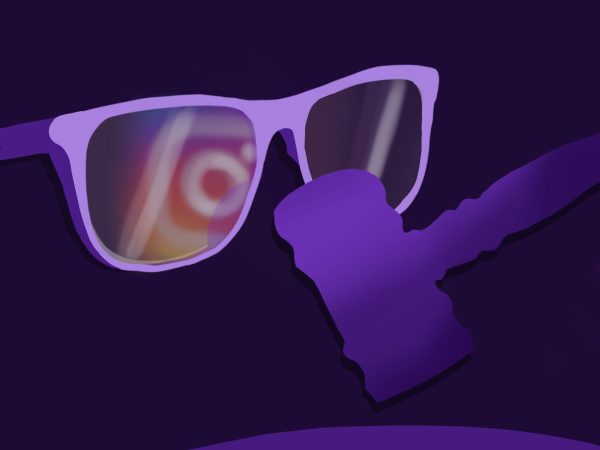
And now, social media giants are heading to the courtroom to atone for the allegedly addictive nature of their apps.
A 20-year-old woman known as K.G.M. is the first plaintiff. She joined social media platforms Instagram and Snapchat at nine and 11, respectively. K.G.M. alleges that this caused an addiction that led to numerous mental health concerns including body image issues and depression.
There are several lawsuits against social media companies, but a series of nine cases, starting with K.G.M.’s, will be heard as bellwether trials — that is, trials that act as test cases when there are many similar lawsuits.
If the plaintiffs win, it could mean monetary settlements and potential changes to the platforms.
Many of the cases discuss similar features of social media that make it addictive, such as automatic video playing and the omniscient, god-like algorithm that always recommends just what you want to see.
As we all know, those are just the tip of the iceberg. Beauty filters and image editing tools on social media make it ridiculously easy to curate a version of yourself that is always prettier, thinner or whatever you want.
Do I personally believe social media is addictive? Absolutely. It has, beyond a shadow of a doubt, worsened the mental health, body image and focus of so many people.
It’s also so hard to know where the awful features of the app end and where the people who use it in problematic ways begin — spreading political misinformation, promoting disordered eating disguised as health and creating toxic content designed to harm others.
But then, of course, all that sensationalized, often clickbait-y and untrue content gets picked up by the algorithm and spread around to more people. There is incentive for people to make harmful content with hateful rhetoric because it’s circulated so much more and subsequently, creators can receive money or status off of the views.
This trial is indicative of a larger truth: We’re living in a world where technology dictates several aspects of our lives, and we are severely ill-equipped to handle it.
For instance, AI is literally destroying people’s lives, leading them to their deaths in the most extreme and unfortunate cases, and we can’t seem to figure out legislation or ground rules to protect people from its harmful effects.
Furthermore, the infrastructure required to support AI chatbots is leading to an environmental strain, as data centers require huge amounts of freshwater daily to be functional.
Can one person or company be held accountable for the harms of technology? Perhaps not.
That doesn’t mean we should stop fighting for better regulations in tech. Companies should still be aware of their ethical responsibilities to the world. But the addictive designs that make people turn to social media again and again, mean more money and more engagement. So hoping for moral responsibility in our capitalist, garbage dump of a society feels like an optimistic but unlikely goal.
Social media and technology sometimes feels like this ambiguously large and evil boogeyman that grew out of control. I don’t think we could have ever guessed the consequences, and I worry that we won’t be able to control it now that it is so mainstream and infiltrated in our lives.
Maybe these trials are a step forward, though. If the plaintiffs win, it could mean some change in how social media works to make it less addictive.
The question we are forced to ask ourselves now is if we value profit over mental health — and I fear I already know the answer.