
By JULIE CARLE
BG Independent News
A comprehensive youth survey conducted in Wood County is sounding alarms for educators and community leaders, revealing troubling increases in vaping, persistent mental health struggles, and heavy screen use among students in grades 5 through 12.
The biennial study, led by the Wood County Educational Service Center (WCESC) analyzed more than 9,000 student responses gathered over two decades. The long-running dataset is among the most robust localized youth health resources in the nation.
“Wood County is exceptional… We have 20 years of data, which is one of a kind, not only in Ohio, but nationally,” said WCESC Prevention Director Alana Stanbery-Sigg, during a roll-out of the 2026 youth study. “Having over a thousand responses is considered a large sample size and relevant to generalize to the population.”
None of the Wood County questions fell under 5,000 responses.
The significance of the survey demonstrates, “We are hearing student voices loud and clear. Because we have this data, we can manage and address it. Our failure would be not to,” Stanbery-Sigg said.
Vaping and edibles surge
According to the responses, alcohol remains the most commonly reported substance; however, the study found significant growth in nicotine and THC vaping, along with edible marijuana use — including use during school hours.
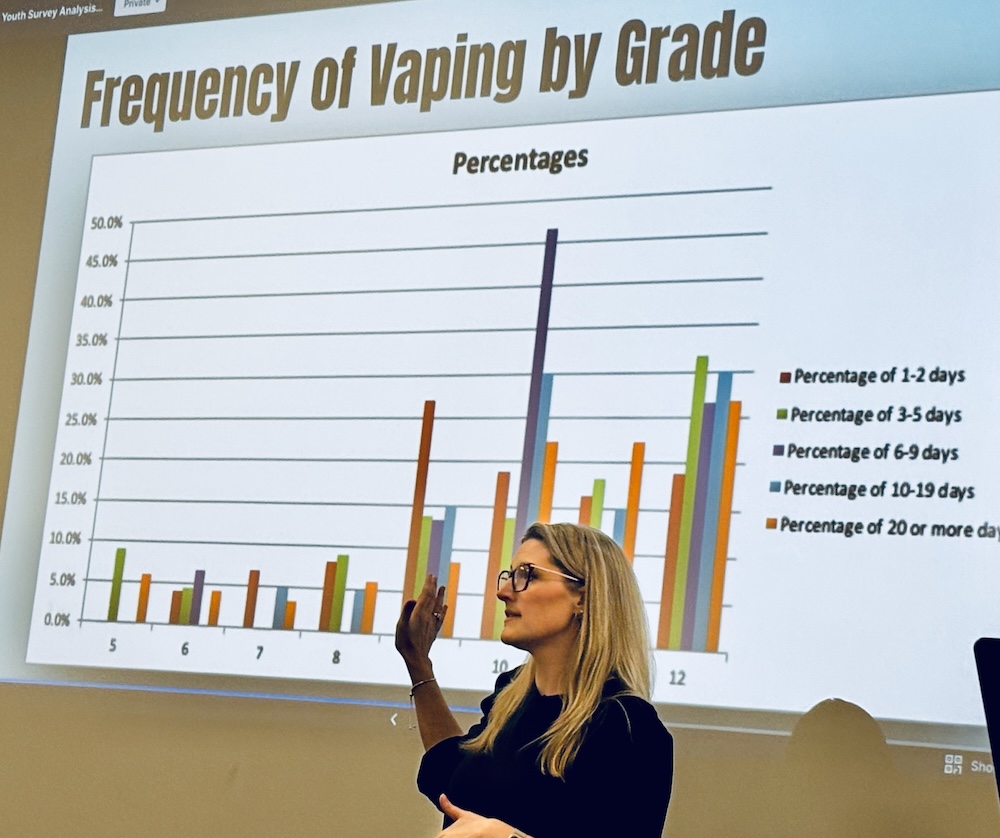 Alana Stanbery-Sigg describes the increase in youth vaping frequency.
Students most often cited relaxation, feeling good, or boredom as reasons for vaping. Alarmingly, many reported obtaining substances not only from family members but also through online purchases.
Stanbery-Sigg warned that online buying exposes youth to potentially lethal contamination risks.
“One in five… substances ordered online are aligned with fentanyl that will kill 100% of the time,” she said. If we’ve got these kids in mass ordering it off of social media and online, we don’t know where it’s coming from and that’s the danger.”
She mentioned the advocacy group Fentanyl Fathers is a key partner in educating communities about these dangers.
Mental health data ‘startling’
Perhaps most concerning to researchers was the mental health picture:
45% of students reported feeling anxious or fearful
35% reported feeling sad or depressed
466 students said they had attempted suicide within the past year
“I want you to imagine what the news would look like if those 466 students would have successfully completed the act of unaliving themselves instead of 466 attempts,” she said.
Local health providers have indicated they are seeing the same trend in real time, with younger children increasingly presenting in crisis.
“These are not just numbers,” Stanbery-Sigg emphasized. “These are student voices.”
Screen time and behavior links
The survey also highlighted problematic digital habits. About 86% of students reported spending more than two hours daily on non-academic screen use.
Researchers found strong correlations between heavy screen time and:
Depression
ADHD symptoms
Aggression and hostility
Sleep disruption
Statistical analysis also showed meaningful relationships between alcohol and marijuana use and dysregulated behaviors such as anger, arguing, and anxiety.
Community response and next steps
To help districts act quickly, a detailed online dashboard was created, allowing school leaders to compare countywide trends with their own student populations.
The county’s diversion program is showing promise, with a reported 91% success rate in keeping referred youth out of the court system one year after services.
Community leaders say the data is intended to drive coordinated prevention efforts across schools, health agencies, and families.
A call to listen
Despite the sobering findings, Stanbery-Sigg emphasized the study provides a roadmap for action rather than a reason for despair.
“We’re here to help you. We hear you, and we’re not going to ignore it,” she said. “ Collectively, we know that prevention work is effective in reducing long-term social and economic costs. It improves student outcomes and supports educators and families. Wood County is exceptional.”
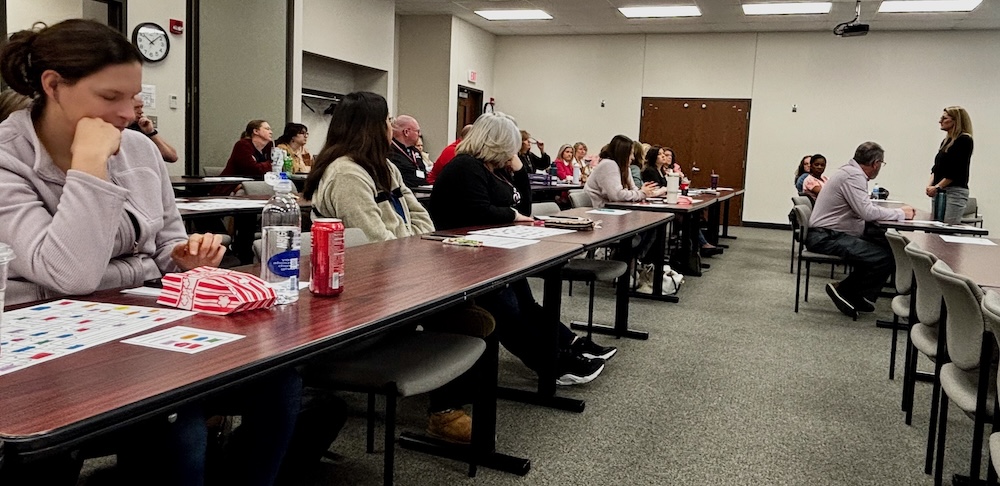 Attendees from school districts and local organizations that serve the youth of the county listen intently to the youth survey findings.
“We absolutely want to thank the districts that show their dedication to our youth by allowing us to continue the survey with their students,” she said. All the school districts in the county are cooperative, even though WCESC provides prevention services to eight of the 10 school districts.
Even those two schools that don’t utilize our prevention services, they choose to participate “because they value the youth study,” which is a one-of-a-kind in the state and the nation, Stanbery-Sigg said. While all the students’ responses are anonymous, results are collected according to school districts, she explained.
Individualized district reports are made available to each of the schools for administration officials to review and address any concerns specific to their student population. “We would hope they would share the information with the parents as well,” she said.
 Posted by: Julie Carle on February 28, 2026.