
Think about how stressful it is to spend even a few hours in an emergency room because you or a loved one have gotten sick or injured.
Now imagine you’re suffering from a psychiatric problem, but instead of spending a day in an ER, you’re there weeks, possibly even months, because there are no inpatient beds available for your care.
That’s become a reality of mental health care in rural Maine and elsewhere.
“It’s sort of a last safe place,” said Dr. Michael Murnik, a board-certified family physician and chief medical officer at Northern Light Blue Hill Hospital, of emergency departments.
“If they need hospitalization and there are beds, they can get admitted right away,” Murnik said. “The problem is the demand is so much bigger than the supply.”
“People do get stuck if there’s not enough beds at the inn,” Murnik said.
And he does mean stuck. “We’ve had people in the emergency room, days, weeks, months, I think once even for over a year,” the physician said.
When someone is experiencing a mental health crisis, or as people in the profession now call it, behavioral health issues, police are often called to help.
The Ellsworth Police show up with a crisis worker from Aroostook Mental Health Center. Often the individual is taken to a local emergency room until he or she can be assessed as to whether they pose a threat to themselves or others.


AMHC has two crisis workers who take turns going on mental health calls with Ellsworth Police officers. “We currently have two AMHC mental health crisis workers embedded in the Police Department,” said Police Chief Troy Bires. “They work opposite days, giving us coverage most days of the week.” “The partnership is working well and I expect things to continue to grow as both officers and AMHC workers learn each other’s needs and expertise,” said Bires. “By all accounts the program has been a great success in the first year of the partnership. Approximately 6.6% of our calls for service are metal health related, however our case workers have been accompanying officers on calls that are reported as another offense, such as domestics, trespassing and substance abuse calls.” The crisis workers are also able to stay with people in the hospital emergency department rooms. Because of that, “it’s cut the duration of time an officer had to stay in ER once the situation was safe,” the chief said. Ashley Pesek, interim program director of crisis services for Aroostook, Hancock and Washington counties, said the crisis workers are also able to go on calls such as unattended deaths.
JENNIFER OSBORN/STAFF
“It takes up one of our ER beds, which is a precious resource,” Murnik said. “The insurance company doesn’t pay us for more than a couple hours. It’s basically free care that takes up a lot of resources because there’s no safe place to go.”
Once people have been admitted and are tucked into an emergency department room, they are assessed for further treatment through psychiatric hospital Northern Light Acadia Hospital.
Jamilyn Murphy-Hughes, Acadia Hospital associate vice president, said patients are first seen by the emergency department attending provider, who decides if the person needs psychiatric evaluation from the Acadia team via the telehealth system. The team includes psychiatrists and licensed clinical social workers.
“During the assessment process, we ask questions pertaining to the reasons they are in the ED (oftentimes also speaking with others who may have been involved or know more information such as family, providers, crisis, police, etc.), sleep, appetite, energy, current/historical substance use, suicidal and homicidal ideation, current stressors, access to guns/weapons as well as other relevant information such as current medications, current providers,” said Murphy-Hughes.
“Over the last three months, Acadia has recommended inpatient 33% of the time in Hancock County,” she said. “This generally matches statewide data. There are times, certainly, when the patient (or their guardian) declines to be hospitalized and they are subsequently discharged. In those three months in Hancock County alone, we completed 99 initial evaluations.”
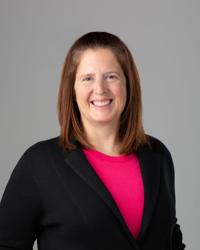
Jamilyn Murphy-Hughes Acadia Hospital
Information gathered in the patient assessments includes psychiatric history including previous use of services, hospitalizations, history of suicide attempts and violence; medical history; family history including family history of mental illness or family history of suicide; personal history, which can include who the person lives with, pets, education, friends and social supports; what they do for work or schooling; military history and history of trauma.
About 33% of people interviewed are deemed to need in-patient psychiatric care. Sometimes, they are admitted to Acadia or another facility right away. Other times they wait. “The bed status changes daily,” Murphy-Hughes said.
Murnik said most of the psychiatric hospitals will get people in and help them apply for assistance. Lack of insurance is not a barrier to care, the physician said.
“They will not turn people away on the basis of insurance, but some of the private hospitals won’t take people who are self-paying or on MaineCare, so that limits your options.”
There are times when patients can be held in the ED if they are at risk and meet the guidelines of the involuntary commitment process, said Murphy-Hughes. That’s the blue-paper process. “The blue paper allows us to transfer them to a psych hospital then the hospital has 72 hours to determine if they need to be in the hospital longer. It really just allows the patient to be court-committed.”
If they’re not in danger or a danger, “we follow up with community crisis teams to call the patient and check in” after they’ve been released, Murphy-Hughes said.
If there are no psychiatric hospital beds available, they’re not alone in the emergency department.
“Our team sees them every day,” said Murphy-Hughes.
How does the hospital staff cope with violent patients who are admitted with behavioral health disorders or substance use issues?
“We’re doing everything we can to prevent” violence, said Murnik. “We have full-time security in the ED that we didn’t have years ago. It’s something we’re working on cutting down statewide. A lot of ED staff and nurses thought that went with the territory — dealing with drunks or disorderly people. Things would happen and it was just part of the job.” But work is being done to change the culture so staff understand they don’t have to put up with that behavior, the physician said. “We do everything we can to address those issues.”
“Maine is a rural state,” Murnik said. “Rural health care is having a rough time of it right now. Payment models don’t support the amount of staff and help to provide enough care. There’s more demand than supply for mental health.”
Murphy-Hughes said conditions would improve with adequate staffing.
“It really is a workforce shortage issue,” said Murphy-Hughes. “We have in-home support and therapists, but at the end of the day, we don’t have enough of them. From my standpoint, that’s where much of the problem lies.”
Legislation to improve staffing issues in the behavioral health field has been introduced. Adult education programs are trying to provide more workforce training. There is a movement to reduce the requirements, such as bachelor’s degrees, for certain positions, said Murphy-Hughes. “It’s a pretty big onion.”
Getting people back to their homes and the community is a good thing, she said.
“We don’t want people going to the hospital.”
One potential alternative to the use of emergency departments for mental health care is a so-called community living room.
Such a place is at the very top of a wish list for Ashley Pesek, who is the AMHC interim director of crisis services for Hancock, Washington and Piscataquis counties. A ‘living room’ is already at work in Portland.
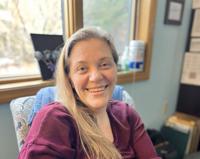
Ashley Pesek AMHC
JENNIFER OSBORN/STAFF
“It may allow for some hospital diversion,” Pesek said. “It’s effectively a drop-in center. You couldn’t sleep there, but you could spend the day.”
People dropping in could have access to a consultant for psychiatric medication if needed, go home in the evening and then come back the next day, Pesek said.
Instilling hope is a chief aim of all the health care professionals interviewed for this article.
“There’s always the opportunity to help,” said Murphy-Hughes. “That’s always the goal, to install some hope.”
One person who has hope is former Castine resident Jennifer Grant.
Grant was diagnosed with borderline personality disorder as a teenager. Access to appropriate treatment was a struggle, in part because she presented herself as a successful person. She was able to hold down a job in health care administration for years. But at home, in private, she was living a nightmare.
After moving to Castine in 2014, she tried to kill herself. She was technically dead when first responders broke down an apartment door to reach her, according to police reports.
Thanks to Castine first responders and then Hancock County Sheriff’s Lt. Chris Thornton and Sgt. Travis Frost, Grant was resuscitated.
Thornton at the time described hearing Grant’s agonal breath — the body’s sound in its final moments of life.
This past November was the 10th anniversary of the Castine incident.
Grant just turned 40. She has been married for over two years to a man she loves deeply. But, by her own admission, she’s not okay.
“I feel like I did 10 years ago,” Grant said. She described her current being as “a sluggish psychosis.”
“I know I can get myself out of it,” said Grant. “It’s just a season, and I need to go through it.”
It’s difficult for people who do not have mental illness to understand what it’s like for those who do.
Grant said her husband “didn’t understand mental health issues until he came to some of my counseling.”

Jennifer Grant, a former Castine resident, seen on her wedding day, has been navigating life, including marriage, since first responders saved her in November 2014.
MA PHOTOGRAPHY photos

Jennifer Grant holds a bouquet on her wedding day.
MA PHOTOGRAPHY
Grant, who is considered to be legally disabled by her borderline personality diagnosis, had her last setback triggered by work. She knows now that she may never be able to work full-time.
“Me working from home is better, or lesser hours,” she said. “I’m just trying to find the right fit.”
But work is really important to her, Grant said.
“That’s what gives me the most pleasure and satisfaction to be able to contribute to our household and not just sit here day after day on the couch,” she said.
“I’ve worked really hard to be where I’m at,” Grant said.
“Recovery is not a linear ride,” Grant said. “It’s definitely up and down. Some years are better than others. There are days when I have to take it hour by hour. Other times that I have to take it week by week.”
Grant credits a now-closed in-patient treatment program at Maine Med for teaching her skills to manage her diagnosis and function.
Maine needs more in-patient programs for those with mental illness, she said.
“I think we need more residential places in our state,” she said.
Also on her wish list is having children from kindergarten through high school take regular classes to learn to regulate their emotions, “not just people with my disorder. It would help everybody.”
Housing, or the lack of it, is a challenge both for those with mental illness issues and for those who work in the field.
It’s difficult to focus on getting better when you don’t have a roof over your head. Think about Maslow’s hierarchy of needs. A person needs to meet their physiological needs before moving up the hierarchy to safety, love and belonging, esteem and self-actualization.
“Housing is such a big one right now,” said Lori Wilson, manager of community services for Community Health and Counseling Services, which has offices in Ellsworth and Bangor, among other places. “The current state of housing, so many properties that may have been available for rent, many of those have become short-term rentals. That’s a problem that affects both clients and our ability to recruit candidates to this area at times. We’ve lost a lot of landlords who would work with some of our clients.”

Lori Wilson CHCS
“In social services, wages are often a challenge,” Wilson said. “The cost of living these days and the housing, it’s challenging to always find the right position to cover. Student loans are another issue.”
Wilson’s wish list includes managed housing as well as what she described as “low-barrier shelters.”
The Emmaus Center, for example, is great, Wilson said. But Emmaus is a family shelter and thus has rules that not everyone who is homeless may be able to meet.
“Being able to have some low-barrier shelters would be amazing,” Wilson said.