
A new initiative led by Cornell University and major New York construction unions is working to address one of the industry’s most pressing but often overlooked challenges — mental health and suicide prevention.
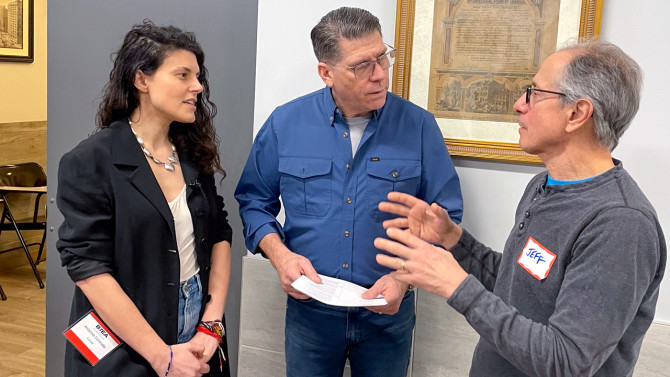 Courtesy: photo by Susan Kelley/Cornell University
The program, created by Cornell University’s ILR School Worker Institute in partnership with the Building and Construction Trades Council of Greater New York (BCTC), introduces a peer-based support network designed specifically for construction workers. The initiative encourages workers to support colleagues experiencing emotional distress and connect them with appropriate professional help.
The program is particularly significant for the construction industry, where workers face intense physical labor, high-risk environments, tight deadlines and financial pressures that can contribute to stress, substance abuse and mental health struggles.
Chris Scattone, a former ironworker who once faced severe addiction and mental health struggles, now plays a leading role in the initiative. Years ago, a fellow union member intervened when Scattone was in crisis, connecting him with help that ultimately led to his recovery.
“Somehow I ended up in the middle of the floor, and I remember being in a fetal position, and it was the first time I ever cried for help in my whole life. I remember looking at him and saying, ‘I don’t want to die, and I need help,’” Scattone said.
Today, Scattone serves as member assistance program director for the Ornamental and Architectural Ironworkers Union Local 580 and is one of about 20 instructors teaching workers how to recognize and respond to mental health warning signs among their colleagues.
“What Cornell is doing is a form of action,” said Scattone. “It’s not another slogan, it’s not another poster, it’s not another help line to call,” he said. “It’s an in-person action and I respect it, because it’s saying it’s OK to ask for help, and that’s what they’re providing.”
Peer Support Model for Construction Workers
The initiative, called the Building Trades Peer Support Network, includes a training program titled “It’s Not Weak to Speak.” The program teaches union members how to recognize emotional distress in coworkers and provide initial support before directing them to professional services when needed.
Participants learn practical skills such as how to start difficult conversations, listen effectively and assess crisis levels among colleagues. Workers who complete the training can apply to become designated peer supporters, identifiable by special stickers on their hard hats at job sites.
The goal is to create a supportive environment where workers feel comfortable speaking about stress, addiction and mental health concerns — issues that have historically carried stigma in the construction industry.
According to the U.S. Centers for Disease Control and Prevention, construction workers have one of the highest suicide rates among all professions, second only to mining. The industry also faces some of the highest drug overdose rates in the workforce.
The program aims to train approximately 1,000 union members by spring 2026, representing about 1% of BCTC’s membership.
Addressing Cultural Barriers
Industry leaders say the biggest challenge is breaking long-standing cultural norms that discourage workers from expressing emotional vulnerability.
Construction workers often face harsh conditions, demanding deadlines and hazardous environments that place enormous physical and mental stress on employees.
“We’re on work sites where there could be no floors, there could be no walls, there could be rain on you, and snow,” said Robert McCleary, a shop steward at Laborers Union Local 66. “Who wants to go out in 10-degree weather and shovel snow for eight hours, or dig a hole in 90-degree weather?”
Many workers also carry emotional trauma from witnessing serious workplace accidents.
“I watched someone get impaled in the face by an I-beam, and he never went home that day. I watched him pass away in someone’s arms right there, on the job,” said Lorenzo Curtis, an instructor at the International Brotherhood of Electrical Workers Local 3. “That is stuck with me forever.”
Historically, workers have been reluctant to discuss mental health challenges due to fears of appearing weak or unfit for the job.
“You have to be a tough guy – can’t let anybody know you’re letting your guard down,” McCleary said. “To bundle it up and have someone tell you ‘Shut up and go back to work’ – it’s not the right thing to do.”
Cornell’s Role in Building the Program
Leaders from the Building and Construction Trades Council say Cornell’s Worker Institute played a key role in designing the initiative and structuring the training curriculum.
“I don’t believe we could have really created the program and the curriculum without the assistance of Cornell,” said Gary LaBarbera, president of the Building and Construction Trades Council of Greater New York. “They did an outstanding job in creating the whole program, because it is a system of care and their expertise in that area was invaluable. I can’t even put a price on that.”
The program includes systems for reporting, documentation, referrals and professional clinical support. Union member assistance program directors are also receiving training to manage the support network effectively.
Jeff Grabelsky of Cornell’s Worker Institute explained that the initiative was designed through extensive collaboration with union leaders and workers themselves.
“We work with organizations to develop a plan that addresses their problems in the workplace,” he said. “They’re the ones who’ve been on the front lines dealing with the crisis of suicide and stress in the industry. We helped them come together in a more systematic and disciplined way, try to lift up their insights and integrate them into a coherent program.”
Expanding the Program Across New York
The long-term vision is to scale the program across New York state’s entire construction workforce, which includes more than 235,000 union members.
Training sessions involve role-playing exercises where participants practice conversations with colleagues experiencing distress. The goal is not to solve the problem immediately but to provide empathy and connect workers with appropriate support.
“They learn basically the very, very key skills of emotional first aid,” said Arianna Schindle, director of training and curriculum design at the Worker Institute. “It’s simple, but it’s a pretty advanced system. They can meet you, listen to your problem, figure out what level of distress or crisis you’re in, and get you the right referrals or supports for that level.”
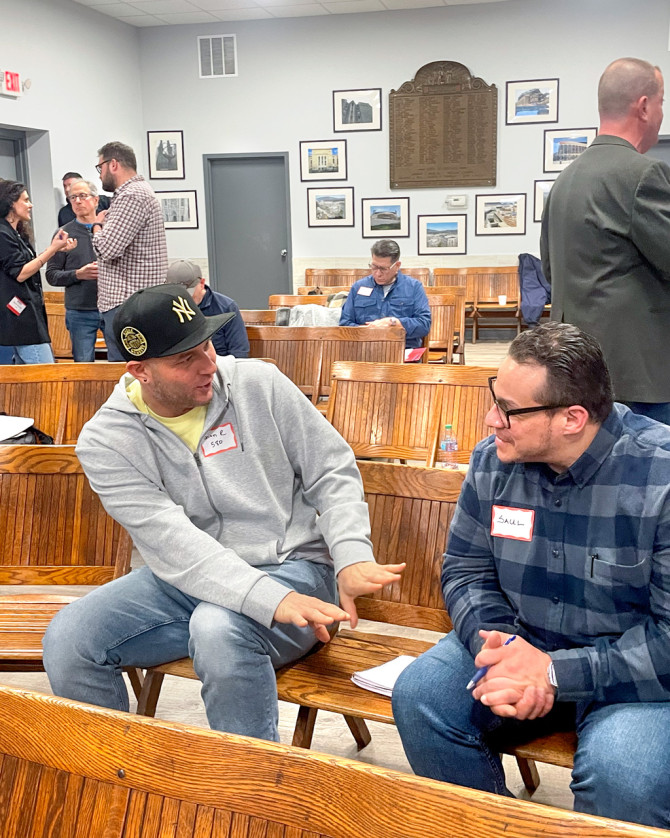 Courtesy: Photo by Susan Kelley/Cornell University
Schindle also emphasized that simply being heard can be the first step toward recovery.
“They’re talking to you because it feels unsolvable. And they need someone to know that it feels hard,” she said. “Y’all carry heavy things. That’s a heavy weight you’re taking for someone, to say, ‘I see how hard it is. I’m here. I got you.’”
Workers Helping Workers
Supporters say the peer-to-peer model is particularly effective because it comes from colleagues who understand the realities of construction work.
“It’s different coming from somebody who you know is digging that hole at the same time as you are,” said Scattone. “You know that they understand your job and how your problems might affect that job. They understand the stressors, they understand the culture.”
For workers like McCleary, who previously struggled with alcohol abuse and financial difficulties, the program is deeply personal.
Now sober for more than three years, he believes seeking help should be treated the same way workers help each other on construction sites.
“As a job steward, I’m a big advocate of doing things together. If I need help at work, I can call over someone to come help me get the job done. What would stop me from calling someone to help me out with my problems that I’m going through?” he said. “We’re a union.”
Originally reported by Susan Kelley, Cornell Chronicle in Cornell.