

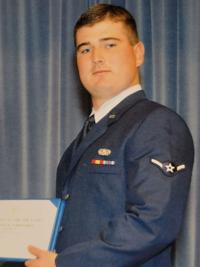
Danny Moore was an Air Force veteran from Kentucky. He was one of many veterans who struggled with PTSD from his time in the military.
PADUCAH — Danny Moore was an Air Force veteran from Kentucky who served two tours in Afghanistan. When he left the military, he was diagnosed with post-traumatic stress disorder and turned to drugs and alcohol.
Anthony Evans, a veteran and the 2nd junior vice commander of the Department of Kentucky’s Disabled American Veterans, is Moore’s brother. After Moore’s death in 2025, Evans began raising awareness for veterans’ mental health, especially for those who struggle with suicidal ideation.
“Every time I engage with a veteran, I see my brother,” Evans said.
According to the U.S. Department of Veterans Affairs’ 2025 National Suicide Prevention Report, which uses 2023 data, there were more than 6,000 veteran suicide-related deaths, with more than a hundred of those being in Kentucky. The VA also reports that 60% of those veterans who died had a mental health-related diagnosis.

Lainey Crown, a trauma-specialized clinician for first responders and military members as well as the founder of Project Reforged, said veterans’ mental health can be complex.
Lainey Crown, the founder and a trauma-specialized clinician for military members and first responders at Project Reforged in Paducah, said there are a variety of factors that can impact a veteran’s mental health after completing their service.
“A lot of veterans really struggle in the two years prior to retirement or leaving the (military), and those first five years following leaving the (military). A lot of times, the military community becomes a family for these guys and gals, and so leaving really leaves them with a big hole to fill,” Crown said.
She said it can be difficult for service members to return to their hometown because it can feel like their “friends and family members have almost moved on without them.”
“The loss of support and purpose from time in the service, then that transition out, trying to find what your next mission is and the lack of support you thought you were going to have,” Crown said.

Evans and Green encourage veterans who are struggling to join veterans organizations, like the DAV or the American Legion.
Evans, who has also struggled with his mental health from his time in the military, said it can be hard for veterans to return to everyday life after service.
“It is the loss that they have had to endure. Losing the men and women to their left and right. When they do come home, in some cases, they have lost their families,” Evans said. “So many times when we get out of the service, we disengage. We disengage from our fellow veterans.”
David Green, a veteran and a member of the American Legion Post 236, said mental health awareness and suicide deaths among veterans have been a problem for decades. He said he struggled with his mental health in the 1960s and 1970s after his time in Vietnam due to the disrespect he received from being a military member.
“We served our time, did what we had to do (and) do what we were told to do. Many of us came home and never wore any military identification in public because it was an invitation to get spit on, kicked or pushed around. So we hid it, along with all of the emotional baggage with that,” Green said.

Evans and Green encourage veterans to speak out about their mental health struggles.
Green said it can also feel “isolating” for those coming back to the States because they do not have the same camaraderie as they did in the military.
“You have fellow veterans you probably know, but there’s no institutional structure to that. You may be close friends, but you don’t have the same kind of relationship with them that you did under duress,” Green said.
Evans said he knows there is a stigma surrounding mental health, and his family never talked about it. He said he wants people to talk about their mental health if they are struggling, so they can help break the stigma and receive the help they need.
“What you’re going through matters, but how you choose to go through that matters more,” Evans said. “We love you. We need you. Your life matters…I don’t want to see one more lose their life.”
Evans and Green said they also encourage veterans who are struggling to join veteran organizations and hope the younger veterans will help spark the conversation for the older ones.

According to a new report, suicide rates are on the rise, and mental health resources are increasing in response.
Other veterans mental health factors
Crown said veterans’ mental health struggles are complex. She said another factor that might affect a veteran’s mental health is financial distress when they leave the military, especially if their spouse was unemployed during the veteran’s service.
“When you’re a service member, and you’re leaving service, where you have a fairly reliable income… You have reliable healthcare, and all of a sudden, you’re transitioning out. That can be a lot of pressure on the service members to find financial stability,” Crown said. “When you are married to someone who, due to your military service, has not really been able to build a career of their own, it’s hard to have the support of a dual income where you’re able to rely on both partners for that support.”
She said veterans can also feel like a burden to their families if they have been hurt while serving.
“There are a lot of guys, especially in the special operations community, who come out with physical injuries that may be they can’t function the way they used to,” Crown said. “They feel like a burden on their family. A burden on society.”
Increased suicide death rates
According to the 2025 VA report, the number of veteran suicide deaths decreased from 2022 to 2023, but suicide rates are increasing.
Within the Local 6 region, last year’s report lists:
Tennessee
Ranked 9th in the nation
Veteran suicide rate of 48.2 per 100,000 veterans
210 veteran suicide deaths
Kentucky
Ranked 17th in the nation
Veteran suicide rate of 39.3 per 100,000 veterans
103 veteran suicide deaths
Missouri
Ranked 24th in the nation
Veteran suicide rate of 37.5 per 100,000 veterans
147 veteran suicide death
Illinois
Ranked 42nd in the nation
Veteran suicide death rate of 25.6 per 100,000 veterans
160 veteran suicide deaths
Crown said the suicide rate likely increased due to those who served in Afghanistan.
“You’re still coming off the end of Afghanistan. The way Afghanistan ended negatively impacted a lot of that,” Crown said. “We saw a massive uptick in mental distress following that.”
Although there is a rise in suicide death rates in veterans, the report also shows that there is an increase in resources for veterans.
Crown said 73,000 nonprofits in the U.S. support the military community, and the VA has a mobile app to help those create a safety plan if they struggle suicidal ideation.
For those who are struggling and have suicidal thoughts, the National Suicide Hotline is open 24/7 and can be reached by calling 988. For veterans seeking mental health services, click here.