
When a veteran in crisis told Britni Jacobson he was afraid to seek mental health treatment because he didn’t want to be away from his children, she shared a painful memory of her own — spending Mother’s Day separated from her kids while getting help.
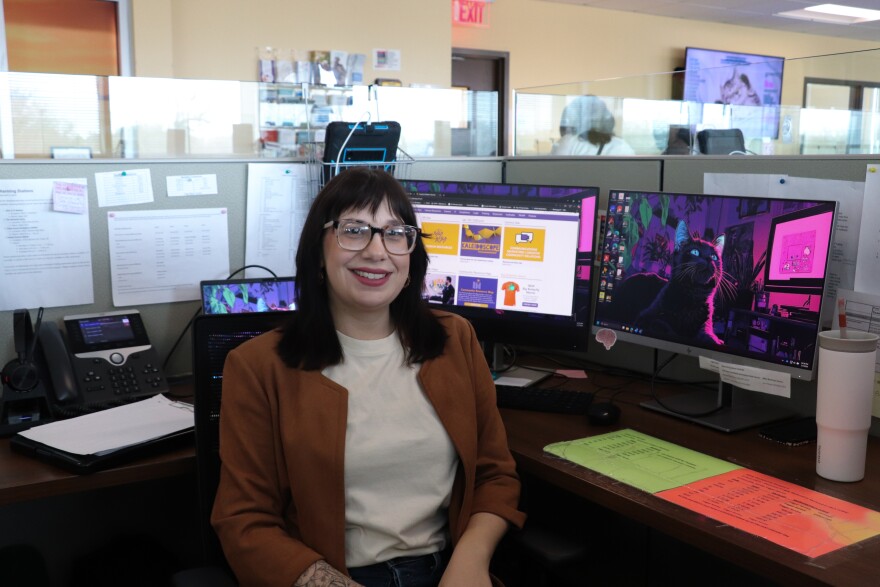
Jacobson is a peer recovery support specialist at Family & Children’s Services in Tulsa, where she works on a mobile crisis team responding to people experiencing mental health and substance use emergencies.
She uses her lived experience struggling with mental illness to inform her work.
House Bill 4275 would allow certified behavioral health case managers and peer recovery support specialists, like Jacobson, to keep their professional certifications while working for municipalities, counties and approved organizations, expanding where they can serve people in crisis.
Under current law, certification is tied to employment with the state, certain state contractors, tribal organizations or the Department of Veterans Affairs. Seeking employment outside those options means losing a state certification.
Representative Nicole Miller, R-Edmond, authored HB 4275. She said it was designed with first responders, county sheriff’s offices and local police departments in mind. Peers and case managers working for municipalities and in county settings like fire departments are becoming increasingly common.
Healthy Minds Policy Initiative, an Oklahoma nonprofit working to improve mental health across the state, advocated for the bill.
“Allied mental health professionals like peers and case managers are such an important part of the behavioral health workforce,” said Brittany Hayes, Healthy Minds policy director. “We want to see these types of professionals be able to work in more settings — like in county courts and on teams with fire departments — but as it stands now, they would have to give up their certification to do so.”
Sierra Pfeifer / KOSU
/
KOSU
Britni Jacobson works as a peer recovery support specialist for Family & Children’s Services in Tulsa.
A 2023 report from Healthy Minds found that Oklahoma has extreme shortages of key mental health professions, and meeting mental health needs in the state should be a priority for policymakers.
The number of licensed marriage and family therapists, psychologists and clinical social workers all fall below recommended totals. The nonprofit recommends “tapping in” to paraprofessionals’ ability to expand the limited workforce and suggests that targeted efforts to retain positions and promote career growth will help address the shortage.
Jacobson said her role at Family & Children’s Services is “not just a job.” Her experiences give her unique skills to help people.
“This is where I’m supposed to be,” Jacobson said. “It was my dream job to work in mental health, so being able to have this opportunity as a peer is like … I can’t even explain that feeling. It’s just really awesome. I’m surrounded by therapists and case managers, and I learn so much every single day.”
She said she knows what it’s like to be navigating mental health challenges, and her past gives people a reason to trust her.
For instance, after she opened up her time at an inpatient facility with the Tulsa veteran worried about seeking out mental health care, he felt empowered to go.
“We both had tears in our eyes,” she said. “And he made the decision to go get help.”
This report was produced by the Oklahoma Public Media Exchange, a collaboration of public media organizations. Help support collaborative journalism by donating at the link at the top of this webpage.