
I have been playing soccer since I was four years old. Sports have taught me how to show up, work hard, and keep going even when things are not easy. Being an athlete has shaped how I approach challenges, both on and off the field.
But over time, I’ve also learned that showing up isn’t just physical — it’s mental.
As athletes get older, the environment around sports changes. The competition increases, expectations rise, and the pressure can feel constant. While the game itself stays the same, what it asks of you mentally often grows.
I notice it in small ways — when the rhythm on the field feels different, when my confidence wavers, or when one split-second decision changes how you’re perceived. These things are not always talked about, but athletes feel them every day.
My older sister, Alyssa, was a soccer player and a ski racer. She loved sports, and they were a big part of how we grew up. In our family, athletics were never only about winning. They were about discipline, commitment, and learning who you are when things feel challenging.
In 2019, we lost Alyssa after she struggled with her mental health following a series of concussions. We later learned that concussions can be linked to serious mental health challenges and an increase in suicide, especially in young people.
Since then, my family has been working to raise awareness about the connection between concussions and mental health, including advocating for a new bill at the state Capitol — “Alyssa’s Act.” The bill would require youth sports coaches to receive basic mental health training and ensure parents are informed about potential mental health impacts after a concussion.
Like many athletes, I’ve experienced injuries, including concussions. At the time, my focus was always on recovery and getting back to the game. Looking back now, I see how important it is to recognize that recovery is not always just physical, and that the mental side of returning to play matters too.
Athletes are often told to be mentally tough. To push through and move on. Resilience matters, but I have learned that real mental strength also comes from having support and knowing how to manage pressure in healthy ways.
That’s where coaches come in.
Coaches play an important role in shaping the environment around sports. The tone they set influences how athletes support one another and how safe it feels to take risks, learn, and grow. When effort and development are valued, athletes are more likely to stay engaged and confident.
Colorado Crisis Line: 1-844-493-8255, coloradocrisisservices.org. Chat online or text TALK to 38255.
Mental Health First Aid: mhfaco.org. Get trained to recognize the signs and how to respond.
American Foundation for Suicide Prevention: afsp.org. Join one of their upcoming walks for awareness in Colorado.
Crisis Text Line: crisistextline.org. Text 741741 from anywhere in the nation to reach a counselor.
Second Wind Fund: thesecondwindfund.org. Links students to mental health professionals and pays for up to 12 counseling sessions.
My coaches have taught me that even when the pressure builds, we still have to show up for ourselves and for our team. I believe coaches should have the tools to recognize when an athlete may be struggling and help connect them to support.
Alyssa’s Act would make sure coaches across Colorado receive basic mental health education — including how to recognize signs of anxiety, depression, and the potential mental health effects of concussions.
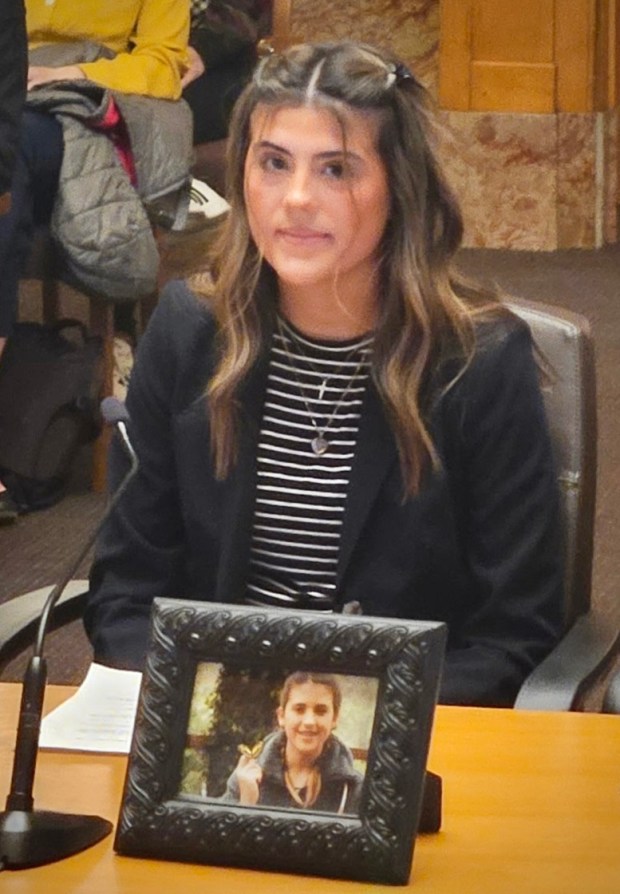 Emily Peterson testified in favor of a bill named for her sister, Alyssa’s Act, Senate Bill 60, on Thursday, March 12, before the Colorado Senate Health and Human Services Committee. (Photo courtesy of the Peterson Family)
Coaches’ education matters because early awareness can make all the difference.
Listening to athletes and recognizing the mental side of competition does not weaken sports. It strengthens them. When athletes feel supported, they become better teammates, stronger competitors, and more resilient people.
Sports are not just about results. They are about learning how to handle pressure with perspective, respect, and consistency. Those lessons matter whether you are the top player on the field or someone who keeps showing up because the process itself is worth it.
That is why I keep coming back to the field. Not because it is easy, but because it continues to teach me how to grow. And it’s why I hope we make sure every athlete has the support they need to keep showing up, too.
Emily Peterson is a student-athlete and youth advocate from Arvada, Colorado, helping advance Alyssa’s Act (Senate Bill 60), which has passed the Senate and is now moving through the Colorado House.
Sign up for Sound Off to get a weekly roundup of our columns, editorials and more.
To send a letter to the editor about this article, submit online or check out our guidelines for how to submit by email or mail.