
by Beth Trimarco

The California Department of Education has joined with Blue Shield of California to offer free Youth Mental Health First Aid training from the National Council of Mental Wellbeing.
The eight-hour English and Spanish trainings run through June and equip adults to recognize signs of mental health or substance use challenges in youth, respond in both crisis and non-crisis situations, and connect students to appropriate professional support. Participants learn how to start difficult conversations, assess risk and create action plans. The program is designed for adults working with youth ages 6-18 in California schools, including administrators, teachers and staff.
Today, California’s 5.8 million K-12 students are navigating an escalating mental health crisis, driven by the pandemic, economic strain and social media. In Blue Shield’s recent BlueSky Youth Mental Health Survey, 94% of Gen Z youth reported regular mental health challenges — a generation in distress.
The good news: we can do something about it.
To address this, California now requires all public school staff to complete evidence-informed youth behavioral health training, identified by the California Department of Education as Youth Mental Health First Aid (YMHFA). By July 1, 2029, all local education agencies must certify that 100% of certified employees and 40% of classified staff with direct contact in grades 7-12 have completed training.
Blue Shield has supported this work since 2021 through its BlueSky Youth Mental Health Initiative, and has directly supported Youth Mental Health First Aid training for 9,071 educators, school administrators, parents and other caring adults statewide.
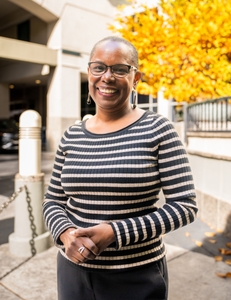
Paula Ambrose, Blue Shield of California
“When a child needs CPR at school, we expect a teacher to act until emergency help arrives,” said Paula Ambrose, who leads Blue Shield’s BlueSky Youth Mental Health Initiative. “Mental health crises deserve the same urgency. Youth Mental Health First Aid empowers educators to support students in distress and serve as a bridge to ongoing, holistic care.”
Often, the first person a student turns to isn’t a therapist. It’s a trusted teacher, coach or mentor. Many training participants report immediate impact: 94% of respondents reported feeling confident assisting a young person in emotional distress, including with suicidal ideation or substance abuse challenges, and many educators have used the training to intervene in real-time crises, according to an evaluation survey from the University of California San Francisco, based in the Philip R. Lee Institute for Health Policy Studies.
One educator shared in an evaluation survey: “The morning after the program, one of my students was teary and asked to step outside. As we were trained, I asked if she was thinking about suicide. I was shocked when she said yes. I connected her with the school counselor immediately. She seemed to have everything going for her, but she had been hiding her feelings behind a happy face. Now she’s getting the support she needs.”
According to Karrie Sequeira, director at the California Department of Education, statewide implementation is a major step forward, as the mental wellness of our school communities is a priority. However, because it is currently an unfunded mandate, school districts must identify the necessary resources to implement youth mental health training, as required by Senate Bill 153. Blue Shield’s early, multi-year investment has helped jump-start this effort, establishing credibility and attracting additional partners.
“In alignment with SB 153, to train 100% of certificated staff and 40% of classified staff, it will require significant resources,” said Sequeira. “Blue Shield’s partnership in prioritizing the mental wellness of our school communities, by providing seed funding, has been instrumental in establishing a strong foundation, ensuring ongoing support, and positioning us to pursue additional resources to extend and expand our offerings — and we now have data demonstrating the impact on those receiving the training.”
Strengthening this first line of defense helps identify youth depression earlier, address anxiety, intervene in substance use and reduce suicide risk — ensuring more young people receive help before their struggles escalate.
“There can be a ripple effect,” said Ambrose. “Over time, trained educators may support many students, some of whom are facing real challenges. Even small moments of understanding and early support can make a difference, helping young people feel seen and get connected to the care they need and deserve.”
To learn more about upcoming trainings or schedule a future training, visit the California Department of Education, follow on Facebook, Instagram, or X, or email OSBHP@cde.ca.gov. Space is limited to 30 participants per session.
Resources