
As spring arrives, crocuses push through snow with determined resilience, emerging stronger and appearing even more beautiful after surviving winter’s harsh grip, a natural metaphor of renewal that forms the heart of “Emergence,” an upcoming art exhibition at 78th Street Studios.
“Emergence” explores mental health struggles through the collaborative lens of photographer Johnny Joo and painter Tessa LeBaron. It opens Friday, April 17 and runs through Friday, June 19 in Suite 215 Gallery within 78th Street Studios.
LeBaron and Joo say the exhibit represents their personal journeys as they move through creative blocks and explore universal themes of mental health, resilience, and transformation.
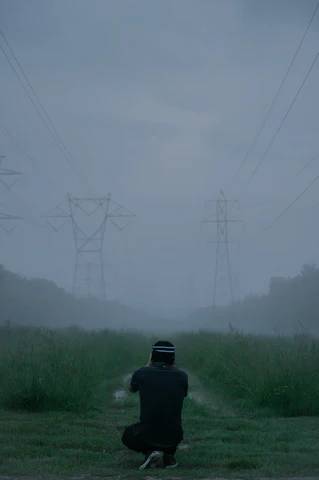 Johnny JooBreaking through creative barriers
The genesis of “Emergence” began more than a year ago when Joo approached LeBaron about collaborating. Both artists found themselves facing the challenge of balancing their commercial work with their own personal artistic expression.
“One of the things that we both struggle with is not having time to do the kind of art that we want to make,” LeBaron explains. “We both go through artist blocks sometimes. I think one of the themes of the show is kind of like emerging out of the artist block.”
While both artists say they enjoy their commercial work—Joo’s wedding photography and LeBaron’s pet portraits and murals—they also say they want to create more personal pieces.
Themes of struggle and transformation
The scope of “Emergence” extends far beyond artistic challenges, addressing broader mental health struggles that resonate widely.
“It’s just a mental struggle that everybody can feel,” Joo says. “Everybody has that moment where you get so deep in a hole—where you feel like you can’t get out.”
LeBaron adds that the process of emerging from those moments is rarely simple or linear.
“The idea I would like to convey in ‘Emergence’ is that the transitional phase of emerging out of depression is not a pretty, easy, or quick process,” she says. “Any profound change takes time, and we must accept the natural rhythms of nature. We don’t always see what we want when we look in the mirror. Life’s a mirror, not a wish list, but we can mold ourselves into being the best version of who we are.”
Both artists draw parallels between human resilience and the cycles of the natural world—growth, decay, and renewal.
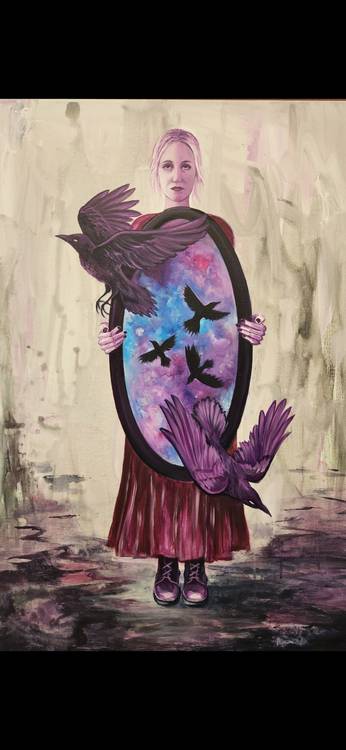 Life’s a mirror, not a wish list, says LeBaronJoo describes it as “the ebb and flow” of healing—likening the experience to flowers pushing through late winter snow. “Every time you do emerge… it’s like the passing winter,” he says. “The snow covers the flowers, right? And they come back every year—everything comes back strong.”
LeBaron echoes that sense of reflection and self-awareness in her work.
“We don’t always see what we want when we look in the mirror,” she says. “Life’s a mirror, not a wish list—but we can mold ourselves into being the best version of who we are.”
Nature reclaiming space
A shared visual language unites LeBaron’s and Joo’s work: The concept of nature recovering what was once lost or abandoned.
“For Johnny and me, our work has similar themes of reclamation and nature overcoming places and figures,” LeBaron explains. “We want to convey the growth that we see in nature and how Mother Earth emerges and takes back what is hers.”
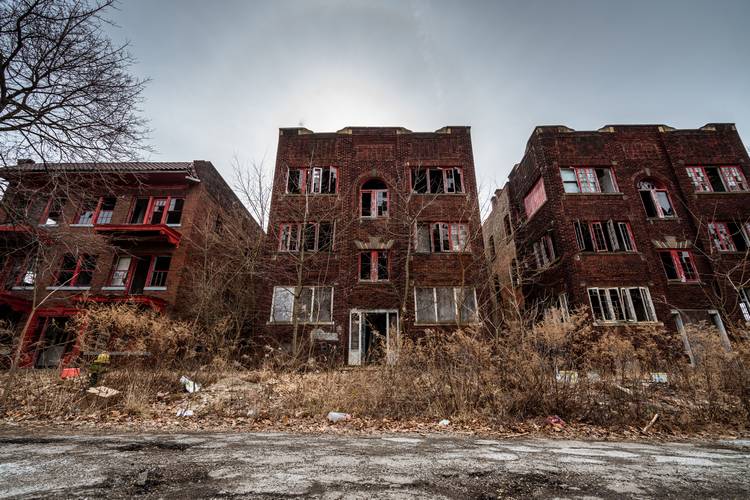
Joo’s photography captures abandoned homes overtaken by vines and trees, while LeBaron’s paintings depict human figures intertwined with flora and fauna—blurring the line between person and environment.
His images challenge viewers to reconsider their perceptions.
“People pass by something like that and think it’s ugly… an eyesore,” Joo says. “But going into something like that and being able to see the beauty in it—that’s everything.”
Finding beauty in abandoned places
Joo’s photography, which is known for capturing abandoned and forgotten places, is a metaphor for the show’s themes. His images of plants growing through the ruins of abandoned houses—vines creeping across old couches and beds—challenge viewers to see beauty where others might only see decay.
“People told me… nobody is going to want to see pictures of some abandoned house, nobody is going to want to hang that in their living room,” he recalls, but their predictions were wrong.
“Then I started selling prints, and people actually connected with it,” Joo continues. “It was like, ‘Oh, people actually like this,’ and ‘people resonate emotionally with this.’ It’s a lot of positive coming from the negative—I think that’s really cool.”
Joo says the appeal lies in “finding beauty in that darkness”—a theme that runs throughout the exhibit. “You have to be able to see past that grime and trash, and be able to make something out of it,” he says.
New frontiers and personal vulnerability
“Emergence” also marks new creative territory with collaborative works and a stop-motion film—an entirely new medium for both artists.
The film, created by LeBaron, features Joo moving through stages of depression: bad habits, imposter syndrome, and internalization.
“We are putting ourselves in the artwork,” LeBaron says. “Johnny starring in the stop motion is interesting because we don’t usually see him in front of the camera—he’s always behind it.”
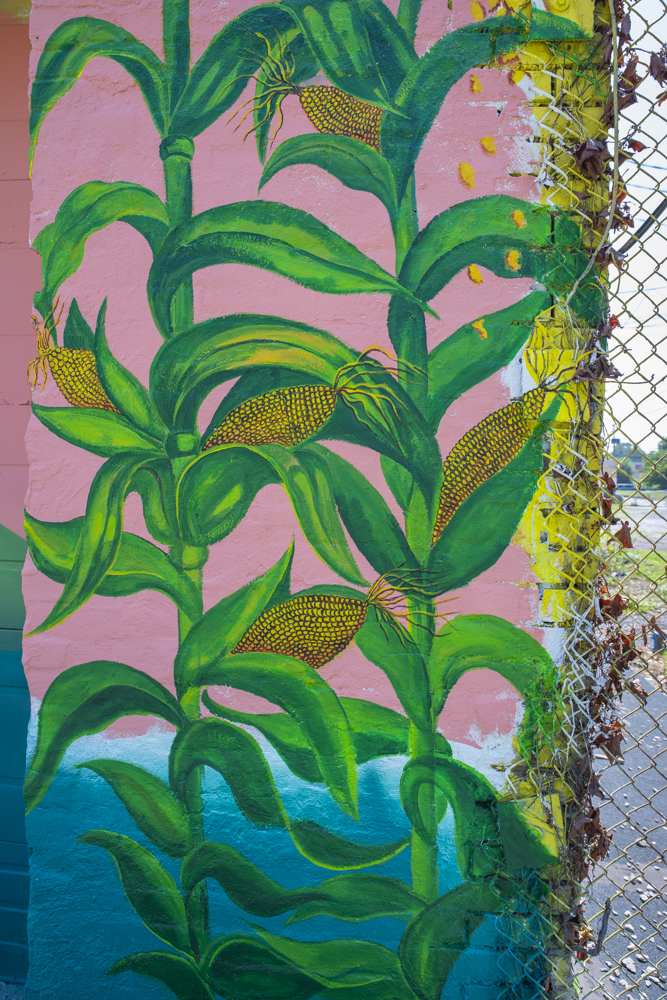 Guatemala mural detailThe role reversal offers viewers an intimate perspective on the two artists, with Joo’s photographs of LeBaron and her own self-portrait further deepening that sense of mutual vulnerability.
“This show will be a new way to see ourselves and our work in a new light,” LeBaron says.
The stop-motion piece also serves as a deliberate contrast to the rise of artificial intelligence in art.
“The stop motion aims to show that we don’t need AI to be technical or artsy in today’s digital era,” LeBaron says. “These videos are handcrafted—one frame at a time—and show that art takes time, involving the human process.”
She contrasts that process with what she sees as the limitations of AI-generated work. She describes it as lacking “humanity… soul or wit.”
Joo agrees, noting that emotional connection is at the core of meaningful art.
“You can’t ask an AI what the emotional connection is,” he says. “Because robots don’t go through mental health.”
Facing fears and offering hope
Additionally, the artists don’t shy away from difficult topics. Joo says he plans to include work addressing his struggle with emetophobia, a condition he says once consumed his life.
 Untitled photo“It’s something people don’t talk about,” he says. “But the more we’re open about it… the more we realize we’re all human.”
Ultimately, the artists say they hope “Emergence” creates a sense of connection for viewers who are navigating their own struggles.
“Any little bit of help that we can give to people—to calm a mental struggle—that’s a big part of the goal,” Joo says. “You want to reach people and say, ‘Hey, you’re not alone.’”
The exhibition opens with a reception on Friday, April 17 from 5 p.m. to 9 p.m. at Suite 215 Gallery inside 78th Street Studios. It will be open during Third Fridays events through June 19, with additional programming to be announced.
“Emergence” runs from April 17 through June 19 at Suite 215, 78th Street Studios, 1305 W. 80th Street, Cleveland 44102.