
By Taylor Knopf
Every Saturday, Linda McDonough picks up her 26-year-old daughter in Raleigh so they can spend the weekend together at her home in Chapel Hill. Typically, they go thrift shopping, visit family and friends and take in a church service before she takes her daughter back.
There was a point at which this routine — so ordinary and unremarkable — seemed almost unimaginable.
McDonough started fostering her daughter at seven weeks old and later adopted her. She had a challenging childhood. She has a genetic disorder that has resulted in developmental disabilities and a serious mental illness. She cycled in and out of what McDonough calls “a circuit of hospitals.”
After nearly a year in a state-operated psychiatric hospital, McDonough recalled sitting in a conference room with her daughter’s care coordinators as they scrolled through a list of possible places for her to live after discharge.
One coordinator would suggest a name, the other would shoot it down. The answer was always the same: The mental health programs wouldn’t accept her with a developmental disability, and disability programs wouldn’t take her with a mental illness.
“I just sat there and cried because there was no place for her,” McDonough said. “But they shoehorned her into this home, and she’s done fairly well there.”
For more than a decade, her daughter has lived in an alternate family living home with two other people with disabilities and an older married couple who are their caregivers. McDonough obtained legal guardianship over her daughter when she became an adult, which allows her to make decisions about where she lives and what health interventions she receives.
McDonough has always been a fierce advocate for her daughter and others with disabilities. She founded — and still teaches at — a school in Durham for children with complex behavioral health issues. It was a long, hard-fought journey, but McDonough’s daughter eventually graduated from an occupational high school program. She’s found a community at her church and has a best friend she likes to visit.
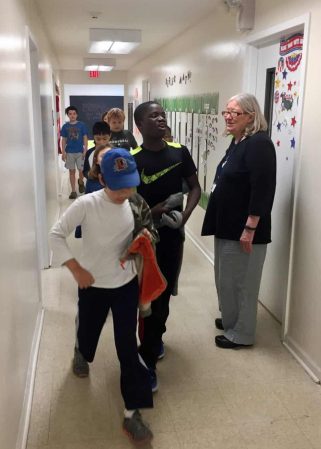 Linda McDonough greets students at Hope Creek Academy, a school for children with behavioral health needs in Durham that she helped start.
McDonough said her daughter is able to live a halfway normal life with her housing arrangement, the services she receives through the NC Innovations Waiver — funded by Medicaid — and finding the right combination of psychiatric medication. Without these things in place, McDonough said, she has no doubt that her daughter would be on the street asking for money.
“It’s always precarious,” she said. “I know everything could come crashing down any minute.”
McDonough has fought to keep her daughter out of the revolving door situation where so many with severe mental illness end up — jail cells, emergency rooms and psychiatric hospitals. This problem is getting worse in North Carolina and has drawn the attention of state legislators, who are now debating what to do about it during meetings of a special House committee formed to examine the involuntary commitment process and public safety.
But there’s been tension around what are the best solutions. Some lawmakers on the committee want to build more psychiatric hospitals, saying that some people with severe mental illness would be better served living in institutions and off the streets. Meanwhile, people who work closely with this population say community-based supports work, but North Carolina has never fully funded and built an effective system.
Since November, lawmakers from the state House of Representatives have been meeting monthly to hear about the issues plaguing the state’s intertwined mental health and criminal justice systems. The House Select Committee on Involuntary Commitment and Public Safety is expected to release a report in April with its policy recommendations.
When Kelly Crosbie, director of mental health at the N.C. Department of Health and Human Services, addressed the committee in December, she talked about the work her department is doing to expand clinical services and other recovery supports in the community.
“We’ve been working very hard on not just clinical models of care … but people with severe mental illness need safe and stable places to live, which we do not have enough of,” Crosbie said. “They also need communities. They need things like clubhouses and peer support specialists so they actually have buddies that know and love them and aren’t just trying to hospitalize them.
“We’re actually trying to build a community infrastructure that actually supports these individuals,” Crosbie continued. ”Medication alone is not going to help the fact that they don’t have housing, or they don’t have stable communities that understand their illness and actually help them maintain their recovery.”
Rep. Carson Smith (R-Hampstead) told Crosbie that based on his experience as the former sheriff of Pender County, he’s concerned about the people who refuse to take their psychiatric medications and are continually picked up by officers and taken to jail or the hospital.
“I don’t have a problem with the community-based model. I just think there are some folks that it’s not meant for,” he said. “[…] for these persistent ones, it’s a revolving door. And you say, build clubhouses or whatever, the government can’t do that, but we can build hospitals. We can build places where they can stay and be safe.”
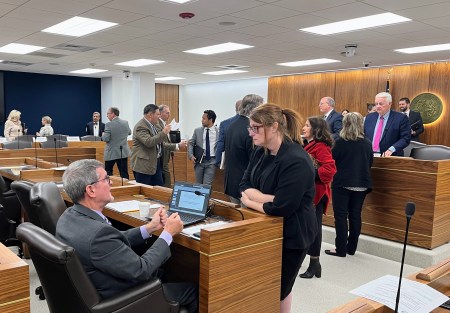 Kelly Crosbie, director of mental helath for DHHS, and Rep. Carson Smith (R-Hampstead) talk after the committee meeting on involuntary commitment and public safety after the two went back and forth over inpatient versus community-based care for people with severe mental illness.
Rep. Donna White (R-Clayton) has echoed Smith’s sentiments. White previously worked as a nurse at John Umstead Hospital, a state-operated psychiatric facility that is now closed, and she remembers clients who she said needed a strict routine and constant supervision from trusted caregivers to maintain stability.
“We know that everybody cannot live outside of an institution,” White said during the January meeting. “We need to have qualified people in those hospitals that were designed to keep people in a safe environment where they are much happier and they’re not out there wreaking havoc among the general population.”
Rep. Tim Reeder (R-Ayden) co-chair of the committee and an emergency department physician, told NC Health News that the committee hasn’t had deep conversations about re-institutionalizing people outside of the public meetings. He said he thinks there could be some middle ground for supportive housing that may be more appropriate, such as group homes, in the same way medically complex patients live in skilled nursing facilities.
Need for more supportive housing
Though some lawmakers may want people with serious mental illness to live — removed from society — in psychiatric facilities, legally, that’s not an option.
Over the past 30 years, there has been a shift toward recognizing the rights of people with disabilities, including mental illness, to have more autonomy. The 1990 Americans with Disabilities Act dictates that they cannot be discriminated against because of their disability, and they must be included in community life. The 1999 Supreme Court decision Olmstead v. L.C. went a step further, mandating that people with disabilities live in the least restrictive settings possible. The main plaintiffs in that case were two women with severe mental health disabilities who had been confined to a psychiatric facility in Georgia. The case was initiated after they petitioned for their release and they were denied.
In 2012, North Carolina entered a settlement agreement with the U.S. Department of Justice over its lack of compliance with the Olmstead decision. The state began a process of moving people with disabilities out of institutions — often ones that lacked the resources to provide them with appropriate services — and into independent living as part of the Transition to Community Living initiative.
So the question remains: What do people with severe mental illness need to safely live in the community?
Marti Knisley, the independent reviewer of that settlement agreement who documented the state’s compliance progress for more than a decade, said effective outpatient services paired with supportive housing works. Over the past 11 years, she said only 5 percent of the people discharged from state psychiatric hospitals who moved into supportive housing were readmitted to those hospitals.
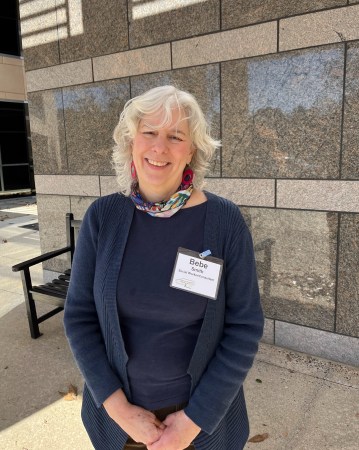 Bebe Smith is a social worker and long-time advocate for people with severe mental illness in North Carolina.
North Carolina used to have more housing options for people with severe mental illness, but those largely disappeared with the privatization of the mental health system in the early 2000s, said Bebe Smith, a social worker and longtime advocate for people with mental illness.
She remembers when there were different levels of mental health group homes, ranging from more independent living options to high-management settings, where residents received supervision and medication management. Now, she said, there are some scattered sites of independent housing for people with mental illness as part of the Olmstead settlement, but many of those people are left without the services and case management that they need.
Additionally, people with severe mental illness sometimes need help managing their rent or dealing with home repairs or an adverse event like a bedbug infestation, explained Elizabeth Barber, executive director of Threshold Clubhouse. Clubhouses are a place for adults with serious mental illness to learn life skills, receive vocational training and find community among their peers.
People with severe mental illness want and need to live a meaningful life in the community, but to do that they need things like socialization and vocational support, Barber said. Providing those opportunities doesn’t always fall under the state’s clinical service criteria.
The clubhouse model exists to fill those gaps, Barber said.
And the model pays off. In 2025, only 8 percent of active Threshold members were admitted to a hospital, Barber said. Clubhouse care runs about $100 a day per member, while a psychiatric hospitalization can cost thousands. Barber said there are seven clubhouses like Threshold around North Carolina and that the state plans to open a handful more in the coming years.
Ali Swiller, associate director of Threshold, said that people getting basic psychiatric services may only see their psychiatrist every three to six months to check in.
A lot can happen between those appointments.
“At the clubhouse, because we see people often and know them probably the best out of any treatment that they’re engaged with, we’re able to advocate for that outpatient treatment much more quickly when something arises before it gets to a crisis level,” Swiller said. “And we’re able to provide collateral information to that practitioner to get them an appointment much more quickly and to avoid that hospitalization.”
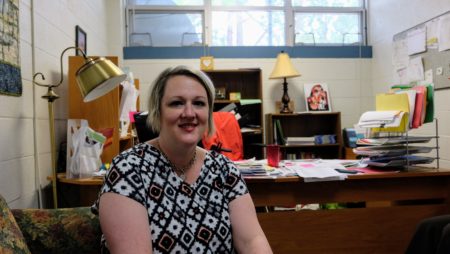 Threshold Associate Director Ali Swiller has been working at the clubhouse since 1996.
Sometimes Threshold staff even go with a participant to an appointment.
But a state Medicaid policy is limiting how many people can access Clubhouse support. Since 2006, a service exclusion has prevented people enrolled in Assertive Community Treatment (ACT) — an intensive outpatient clinical service meant for people with serious mental illness — from also receiving clubhouse services at the same time. Nonetheless, Threshold has continued serving some clients receiving ACT services at no charge.
“We have a couple of folks that come here almost every day that are receiving ACT,” Barber said. “From our perspective, it’s pretty clear that that is a complementary service that would really produce much better results for folks on ACT if they could also receive Clubhouse services.”
Another issue is that as people qualify for Medicare at age 65, that federal payer of health services for older adults doesn’t cover the Clubhouse model — or a host of other intensive outpatient mental health services. Those who work closely with people who have severe mental illness say the system needs to be structured to care for individuals across their entire lifespan.
Effective services across the lifespan
For people living with serious mental illness, the need for support doesn’t end after a hospitalization or a crisis. The state needs to think in terms of decades, advocates say, not just solving today’s crisis and moving on.
“Managed care goes for short-term episodes of care,” said Smith, the longtime social worker. “A lot of the more enhanced services have very strict eligibility criteria, and you have to have Medicaid to get them.”
“The way that I think about something like schizophrenia is that you really have to take a life course perspective,” she added, noting that the need for care can stretch for years, even a lifetime.
Smith said that means early intervention when symptoms first appear, ongoing psychiatric care and medication management, meaningful case management that helps people stay engaged in treatment and navigate benefits, and stable housing with the right level of support. She said there should also be more engagement of and education for supportive family members of people with severe mental illness.
Another issue is that many of the intensive community mental health services exist on paper, but fall short in practice. Knisley, the independent reviewer of North Carolina’s Olmstead settlement agreement, said the state’s ACT teams are a prime example. They are supposed to function like hospitals without walls, bringing rigorous services to people where they are.
But of the state’s 87 teams, her review found that only about six are truly effective.
Knisley said North Carolina’s ACT payment model doesn’t incentivize intensive services. She said teams are paid the same regardless of how often or how long they see patients or whether all the positions on the team are filled. ACT teams also lack a tiered structure to match the level of services to patient needs, Knisley said, adding that these factors lead to inconsistent and sometimes poor practices.
She said many of the folks she talks with at the state’s mental health managed care organizations who run the ACT teams want to improve them but often lack the guidance and tools to do so. Knisley said meaningful performance improvement is far more complex than ticking boxes on a checklist.
Compounding the problem, Knisley said, state dollars for mental health services have dwindled over time, and policymakers shifted to a reliance on Medicaid to fill the gaps. She notes that Medicaid doesn’t always cover the most effective services, meaning overall spending can appear stable even as the quality of care declines.
This could be exacerbated over the coming decade as Medicaid cuts mandated by the One Big Beautiful Bill Act go into effect.
The only way to stop the revolving door of jails and hospitals for people with severe mental illness, these advocates say, is for the state to truly commit to an intensive outpatient system with the right housing and social support.
This article first appeared on North Carolina Health News and is republished here under a Creative Commons Attribution-NoDerivatives 4.0 International License.