

Julia Thomas
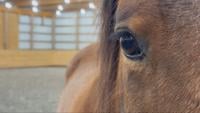
NOVINGER, Mo. — At Guardian Hills, healing doesn’t start with sitting in a room and talking. Instead, it often begins in an arena — alongside a horse.
Located north of Novinger, Guardian Hills offers weeklong retreat programs for veterans and first responders focused on post‑traumatic growth. The programs serve those dealing with post‑traumatic stress, moral injury and military sexual trauma, using equine‑assisted therapy as a core part of the healing process.
Rather than traditional talk therapy, participants work with horses under the guidance of licensed mental health professionals.
“We partner with mental health professionals, and the horses are just basically a tool,” said Penny Kittle, Guardian Hills’ equine director. “We have planned activities, experiential learning, hands‑on activities, all on the ground. We don’t do any riding. We play games and do different activities with the horses, and our therapists observe.”
Kittle said equine‑assisted therapy can be especially effective for people who struggle to communicate in traditional counseling settings.
“People who have a hard time talking in traditional talk therapy will sometimes communicate with the horses,” she said. “Horses require constant communication, and they evaluate your behavior and read your emotions immediately and without bias.”
Staff say horses often respond to stress or calm energy before a participant ever speaks, giving insight into how someone is feeling in the moment.
“One of the first things we do is everybody comes into the arena, and they evaluate the horses and just look at them,” Kittle said. “I usually have four horses running loose, and they get to identify which horse they think resonates with them the most. Then we get in a group and we talk about why.”
For many participants, that first interaction comes with hesitation. Some arrive unsure of what to expect, and others say they are uncomfortable around horses.
“When they come in Wednesday morning for that first time, a lot of them will say, ‘I don’t really like horses’ or ‘I’m not comfortable around horses,’” Kittle said. “But by the time free time rolls around on Thursday afternoon, and by the time they go home Saturday morning, almost everybody has spent one‑on‑one time with the horses.”
Staff say relationships with the horses tend to form naturally and without pressure, often creating meaningful moments for participants struggling with trust or self‑esteem.
“The horses are just so giving,” Kittle said. “They can sense when somebody is hurting or when somebody needs that extra attention. When they choose to walk up to a guardian who’s struggling with self‑esteem or emotions, and they put their head in their chest or on someone’s shoulder, you just see them melt.”
In addition to equine activities, Guardian Hills’ retreat programs include archery, wellness education, physical exercise and guided reflection. The goal, staff say, isn’t to eliminate trauma but to help participants learn how to live with it in healthier ways.
“This is not a place where you come in and, in a week, you’re cured of problems,” said Guardian Hills President Daniel Slawski. “No one is ever cured of trauma. You learn not only to embrace the trauma but also to grow from it.”
Staff say taking the first step toward healing often comes with uncertainty, but for many who attend Guardian Hills, it becomes the beginning of long‑term growth and connection.