
In the aftermath of George Floyd’s murder and the resulting nationwide protests against racism and policing, American cities declared a crisis. The word traveled quickly, from city halls to cable news to boardrooms. Along the way, the crises started multiplying: Police violence was a crisis, but so was mental illness, homeless encampments, overdoses. The language did political work; it conveyed urgency, signaled moral seriousness, and justified action.
Out of this state of emergency emerged a wave of nonpolice crisis response programs. Cities across the country—from Albuquerque and Denver to Atlanta and New York—promised to send clinicians and peer counselors, instead of armed officers, to respond to mental health calls. A humane alternative to policing had arrived. Reform was underway. But nearly six years on, many of these programs are faltering. Most are grossly underfunded. Others are limited to narrow call categories. Almost all lack meaningful, sustained follow-up services. In some cities, they have been quietly subordinated by police departments or constrained by dispatch protocols that keep them marginal at best. They are praised as progressive victories while operating at a scale far too small to alter the conditions that generate the calls in the first place.
To understand why, it helps to turn to the anthropologist Janet Roitman and her concept of “anti-crisis.” Roitman argues that the declaration of crisis does not simply describe a rupture; it frames events in ways that obscure the political structures that produced them. Crisis narratives isolate failures as exceptional breakdowns—temporary malfunctions in otherwise legitimate systems. It names an emergency while protecting the status quo by concealing causal factors. The American turn to “crisis response” in mental health and police reform fits this pattern precisely.
Consider New York City. The city’s flagship nonpolice program, Behavioral Health Emergency Assistance Response Division (B-HEARD), was launched in 2021 to considerable fanfare. Teams of EMTs and social workers would respond to certain 911 mental health calls without police. It was described as a transformation in public safety and is now slated to play a central role in Mayor Zohran Mamdani’s proposed Department of Community Safety—one of the signature policy plans he campaigned on.
But more than four years after B-HEARD’s launch, the program remains geographically limited and severely constrained by dispatch rules that divert many calls back to police. Even when and where it operates, the teams encounter people cycling between emergency rooms, shelters, jails, and the street. The program does not control housing placements. It does not guarantee income support. It cannot reopen public mental health clinics or create long-term relationship-based care and support via daily outreach by community care workers. It just responds to acute distress, then, in almost all cases, hands people back to the same infrastructural void that generated the distress.
By framing street-level suffering as a crisis requiring a rapid response team, cities displace attention from the slow violence that precedes the 911 call.
The data underscores this reality. Former New York City Comptroller Brad Lander’s May 2025 audit of the B-HEARD pilot from fiscal years 2022 to 2024 revealed a cascade of failures. About 60 percent of mental health related calls in the areas of B-HEARD’s operation were deemed ineligible. Of those regarded as eligible, only 65 percent led to dispatch of a B-HEARD response team in place of police. Approximately half of the people to whom B-HEARD teams responded did not receive a mental health evaluation, about half were taken to a hospital emergency room, and only 10–15 percent of those individuals were connected to community-based care.
The consequences of B-HEARD’s limitations continue to be catastrophic for families and communities. This was poignantly underlined in March 2024, when nineteen-year-old Queens resident Win Rozario called 911 from his family home to explain that he was having a mental health crisis and to ask for help. Two NYPD officers—both of whom had been trained by the department on responding to mental health calls—arrived within minutes, and horror ensued. When the officers attempted to take Win into custody to transport him to a hospital, he picked up a pair of scissors. The officers fired their tasers at Win, shocking him. When the taser prongs fell off, with Win’s mother bear-hugging him, one of the officers pulled out his gun and shot Win. Both officers proceeded to fire multiple rounds into his body, killing him in front of his mother and younger brother—and adding Win to the more than two thousand people suffering from a mental health crisis who have been killed by police officers in the United States since 2015.
In January of this year, a near-repeat of the above scene unfolded, again in Queens, when police shot twenty-two-year-old Jabez Chakraborty, who lives with schizophrenia, in his home in front of his family after they called for an ambulance to help him as he suffered a mental health crisis—but were sent police instead. Only this time, fortunately, the multiple police bullets that struck Jabez did not kill him. A week after the shooting, Mamdani released a statement emphasizing Chakraborty’s family and his mental illness, the need for care not prosecution, and reiterating the importance of building a Department of Community Safety “rooted in prevention, sustained care, and crisis response” to prevent such incidents.
Chicago, which has also endured a series of police killings in response to mental health crises, offers a parallel story. Chicago launched its Crisis Assistance Response and Engagement (CARE) pilot under former Mayor Lori Lightfoot in 2021 as a partial concession to community advocates for an ambitious community mental health platform called Treatment Not Trauma (TNT). It paired paramedics with mental health professionals, although Lightfoot insisted on keeping police “co-responders” on the CARE teams too, to respond to select 911 calls. Current Mayor Brandon Johnson’s campaign embraced the full TNT platform, dispensing with the police co-responder model and promising to dramatically expand CARE teams, reopen city mental health clinics shuttered by former mayor Rahm Emanuel, and build a robust community care worker outreach program to operate in tandem with the clinics and crisis response teams.
Although TNT’s crisis response teams were designed as just one part of a broader community care worker initiative organized around ensuring continuity of care and preventing mental health crises from ever arising, that has since been ignored by Johnson’s Commissioner of Public Health, Dr. Olusimbo Ige. Ige was hired in large part specifically to implement TNT and is responsible for building out the program under the Chicago Department of Public Health (CDPH). The program nonetheless represents a significant departure from automatic police dispatch—at least in theory.
In reality, TNT’s footprint remains extremely small relative to the scale of need, operating only Monday through Friday, 10:30 a.m. to 4:00 p.m., in a small number of neighborhoods. CARE teams responded to only 239 calls in 2024 while leaving to armed police officers over 99 percent of the city’s more than 96,000 mental health-related emergency calls, with—it appears—only marginal improvements since. (Official figures for 2025 have not yet been released, but no expansion of CARE’s hours nor meaningful scaling up of the program occurred in 2025, which means that CARE teams today are actually responding to even fewer calls than they did under Lightfoot over her last two years and only about half the volume they did during her last months in office.) In the instances where CARE teams are dispatched, they encounter individuals in crisis whose primary problems are typically untreated chronic illness and disability, homelessness, and/or substance use without access to essential treatment and support systems.
Faced with these realities, the crisis responders can sometimes stabilize a moment, but they cannot stabilize a life when they do not have adequate ongoing care infrastructure with which to work. As a result, Chicago’s chronically underfunded launch of nonpolice crisis response teams has done very little to reduce mental health needs: Mental health-related emergency calls to police more than doubled between 2019 and 2024.
In dozens of cities across the country, models similar to New York’s B-HEARD and Chicago’s CARE teams—often inspired by CAHOOTS in Eugene, Oregon—have been adopted with bipartisan praise. They are frequently funded through pilot grants or temporary budget allocations, with data repeatedly showing them to be much more effective than the police norms they have replaced. They are evaluated primarily on call diversion rates, violence and arrest rates, and cost savings—always relative to policing. And, like the police practices they are designed to supplant, they are almost never embedded in comprehensive prevention strategies.
This is where Roitman’s insight matters. By framing street-level suffering as a crisis requiring a rapid response team, cities displace attention from the slow violence that precedes the 911 call: decades of disinvestment in public housing; the erosion of income supports; the medicalization of poverty; the closure of neighborhood mental health clinics and defunding of lay care worker systems; the casualization of labor; the steady inflation of rents and absence of guaranteed supportive housing for those in need of it; and the failing status quo of American psychiatric norms with their narrow focus on lucrative but frequently ineffective medication-centric treatment while sidelining well-established tools for prevention of mental illness (and recovery from it) through nonmedical social services. Each crisis call is treated as an episodic emergency rather than the predictable outcome of structural abandonment.
The effect is paradoxical. Nonpolice response programs are celebrated as policy triumphs over entrenched policing norms, yet they serve as little more than a more humane revolving door that ensures ongoing perpetual crises. A social worker replaces an officer; a stretcher replaces handcuffs. But the person stabilized at 2:00 a.m. often returns to a shelter bed, an overcrowded single-room occupancy hotel, or the sidewalk. Within days or weeks, another call is placed. The crisis reappears—announced once again as an exceptional moment requiring emergency response.
Meanwhile, the institutions that have failed to provide durable support are spared deeper scrutiny. Police budgets remain intact or expand. Real estate speculation continues unchecked. Public mental health infrastructure is not rebuilt at anywhere near the scale required. Crisis talk isolates the scene of visible breakdown—the subway platform, the sidewalk encampment, the emergency room hallway—while shielding the political economy and corresponding psychiatric model of mental health that, by fixating on neurotransmitters and medications rather than foregrounding underlying social causes and necessary policy solutions, produced it.
In New York City, debates over mental health often center on involuntary treatment laws and subway safety. In Chicago, public discussion focuses on whether paramedics or police should respond to a behavioral health call. These are important questions. But they are downstream questions. They assume that crisis is inevitable and that the central task is to manage it more humanely.
A prevention-oriented approach would invert that logic. It would treat crisis response as one component of a broader public architecture of social support. That would mean guaranteed access to housing before discharge from hospitals or jails. It would mean sustained funding for community mental health centers that don’t just function as clinics but as homebases for large-scale community care workers—trained peer support workers recruited into full-time, properly compensated positions with benefits like those now given to police to provide everyday care and companionship to people suffering from mental illness and social isolation. It would mean income supports sufficient to reduce the churn between shelters and the street. It would mean everyday outreach embedded in neighborhoods, not just crisis teams activated only when someone reaches a breaking point.
Such measures are politically far harder than building crisis response programs alone. They require reallocating budgets and expanding reliable public systems rather than—as has become ubiquitous in the era of public-private partnerships used to shrink government services and responsibility—continually contracting out essential care provision to contingent, unaccountable private organizations. They demand durable revenue streams rather than pilot grants. They do not lend themselves to ribbon-cutting ceremonies or rapid results that conform to election cycles.
Declaring a crisis, by contrast, is politically efficient. It authorizes emergency action while preserving underlying arrangements. It allows mayors to claim reform without redistributing power or wealth, without confronting corrupt health care systems, and without building adequate public infrastructure for everyday social care. It produces programs that can be heralded as innovation even as the volume of crisis calls and unmet mental health needs continues to rise.
Crisis talk isolates the scene of visible breakdown while shielding the political economy and corresponding psychiatric model of mental health that produced it.
None of this is an argument against nonpolice crisis response, which remains undeniably important for both practical and political reasons. Without effective nonpolice crisis response, people will remain at risk of police violence and unnecessary arrest while any attempted long-term work of building care programs will be vulnerable to political attacks that cast them as failures whenever violence does arise. Replacing armed officers with clinicians and peer support workers in moments of acute distress is a meaningful, essential improvement. The question is not whether these programs should exist, be expanded, and be properly funded, but whether they will continue to be made into politically convenient substitutes for major investment in prevention infrastructure rather than deployed as gateways and complements to building the broader care systems we need.
Roitman’s “anti-crisis” reminds us that the very language of crisis can foreclose structural analysis and action. If homelessness is a crisis, we respond to encampments. If mental illness is a crisis, we dispatch a team. If overdoses are a crisis, we send paramedics. Each intervention is necessary. None addresses the long chain of policy decisions for planned public abandonment of communities and individuals in need that have made emergency routine.
As Mayor Mamdani looks to build a first-of-its-kind Department of Community Safety for New York City, he faces a pivotal choice, like many leaders of cities across the country—including Chicago’s Mayor Johnson, who is speculated to seek reelection. He can continue to expand crisis response programs as standalone solutions: incremental improvements within a system that reliably generates suffering. Or he can insist upon these programs as only entry points into a larger transformation of community mental health and safety by building a department defined by integrated supportive housing initiatives, neighborhood clinics, training and stably funding lay community care workers as essential public health and safety infrastructure, and measuring success not by diverted calls but by declining need.
Mamdani’s campaign rhetoric pointed toward this more expansive vision. His outline for a Department of Community Safety promised not merely to coordinate existing response teams but to shift the city’s safety paradigm toward prevention, expanding nonpolice crisis response while building the upstream systems of care that make crisis less likely in the first place.
In the wake of the police shooting of Chakraborty during Mamdani’s first month in office, the mayor asked his team to “speed up” work on the new department. But early signals from City Hall suggest that the gravitational pull toward the familiar model of crisis management remains strong. Mamdani’s has reversed his pledge to end sweeps of homeless encampments and he has hired Erin Dalton to lead the city’s Department of Social Services—a decision with substantial consequences for community mental health and safety. Dalton is a paradigmatic crisis-management bureaucrat, having built her career in Pittsburgh around sweeps of homeless encampments coordinated with police, defunding of supportive housing, expanded use of forced psychiatric treatment that coerces people into accepting long-acting injections of (often ineffective but serious-side-effect-causing) antipsychotic medications under threat of police seizure and involuntary hospitalization, and a predictive algorithm that flags poor families—disproportionately families of color and those with disabilities—for preemptive child-abuse investigations.
More
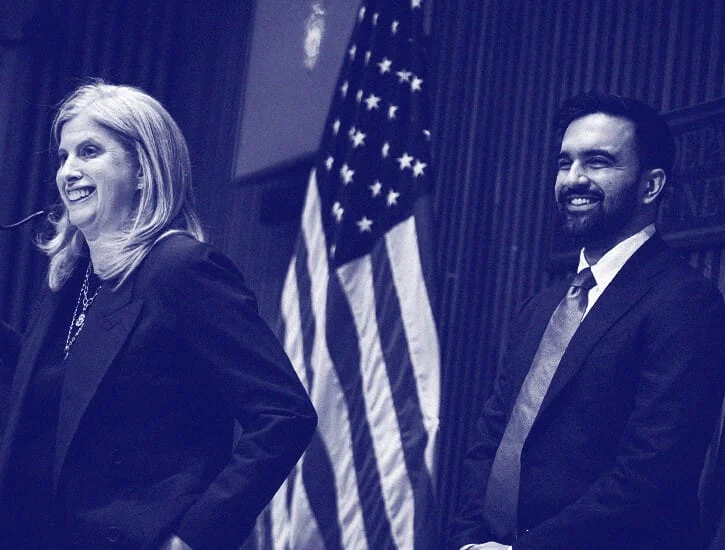
It’s also alarming that Mamdani’s signature new initiative has been reduced to a Mayor’s Office of Community Safety created by executive order (and just as easily eliminated by a future such order) rather than pursued as a full-fledged city department. This has, in turn, reinforced myopic discussion of its planned scope primarily in terms of scaling up B-HEARD and improving dispatch protocols, rather than in terms of building the housing, clinical, and community-based peer care infrastructure that would allow crisis response teams to do more than simply cycle people between the isolation at home or on the street and the emergency room. Most concerning of all is that Mamdani’s first proposed budget allocates no new funds for either an eventual city department or the new Mayor’s Office of Community Safety, which his team has framed as a “first step” toward building a department. He has instead launched the office by simply assigning it oversight over $260 million in existing funding for existing programs moved under its umbrella. Without a durable budget and a willingness to engage the political fight required for departmental status that can outlive Mamdani’s time in office, this move appears to be an empty gesture––or worse, a co-optation of grassroots organizing efforts for electoral wins and little more.
Without far more ambitious, concretely funded, and principled commitments to moving beyond perpetual crisis, any possible Office or Department of Community Safety will be something far more modest than what New Yorkers were promised: just another reorganized crisis response apparatus rather than a preventive community health and safety system grounded in continuous care. The danger New Yorkers face is not that crisis teams will fail, but that they will work exactly as designed––as a band-aid that politely covers over the structural vacuum that continues to manufacture the crises to which they endlessly respond.