
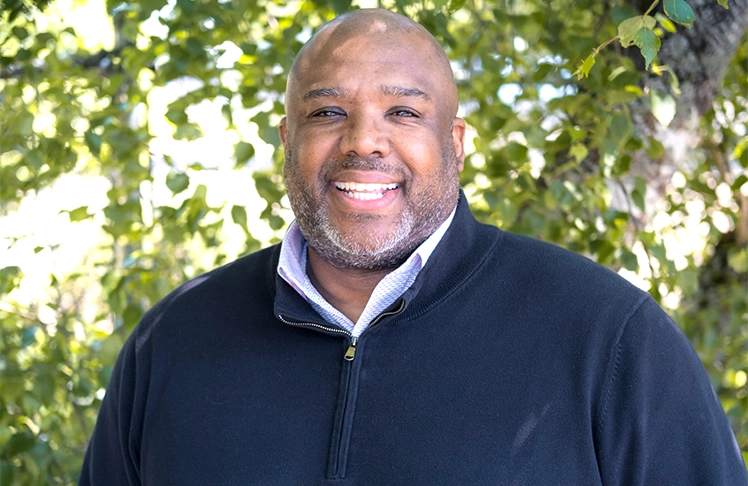
 Steven Akuffo
By Kiara Doyal, The Seattle Medium
As demand for youth mental health services continues to rise, school-based health centers in Seattle are playing an increasingly vital role in supporting students by providing care directly where they are – on campus.
Through partnerships with community organizations and funding from the city’s Families, Education, Preschool and Promise Levy, Public Health – Seattle & King County helps operate 29 school-based health centers within Seattle Public Schools, offering students access to both physical and behavioral health services.
“The public health role is to steward those resources with community partners to implement and directly provide those services to students in the buildings, and the 29 school-based health centers that exist inside Seattle Public Schools,” said Sara Rigel, health services administrator for Public Health – Seattle & King County. “However, even though they’re situated in 29 school sites, any SPS student can access services in a school that might not be the one that they attend. We are here to overall support student well-being.”
At Garfield High School, located in the heart of Seattle’s Central District, school-based care is making a tangible difference. Steven Akuffo, a licensed clinical psychotherapist at Seattle Children’s Odessa Brown Children’s Clinic and a mental health therapist at Garfield, said both proximity and representation are key to reaching students who might otherwise go without support.
“We are the first two therapists of color in the history of the teen health center here, and what we are trying to do is create a bridge between the African American parents and the school, because they’ve felt marginalized at times,” said Akuffo. “We are trying to destigmatize mental health within the community and also bring a focus on the intersection between African American student mental health and academic achievement.”
Akuffo said that while mental health challenges are often highlighted in the Black community, the need for support spans all student populations.
“What is interesting is that Garfield is a very diverse school, so I know that there is a mental health crisis that is well publicized in the Black community, but there is a mental health crisis among all adolescents. Depression and anxiety are indiscriminate; it doesn’t matter what your background is,” Akuffo said. “So, we have different types of students come in here, all ethnic backgrounds, all dealing with generally the same thing, right? Depression, anxiety, suicide ideation, and those are the ones we commonly see.”
According to Akuffo, suicide was the third leading cause of death among Black Americans ages 10 to 24 in 2022, underscoring the urgency of expanding access to care.
Representation also plays a critical role in whether students seek help. Akuffo said that having therapists of color on campus has helped build trust and increase engagement among students who may have previously felt disconnected from the system.
“That is the bigger piece because the access is here, it’s on campus, it’s a medical home for students. The disparity, oftentimes, is when folks don’t have people who look like them. But that has been addressed. So that particular disparity is remediated by the fact that you have two therapists of color who are on staff here in the building,” said Akuffo. “We are getting more and more kids of color self-referring and registering for services because they see us. It is a really important element in the building that therapeutic relationship with people of color when you are someone of color yourself.”
While school-based care offers increased convenience, it also presents unique challenges. Maintaining confidentiality in shared spaces requires careful coordination, though providers say systems are in place to protect student privacy.
At the same time, the ability for students to access care during the school day continues to drive engagement.
“But on the flip side, it’s also a benefit, because it’s right here on campus, right? And so I believe that the amount of services we provide will help school-based centers continue to grow in their efficacy over time because of accessibility. Accessibility is always key,” said Akuffo. “When I was in private practice, people wouldn’t show up because they had to drive and commute to the office. Well, kids can just come right down.”
In response to recent traumatic events affecting the Garfield community, services have expanded beyond traditional one-on-one therapy to include more flexible support options for students and staff.
“We have had some very tragic incidents that have happened here at Garfield with gun violence and so forth, and so OBCC has done a great job of offering support for students and for staff who can just drop in and talk to a therapist,” Akuffo said. “And that is one way that the resources expanded beyond just traditional individual therapy. We also do family therapy. So, if we see that a student is struggling to the extent that we recognize it as a family systems issue, we also can provide family therapy.”
Public Health – Seattle & King County has also expanded services in response to growing demand. Rigel said additional funding has allowed for more therapists to be placed in middle and high schools, as well as the introduction of behavioral health care coordinators to help students navigate available resources.
“Public health also has an additional investment that came from the city of Seattle through the voice of students advocating for more mental health services. So, there is increased capacity for more students to seek behavioral health services through a school-based health center,” Rigel said. “And then the other addition that we made was adding a role called the behavioral health care coordinator. Those folks are hired by community-based organizations that partner with both the school-based health center and the school to really, again, provide resource navigation and improve that capacity for students to meet their behavioral health needs.”
At Ballard High School, behavioral health coordinator Jake Wishart said the school-based model helps remove barriers that might otherwise prevent students from seeking help.
“On a typical day, I meet with several students individually to facilitate their access to community and school resources. I also meet with teachers, counselors, administrators, and/or our school-based healthcare staff to collaborate and provide support to our students and families,” said Wishart. “Having [this access and collaboration] breaks down a lot of barriers that may prevent students from being able to effectively access help on their own. It provides a convenient option that increases positive outcomes for our students.”
“My role helps to show students that their mental health is a priority and that they are not alone. I’ve always loved working with kids and am passionate about supporting mental health,” Wishart added.
Rigel said the importance of these services can be summed up in a simple idea: healthy students learn better.
“We all want our kids to achieve in school, and we know that their health, be it physical or mental health, and their well-being are really inextricably linked to the outcomes that they have in their school day and in their lifelong term. We really want to build healthy students in healthy communities, and this is one of the ways that we can do that,” Rigel said. “Meeting students where they are is really the best outcome. Building [a relationship] with another trusted adult in their community builds capacity for students to really have their needs met, seen, and addressed immediately.”