
In Thailand, an estimated 800 000 people live with mental and behavioral conditions, highlighting the need to strengthen accessible, community‑based and recovery‑oriented mental health services.
For many years, mental health care has primarily been delivered by clinical professionals. At the same time, the knowledge and perspectives of people with lived experience of mental health conditions have not always been systematically integrated into service delivery, despite growing global evidence on the contribution of peer support to recovery-oriented care.
In 2024, the Department of Mental Health approved the Service Standard for Peer Recovery-Oriented Mental Health Care, marking a policy milestone that formally recognizes the role of people with lived experience within the mental health system. The Service Standard establishes a framework to support the participation of people with lived experience in mental health service delivery. The Standard has since been adopted by the National Health Security Office (NHSO) enabling peer support services to be delivered under Thailand’s Universal Health Coverage scheme. People who meet defined training and competency requirements can be certified as Peer Support Workers and are eligible for reimbursement for approved services.
To support implementation of the new Standard, WHO in collaboration with Srithanya Hospital, the Department of Mental Health, and the Ratchasuda Institute, Mahidol University, provided technical support to strengthen the Peer Support Worker pathway, with a focus on training curricula and competency development.
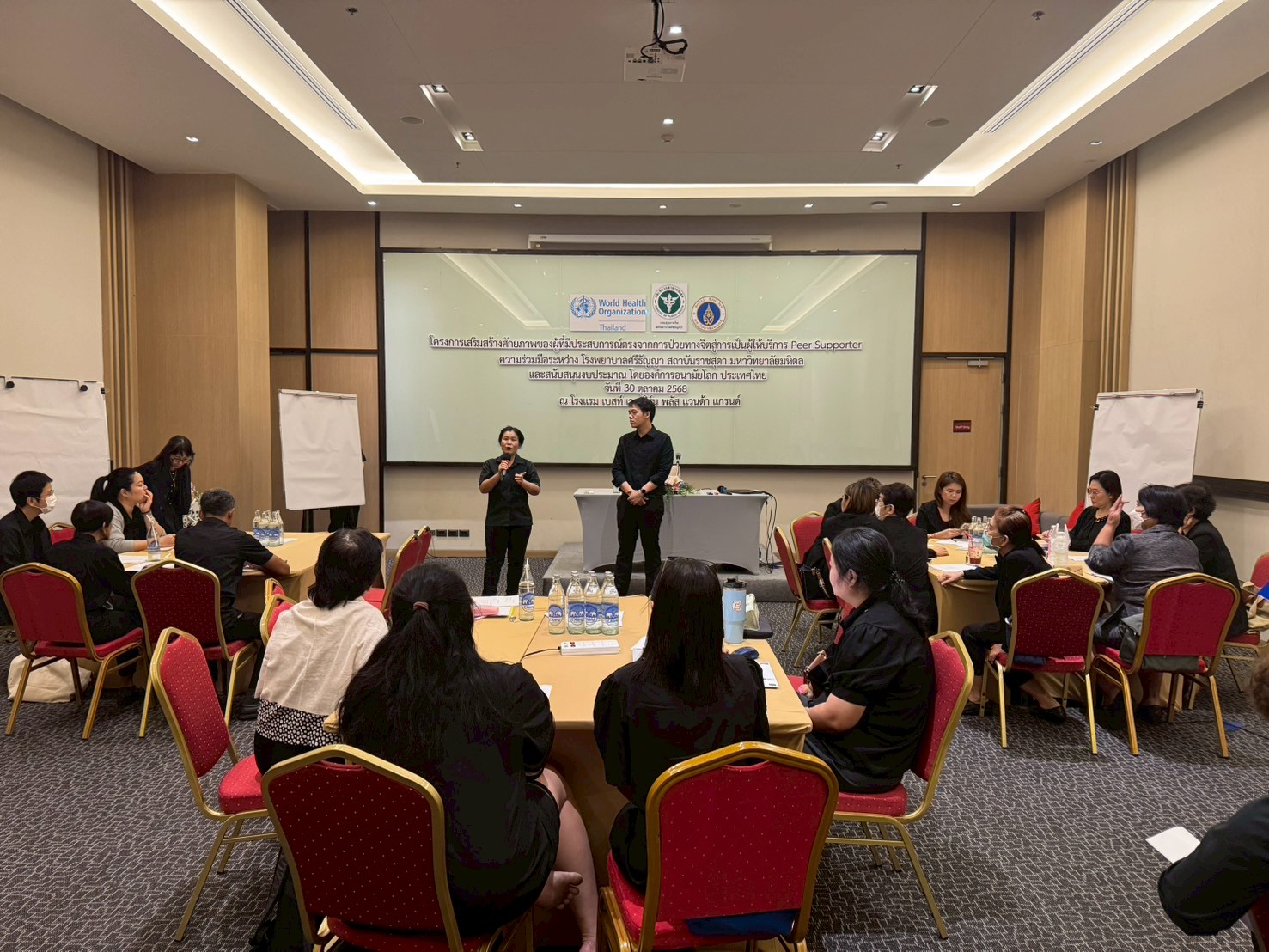 People with lived experience participate in a workshop hosted by WHO, Srithanya Hospital, Department of Mental Health and Ratchasuda Institute, Mahidol University to share their experiences and provide input in strengthening the Peer Support Worker certification curriculum. Photo credit: Srithanya Hospital
The project focused on revising the Peer Support Worker Certificate Curriculum to ensure it is practical, accessible, and aligned with recovery-oriented principles, while maintaining quality standards required for certification, and eligibility for reimbursement under the NHSO scheme.
Curriculum development was informed by structured discussions with people with lived experience. The revised curriculum was then tested through a pilot training programme that combined classroom learning with supervised field practice, including individual one-to-one peer support sessions and group facilitation, with supervision throughout.
Twenty people with lived experience were enrolled, and 16 participants achieved full certification. Under Department of Mental Health’s approved Service Standard, each certified Peer Supporter is expected to deliver up to 30 service sessions per year. With 16 certified Peer Supporter now active, the system has the capacity to deliver up to 480 peer support sessions annually, contributing to expanded access to recovery‑oriented support within community and clinical settings.
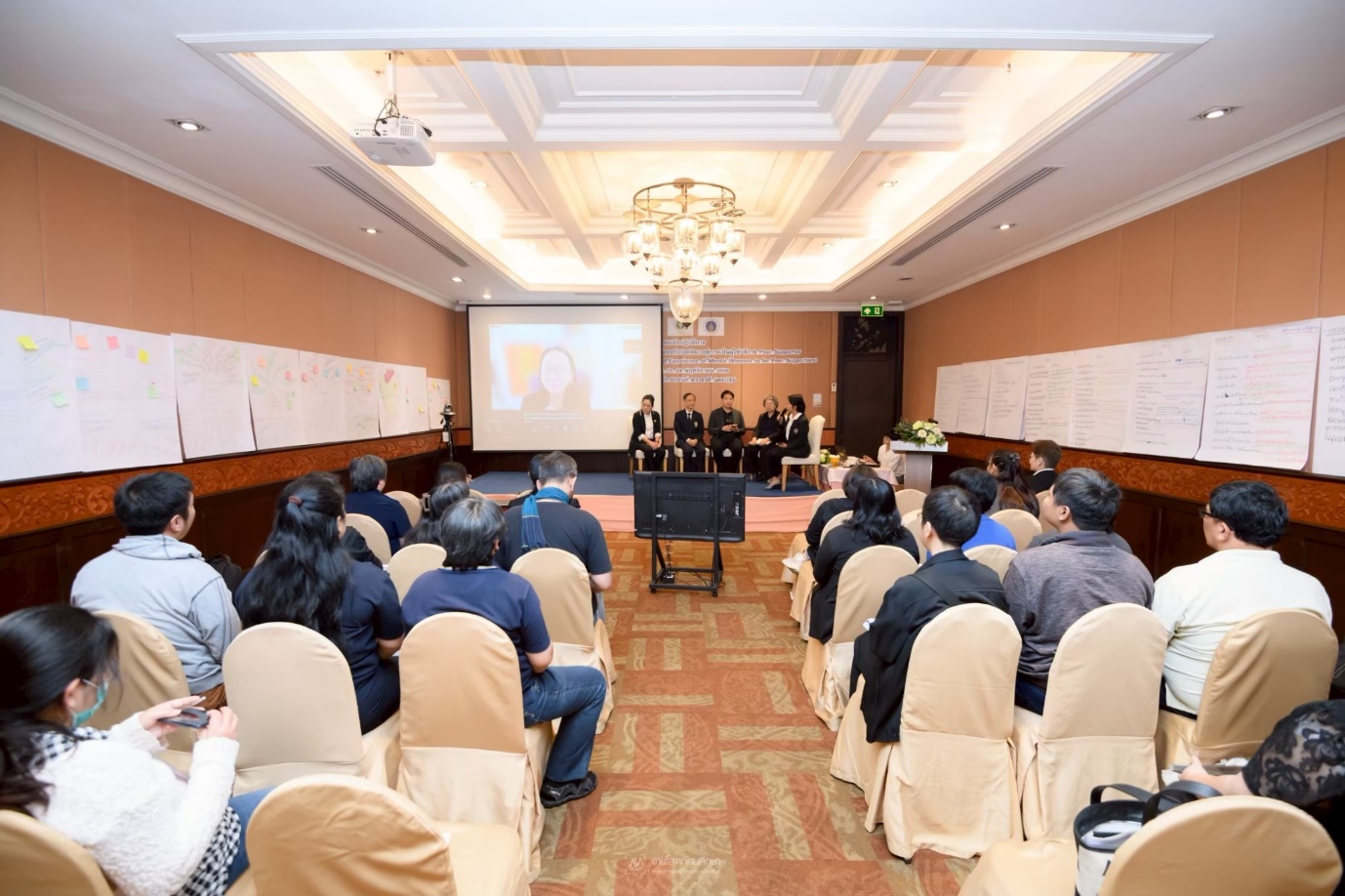 A panel discussion with representatives from WHO, Mahidol University, Department of Mental Health, NHSO, and PWL map out the road ahead — explores pathways to sustain peer support services and ensure certified Peer Support Workers can be compensated under Thailand’s UHC scheme Photo credit: Srithanya Hospital
Alongside the curriculum development, a panel seminar “Direction and Challenges in Advancing Peer Support Services in Psychiatry under Thailand’s Universal Health Coverage System” brought together key stakeholders to examine the role of peer support on the mental health system. The panel featured Dr Supasaek Virojanapa from Srithanya Hospital, Dr Somkiat Leelasithorn, Director of the Ratchasuda Institute, Dr Olivia Nieveras, Senior Public Health Specialist from WHO Thailand, Dr Khwanjai Jiratjinda from the NHSO, and Ms Kruawan Thiangtham, a certified peer specialist and peer support trainer — moderated by Dr Wachara Riewpaiboon, Acting Deputy Director of Ratchasuda Institute.
Next steps include formal accreditation of the revised curriculum with the Department of Mental Health, and expansion to disability service centers to integrate certified Peer Support Workers into reimbursable service delivery under the NHSO framework.
By strengthening mechanisms for the meaningful inclusion of people with lived experience, this initiative contributes to Thailand’s goals for effective universal health coverage, disability inclusion and social equity. It also reflects principles outlined in the WHO Framework for Meaningful Engagement of People Living with Noncommunicable Diseases, Mental Health and Neurological Conditions (2023), demonstrating how global commitments can lead to tangible impact at country level.