
A group of local students is stepping forward to address one of the most urgent challenges facing their generation: mental and behavioral health.
The Moffat County Youth Action Council, a youth-led program administered by Partners for Youth, has joined forces with the Health Partnership to create a four-part education series designed to help adults better understand the realities that young people face every day.
The series, developed entirely by youth council members using a Human-Centered Design approach, aims to strengthen communication between generations while opening the door to conversations that are often avoided or misunderstood.
Sessions are held weekly from 6:30 to 7:30 p.m. at the Craig Chamber. Dinner will be provided and childcare will be available, making the series more accessible to community members.
The first session was held on April 15.
Mackenzie Mixon, Empowerment Program Coordinator for Partners for Youth in Moffat County, said the MCYAC is composed of middle and high school students who meet weekly to identify issues in their community and take collective, meaningful steps to find solutions.
“The council meets weekly, giving the students a chance to identify local challenges and create action plans to address them,” Mixon said. “We create a healthy foundation for youth to use their potential and empower them to develop skills by providing a safe space for youth voice.”
The collaboration with the Health Partnership began after the organization received funding to support a Human-Centered Design project focused on youth behavioral and mental health. Mixon said the alignment between the two groups was a natural next step.
“This strongly aligns with our Youth Action Council program where youth identify an issue they are passionate about and develop projects and initiatives to address the issue,” she said. “This provided a natural fit for our organizations to collaborate.”
At the start of the school year, students completed a survey identifying the topics they wanted to explore.
“The majority of the youth showed interest in behavioral and mental health, which made the overall choice very easy for them to decide on,” Mixon said.
Students spent four weeks working closely with Health Partnership staff through the Human-Centered Design process as they brainstormed ideas that ranged from small, low-cost efforts to large-scale community initiatives.
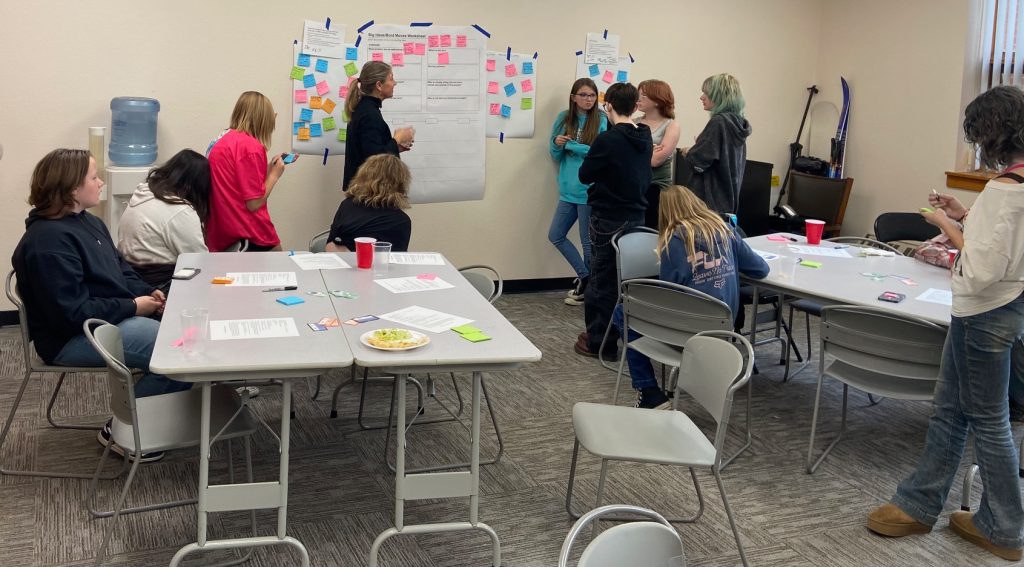 Sarah Meade and Brittney Wilburn lead Moffat County Youth Action Council members through a Human-Centered Design workshop, helping students explore community issues and shape their adult education series.Courtesy Photo/Moffat County Partners for Youth
“They had to come up with several different ideas that ranged from one dollar to one million dollars,” Mixon said. “Once they completed the brainstorming process, they voted until we had their final decision.”
That decision centered on helping adults better understand what young people are experiencing and how to respond to those experiences in supportive ways.
“Their final decision was providing adult education classes to local adults in the community,” Mixon said.
From there, students held in-depth discussions about the topics they felt were most important. In many cases, the most difficult conversations were with adults and parents. Those discussions led to the selection of four key areas, including anxiety and depression, substance abuse, suicide prevention and support for queer youth.
The sessions are “Anxiety and Depression: More Than Stress,” which was held on April 15; “Substance Abuse: Real Talk,” which will take place on April 22; “Suicide Prevention: Start the Conversation,” scheduled for April 29; and “Queer Youth: Understanding and Supporting,” set for May 6.
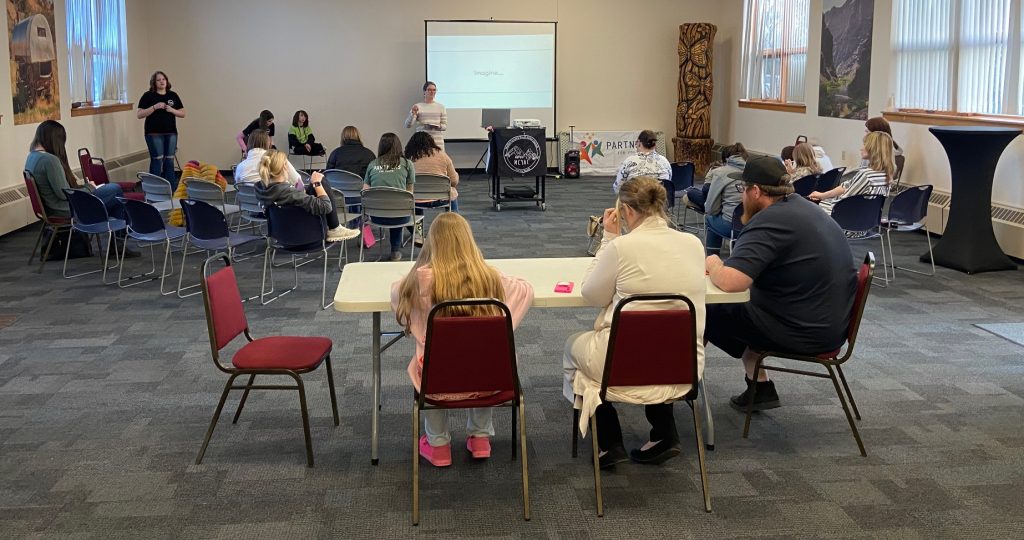 Members of the Moffat County Youth Action Council present “Anxiety and Depression: More Than Stress” during the first session of a youth-led education series held on April 15 at the Craig Chamber.Courtesy Photo/Moffat County Partners for Youth
Mixon said the goal is to give adults a clearer, more honest understanding of how these issues affect youth in their daily lives while promoting effective and open dialogue.
“Youth want adults to understand how to be a safe and trusted adult they can come to and not be judged or dismissed,” she said. “Even though these may be hard topics to talk about, youth want to have those conversations.”
Unlike traditional workshops led solely by professionals, each session in this series is led by the students themselves, a choice Mixon said adds both authenticity and impact.
“At Partners for Youth, we feel that youth voices are incredibly powerful,” Mixon said. “When the youth are presenting, you will hear the passion, dedication and commitment they have made to this project. You will also hear real experiences and gain a deeper understanding of what youth are going through today.”
Students worked in small groups to design their sessions, choosing formats that reflect their voices and ideas. Presentations may include slideshows, skits and interactive activities aimed at engaging attendees.
Each session will also feature a resource table with information adults can take with them.
While adult professionals were invited to meetings to provide guidance and answer questions, students directed how the sessions were structured and delivered.
“The creation and delivery of these presentations has all been youth-led,” Mixon said. “The youth have been excited to push this project forward and have brought incredible passion and determination to the program this year.”
The intended audience includes parents, grandparents, educators, local officials and any adult interested in becoming a stronger support system for youth.
“The youth are hoping to see adults who work with youth every day, as well as any community member who wants to be a trusted support,” Mixon said.
No registration is required, and the series is designed to be welcoming, respectful and engaging. Attendees are encouraged to come with an open mind and a willingness to listen.
“A key component to these presentations is giving adults new tools and ways to think about navigating difficult conversations with young people,” Mixon said. “We urge anyone who attends to come ready to engage.”
Beyond simply sharing information, the series is intended to create lasting change in how adults and youth communicate with one another.
“Our hope is to provide attendees with a new perspective on issues that affect youth, and for them to learn new ways or tools they can use to have open and supportive conversations,” Mixon said.
She added that addressing youth mental health at the local level is both urgent and essential.
“Our youth are the future of our community,” she said. “If they are not in a good place mentally, emotionally and physically, we are not being fair to them as a community.”
Looking ahead, organizers hope the impact of the series will extend beyond the four sessions and shape how the community approaches youth well-being in the long term.
“Our hope is that adults take the time to pause, reflect and think about what youth are dealing with,” Mixon said. “Think about how they can be supportive during tough conversations and how to provide a judgment-free space.”
For the students involved, the project represents more than just a series of presentations. It is an opportunity to be heard, to lead and to help build a stronger, more understanding community.
“They want adults to know that their words and feelings matter,” Mixon said. “All they want is someone who will listen.”
For more information, email mackenzie@partnersyouth.org or call 970-629-2486.