

Greetings, MindSite News Readers.
It’s Earth Day, so take a look at suggestions on finding some great ways to support our beautiful but fragile planet.
In today’s Daily, a look at why police agencies still struggle to end police shootings during mental health calls and what reforms mental health advocates say will make the difference.
In other news, how a positive mindset helps with aging. Why you may be undermining yourself without even realizing it. Plus, some social media users have started to report that their GLP-1 left them with a case of the blahs. Scientists have taken note — and even come up with a solution that helps most people affected.

But first, 33 great ways to celebrate Earth Day from the online magazine GoodGoodGood, including learning about restoration efforts in the Amazon rainforest, planting more urban trees and cleaning up the Great Pacific Garbage Patch.
Maryland police forces are trained to help in mental health crises. Why are they still getting it wrong?
 Credit: Photospirit/Canva
In the midst of a mental health crisis, Alex LaMorie made a fatal decision — he called the local police for help.
Concerned that he was being extorted by someone online, the autistic 25-year-old requested police support, and officers responded to his residence at a housing complex for adults with disabilities.
When they arrived, police say, LaMorie was upset and holding a knife, refusing to drop it and threatening to harm himself.
His family reasonably expected officers to de-escalate the situation: 80% of the Howard County Police Department has completed crisis intervention training, or CIT, and behavioral health specialists are available 24/7.
Still, when officers responded to LaMorie’s call, they shot him to death.
“That goes to show you how much more there is to learn and how much more there is to invest in the resources needed for these types of situations,” Scott Gibson, chief operating officer at Melwood, a collective of nonprofits supporting people with disabilities in the DMV-area, told the Baltimore Sun.
Sadly, LaMorie’s death is part of a recent pattern. Last June, Baltimore police killed a 70-year-old woman experiencing a behavioral health crisis, and at the start of this year, the same department shot a 48-year-old woman in crisis when specially trained officers weren’t available.
Last fall, Cambridge Police shot and killed an unclothed suicidal adult who was wielding a knife. And still another family is calling for an investigation into the operation that led Baltimore County Police to shoot and paralyze their 27-year-old autistic son in the midst of a mental health crisis.
Research indicates that between one-fifth and one-third of fatal police encounters across the nation involve someone in a mental health crisis, while 10% of all police encounters involve someone showing signs of a mental health disorder. If police departments know this, why does it keep happening?
According to experts, although CIT certification is important, one-and-done CIT training — which most officers take — isn’t enough. “It’s valuable, it’s important. Every officer should have it,” said Tahir Duckett, executive director at Georgetown Law’s Center for Innovations in Community Safety. Still, “given the number of people in mental health crisis that police officers deal with each year, a single 40-hour training is actually woefully insufficient.”
Gibson concurred: “A 40-hour training may not be enough when you throw people in very high-tense, dangerous situations. Instincts are going to kick in. We are wired to protect ourselves.”
Beyond training, Gibson advocates for a stronger community mental health safety net — one that spreads awareness about resources for urgent behavioral care that don’t involve police. Too often, people don’t know where to turn besides 911.
“We’ve got to step back and we’ve got to make sure that the safety net in the community is robust enough that we can prevent more of these calls from even happening,” Gibson said.
In addition to CIT, most Maryland jurisdictions have established mobile crisis teams — pairings of licensed behavioral health specialists with peer recovery specialists who respond to mental health calls with, or instead of, police.
Duckett argues that when someone is in crisis without a weapon, these specialists — not police — should be the primary responders, as is already standard practice in cities like Denver and Durham, North Carolina.
“At the very least, when there is a mental health component to a call, a mental health professional needs to be on the scene,” Duckett said.
If things escalate, specialists can call for backup. Other departments prefer a co-responder model, where specialists accompany officers on scene. Despite their effectiveness, both approaches remain constrained by inconsistent funding and uneven deployment.
Political disagreement about approaches to reform also perpetuates stagnation, said Heather Warnken, executive director of the University of Baltimore’s School of Law Center for Criminal Justice Reform.
“We default to continuing to do business as usual,” she said. “We need to be more bold, courageous and innovative.”
Could GLP-1 be dulling your joy?
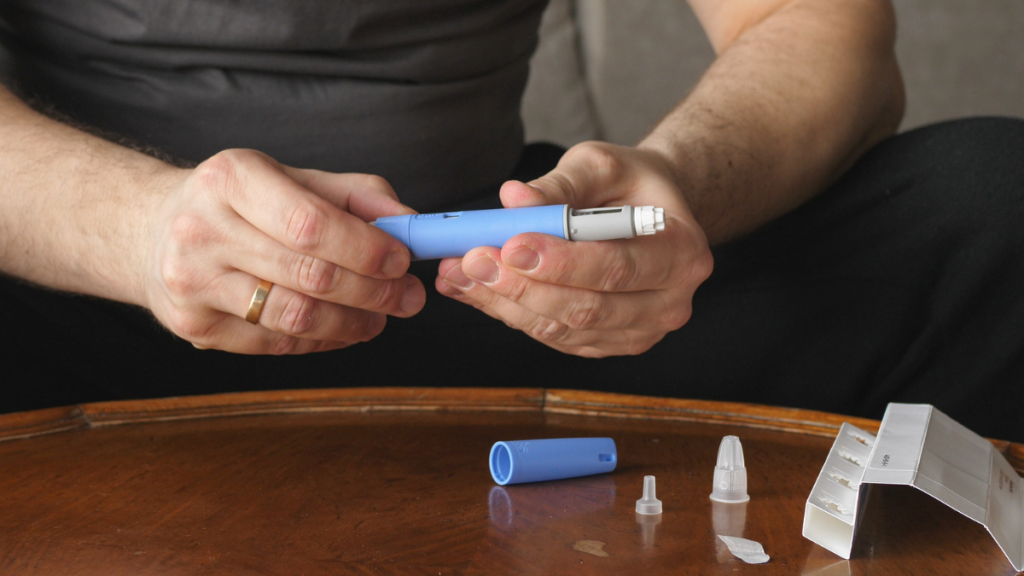 Credit: imyskin/Canva
Nothing was wrong per se, but something wasn’t right either, Korrie Stevenson thought.
She’d been struggling with her mood for months without a clear explanation. She didn’t quite feel depressed, but there was a persistent feeling of “meh” causing her to only notice the beauty of a pink- and purple-streaked sky rather than being struck with awe.
“Like you’re trying to be excited about a moment but can’t fully connect to it,” she told The Washington Post.
Even sports, Stevenson’s passion since childhood, had started to feel mundane. She wondered what could have muted her feelings until it finally hit her: Maybe it was a side effect of her GLP-1 medication.
While not a widespread effect of the drug, Stevenson’s mood experience is no longer an anomaly and physicians are taking note.
Anhedonia, the clinical term for the persistent “blah” Stevenson felt, called “Ozempic personality” online, is described by those who experience it as a general flattening of everyday pleasure.
Studies over the past couple of decades have found GLP-1 drugs to generally be safe and effective to treat metabolic disease, diabetes and obesity.
But with primary focus falling on their physical effects, more research must be done to understand the psychological impact of semaglutide, the active ingredient in Ozempic and Wegovy.
According to physicians, patients on GLP-1s generally report improved mental health gains, including less shame over eating, better mood and greater self-esteem.
Earlier concerns that the medications might increase risk of suicidal ideation have not held up under further study. In fact, new research suggests that GLP-1s could help treat substance use disorders.
Still, doctors say they’ve begun hearing accounts like Stevenson’s with enough frequency and consistency to warrant closer scrutiny.
Considering the myriad ways that extreme weight loss can change a person beyond their body – reshaping identity, habits or even how strangers treat them – scientists must take care to distinguish a drug’s direct effects from its secondary consequences.
For instance, researchers are studying GLP-1’s impact on dopamine. It’s thought that because the medications are known to quiet “food noise,” the constant draw towards eating, they sometimes work to an extreme, dulling other pathways.
“There’s a tendency to think dopamine just drives us to seek pleasure,” said Zak Krumm, who studies GLP-1s in animals at the University of Florida. “But it’s really about how valuable a reward feels.”
Obesity specialist Spencer Nadolsky said that most cases he’s seen resolve when patients reduce their dose, often within weeks. Persistent symptoms are often treated with a lower GLP-1 dose plus bupropion, an antidepressant commonly known by the brand name Wellbutrin.
In the meantime, he and Krumm are compiling roughly 100 case studies to better understand a phenomenon that remains more observed than explained. Balance is the ultimate goal, Nadolsky said. “We want enough dopamine to still enjoy the things we enjoy.”
In other news…
Ending self-sabotage: You might be undermining yourself on purpose and not even realize it. Psychologists call it self-sabotage: the habit of quietly setting yourself up to fail so you have a ready excuse if things go wrong. As someone who has only now begun to notice my own strengths, I’m intimately familiar with the problem. It’s a relatively common way that people with low confidence operate, and often guarantees the very outcomes they fear most. BBC Science Focus offers a peek into what drives self-sabotage — and how to stop it.
Bevy Smith says, “It gets greater later,” and having observed my mother up close over the past four decades, I know it does. She’s my forever favorite girl, somehow increasing her capacity to love and grow. I’ve seen her confront her fears, travel to places she never thought she’d see, and befriend a couple of folks she’s old enough to parent, who are teaching her new things.
Now, there’s science to back up her ever-elevating sense of “fly.” A paper published last month in the journal Geriatrics found that many older adults improve in cognitive and physical abilities laterin life — and having a positive mindset about aging is key to their sustained growth, the San Francisco Chronicle reports.
For their study, scientists at Yale relied on data from nearly 11,000 older adults drawn from the federally-funded Health and Retirement Study. They found that nearly half of those aged 65 and older showed improvement in cognition, walking speed – an important measure of physical function – or both over the time period.
“What we found is that improvement in later life is not rare, it’s common, and it should be included in our understanding of the aging process,” said Becca Levy, the study’s lead author and a professor of public health and psychology at Yale.
Researchers noted that mindset made a big difference, finding that participants who held positive beliefs about aging were significantly more likely to improve. This finding is rooted in embodiment theory, or the idea that the messages we absorb about aging from media and culture affect our outcomes.
The good news, researchers say, is that our beliefs – both individual and collective – are changeable. “Our findings underscore the need to instill or magnify the positivity of age beliefs and to redefine aging so that it includes the possibility of improvement,” the researchers wrote.