


Caught in the cycle
PART 3
Grim toll of suffering, deaths mounts amid mental health crisis
in SC jails
By Jocelyn Grzeszczak,
Alan Hovorka and Glenn Smith
April 26, 2026
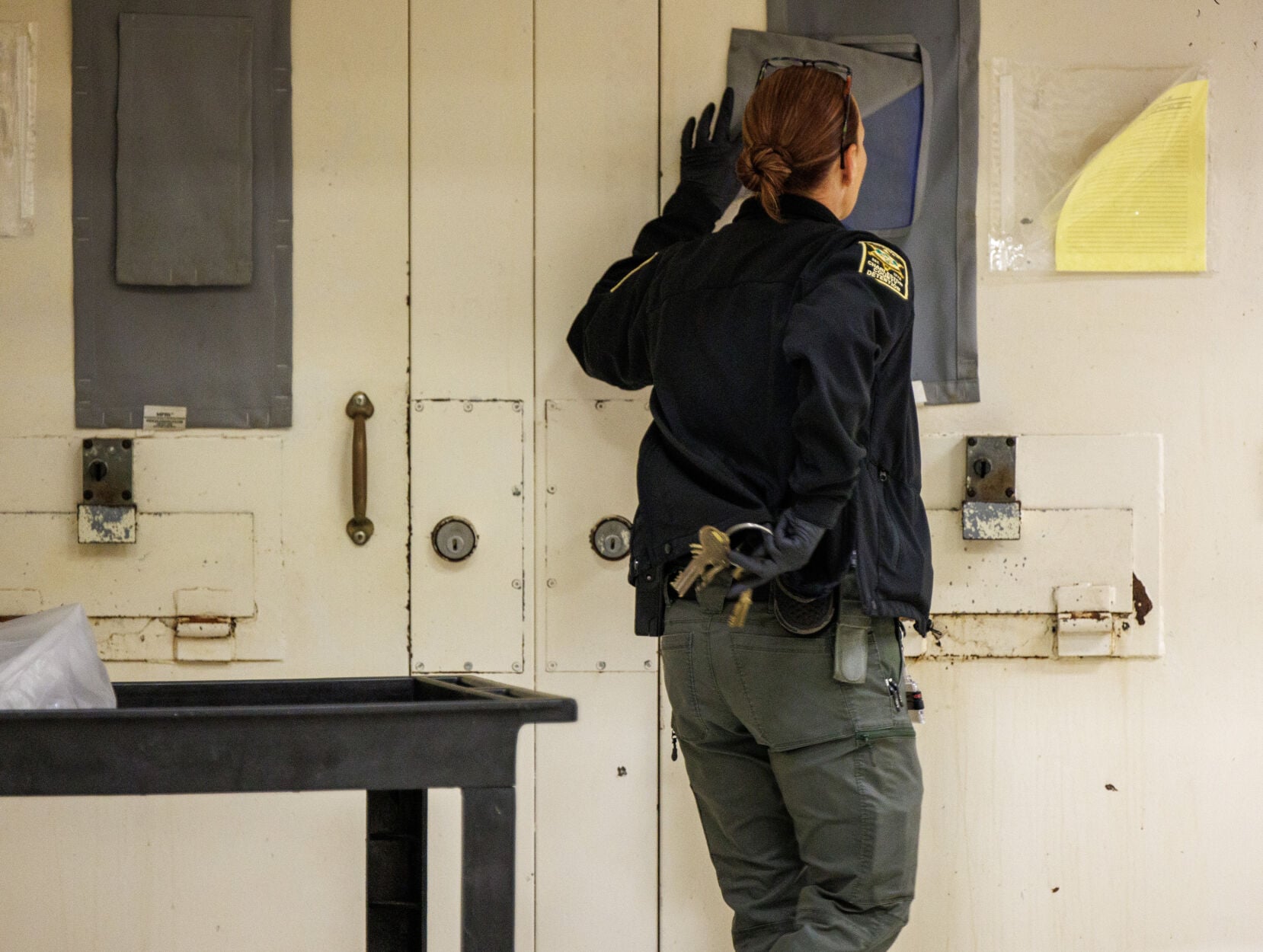
Lt. Melissa Last checks on inmates in the
Behavioral Management Unit at the Sheriff Al Cannon Detention
Center on Wednesday Sept. 10, 2025, in North Charleston.
GRACE BEAHM ALFORD/STAFF
Lt. Melissa Last checks on inmates in the
Behavioral Management Unit at the Sheriff Al Cannon Detention
Center on Wednesday Sept. 10, 2025, in North Charleston.
GRACE BEAHM ALFORD/STAFF
D’Angelo Brown lay slumped on the floor of his jail cell when Charleston County deputies found him a few days before Christmas in 2022. Dried vomit caked his face. Excrement streaked the tiny room.
A pair of officers struggled to load his emaciated body into a wheelchair. He died in a hospital eight days later from organ failure.
Brown, a 28-year-old father of two, should have been getting court-ordered care for his schizophrenia in a state psychiatric hospital. But his body withered away before a bed there became available.
Inmates in South Carolina with serious mental illnesses are locked in a perilous waiting game for treatment to ease their symptoms just enough to restore their ability to stand trial. Average wait times for this care swelled from about a month in 2019 to eight months as of March — delays that have caused needless suffering and death, a Post and Courier investigation found.
The newspaper unearthed psychiatric records from more than 200 Charleston County defendants that offer a rare window into this world. Together with lawsuits, law enforcement records and coroner’s reports, they depict a jail struggling to care for — and control — people with chronic, complex and often unpredictable behavioral issues.

D’Angelo Dontrel Brown, 28, who was found unconscious in December 2022 in a filthy Charleston County jail cell, died by homicide due to gross medical neglect, according to Charleston County Coroner Bobbi O’Neal.
File/Staff
Some inmates refused treatment and medications, pushing them closer toward crisis, neglect and self-harm. They ate their own excrement, destroyed their cells, screamed through the night, and declined food and water. Some hurt staff or themselves.
And all this occurred before they had been convicted of their charges.
One man missed a scheduled competency exam because he had smeared himself with feces. Another showed up to his exam with both legs in casts after jumping from a second-story balcony. A woman became delusional, claiming that she was Ashley Phosphate and Mother Nature, that the air was poison and people could hear her thoughts.
Others, like Brown, died under brutal and fetid conditions.
He is among at least 20 people who perished over the last decade in county jails across the state after their competency to stand trial was questioned, a Post and Courier analysis found. An even greater number — at least 100 inmates — had struggled with mental illness when they died behind bars. That’s more than a third of all jail deaths from that period.
Eleven of those deaths occurred inside Charleston County’s jail, a hulking edifice in North Charleston that can house nearly 1,700 inmates, making it the state’s largest detention center. These deaths spanned multiple administrations and health care providers, and prompted a federal civil rights investigation into inmates’ treatment.

Charleston
County spends about $104 a day to house a typical
inmate. But it can cost up to three times more to
house a mentally ill offender due to increased supervision and
medication needs, officials said. If jailed today, Gregory Bryant’s
880-day stay would cost taxpayers around
$274,000.

They’ve come at a high financial cost, too. Charleston County taxpayers have shelled out at least $12 million in settlements and legal expenses in the last decade to compensate families of the dead.
Charleston accounted for about half of the more than $25 million paid out across the state in that same period. At least a third of all deaths of people with mental illness in South Carolina jails have resulted in some kind of settlement or taxpayer legal expense, according to the newspaper’s analysis of news accounts, court records and Insurance Revenue Fund reports.
Madalyn K. Wasilczuk, a University of South Carolina law professor who tracks inmate deaths statewide, said the sheer number of people dying behind bars in the Palmetto State should be “a glaring red light.”
“There is no other explanation than, ‘Something is going horribly wrong,’ ” she said.
A jail employee walks through Tower A, which houses the Behavioral Management Unit where some inmates with serious mental illnesses are held in the Sheriff Al Cannon Detention Center, the state’s largest jail, on Sept 10, 2025.
Grace Beahm Alford/Staff
Jail officials say their facilities were never designed to be psychiatric hospitals. But jails across South Carolina are increasingly being forced into that role due to a lack of mental health resources in communities. About two in five adults in jails have a history of psychiatric issues, according to the National Alliance on Mental Illness.
“You know, every jail administrator, every sheriff who runs a jail, anybody that runs a jail in this country wants something to be done about this,” said Mitch Lucas, a former assistant sheriff who led Charleston County’s jail for more than a decade. “Nobody thinks that the way we’re handling the mentally ill in jails is appropriate.”
Unraveling behind bars
Jails are considered to be among the worst places for someone struggling with mental illness. It’s easy to understand why.
Trapped in cramped quarters, bathed in noise and bright lights, inmates are cut off from the family, friends and routines that structure their lives. This can trigger paranoia or delusional thoughts, causing inmates to withdraw or behave oddly. Over time, some lose their tether to reality while sealed inside isolation cells.
When that time stretches into months, the harm can prove dire and difficult to remedy.
Joshua Duncan’s mental state deteriorated during the 568 days he spent awaiting trial for threatening police officers and possessing methamphetamine. He removed plumbing pipes from his cell because he thought he was being poisoned. He didn’t eat, refused medicine and frequently hurled racist insults at deputies.
By the time Duncan arrived at the state psychiatric hospital, it took six months of treatment before evaluators said he could stand trial. Duncan, then 40, pleaded guilty to the threat-related charge and received a sentence of time served.
Gregory Bryant’s journey from jail cell to psychiatric hospital took six months following a 2016 arrest for vandalizing a sign and truck at age 43. In the interim, he refused to take medicine for his schizoaffective disorder. He became agitated, aggressive and unkempt. A jail doctor warned that he posed a substantial risk to himself and others. Once, he slipped out of his cell and ran naked through the housing unit.
Bryant would wait even longer for a hospital bed on a return trip to jail in 2021, this time for strong-arm robbery. He would spend a year and a half behind bars, his health deteriorating. When he finally arrived at a psychiatric hospital, he needed treatment for malnourishment.
An empty cell in the competency restoration unit at the Sheriff Al Cannon Detention Center on Sept. 10, 2025. The unit sat idle for more than two years after the Charleston County Sheriff’s Office renovated the space.
Grace Beahm Alford/Staff
Charleston County Sheriff Carl Ritchie, who took office in January 2025, said these long wait times are among the jail’s biggest challenges. And when inmates return from treatment, they often have to wait months more for their cases to be heard in the backlogged court system — a period in which they’re at risk of backsliding. He likened the process to a frustrating “hamster wheel.”
The psychiatric records obtained by The Post and Courier illustrate how this can play out.
A judge ordered Rodney Ladson into two months of restoration treatment in 2017 after he cloaked his jail cell with aluminum foil and spoke of airplanes monitoring him. Examiners declared him competent. But Ladson, then 33, unraveled again while back in jail, waiting for his court date on a harassment charge. He refused to shower or change his uniform. Some days he refused to eat, jail records show. A second exam eventually found him unfit to stand trial due to his severe schizophrenia symptoms.
All told, Ladson spent a year and a half behind bars before prosecutors agreed to dismiss his charge and send him to probate court for a commitment hearing.
In another case, 65-year-old Vernon Memminger landed in jail in August 2018 on allegations that he tried to sexually assault a gas station clerk. He was locked up about a month before detention center staff sent him to Columbia for an emergency psychiatric stay to calm his psychosis. Memminger soon returned to jail, where he rapidly fell apart again.
He refused showers and his medicine for schizophrenia and bipolar disorder. He constantly yelled and grew belligerent. Jail staff repeatedly sounded the alarm about his condition.
If you or someone you know is experiencing a mental health
crisis, contact the South Carolina Office of Mental Health’s
statewide Mobile Crisis Team, available 24/7/365: 833-364-2274.
South Carolina has a network of 16 community mental health
centers and dozens more local clinics that provide emergency and
outpatient services. To find a location nearest you, here.
National Suicide Prevention Hotline: Call or text 988.
“This inmate is completely out of his mind,” they wrote in a Dec. 3, 2018, jail log. “This inmate needs serious help beyond the capabilities of this facility.”
In the ensuing weeks, Memminger developed a lung infection, which triggered sepsis and hypothermia, and slowed his heartbeat. He survived, but continued to need emergency psychiatric hospitalizations.
Even the best-equipped jails in South Carolina aren’t set up to provide the comprehensive psychiatric care needed in such episodes.
At Charleston County’s Sheriff Al Cannon Detention Center, the most severely ill are held in designated units, away from the general population, with detention officers who receive special training to look after them. The jail also has an in-house medical provider and mental health workers to offer care.
But none of this prevented horrific and avoidable tragedies from occurring.
The Sheriff Al Cannon Detention Center in North Charleston serves as the Charleston County jail, the largest such facility in the state.
File/Grace Beahm Alford/Staff
String of avoidable deaths
D’Angelo Brown, who succumbed to organ failure in 2022, died 13 days after a Charleston County judge ordered him into psychiatric treatment so he could face charges in a violent home invasion. He had been incarcerated for four months at that point.
Coroner Bobbi Jo O’Neal ultimately determined Brown’s death to be a homicide caused by “gross medical neglect.” Health care workers at the jail failed to manage his schizophrenia, despite records that should have alerted them to his condition early on.
Nekeya Jones, Brown’s mother, remembers their final conversation well. Brown called from jail, saying he didn’t think he would make it out alive. Jones tried to reassure him, saying God would carry him through this challenge, too.
During this time, Brown appeared to advocate for himself, according to his psychiatric evaluation. Jail mental health staff noted on Nov. 2, 2022, that Brown refused to speak with them unless it involved “going back into the hospital setting.” Staff described him as aggressive and agitated.
Looking back, Jones believes her son knew he was dying. Her greatest regret is not taking him more seriously.
“Standing over my son and making the decision to pull the plug because he had no function to the brain or anything,” Jones said in a statement, “that is … the worst nightmare, to have to say goodbye to your child.”
In the ensuing months, Ninth Circuit Public Defender Cameron Blazer took a hard look at how her staff monitored clients like Brown, whose death she called an “avoidable tragedy.”
Brown had been in the jail for several weeks before Blazer’s office was appointed to represent him. After seeing his condition behind bars, his attorney tried to get him admitted to a state psychiatric hospital, Blazer said. But Brown was rushed to the Medical University of South Carolina before that could happen.
Now, Blazer sends a letter to her attorneys each month tracking how long clients with mental illness have been in jail. And she has a public defender embedded at the detention center three days a week to keep an eye on them, plus attend weekly meetings with mental health staff.
“We will never not know that someone is sick and unrepresented again,” Blazer said.
Meanwhile, several elected officials asked the federal government to investigate whether conditions at the jail violated inmates’ civil rights. Congresswoman Nancy Mace toured the jail in March 2023 and called for more spending to help its mentally ill population, pointing to a spate of deaths inside the facility.
Amy Sutherland, her husband James Sutherland Sr. and their son Jamar stand with a photo of their son and brother, Jamal, at their home on June 23, 2021, in Goose Creek. Jamal Sutherland died at the Charleston County jail after detention deputies used stun guns and pepper spray on him following his arrest at a psychiatric facility in January of that year.
File/Gavin McIntyre/Staff
The jail had drawn increased scrutiny since the death of Jamal Sutherland in January 2021. He landed there following a fight at an inpatient psychiatric facility in North Charleston where he was being treated for schizophrenia and bipolar disorder. Sutherland, 31, died the next day after detention deputies used pepper spray, stun guns and physical force to remove him from his cell to attend a court hearing.
Amanda Alvarez, 40, then died by suicide at the jail in October 2021. So did 38-year-old Patricia Sizemore, six months later.
In November 2023, the U.S. Department of Justice launched an investigation into the jail to determine whether the facility discriminates against people with psychiatric disabilities. That probe remains unresolved. In the meantime, more inmates with mental health issues died behind the jail’s razor-wire fence.
Jordan Bell and Forrest Kreider died by suicide within two months of each other in spring 2024. Both were 33. That summer, on July 3, a detention deputy found 62-year-old Lorenza Trapp curled in a fetal position inside his cell, his eyes wide open and mouth agape. An autopsy blamed severe dehydration tied to his mental illness.
Trapp, a former city of Charleston employee who was homeless and struggling with dementia, had for years cycled between jail and a community without a clear place for him. Nursing homes would not admit him because he was in jail, and homeless shelters could not take him because he needed advanced medical care.
Trapp is among 17 people who died during former Sheriff Kristin Graziano’s first and only term, which began in 2021 — just three hours before Jamal Sutherland’s death. Charleston County voters in November 2024 replaced her with Ritchie, an ex-police chief who criticized Graziano over the string of deaths. The crisis “demands immediate action,” he said on the campaign trail.
Five people have since died on Ritchie’s watch, including 23-year-old Mary Brucato. Jail staff found her Aug. 11 face-down in bed, wrapped in a blue blanket and cold to the touch. Excrement clung to the cell’s wall, floor and toilet.
Mary Brucato, a 23-year-old with anxiety and depression, died inside the Sheriff Al Cannon Detention Center in August 2025 while going through fentanyl withdrawal. Her family filed suit against the sheriff’s office after her death was ruled a homicide due to medical neglect.
File/family of Mary Brucato/Provided
Brucato had battled crippling withdrawal symptoms since arriving in jail two days earlier on a drug possession charge. A bright, creative child who devoured books and dreamed of becoming a heart surgeon, Brucato got hooked on fentanyl as a teen after buying what she thought was Xanax to treat anxiety and depression, three of her siblings said.
Like many loved ones of people with serious mental illness, they thought she would be safe in jail and get the help she needed. Instead, jail staff stood by as Brucato deteriorated alone in her cell, said an attorney representing her family in a lawsuit.
“Now we see the timeline of how this all went down,” her brother Justin Sturgill said. “Like, they literally watched her die.”
“She was never convicted of anything,” her sister Sarah Sturgill added.
The sheriff’s office said all deaths are tragic and noted that many people arrive at the jail with “pre-existing health challenges” that staff work to address. As for Brucato’s death, the agency and its medical providers are cooperating with a State Law Enforcement Division investigation of the incident, officials said.
O’Neal ruled Brucato’s death a homicide, concluding she died from opioid withdrawal plus dehydration due to medical neglect.
When deciding an inmate’s manner of death, O’Neal said she weighs the quality of care they received behind bars. She said her homicide rulings have captured public attention and have the power to create change by exposing systemic issues.
Charleston County Coroner Bobbi Jo O’Neal, seen here at an April 2023 press conference, said detention deputies often find themselves stretched thin and discover some people in crisis after they’ve reach the point of no return.
Grace Beahm Alford/Staff
“But the problem is that if you don’t take that information and make a correction, then it’s bound to repeat itself,” O’Neal said. “Just like D’Angelo Brown, just like Mary Brucato. We’re repeating ourselves.”
Rural jails share in tragedies
Charleston County has its struggles, but it is far ahead of much of the state, said Al Cannon, a former longtime sheriff and the jail’s namesake. Many rural areas have far fewer mental health resources available and law enforcement agencies lacking in training and competent supervision, he said. In fact, some county jails struggle to hire even one doctor to treat inmates.
The Charleston County jail, like many detention centers in South Carolina, has long struggled to care for inmates with severe mental illnesses. In November 2007, a Post and Courier photographer captured one inmate in psychiatric distress squatting naked and dipping his dinner in the toilet. The jail’s administrator at the time said these facilities were not designed for people with such dire mental health needs.
File/Staff
A state mental health clinician first began working inside the Charleston County detention center in the late 1980s, around the time of Cannon’s first election. But nearly four decades later, only about a quarter of the state’s 54 county detention centers contract with the state Office of Mental Health to provide some degree of care for inmates.
Sumter-Lee Regional Detention Center isn’t on that list. And its employees never received training on how to properly handle mentally ill inmates, according to a lawsuit filed on behalf of one family. The failure ended badly for 26-year-old Hosanna Dinkins, who waited three weeks in jail for a spot to open up in a state psychiatric hospital, the lawsuit alleges.
Dinkins’ parents sought help in civil court for their daughter’s schizophrenia and depression. There, a probate judge ordered her to take medicine and seek treatment from state doctors. But she didn’t — a persistent theme for those battling psychosis.
Hosanna Dinkins, 26, died in the Sumter-Lee Regional Detention Center in August 2023 while waiting for a psychiatric bed to become available. “I just wanted my child to receive the medical treatment that she needed and deserved,” her father said.
Dinkins family/Provided
So the judge held Dinkins in contempt and sent her to jail until a treatment bed became available.
The lawsuit argues that once Dinkins was behind bars, she didn’t eat, drink, consistently bathe or receive her psychiatric medications. The Sumter County Sheriff’s Office has broadly denied wrongdoing through court filings. A spokesperson did not respond to a request for comment.
When staff entered Dinkins’ cell on Aug. 23, 2023, they found the cramped room in disarray, according to the family’s lawyers. Old food stuck to the floor. A deputy had to throw away multiple trays of uneaten meals so medical staff could get to Dinkins, who lay naked and lifeless on a dirty, bare mattress. An autopsy determined her cause of death: a blood clot due to dehydration.
Since 2015, at least 102 mentally ill people have died in South Carolina jails. Derrick Gordon’s younger brother, Kevin, was one of them.
By Grace Beahm Alford gbeahm@postandcourier.com
“I just wanted my child to receive the medical treatment that she needed and deserved,” Dinkins’ father said in a statement through his lawyers, “and that didn’t happen.”
The same was true for 41-year-old Kevin Gordon, according to a lawsuit against Florence County, its sheriff’s office and several jail medical staff.
Gordon deteriorated over the eight months he spent behind bars in 2018 after allegedly becoming combative in a hospital emergency room. A psychiatrist who saw him there thought Gordon would be “better served in jail,” according to medical records.
But jail staff misinterpreted his chronic schizophrenia symptoms for unruly behavior, the lawsuit argued. The Florence County Sheriff’s Office did not respond to a request for comment. In 2022, the office settled with Gordon’s family for nearly $1 million without admitting liability, court records show.
Detention center records document the punishments that deputies wielded against Gordon. They repeatedly doused him with pepper spray through the flap of his cell door. They shocked him with a Taser and kept him on suicide watch inside an isolated cell.
During one incident in July, an officer heard Gordon beating on his cell door late at night. Gordon told the officer he saw spiders and they were trying to bite him, and he was scared of the dark. The officer told Gordon to calm down.
“Y’all don’t care about me,” Gordon replied, according to a jail incident report. Then officers forced him into a restraint chair, citing his “disruptive behavior.”
Derrick Gordon at his Moncks Corner home on March 5, 2026. Gordon’s brother Kevin, who had chronic schizophrenia, died while in the custody of Florence County’s jail in 2018. “He was a gentle giant,” Derrick Gordon said. “He was very loving. He was very caring.”
Grace Beahm Alford/Staff
Derrick Gordon remembers his younger brother as a gentle giant — tall, protective and fiercely caring. It’s difficult for him to imagine how Kevin must have felt in that moment. Alone. Afraid. His mental capacity shot to the point of no return.
“The deck is stacked against you, my brother,” Derrick said in a recent interview with The Post and Courier. “The deck is stacked against you. How are you going to make it out?”
On a Wednesday morning in October 2018, an officer saw Kevin lying on his cell floor next to a pile of feces and vomit. Nurses asked him to sign a medication administration form. Kevin couldn’t. He had vomit on his hands.
A judge filed an order the next day to evaluate Kevin’s competency to stand trial on accusations he spat at an officer at the jail. That evaluation never happened. Medical staff found him less than 24 hours later without a pulse. An autopsy revealed Kevin died of a small bowel obstruction.
He had eaten part of his mattress.
Faces of the cycle
Forrest Kreider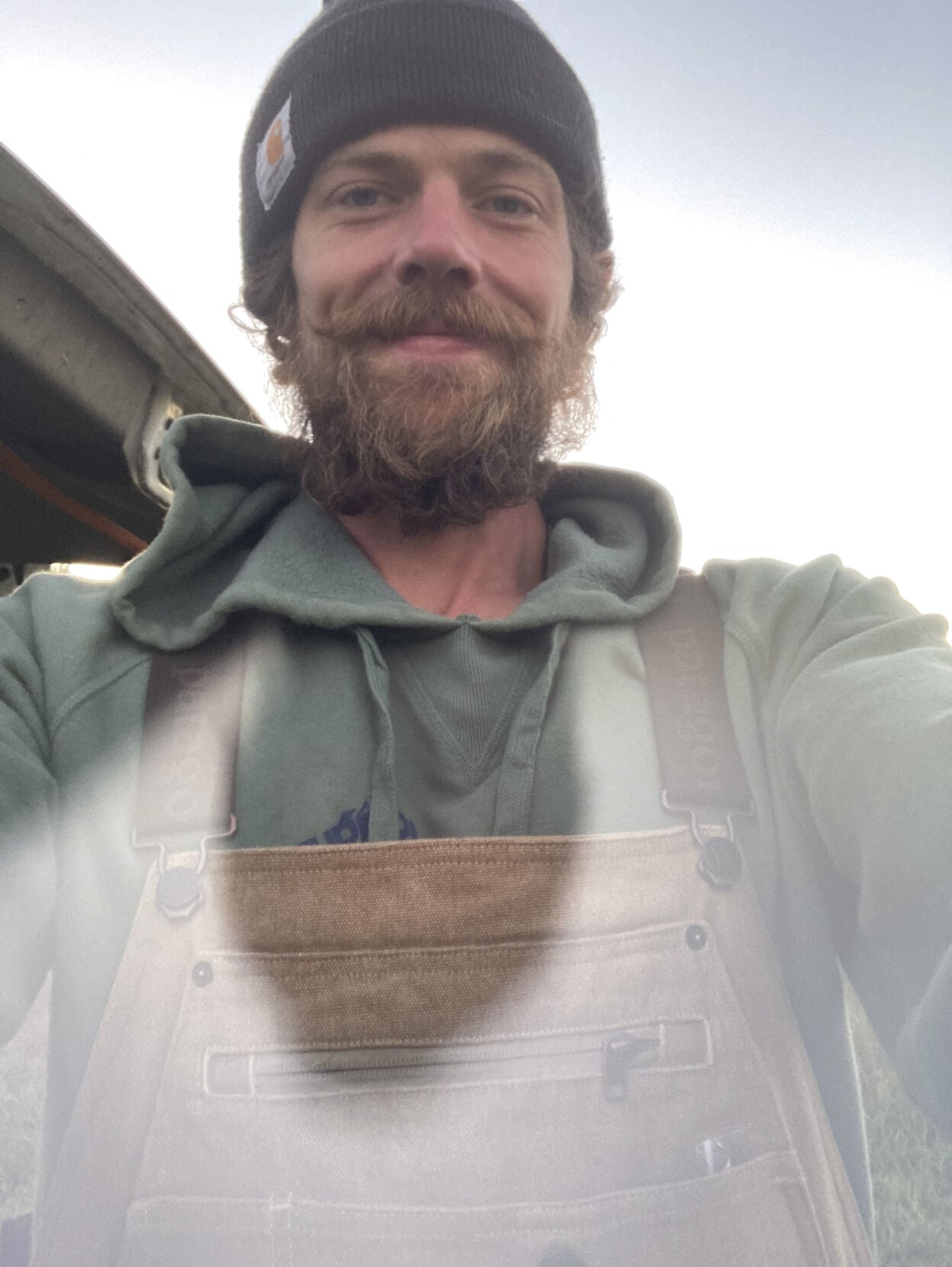
Spreading Forrest
Kreider’s ashes along a Michigan hiking trail was among
the 33-year-old’s final wishes.
His mother, Mary Wall, said her son grew up loving nature. He once
dreamed of having a slice of land where he could live off the grid
in self-sufficiency and sustainability, said his father, Shawn
Kreider.
Forrest’s father recalled how his son did not want the same life as
his grandfather, who struggled with manic depression.
“My father was hospitalized, and he was on medication,” Kreider
said. “Forrest did fear that because of what was happening with
himself.”
Diagnosed with bipolar disorder weeks before he died in Charleston’s jail, Forrest
refused counseling and corporate-made pharmaceuticals. He believed
his grandfather’s Parkinson’s Disease was linked to his lithium
prescription, according to legal records. He preferred to
calm his symptoms with natural remedies such as marijuana, kratom
or micro-doses of psilocybin, his family said.
“Forrest, all his adult life, he had been doing some kind of drug
to deal with the demons in his brain,” Wall said. “He called it his
medicine.”
His parents, divorced educators, said they could only push their
adult son so hard to get formal treatment.
Three years before his death, Wall sought to have her son
hospitalized after his condition grew increasingly erratic. Forrest
believed people were poisoning his air conditioning and following
him. He bought a gun and told his mom he was prepared to shoot
people he struggled to describe. He was evaluated at a hospital but
released a short time later after doctors determined he was not a
threat.
He called his mother and told her she would never see him
again.
Then he hit the road.
From there on, they only communicated sporadically by phone as he
traveled the country in a van and worked odd jobs. She always
reminded him he was loved, she said.
His father last saw him in December 2023 when Forrest helped him
move to another home in California. Then Forrest went back
East.
Mount Pleasant police would later describe Kreider as homeless in
January 2024 after arresting him for threatening a pier fisherman
with a knife.
His arrest initially brought some relief, his parents said. They
hoped his jail stay would lead to medication and long-term
treatment.
Four months later, he was dead.
His cellmates told state investigators he had discussed thoughts of
suicide. They were the first to discover the locked shower stall
where he ended his life.
Investigators noted Forrest had seen jail behavioral health staff and was scheduled
for a mental health evaluation shortly before his death. He had
agreed to take prescription medication but didn’t show up to
receive it in the hours before he was found in a shower stall,
according to a lawsuit.
In his cell, jail workers found evidence of his final thoughts.
In notes detailed by his parents, Forrest said he feared becoming a
burden and facing the uncertain future his assault charge carried
after police seized his live-in van. He said he had
tried his hardest, and asked them not to be upset.