


Caught in the cycle
PART 1
Hellish conditions, damaging delays and uncertain justice fuel
mental health crisis inside SC jails
By Glenn Smith,
Jocelyn Grzeszczak and Alan Hovorka
April 26, 2026
Hundreds of mentally ill people are languishing for months in South Carolina jails, deprived of needed treatment in a legal purgatory that feeds a cycle of incarceration, despair and avoidable deaths, a Post and Courier investigation has found.
Too sick to stand trial, these defendants remain stuck between slow-moving courts and an overloaded psychiatric system. They end up trapped in county jails ill-equipped to care for them.
This process delays justice for crime victims, bleeds money from taxpayers, and plunges desperate and vulnerable people even deeper into crisis.
In the end, some defendants serve more time behind bars than the maximum punishment for the crime they’re convicted of.
And some don’t make it out alive.
Since 2015, at least 102 mentally ill people have died in South Carolina jails from dehydration, suicide and other causes, according to a newspaper analysis of state, county and court records.
In one case, 28-year-old D’Angelo Brown died after rotting for months in a filthy Charleston County jail cell while awaiting treatment at a state psychiatric hospital. The county coroner drew a direct line to the system’s failures when she ruled his December 2022 death a homicide from “gross medical neglect.”

Nekeya Jones (left), mother of D’Angelo Brown, wipes away tears as she’s consoled by Joseph Jones during a June 8, 2025, vigil in North Charleston for those who died in the Sheriff Al Cannon Detention Center. Brown, who battled schizophrenia, died while in custody at the jail in December 2022.
File/Gavin McIntyre/Staff
A year and a half later, another mentally ill man named Lorenza Trapp died at age 62 from severe dehydration inside the same jail — the largest and, arguably, best equipped detention center in the state.
Many others exist in a crushing, repetitive loop of emergency hospitalizations, arrests and confinement — often without receiving any long-term care to manage their illnesses.
Strong consensus exists at nearly every level that South Carolina’s criminal justice system is in the midst of a mental health crisis and in dire need of repair. But there is less agreement about how to fix the problem.
“There’s no good outcome for this,” said former Assistant Sheriff Mitch Lucas, who ran Charleston County’s jail for 16 years before his retirement in 2021. “I’ve said this for a long time: If mentally ill people — mentally ill American citizens — were in a foreign country being treated the way a lot of the mentally ill inmates are in this country, the public would demand that the government go and rescue them.”
A serpentine shuffle
Key to this crisis is the long wait that defendants endure for court-ordered care to get them lucid enough to stand trial. In South Carolina, the holdup for competency restoration treatment has grown increasingly worse. It now drags out for eight months, on average.
Many sink deeper into an abyss of psychiatric distress during this period.
Legal experts argue the delay is unconstitutional and leaves the state exposed to a costly class-action lawsuit.
That gives the state a very real motivation “to fix this and fix it soon” — even if leaders aren’t moved by the harm inflicted on people, said Allen Chaney, legal director at American Civil Liberties Union of South Carolina.
A team of Post and Courier reporters obtained a rare glimpse into this harrowing world by examining the psychiatric evaluations of more than 200 Charleston County defendants awaiting trial over the past 15 years. Collectively, those records reveal troubling gaps in South Carolina’s fragmented mental health and criminal justice systems.
The experience of Charleston’s Gregory Bryant, 53, illustrates the cycle that often ensnares these defendants.
If you or someone you know is experiencing a mental health
crisis, contact the South Carolina Office of Mental Health’s
statewide Mobile Crisis Team, available 24/7/365: 833-364-2274.
South Carolina has a network of 16 community mental health
centers and dozens more local clinics that provide emergency and
outpatient services. To find a location nearest you, here.
National Suicide Prevention Hotline: Call or text 988.
Bryant stood accused of attacking a man and stealing his wallet outside the Medical University of South Carolina in January 2021 while free on bail from another crime. It took about 11 months for his mental competency to be evaluated, another six months before he was admitted to a psychiatric hospital and then two more months of restoration treatment before a judge deemed him unfit to stand trial in October 2022. Bryant then spent 10 more months stewing in jail while officials figured out what to do with him. He was ultimately released in August 2023.
This serpentine shuffle strains county resources, particularly in rural areas, leaving jails — and ultimately taxpayers — on the hook for triaging care.
Charleston County spends around $104 a day to hold a typical inmate. But it can cost up to three times more to house a mentally ill offender due to increased supervision and medication needs, officials said. If an inmate like Bryant came in at the higher end of that range, the tab for his 880-day stay would be around $274,000.
The personal costs to crime victims can be staggering, as well, leaving people like Anne Dickerson waiting years for some semblance of justice.
Anne Dickerson was shot in Beaufort by Isaiah Perdue, a mentally ill stranger who had stabbed a man in a North Charleston motel a week earlier.
By Grace Beahm Alford gbeahm@postandcourier.com
Dickerson, 78, was shot while jogging in her Beaufort neighborhood in April 2020. The gunman, a mentally ill stranger named Isaiah Perdue, had stabbed a man in a North Charleston motel a week earlier.
Dickerson waited three years before a judge found her attacker not guilty by reason of insanity and sent him to a psychiatric hospital. The move gave him a shot at future freedom while ignoring the damage done to her, said Dickerson, who has lingering mobility and speech problems from the shooting.
“It’s like there’s no public admittance — there’s no written acknowledgment — that he almost killed me and he changed my life,” she said.
A cache of records exposes problems
A host of similar stories can be found in the trove of records left unsealed by Charleston County court officials. This error left typically hidden records exposed to public inspection.
The Post and Courier discovered the breach in 2024 while reporting on the case of a homeless man accused of hacking a stranger to death with a hatchet on James Island two years earlier. The Charleston County Public Defender’s Office sued the newspaper to block it from publishing information from the defendant’s 31-page mental health evaluation. But a judge sided with the newspaper.
Reporters found about 200 similar evaluations that court officials had failed to seal in cases that ranged from property crimes like shoplifting to violent offenses such as murder and rape. The team’s review of these records opened an unexpected window into a dysfunctional, costly and, at times, inhumane system whose failings are normally kept hidden from the public.
Poor defendants and people of color are disproportionately represented in these records. Most have severe psychiatric conditions and histories of run-ins with police that built like a crescendo over time. Nearly all are men. Many struggle with drug and alcohol abuse.
Collectively, these 206 defendants had been charged or fined around 6,000 times in South Carolina throughout their lives, according to a Post and Courier analysis of criminal records. That’s an average of about 30 charges each. Nearly half had previously been examined for mental competency, according to the analysis.
Only some 15 defendants lacked a criminal record in the state before they were arrested for an offense that raised questions about their mental fitness.
A handful had more than 100 charges to their name, often for petty crimes like trespassing, shoplifting and public drunkenness.
These minor offenses rarely warrant a competency exam. South Carolina generally reserves those evaluations for more serious crimes. But that approach means the courts have fewer opportunities to assess struggling people and intervene before their behavior progressively worsens.
The evaluations often document lives riddled with trauma, abuse and dysfunction. They capture their subjects’ slow-motion unraveling while rotating between hospitals, jails and communities where they struggle to fit in.
For instance, Travis Woodward’s file showed at least 70 hospital visits between 2009 and 2022 for psychotic episodes, including several where the Charleston County man threatened to kill others. On one occasion, he reportedly bought a gun. Yet Woodward regularly wound up back on the street, at times within a day of seeking care. He racked up six charges along the way for crimes ranging from assault to property damage.
Lamont Cason’s parents called mobile crisis workers 87 times for help with their son’s psychotic episodes. His longest hospital stay lasted a month. Cason underwent competency restoration treatment after a 2016 burglary arrest. Ultimately, he received a 30-day sentence on a reduced charge of trespassing. By that time, Cason had already spent 13 months behind bars. He’s now back in jail and under competency review as he awaits trial on an assault charge.
Or consider the case of Denardo Felder who stabbed his brother to death in his North Charleston home in 2017. After two rounds of mental health evaluations, Felder posted bail in 2020 only to be arrested again after allegedly trying to stab another man. He eventually pleaded guilty to manslaughter in his brother’s death and was released in 2022 on community supervision after serving a short sentence. He, too, is back in jail after being accused of trying to stab his sister and two others.
To be sure, mental illness is not an indicator of violence. Research shows someone with a serious mental health condition is more likely to be a crime victim than an instigator. The unsealed court records reflect that reality and illuminate lifetimes of adversity faced by the majority of these defendants: sexual abuse, homelessness, exposure to homicide.
To better understand this world, Post and Courier reporters visited jails, prisons and psychiatric facilities, and interviewed more than 100 offenders, crime victims, mental health professionals, criminal justice personnel and experts. The team also reviewed at least 5,000 pages of reports, studies, detention records, court files and other documents.
The reporting revealed a system that, at its heart, aims to get people just well enough to punish them.
Not true care, but a ‘civics lesson’
That system revolves around competency restoration treatment. But it’s not designed to comprehensively manage defendants’ underlying illnesses, which often include schizophrenia and bipolar disorder. Nor is it intended to better their lives and put them on a path to be functional citizens. The goal is simply to help defendants understand their charges and meaningfully participate in legal proceedings.
The concept dates back to at least the 17th century, when English common law mandated defendants be mentally fit to stand trial. To achieve this goal, South Carolina uses a system that has remained fairly uniform for decades.
When a defendant’s competency is questioned, a judge orders a clinical evaluation to determine whether mental illness or an intellectual disability makes them unable to stand trial.
A page of the mental competency workbook taught to Aiken County jail inmates on Monday July 21, 2025, through the Aiken-Barnwell Mental Health Center.
Grace Beahm Alford/Staff
Treatment, if needed, consists of medication, basic education about legal procedures and targeted therapy — a process that took defendants an average of 130 days to complete last year.
Circuit Judge Frank Addy, who serves as a liaison between the courts and the state Office of Mental Health, likened it to a sixth-grade civics lesson.
“Restoration is not treatment in any sense of the word,” he said. “It is a very, very minimal effort to get that person to understand how court works. And that is it.”
If defendants successfully complete treatment, they return to jail or are released on bond to await trial. But they may end up waiting several more months for that to happen due to South Carolina’s backlogged court system. Some will slip back into mental crises during this wait, requiring additional care and perhaps another round of restoration treatment.
For most, this process unfolds at South Carolina’s lone public forensic psychiatric hospital, G. Werber Bryan in Columbia. It had a 165-person waiting list in March. The facility has 213 beds for criminal defendants — the same number it’s had for decades.
The G. Werber Bryan Psychiatric Hospital in Columbia is South Carolina’s lone public forensic hospital for mentally ill defendants.
Grace Beahm Alford/Staff
Meanwhile, the state’s population has swelled by more than a million people over the past 20 years. Its mental health needs have also grown.
Some 706,000 adults in South Carolina are said to have a mental health condition. That’s more than four times the population of Charleston, the state’s largest city.
Public Defender Cameron Blazer, whose office represents many mentally ill defendants in the Ninth Judicial Circuit, said the Office of Mental Health’s capacity hasn’t kept up with the state’s rapid growth, placing greater pressure on the entire system.
“I don’t care how fiscally conservative you are,” she said. “Every dollar we spend on mental health is $1 we save on jails, on prosecutions, on property loss from theft, on the devastating effects of interpersonal violence and crime that occurs in the crucible of mental illness that is untreated or unchecked.”
Public Defender Cameron Blazer at the Charleston County Courthouse, Thursday, April 16, 2026, in Charleston.
Grace Beahm Alford/Staff
The anxiety-inducing isolation of the COVID-19 pandemic added to the challenge. The state agency said it has seen a nearly 50 percent jump in court orders for competency restoration treatment since the pandemic.
This fuels fears that South Carolina is falling behind other states in finding alternatives to its one-size-fits-all approach to competency treatment. Experts warn that the system, as is, leaves the state vulnerable to legal challenges that could lead to costly penalties and reforms.
A number of states have already faced lawsuits over their lack of treatment capacity and long wait times, resulting in millions of dollars in fines to meet goals set by court-appointed monitors or the U.S. Department of Justice.
Washington State, for instance, has invested more than $2 billion over the past decade to add psychiatric beds, staff and other resources following a lawsuit challenging that state’s lengthy wait time for mentally ill inmates to receive competency treatment.
In an effort to reduce such delays in South Carolina, legislators rewrote state law in 2022 to allow restoration treatment to take place in detention centers. But four years later, Aiken County has the only program that’s fully up and running, largely due to a lack of funding and buy-in from county jails.
State mental health officials have tried to whittle the wait list by pre-screening defendants and diverting those they can to outpatient clinics and other care. But it hasn’t made much of a dent in the eight-month lag time before an inmate can receive restoration treatment in Columbia. It’s just kept that wait from getting worse.
Charleston’s Chief Administrative Judge Roger Young, a former state lawmaker, said the Legislature has the money needed to make changes. But competition for those funds is fierce. And many people don’t see helping mentally ill criminal defendants as a priority.
“It’s a lot easier to just pass that buck down to the jails than it is to create mental health institutions that they then have to staff and fund,” Young said.
Assistant Public Defender Martha Kent Runey offers support to her client Dwayne Green as he pleads guilty to a felony property crime in a Charleston County courtroom, Aug. 13, 2025. Green, who has schizophrenia and a history of shoplifting, stole two beers from a convenience store.
Grace Beahm Alford/Staff
Rising needs, dwindling resources
South Carolina, like many states, has struggled to care for its mentally ill in the decades since the country moved away from warehousing people in psychiatric institutions.
Since 1950, the number of people receiving care in state-owned psychiatric hospitals has dropped roughly 92 percent. This accompanied a transition to community-based care, a solution considered to be more humane and effective. But funding never materialized to fully realize that promise. The Great Recession and other economic troubles undercut those efforts even more.
South Carolina now ranks third from the bottom in access to mental health care, surpassing only Texas and Alabama.
Over time, much of the burden in caring for the most severely ill shifted to county jails and state prisons, which became de-facto asylums. While prisons at least offer a long-term path to treatment for some, jails cater to a revolving cast of inmates who may be gone before help arrives.
Jail is usually the last thing these people need, said former Charleston County Sheriff Kristin Graziano. But there are few other options when police are called in.
“There’s nowhere to take them,” she said. “So the easiest thing to do is put handcuffs on them, have some petty-ass (expletive) charge and take them to a jail when they need everything except that.”
Mental health courts are often touted as a means to alleviate this predicament, as they allow some low-level and non-violent offenders a chance to avoid prison by participating in supervised treatment. But their use and availability widely varies across the state. Charleston County had only seven defendants participating in its program in 2025, according to probate court data.
Neil Gowensmith, a forensic psychologist and professor at the University of Denver, said South Carolina’s struggles reflect the nation’s dysfunctional mental health system — one in which too many people wind up seeing police and correctional officers instead of doctors and social workers.
“I think we, as a country, have abdicated our responsibility to people with mental illness, away from people with licenses and towards people with badges,” Gowensmith said.
The scenario plays out again and again in the lives of people like Dwayne Green, who was busted in July, accused of swiping two 16-ounce Icehouse beers from a Charleston convenience store.
Schizophrenic and an alcoholic, Green has a decades-long history of shoplifting, according to court records. Judges didn’t always question his competency to stand trial. This time, rather than a 30-day misdemeanor charge, Green faced an enhanced penalty as a repeat offender that elevated his beer theft to a felony charge carrying up to 10 years in prison.
Green, 52, stared at the courtroom floor during an August hearing. He swayed side to side as a judge questioned him about the theft. His public defender placed a hand on his back to steady him.
“You couldn’t afford to buy two beers?” Circuit Judge Debra McCaslin asked.
“Not at that time, ma’am,” he replied.
McCaslin struggled to find a less-restrictive sentence than prison that would fit the crime and perhaps do Green some good. She said he needed stable housing and treatment. But such resources were in short supply.
McCaslin ultimately suspended a five-year prison sentence to roughly two months in jail plus probation so state agents could find him a suitable place to live.
“Mr. Green, you have to quit stealing. Even if it is a beer,” she said, and asked whether Green understood.
“Could you explain it a little more?” he said.
Green’s left arm uncontrollably shook as the judge slowly described his sentence again.
He is now back in jail.
Faces of the cycle
Finding mental health care in prison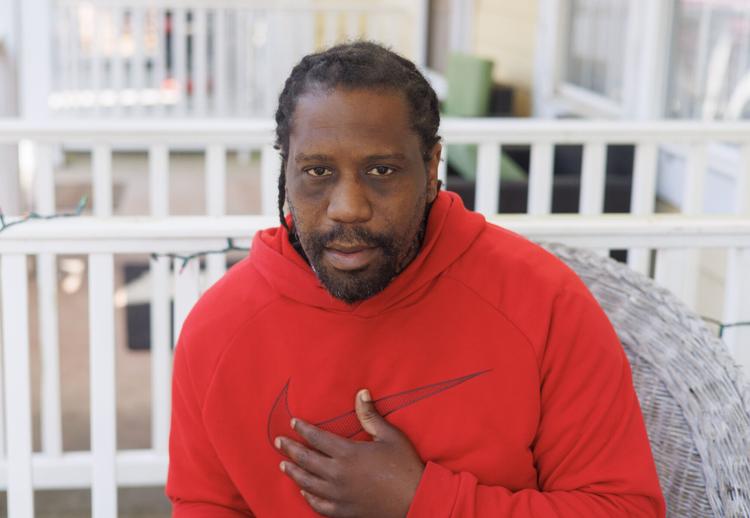
Travra Zanders can’t
recall exactly when he started hearing voices. But unwelcome
changes settled over his life as his promising childhood drew to a
close.
Zanders had been an honor roll student growing up in North
Charleston’s Midland Park neighborhood. But as he entered his
teenage years, his grades slipped. He failed seventh grade. And by
high school, he was out, expelled for selling marijuana.
Soon after, Zanders said, he fatally shot a man who tried to rob him during a drug deal. He
ultimately accepted a voluntary manslaughter plea without admitting
guilt. He was barely a legal adult when he started a 12-year prison
sentence in January 2000.
It was in prison that he finally told someone about the voices in
his head. Doctors there diagnosed him with a mental illness at age
19. His first taste of mental health treatment came inside a prison
psychiatric hospital. He returned three more times, with staff
noting a range of symptoms: bizarre behavior, hallucinations,
rambling speech.
Zanders said he got into fights with other inmates, which led to
long stretches in solitary confinement. Alone in his cell, the
voices grew louder.
“I can just remember being in the room all day,” he said. “I don’t
like being on my own because of that.”
Zanders’ diagnoses fluctuated. So did his medication, which he
didn’t always take. Doctors told him in 2008 that he had
schizophrenia, he said. The state paroled him in 2009 — about a
month after his last admission to the psychiatric hospital.
Zanders’ mother didn’t recognize the man he’d become, and his
family struggled to care for him, records show. Hospital visits and
calls for police became frequent. By 2012, he landed back in jail
after swiping at his mother’s boyfriend with a knife. Prosecutors
dropped the case in 2016 after he was found not competent to assist
in his own defense multiple times. A Columbia state mental health
facility released him in 2020.
Had he been able to stand trial, Zanders would have faced a maximum
punishment of three years behind bars on the assault charge — about
a year less than the time he was hospitalized.
Now 45, Zanders lives with his mother and still hears voices. He
has good and bad moments. He hopes to find love one day and be an
artist.
“I’m just trying to be the best person I can be while I’m here,” he
said on a recent afternoon.
But his front porch is as far into the outside world as he’ll
venture. A set of wicker furniture and a bowl of tightly packed
sand and cigarette butts mark the threshold he rarely crosses.
Zanders is afraid of people, of police, of suffering another
psychiatric crisis. And of returning to prison.

How we did it
This series began in
2024 with a tip that a man charged in a James Island hatchet
slaying would be involuntarily committed to a psychiatric facility
and a reporter’s discovery of his unsealed mental health
evaluation.
The document chronicled a revolving door of hospitalizations,
arrests and missed opportunities to provide help before tragedy
occurred.
The Charleston County Public Defender’s Office sued the newspaper
to prevent reporting on the document. The newspaper
prevailed just as reporters learned more than 200 other
defendants had their records exposed over 15 years.
A team of reporters examined thousands of pages from those cases
and sought to understand how those mental health histories
intersected with the justice system. The newspaper converted state
rap sheets into a database, obtained 25 years’ worth of Charleston
County court case data and assembled them into interconnected
datasets that totaled about 70,000 records.
Collectively, these data and records showed a dysfunctional system
that trapped people in a crushing cycle of emergency
hospitalizations, arrests and incarceration – often without
long-term care to manage their illnesses.
The newspaper used general artificial intelligence (Google Gemini)
to generate Python code to process this data. Journalists were
involved at every step. No sensitive records were provided to
artificial intelligence. Data journalist Hongyu
Liu and data analytics consultant Phil McDaniel were
critical in this process.
The reporting team went even further in analyzing hundreds of
in-custody deaths in South Carolina jails. Reporters identified
those people who died between 2015 and 2024 while struggling with
mental illness. Incarceration Transparency, a project maintained by
University of South Carolina professors and students, was
foundational in this work. incarcerationtransparency.org
Understanding this information involved interviewing more than 100
mental health experts, court officials, offenders, victims, police
and others across six states. And the reporters reviewed more than
1,000 pages of government reports, academic studies and news
clippings from around the country.
The National Judicial Task Force to Examine State Courts’ Response
to Mental Illness provided crucial guidance in identifying states
working to improve their handling of mental competency cases.
Photos and Video: Grace Beahm Alford
Presentation: Brandon Lockett
Graphics: Brandon Lockett and Matthew Hill
Data: Alan Hovorka and Jocelyn Grzeszczak
Editing: Allison Nugent-Caruso, Jason Cato
and Jeff Taylor
