


Caught in the cycle
PART 4
SC’s history of failures, missed chances leaves mentally ill
desperate for care. How’d we get here?
By Jocelyn Grzeszczak,
Alan Hovorka and Glenn Smith
April 26, 2026
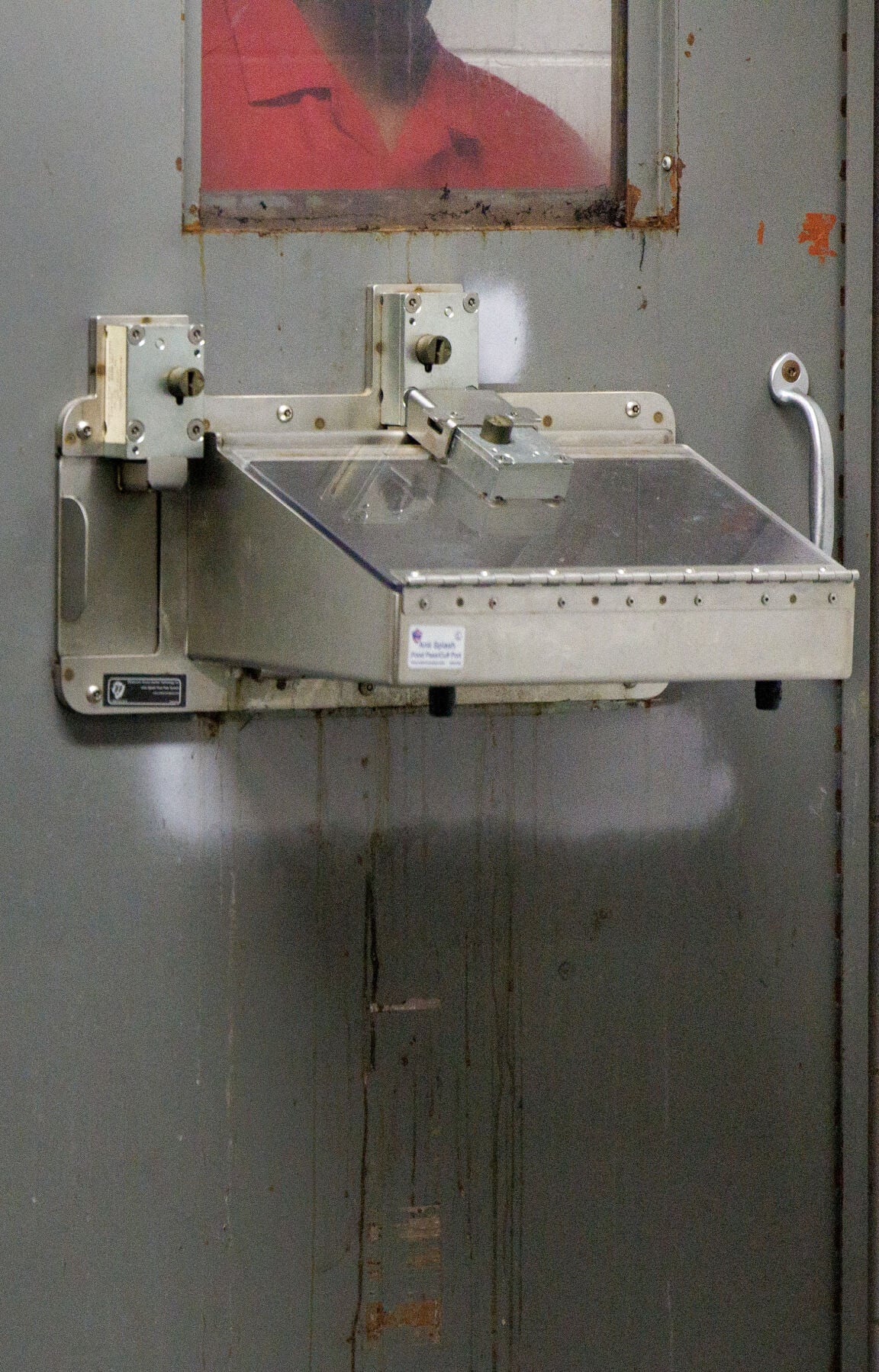
An inmate stands at the door of a secure unit at
the Aiken County jail on July 21, 2025.
GRACE BEAHM ALFORD/STAFF
An inmate stands at the door of a secure unit at
the Aiken County jail on July 21, 2025.
GRACE BEAHM ALFORD/STAFF
South Carolina lawmakers thought they had a solution.
Mentally ill inmates needed treatment to help them stand trial, but a state hospital lacked room. Wait times stretched for months, so legislators signed off on a fix:
They would bring that treatment straight to the jails.
Other states have long used this approach to save time — and money. But four years later, the Palmetto State’s effort has stalled due to a lack of funding and buy-in.
Only one program is fully up and running. Another shuttered when it ran out of cash. And a specialized unit that cost $180,000 to redesign has been collecting dust on the third floor of Charleston County’s jail.
If you or someone you know is experiencing a mental health
crisis, contact the South Carolina Office of Mental Health’s
statewide Mobile Crisis Team, available 24/7/365: 833-364-2274.
South Carolina has a network of 16 community mental health
centers and dozens more local clinics that provide emergency and
outpatient services. To find a location nearest you, here.
National Suicide Prevention Hotline: Call or text 988.
This failure is emblematic of the state’s approach to mental health care from its inception.
Investigations in the 20th century exposed dismal conditions inside South Carolina’s poorly funded psychiatric hospitals, where patients were subjected to abuse, neglect and worse. Shifting them from institutions to the community beginning in the 1960s changed their setting but did little to improve their fate. That’s because state lawmakers consistently shortchanged programs to help them live at home.
A trove of court records obtained by The Post and Courier underscores the ramifications of legislators’ failures. More than 200 psychiatric examinations of defendants in Charleston County — left open to the public by court error — show how this lack of community mental health resources helped funnel people into jails ill-prepared to care for them.

Extra mattresses are stored in the competency restoration unit at the Sheriff Al Cannon Detention Center in North Charleston on Sept. 10, 2025. Charleston County Sheriff Carl Ritchie said he has been working to get the staff and resources to open the unit in the state’s largest jail, where 11 inmates who struggled with mental illness have died over the past decade.
Grace Beahm Alford/Staff
Now, criminal courts are scrambling to solve a problem they never envisioned: overseeing hundreds of people with serious mental health conditions. Feeling like they have few other options, some desperate judges and attorneys raise the question of competency to secure help for these offenders. That can ensure a trip to a state hospital, with a goal of getting them temporarily well enough to stand trial.
“It’s the easiest lever to pull in terms of getting somebody treatment,” said Daniel Murrie, a psychologist and director of the University of Virginia’s Institute of Law, Psychiatry and Public Policy.
But this step comes with its own problems. In South Carolina, the competency restoration process clogs the court system and blocks the most desperate people from getting care in a timely manner, a Post and Courier investigation found. The average wait time is now eight months from the moment the state Office of Mental Health receives a judge’s treatment order.


This system is under immense strain, leaving South Carolina at risk of costly federal civil rights litigation, said Kelly Gothard, the mental health agency’s forensic services director.
And the state still hasn’t come up with the money or resources to fix the problem. While South Carolina’s general fund has nearly doubled over the last decade, the budget for its mental health agency has failed to keep pace, growing by just over 50 percent.
Jail-based treatment programs fall into this pot of neglected initiatives. Lawmakers voted to allow this new approach in 2022 but left the funding for others to figure out.
Again.
To better understand how this cycle began, we need to step back in time.
A pioneering state falls short in providing care
South Carolina in 1821 became an early pioneer of caring for the mentally ill when it decided to build one of the country’s first psychiatric hospitals.
The South Carolina Lunatic Asylum opened on Bull Street in Columbia seven years later with a mission to serve residents with mental illness — and any condition deemed “insane” in the antebellum era. Relatives or a court typically decided someone’s admittance.
The red-brick Greek Revival structure, featuring two wings and a basement, catered to a hodgepodge of patients. People with mental illnesses and developmental disabilities received care alongside epileptics, drug users, sexual deviants, heavy drinkers and the senile elderly. Indigent patients who had nowhere to go — or no one to take care of them — wound up in the building, which expanded over the years to accommodate a growing caseload.
A historic drawing of the South Carolina Lunatic Asylum on Bull Street at the State Archives in Columbia, March 6, 2026. South Carolina was an early pioneer of caring for the mentally ill, but has struggled to meet that need for decades.
Grace Beahm Alford/Staff
Conditions were dismal. An investigation in 1910 found bedbugs, lice and patients left in frigid rooms. Touring lawmakers saw people strapped to filthy beds.
The state began rethinking its approach around the 1960s, following a national trend of shifting care into the community. Much of this had to do with changes in federal funding.
Psychiatric institutions across the country brimmed with patients, reaching an all-time high of more than 550,000 people. South Carolina’s state hospitals peaked in 1962 at nearly 6,600 patients.
The federal government didn’t want to pick up the growing tab for this institutional care — a bill that became more expensive as civil rights lawsuits prompted reforms. So Congress backed a less-costly alternative that included more community-based mental health services and expanded access to new psychiatric medications.
A mental health display at the South Carolina State Archives in Columbia, March 6, 2026.
Grace Beahm Alford/Staff
South Carolina’s General Assembly followed the money. Patients whose conditions could be managed at home were redirected to a statewide network of community mental health centers and clinics.
The U.S. Supreme Court further solidified this approach in a landmark 1999 decision that barred states from locking the mentally ill away in isolated asylums far from their homes. Olmstead v. L.C. made clear the 1990 Americans with Disabilities Act required that people with psychiatric disabilities be treated in the least-restrictive setting.
“Toward local care,” or TLC, became a rallying cry in South Carolina for the mass emptying of hospitals.
But the state would soon realize that the promise of this strategy had been primed for failure from the very start.
‘Toward local chaos’
South Carolina’s spending on mental health already lagged behind other states. As far back as 1897, the chairman of the state psychiatric hospital complained it spent less on its patients than any such facility in the world.
More money flowed into the Department of Mental Health in the decades that followed. But it was never enough.
By the 1980s, only a quarter of the agency’s treatment funds went toward community mental health centers. That didn’t keep pace with a swelling caseload that had more than tripled in three decades. With the exception of Mississippi, no state spent less per capita on its mentally ill than South Carolina, officials said in 1984.
Dr. Richard Frierson worked as a psychiatrist for the state in the early 1990s. He had a front-row seat to deinstitutionalization and remembers joking with colleagues about a different kind of TLC: “toward local chaos.”
“They get out and there’s really nothing there for them,” Frierson said.
John Abernathy’s story, contained in psychiatric records uncovered by The Post and Courier, shows how this played out. Born in 1959, Abernathy started working in masonry at age 8 and later dropped out of high school. Schizophrenia set in when he was a young man, and he landed in the state’s asylum on Bull Street in the 1980s. He seemed to respond to treatment there and became well enough to be discharged.
But Abernathy’s problems increased as the state ramped up its shift toward community care. He went on to have roughly five dozen interactions with South Carolina police and the courts between 1984 and 2014, according to records reviewed by the newspaper. He faced 101 charges or citations in those three decades, along with stints of outpatient care and inpatient commitment.
His records show that run-ins with police became more frequent after his wife died in the mid-2000s. In the first half of 2009, Abernathy was in jail on a near-monthly basis, mostly for drug offenses and trespassing.
Around that time, the nation went through two periods of economic upheaval that had profound consequences for South Carolina and its mentally ill population.
Between 2001 and 2008, fallout from the dot-com bust and the Great Recession further hollowed out the state budget for mental health services. This resulted in steep cuts to staffing, inpatient bed space and community programs across the state.
The Department of Mental Health never recovered. Jails and prisons became the new asylums amid this backdrop.
A prisoner huddles beneath a blanket in his cell at Gilliam Psychiatric Hospital in Kirkland Correctional Institution in Columbia on June 26, 2025. Jails and prisons took on a greater burden of care for the mentally ill after the state shifted to community treatment but failed to properly fund it, experts say.
Grace Beahm Alford/Staff
The population inside South Carolina’s state psychiatric hospitals plummeted 93 percent from its peak in the 1960s to around 440 people today. Its prison system, meanwhile, went from housing about 2,300 inmates to roughly 16,500 last year. A third of them received mental health care, according to officials at the S.C. Department of Corrections.
A shrinking capacity to treat people in the community sets up a troubling cycle, said Murrie, the University of Virginia psychologist.
“At its worst, you could have a pattern where arrest is the main route to treatment for somebody without financial resources,” he said.
‘The cost of doing nothing’
Experts say a strong community mental health system is key to keeping people like John Abnerathy on the right path and away from the justice system.
But so far, South Carolina is falling short in that mission — despite increasing scrutiny of its patchwork system of hospitals, clinics, jails, prisons and group homes that help care for the mentally ill.
Gov. Henry McMaster raised alarms about the state’s mental health crisis in his Jan. 19, 2022, annual address to the Legislature. He particularly feared for children who had endured isolation and disruptions under the COVID-19 pandemic. He floated additional privatization of services. And he created a task force to review the state’s behavioral health system.
“The cost of doing nothing is unimaginable,” McMaster said. “And the damage, well, the damage will likely be immeasurable.”
A 2024 report commissioned by the state concluded that South Carolina had the most fragmented health and human services structure in the nation, with eight independent agencies. It had three times fewer mental health facilities per capita than other states and a below-average supply of psychologists. This put pressure on the state’s hospital emergency rooms, which treat more behavioral health patients than other states, according to the report.
Armed with about $65 million, the task force funneled money to private hospitals to build new mental health care hubs and specialized crisis units that divert psychiatric patients from ERs. But lawmakers directed few new dollars from that pool to the state’s public mental health agency.
The U.S. Justice Department sued the state in December 2024 for using South Carolina’s network of around 250 assisted living facilities as “little asylums” with poor conditions. A federal investigation accused the state of unnecessarily sequestering thousands of people with serious mental illnesses in these group homes, including some people found not competent to stand trial. The facilities often serve as the first stop after inpatient care, with stays typically lasting five years.
McMaster’s office blasted the lawsuit as “political lawfare” by the outgoing Biden administration while acknowledging reforms were needed.
The following year, the governor signed a bill merging the state’s separate mental health, addiction and disabilities departments into one cabinet-level agency. The state also settled with the Justice Department — a move that required the expansion of community-based mental health services.
State mental health officials sought an extra $1.1 million to pay for changes such as supportive housing, intensive treatment teams and job programs. It’s left their department pulled once again in many directions, still scrambling to find money to treat those in its care.
And the wait list in the jails keeps growing.
Working in the margins
In the absence of legislative buy-in, the mental health agency has been working in the margins, scraping for low-cost remedies to ease the strain.
Last spring, the Office of Mental Health launched a new screening program to flag defendants who don’t need to wait for a mental competency exam. Those people are then diverted to other services. Defense attorneys can request a screening for their clients before they seek a court order for a psychiatric evaluation.
The service should have been implemented years ago, said Frank Addy, a circuit judge who acts as a liaison between the judicial system and mental health department. So far, it’s prevented more than 100 cases across the state from entering the competency pipeline.
Kelly Gothard, forensic services director for the state Office of Mental Health.
Provided
Kelly Gothard, the Office of Mental Health’s forensic services director, also cobbled together a statewide team who travels to jails to better identify inmates at risk of a crisis. Their goal is to get them medicated before they become too ill for trial.
The agency’s workers are already playing a key role in Aiken County, which hosts the state’s only fully operational jail-based restoration program. It launched in the jail there in 2023.
Weekly group sessions of courtroom education and therapy take place inside a spartan, cinderblock room containing only a table and a couple of chairs. Sessions include workbooks that cover topics from communicating with a lawyer to coping with stress and difficult emotions.
The program has a 10-person capacity, and mental health staff will often tailor treatment to the defendant’s specific symptoms.
Twenty-six inmates as of March had either completed or were moving through the program. Among those who finished, roughly half became competent to stand trial.
Maj. Nick Gallam, Aiken County’s jail administrator, oversees what has been the state’s lone jail-based competency restoration program. He said the state needs more inpatient psychiatric beds. “There are some people in this population that are not going to be able to maintain in society,” he said. “And that’s unfortunate.”
Grace Beahm Alford/Staff
The Office of Mental Health estimates the program has saved South Carolina taxpayers $2.5 million in additional inpatient bed costs. And it shaved at least 6,240 days — a staggering 17 years — off the time defendants stewed in jail, waiting for their cases to be resolved.
The department has asked the General Assembly for money to replicate programs like the one in Aiken. Lawmakers have so far failed to deliver.
The issue seems to have largely dropped off legislators’ radar. Several who played a role in the law’s passage couldn’t speak to its lack of progress.
“I just really don’t know what the current status of it is, or the wait times even,” said Senate Minority Leader Brad Hutto, an Orangeburg Democrat and defense attorney who chaired the subcommittee that advanced the legislation.
But some lawmakers worry the state is putting itself at risk by not paying attention to the problem.
Sen. Tom Davis, a Beaufort Republican and attorney, suspects the lengthy wait times for restoration treatment violate federal law and leave the state open to legal challenges. Fixing the problem will cost money, but the cost of inaction could be far greater, he said.
Rep. Tommy Pope, a York Republican and former solicitor, said South Carolina is “woefully failing everywhere” on mental health issues. But competing priorities in the Statehouse make it difficult to get traction on the problem, he said.
Pope has two pending bills aimed at expanding treatment options for mentally ill inmates. Both are stalled in committee.
Without such options — and replicating restoration programs like Aiken’s — many struggling inmates will grow worse while waiting months to get care, Pope said. And as Aiken’s program shows, he said, getting treatment to people quicker can save money in the long run while getting them the help they desperately need.
“That’s a crazy idea that we might help people,” he said.
The recreation space sits empty in the competency restoration unit at Sheriff Al Cannon Detention Center in North Charleston on Sept. 10, 2025. For more than two years, the unit lacked the staff and resources needed to open, officials said.
Grace Beahm Alford/Staff
Charleston unit sits empty of all but promise
In Charleston County, a 21-bed restoration unit that could reduce treatment wait times sits empty and idle.
Then-Sheriff Kristin Graziano showed off the $180,000 redesign in September 2023. With its calming colors, sound-dampening carpet and smoothly contoured furniture, the unit was meant to be a respite from chaos. But it has yet to house its intended occupants.
Graziano accused Sheriff Carl Ritchie, her successor, of mothballing the program due to a lack of interest. Ritchie countered that Graziano’s plans were premature. The jail didn’t have the money or manpower to run the unit, he said.
“Those are things that we’re going to work to overcome,” Ritchie said.
The county would also need to sign off on a state requirement allowing for inmates to be medicated, even over their objections. This has proved a hurdle elsewhere across South Carolina. So far, Aiken’s jail is the only one to sign off on the policy. Some counties remain uneasy about potential liability and litigation from forcing medications on people.
The Charleston County Sheriff’s Office has not announced a timetable for opening the unit. But in response to questions from The Post and Courier, the agency did reveal on April 23 that it had recently launched a pilot program with the Office of Mental Health and other partners to provide competency restoration to a handful of inmates. Sheriff’s officials did not reveal specifics about the effort.
Writing on the windows of cells inside the competency restoration unit at the Sheriff Al Cannon Detention Center, Wednesday, September 10, 2025, in North Charleston.
Grace Beahm Alford/Staff
In the meantime, Charleston County’s restoration wing is filled with promise but little else.
A row of deserted cells. A closet stacked with unused mattresses. A mural with a bright blue sky, floating lily pads, lush green hills and no one to look at it.
Jamal Sutherland, a 31-year-old Goose Creek man who died on a floor below in the throes of a mental health episode, inspired the mural. Sutherland would visit this tranquil pond in his family’s backyard every morning after waking up. He found peace in the water, Amy Sutherland said of her son.
Harold Ancrum feels his new chance begins by managing his bipolar disorder.
By Gavin McIntyre gmcintyre@postandcourier.com
The county’s failure to open the unit has brought her a certain sadness and frustration: “God has given you a place to put people who need to be there, and you didn’t put them,” she said.
It was too late for her child. But she hopes the unit — and the mural — will bring comfort to those who may someday fill its walls.
Faces of the cycle
Starting over after decades in prison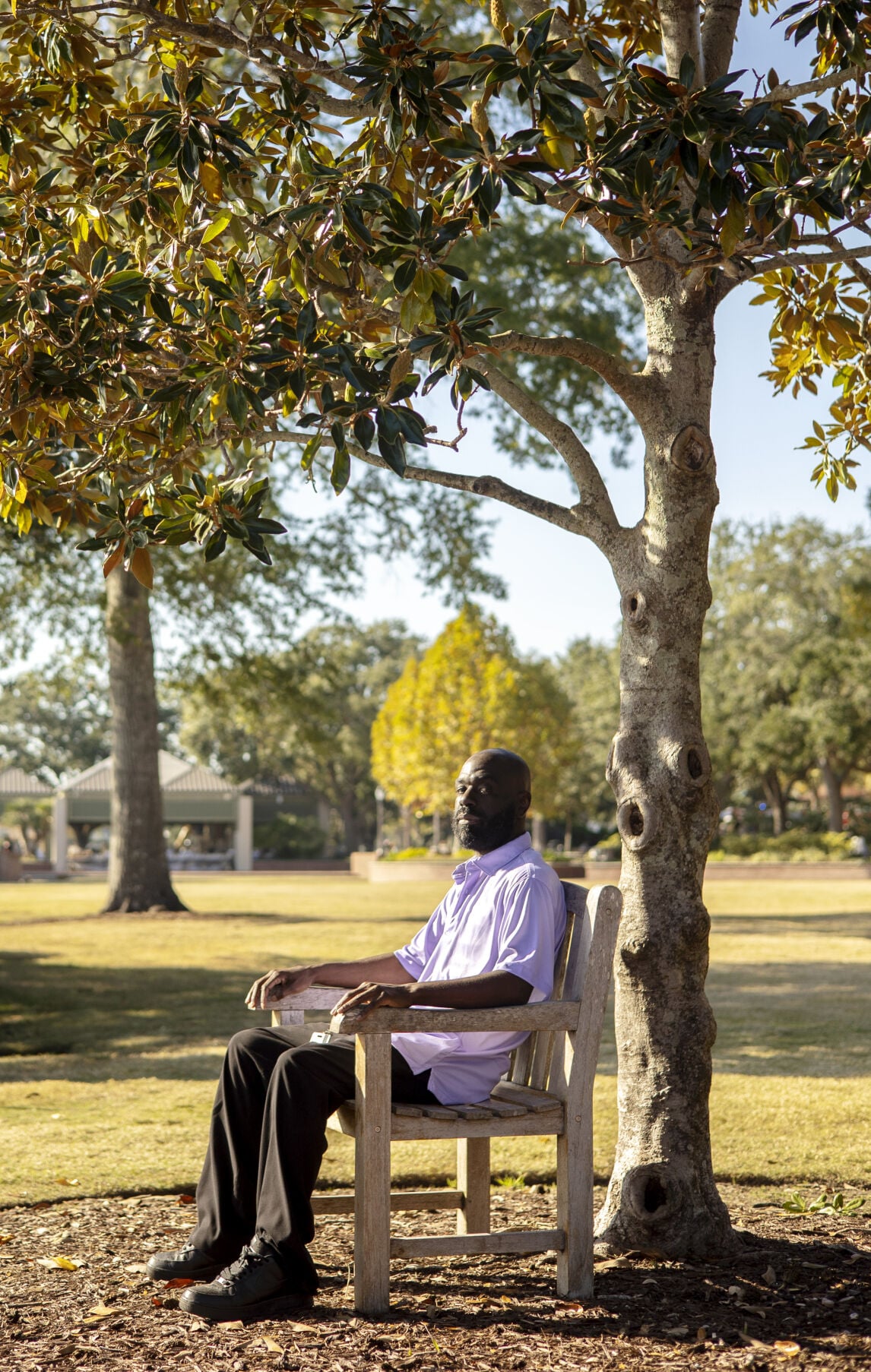
At age 48, Harold
Ancrum can measure much of his life in prison terms.
Around a year in 1995 for carrying a concealed weapon, among other
charges. Nine in 1997 for strong-arm robbery. Another 18 months in
2007 for spitting on a nurse. And a decade in 2015 for his role in
a Jasper County armed robbery. In between, he piled on more than a
dozen other charges, spending short stints in Lowcountry jails.
As a quiet child with an occasional stutter, everyone thought
Ancrum was “slow,” he told The Post and Courier. He fell in with
the wrong crowd, playing hooky and getting into trouble. He caught
his first charges as an adult in 1995 — the same year he found work
at McDonald’s, flipping burgers and cleaning grills.
He had to quit after he started “feeling funny.” At six months,
it’s still the longest he’s ever held a job.
Ancrum said he didn’t receive mental health treatment until the
tail end of his second prison stint. He was admitted to the
prison’s psychiatric hospital, where he reported visions of “little
green men,” according to a copy of his court-ordered evaluation. He
later became delusional, unsure of the date or time. He wasn’t
taking medicine and only sporadically ate.
“I was like, out of my mind,” Ancrum recalled.
When he left prison in 2006, staff told Ancrum to seek treatment
for his bipolar disorder at a mental health center in Beaufort. He
went to appointments but still rebuffed medication, unsure of what
it was for.
Staff there sent Ancrum in 2010 to live at a homeless shelter in
Charleston, he said. He wound up sleeping underneath an overpass.
Trips to jail started piling up.
“Every time I got out, I go back,” he said. “Get out, go back. Get
out, go back. Get out, go back.”
A judge in the summer of 2011 signed an order to evaluate Ancrum’s
ability to stand trial for a slew of charges: second-degree assault
and battery, indecent exposure and breaking into a car.
Examiners found him incompetent, and a judge sent him to the state
psychiatric hospital in Columbia for restoration treatment. Ancrum
remembers clinicians watching him all day, never knowing what they
were saying about him.
He was glad when they ultimately said his case could move
forward.
Ancrum pleaded guilty to two charges and received a sentence of
time served. The other charge was dismissed. But he was back in
prison by 2015 — not long before the S.C. Department of Corrections
began making much-needed improvements to its mental health services
as a result of a class-action lawsuit.
This time, Ancrum consistently took his medicine and found meeting
with mental health staff to be helpful. He initially feared they
were trying to kill him when a doctor ordered an injection, he
recalled. But then he felt better.
“My problems went away,” Ancrum said. “I wonder why they didn’t
give me the shot before.”
Ancrum is nervous about readjusting to society after a decade spent
locked away. But he wants this time to be different. He knows he
has another chance. Keeping up with his appointments at the local
mental health center will be key, he said.
On Halloween, Ancrum’s niece picked him up from Kershaw
Correctional Institution in Lancaster County. She offered him
something to eat from a gas station. His request was simple: a
Pepsi, a bag of Fritos and a pack of Newport shorts.
Sometimes, Ancrum said, it’s good to start over.