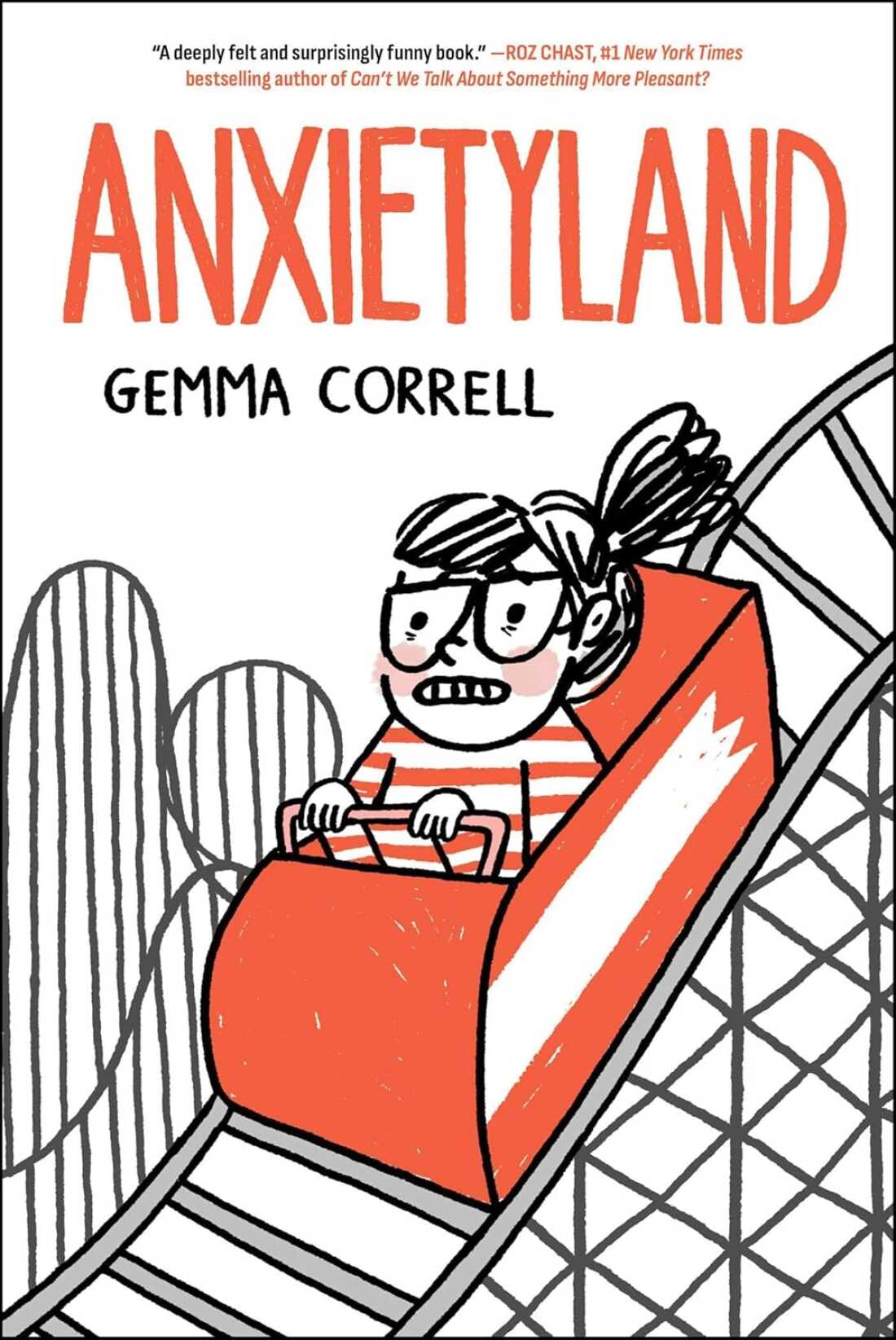
It’s 2018 and cartoonist Gemma Correll is not doing well. In the midst of a week-long panic attack, she is trying everything to get her nervous system to calm down. She tries long walks through her Northern California neighborhood, meditation apps, magnesium, and all the liquor in her home. Lying on the ground in the fetal position is her choice method. But nothing works.
Instead, she lies awake at night, gags at the sight of food, and since she can’t get her eyes to focus, ignores work deadlines. One week turns into several. She is unravelling.
Her spiral takes her down a rickety wooden rollercoaster into “The Abyss” of exhaustion and she begins to give up. Sitting on the floor crying to her husband, she says she needs to go to the hospital. Her husband agrees.
This is where Correll’s new graphic memoir Anxietyland begins – but it’s not where her relationship with anxiety begins. For that, she takes us back to her childhood and walks us through her life living in a terrible theme park called Anxietyland.
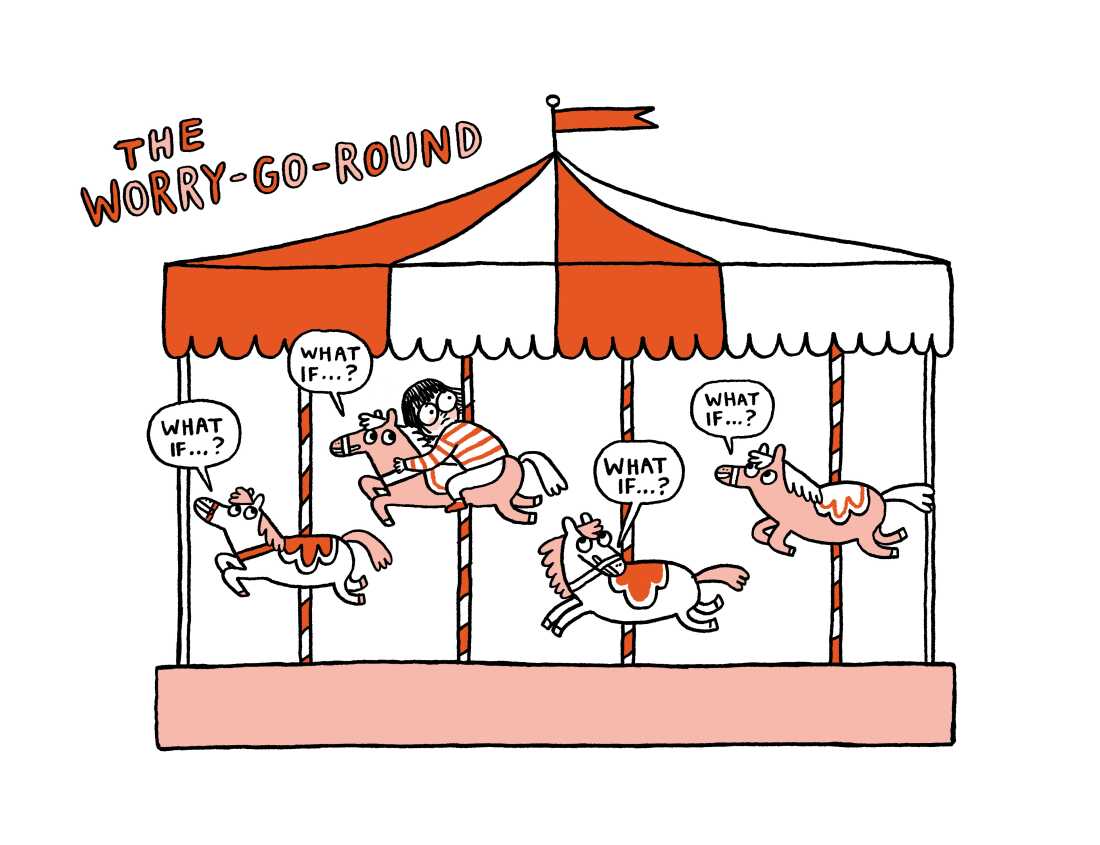
An image from Anxietyland.
Gemma Correll/Gallery Books
hide caption
toggle caption
Gemma Correll/Gallery Books
The theme park contains rides such as the Emotional Roller Coaster, the Worry-Go-Round and the House of No Fun. Yes, there are even clowns (so many clowns) in Anxietyland — and they are terrifyingly coming from a therapist’s office. You want to tell her to run, run as fast as she can out of there.

Ever since she was a kid, Correll has had this ever-present feeling like a pit in her stomach that she calls “The Bad Feeling.” Her drawn representation of the bad feeling is a sickly pink blob with sharp teeth, mean eyes and claws. It hovers over her and tells her nasty things to keep her afraid. When Correll is told she is over-sensitive, shy and even a freak, The Bad Feeling kicks her while she is down. She struggles to fit in, find friends, and feel safe. Her mind is often on the “Worry-go-round,” and she is hyper vigilant about keeping her cat Oliver safe from countless perils.
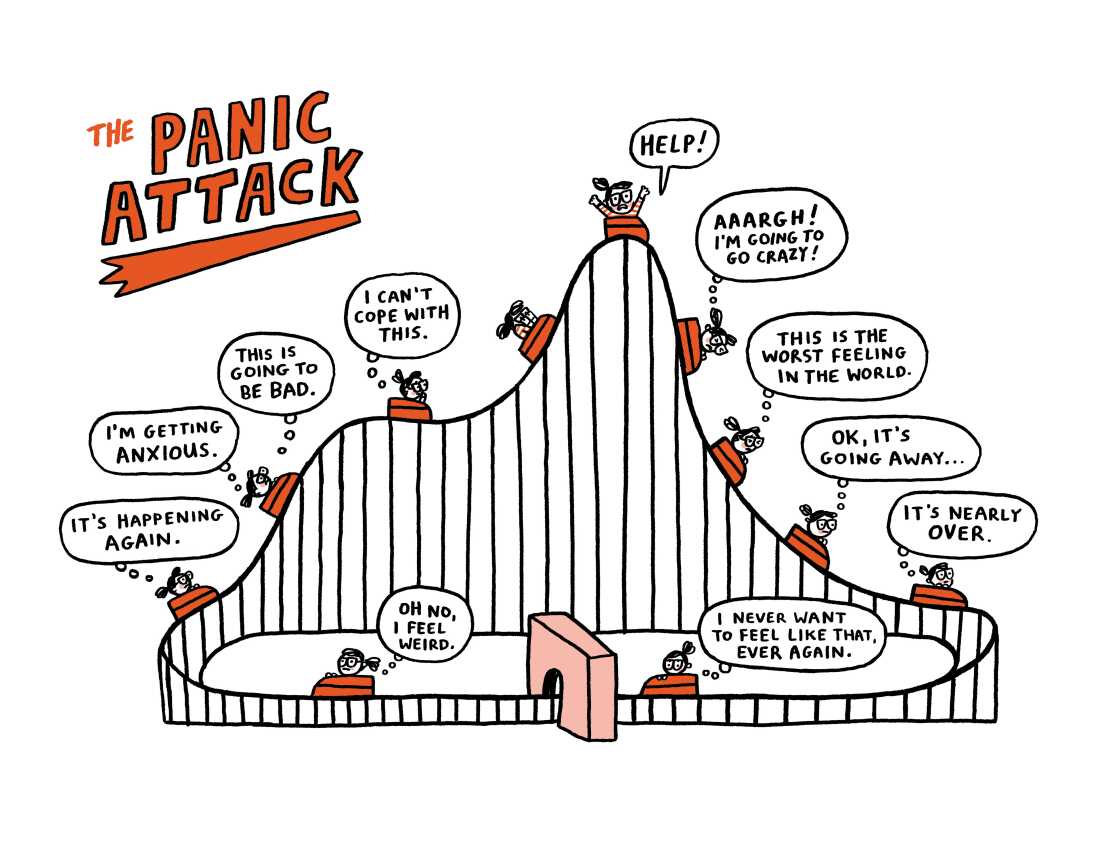
A page from Gemma Correll’s new memoir.
Gemma Correll/Gallery Books
hide caption
toggle caption
Gemma Correll/Gallery Books
Then the book flips to her life as a young adult, dealing with things like college, moving and paying bills. She tries therapy but has no luck so she pushes “The Bad Feeling” way down with alcohol and work. It’s a bandage for the time being.
Then it’s the present day, where Correll is dealing with her panic attacks. She ends up going to the hospital, and finds an outpatient mental health clinic to help her learn how to cope. There she learns the words for The Bad Feeling are Anxiety and Panic Disorder. She learns ways to cope with her mental state and her emotions. She processes, makes friends, and gets on medication.
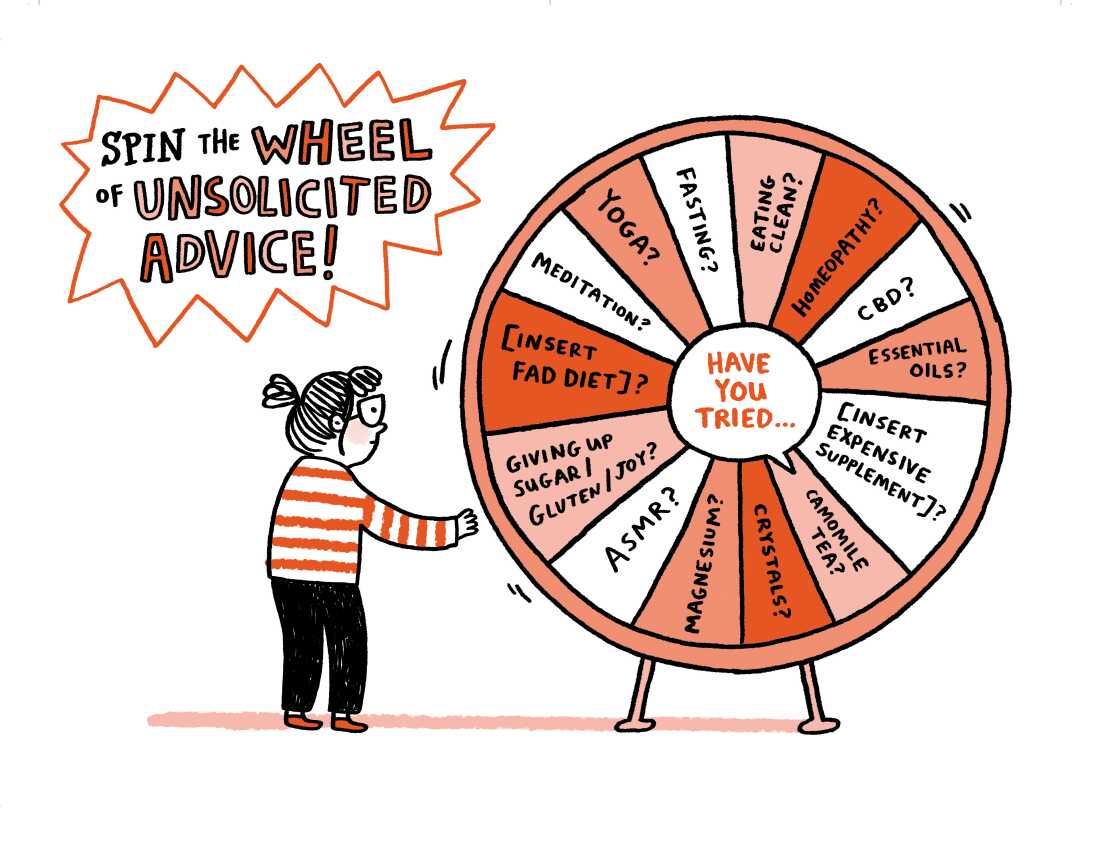
From Anxietyland.
Gemma Correll/Gallery Books
hide caption
toggle caption
Gemma Correll/Gallery Books
The biggest contrast in Anxietyland to me comes from the fact that Correll’s drawn world is so confident. Her linework is impeccable, her characters flawless, and her dialogue quick and witty. It’s almost a shock to learn how much she has struggled because the version of herself she has always presented, although self-deprecating, feels authentic and in control.

As someone who struggles to manage anxious thoughts, I know the inner world and outer presentation of a person can often be at odds. Through her confessional, I felt seen. But I selfishly wish there were more attention paid to the present day, where she is learning to cope; I kept waiting for some new nugget of information to help my own anxiety. But this is not a self-help book. It is a story of struggle and perseverance. Of how we perceive ourselves and how we want to be perceived. Of how everyone just wants to be accepted for who they are.
See, the thing about anxiety, Correll writes to her child self in the last part of the book, is that you can’t get rid of it entirely, but you can learn to cope. Through her art and therapy, Correll has learned to cope and continues to be a strong voice in the cartooning world.
Purchase BookAnxietyland by Gemma Correll