
Amid ongoing national discourse about the lasting impacts of social media and artificial intelligence on young brains, psychiatry experts gathered in Winter Park on April 29 to spotlight, and ultimately, raise questions about, the future of youth mental health in a digital age.
“We are here because there’s a mental health crisis in Colorado, particularly among our mountain communities, particularly among youth,” Dr. Scott Simpson, a keynote speaker of the event and a professor of psychiatry, said in an interview with Sky-Hi News.
Simpson and Dr. Sandra Fritsch, a fellow psychiatrist at the University of Colorado Anschutz, brought up several issues pertinent to youth in Colorado, including in rural mountain communities. Their research pointed to a clear message: reducing exposure to technology and social media is instrumental in preventing youth mental health issues.
Fritsch, Simpson and local attendees highlighted the importance of collective action, noting that Grand County schools could consider banning or limiting smartphone usage during the school day to ensure schoolwide compliance and accountability.
Phones, AI and modern education
Despite efforts to keep phones out of schools, students are increasingly utilizing phones and computers to access homework and class assignments, according to college psychiatry professional Matt Mishkind, who helped organize the event. Completing school assignments online, he said, can create confusion and further entrench technology use.
“We tell kids to get off their phones, but then everything is sent to them on an app,” Mishkind said. “All homework assignments are on an app, sports stuff, even parents are on the apps. No phones in schools is fine, but we need to get to a collective action where we stop sending kids to their phones.”
The data on rising artificial intelligence use in schools, however, points to a future in which technology use in public school systems is not slowing down anytime soon.
“We are here because there’s a mental health crisis in Colorado, particularly among our mountain communities, particularly among youth.”
Dr. Scott Simpson, Ph.D. psychiatry
According to the Institution of Education Sciences, 69% of public school leaders have a favorable view of teachers using AI for their job duties, and 72% of them moderately or strongly agreed that integrating AI tools into teaching and learning would make life easier for teachers.
Data from the National Center for Education Statistics show the extent to which public schools have implemented policies to limit cell phone use: 77% now prohibit students from using cell phones during any class.
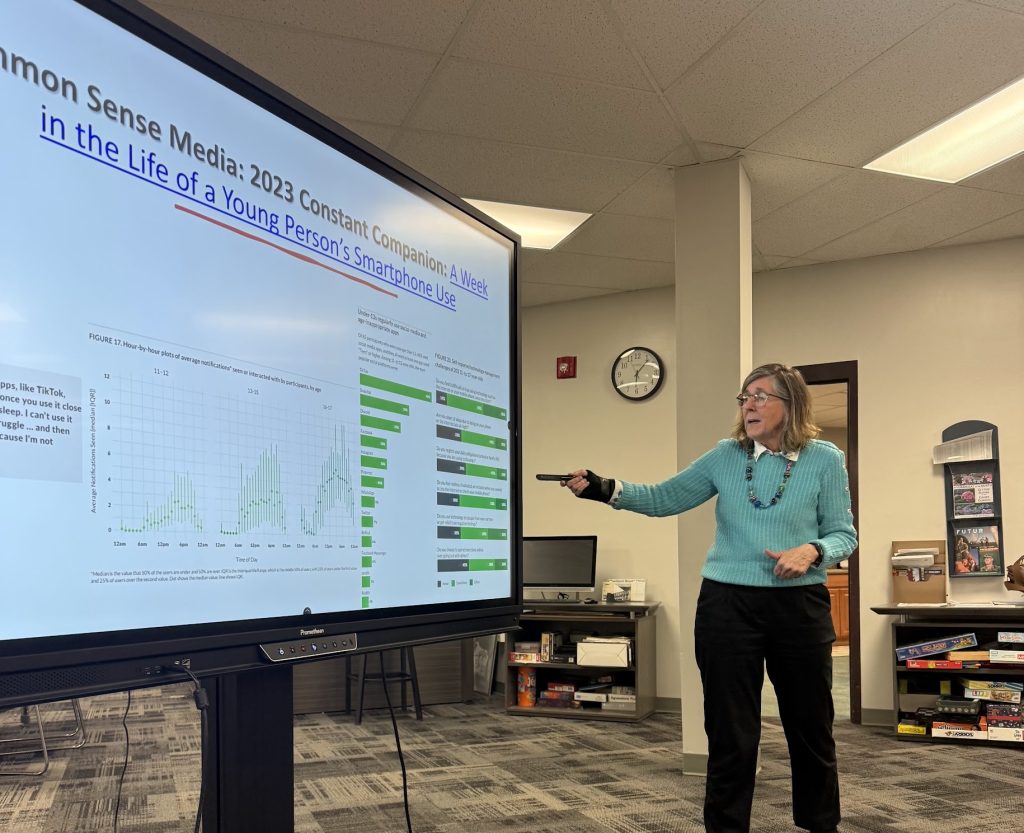 Dr. Sandra Fritsch speaks to students in Kremmling at West Grand High School about youth mental health on April 29 after delivering the same presentation in Winter Park that day. Scott Simpson/Courtesy photo
Limiting student phone usage has proven to be a successful model for improving mental health in learning environments, speakers said at the Winter Park event. Meanwhile, newly emerging AI models marketed as mental health and wellness tools can also be helpful. However, these tools should be used with caution and not in place of licensed professional care, they said.
Apps like Calm Harm, designed to prevent teenage self-harm, or ElizaGPT, ChatGPT’s AI therapist specializing in neuroscience and cognitive behavioral therapy, are paving the way for technology-based mental health treatment. However, solid evidence of their effectiveness remains in question.
“I have a hard time with non-evidence-based platforms, putting them up there and promoting that,” Fritsch said to the crowd. “But many of these things are actually being looked at and studied.”
Additionally, more technology may not be the solution to technologically driven problems, she pointed out. Solutions may look as simple as spending more time at third spaces, such as libraries or “places where we can bring people together” outside of work and school, she said.
Youth benefit from face-to-face interaction, including imaginary play, recess and real‑world social problem-solving, Fritsch said during the presentation. Device-free contexts, from summer camps to winter skiing excursions, are crucial to fostering real-world connection, she added.
Professionals note lack of mental health care providers
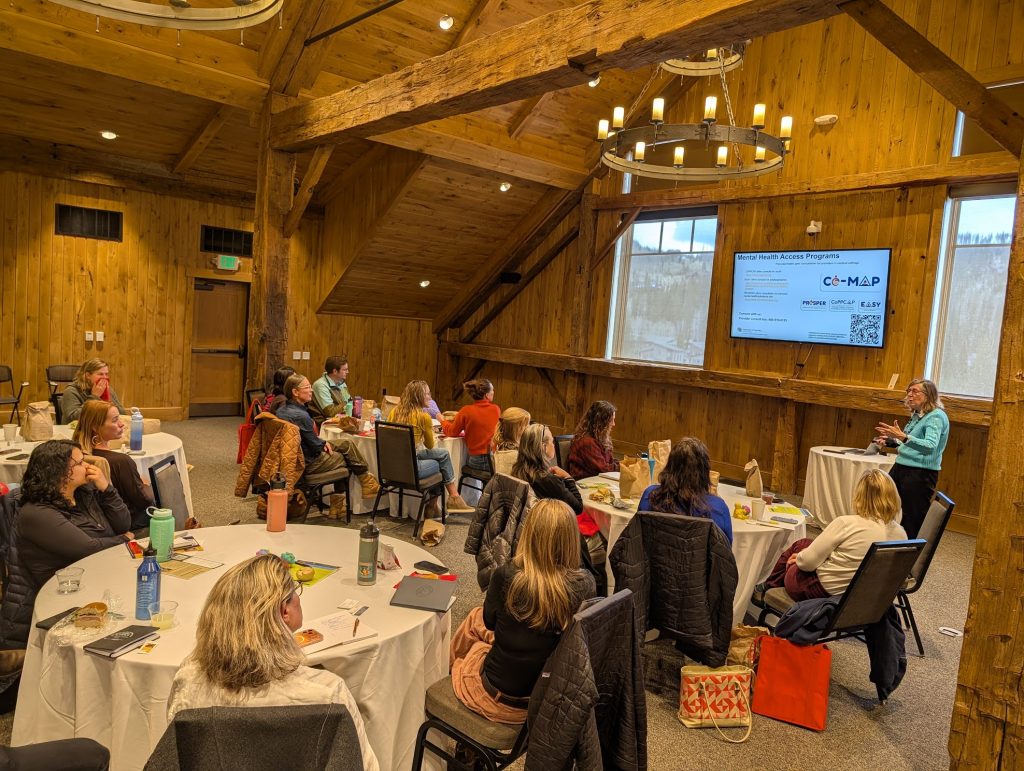 Dr. Sandra Fritsch, a psychiatrist at the University of Colorado Anschutz, presented a speaker series with Dr. Scott Simpson spotlighting youth mental health in rural communities on April 29.Izzy Wagner/Sky-Hi News
When it comes to counseling, in-person interaction is particularly important to fostering a safe environment for students to explore their emotions, local guidance counselors Brooklyn Fernandez and Ben Polonowski said.
As part of state regulations, school guidance counselors provide only temporary services and cannot serve as long-term therapists for students. Polonowski, who works with students at Middle Park High School, said that the limited number of licensed care providers in Grand County means he often has to refer students and families to the Front Range for long-term counseling services.
“If you have to go down to the Front Range, or to the Children’s Hospital, that’s two hours away,” he said. “To say to somebody, ‘You’re having a mental health crisis, but you have to do a four-hour round trip to go get support,’ maintains the stigma of where mental health services should be. And I think mental health support should be a right for all people to have access to, especially in rural communities.”
Another significant weakness in Grand County’s mental health support system, according to community care providers, is the lack of resources for Spanish speakers.
“There is a gap for our Spanish speakers in terms of what they need culturally,” Amanda Uehlein, executive director of Grand County Rural Health Network, said during the presentation. “Healthcare providers should be culturally aligned, rather than just competent in the language. While we have a couple of providers and telehealth options for Spanish speakers, it’s pretty minimal.”
School counseling services also fall short on offerings for Spanish-speaking students, according to Polonowski.
The future of youth mental health
 Young people and adults are increasingly turning towards social media and AI to connection and support. The popularity of unmonitored therapy chatbots like CalmHarm and ElizaGPT are on the rise. Andrew Maciejewski/Summit Daily News
The rise of digital media, increased isolation and high rates of depression and suicide in teens paint a challenging picture for navigating youth mental health in the future. Still, community members are diligently searching for answers.
“We have thought about how to rise to this challenge,” Simpson said, emphasizing the importance of free and expanded services such as psychiatric consultations and outreach programs for mental health crisis management.
“These programs are a step in the right direction, but what we’re hearing tonight is that there are so many more opportunities for us to address gaps in our system,” he added.
Addressing those gaps lies in community partnerships, Polonowski said. Schools and third spaces are critical support systems for youth, laying the foundation for how they navigate the rest of their lives.
“In a rural community like Grand County, the frontline is really our education system and schools,” Polonowski said. “We need mental health support available in the school … a healthy community should nurture and support everyone.”
What resources are available now?
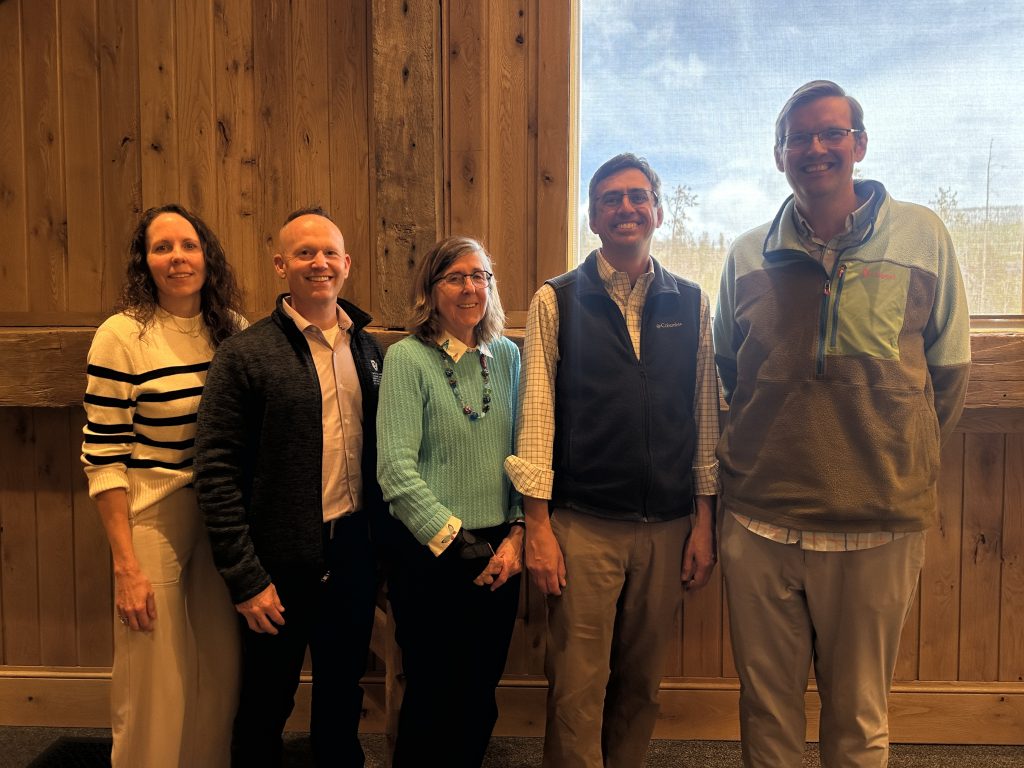 From left: Donna Reed, a local organizer with Reuniting Pathways; Matt Mishkind, a professional in the University of Colorado Anschutz psychiatry department; Dr. Sandra Fritsch, keynote speaker; Dr. Scott Simpson, keynote speaker and Ben Polonowski, a counselor at Middle Park High School, gather after a youth mental health event in Winter Park on April 29.Izzy Wagner/Sky-Hi News
For Grand County residents of all ages, mental health support is available.
The Grand County government website and Healthy Grand County have a resource list of mental health support services from crisis and suicide prevention lines to local therapy providers.
Building Hope Grand provides a comprehensive online guide to navigating mental health issues, including therapy, medication management, eating disorders, peer groups, psychological evaluations, financial assistance and more.
Grand County Rural Health Network provides many free services, including individual, group and community support groups for those affected by substance use. The organization is also spotlighting mental health as part of its “Light in the Valley” event series, which runs through June. More information on upcoming events is available on their event calendar.
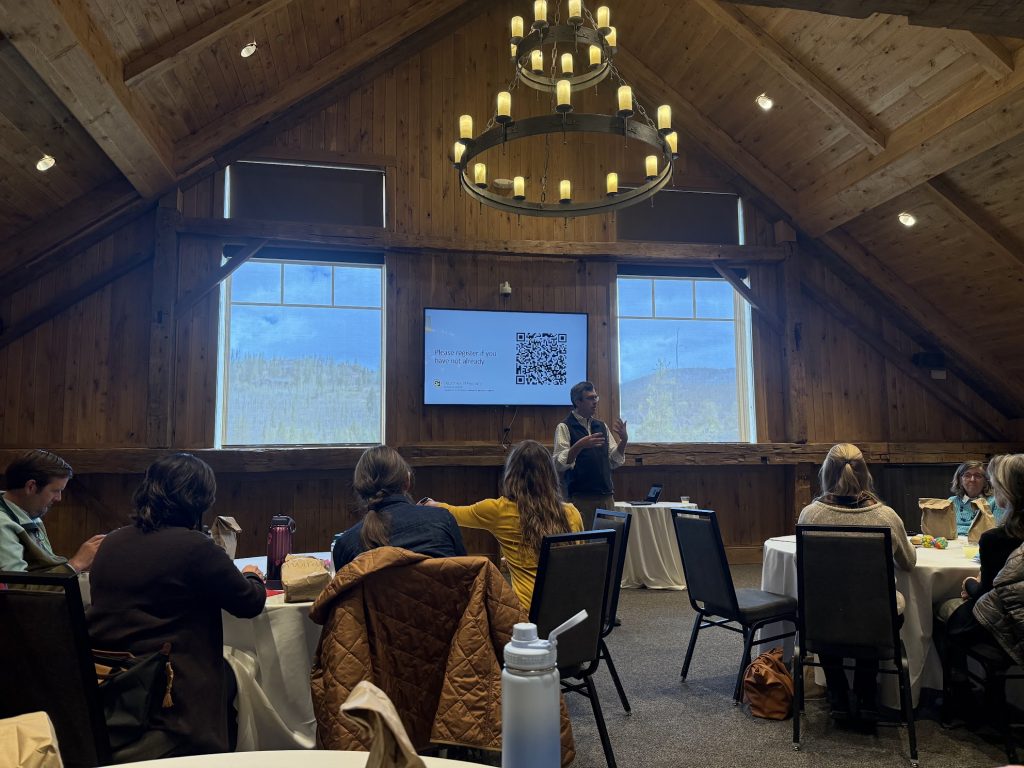 Dr. Scott Simpson is a psychiatrist at the University of Colorado Anschutz who presented at a youth mental health event in Winter Park on April 29. Izzy Wagner/Sky-Hi News