
The most dangerous part of the Brendan Sorsby story isn’t that it happened. It’s that it makes perfect sense. A highly paid star college quarterback tied to major gambling activity involving his own team. Reportedly “thousands” of bets ranging from games, props, and even individual plays. Now, he’s in sports betting rehab.
That should hit like a thunderbolt. Instead, it lands like a warning we’ve been ignoring. If you’re in sports media—on air, in production meetings, selling inventory, shaping coverage—you don’t get to treat that as someone else’s problem.
This isn’t just about players anymore. It’s about the system we’ve built around them.
Start with the leagues. The NFL, NBA, MLB, and NCAA didn’t cautiously step into gambling partnerships; they sprinted. Billions of dollars, integrated platforms, official data deals, naming rights, sponsorships.
This wasn’t survival. It was expansion.
Then came the networks, and this is where the media angle stops being passive and starts being active. Pregame shows that once broke down matchups now open with lines and movement. Halftime shows don’t just tell you what happened; they explain what it meant compared to the spread. In-game broadcasts casually reference odds like they’re part of the box score. Postgame shows frame outcomes not just in wins and losses, but in covers, with segments on ESPN celebrating bad beats.
A Growing Risk
The language has changed, and with it, the way the audience consumes the game.
Now it’s gone even deeper. Player props, micro-markets, and hyper-specific wagers on individual performance. Yards, rebounds, strikeouts, even sequences within games.
Add in the rise of prediction-style markets. Where outcomes tied to performance, availability, or even decisions can be speculated on in real time. Suddenly the experience isn’t just about who wins. It’s about everything. Every play, every possession, every substitution becomes a potential financial event.
That’s where the risk explodes.
When gambling focused only on outcomes—Team A versus Team B—there was at least a buffer. Compromising that result required something big, obvious, and difficult to execute. When the market shifts to player props and micro-events, the barrier drops dramatically.
You don’t need to fix a game. You just need to influence a moment.
A missed free throw, dropped pass, or a quiet defensive lapse or minutes reduction that doesn’t quite add up. These are small actions, almost invisible in the flow of a game, but significant in the context of a wager.
Now consider who sits at the center of that. Players. Especially college players.
The NCAA asks 18-, 19-, and 20-year-olds to exist in a world where gambling is everywhere. Advertised, discussed, normalized—while telling them they are completely off-limits from participating.
Yes, NIL money has changed the equation for some, but not for most. Most players aren’t cashing life-changing checks. They’re watching an entire ecosystem profit off wagers tied to their performance down to the smallest detail, while being told, “Don’t touch it.”
That’s not a guardrail, it’s a contradiction.
The Prop Problem
These contradictions create pressure. For the star quarterback, the risk isn’t worth it. For the backup, the role player, or the athlete without a financial cushion, the equation looks different. The system itself has made it clear how valuable even the smallest piece of performance can be.
That’s where this becomes dangerous. Not just for individuals, but for the integrity of the sport.
The nightmare scenario isn’t players placing bets. It’s players changing outcomes on a micro level. Not throwing a game in the obvious sense, but nudging moments. Influencing props. Affecting the margins that now matter just as much as the final score.
Once that possibility becomes credible—not proven in every case, just believable—the damage is done. Fans don’t need proof. They need doubt, and doubt spreads faster than any scandal.
So where do networks fit in? Right in the middle.
Network Responsibility
They’re not just covering games anymore; they’re contextualizing them through a gambling lens. Every mention of a prop, sponsored segment breaking down “value plays,” and every integration of prediction-style markets reinforces the idea that every element of performance has a price attached.
That’s a powerful message, and it comes with responsibility.
Right now, that responsibility is handled like a legal disclaimer. The quick “If you have a gambling problem, call 1-800…” graphic. The checkbox. It exists, but it carries little weight compared to the hours of programming that normalize—and now glamorize—gambling as part of the experience.
That imbalance matters. You can’t spend three hours making something look fun, accessible, and essential, then spend three seconds warning about the downside and call it responsible. That’s not education, it’s cover.
Hence, that’s why the cigarette comparison isn’t over the top; it’s instructive. There was a time when smoking wasn’t just accepted—it was embedded in culture. Athletes endorsed it. Ads glamorized it. The warnings existed, technically, but messaging drowned them out.
It took years, and real damage, before the system recalibrated. Gambling is following a similar path. Only faster, and with more direct ties to the product itself.
Which brings us back to the central question. Do networks run risks by diving this deep into sportsbook advertising and gambling-driven content? Of course they do, and those risks are growing.
Every added layer—props, micro-markets, prediction-style betting—tightens the connection between performance and money. The tighter that connection becomes, the more fragile the perception of legitimacy becomes.
Leagues have accepted the revenue. Networks have built it into broadcasts and are being paid a premium for it. Sportsbooks have expanded the menu. Everyone has a stake. That also means everyone shares responsibility.
A Shared Responsibility
Leagues need stronger guardrails, especially at the college level. Not just enforcement, but real education on how these markets work and how easily they can pull players into compromised situations.
Networks need to recalibrate the balance. Gambling can be part of the conversation, but it doesn’t need to dominate it. Not every pregame show needs to open with lines, and multiple odds updates. Not every postgame show needs to frame the night through betting outcomes.
The game itself must remain the centerpiece.
The messaging—the responsibility side—must be more than an afterthought. It needs to be more visible, more consistent, and more real. Right now, the industry is trying to have it both ways: profit from gambling while minimizing its impact.
Promote it relentlessly while warning about it briefly. That works, until it doesn’t.
Sorsby is a warning. Not the worst-case scenario—not even close. The worst-case scenario is the moment fans stop debating outcomes and start questioning them. Not just who won, but what was influenced along the way. The moment a missed free throw isn’t just a miss, but a question. The moment a quiet fourth quarter becomes something more than strategy.
That’s when the fabric starts to tear, and we may already be there.
No amount of ad revenue, partnership, or innovation in betting markets will matter. Sports don’t survive on wagers. They survive on belief. Right now, that belief is starting to feel like the riskiest bet of all.
Barrett Media produces daily content on the music, news, and sports media industries. Sign up for our newsletters to stay updated and get the latest information right in your inbox.
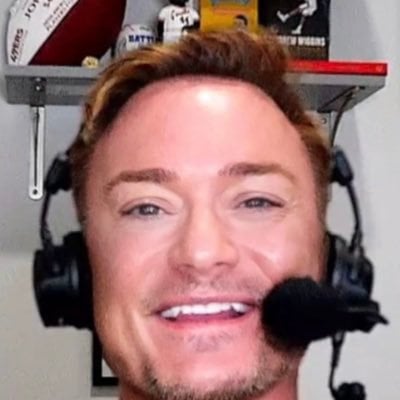
With decades of experience behind the mic, John Lund is more than a sports commentator and weekly columnist for Barrett Media—he’s a storyteller, humorist, and true fan. He’s hosted shows in mid sized markets like Pittsburgh and Salt Lake City to larger cities like San Francisco, Detroit and Dallas. John has even hosted nationally on ESPN Radio. Known for his sharp wit and deep sports knowledge, John welcomes your feedback. Reach him on X @JohnLundRadio or by email at John@JohnLundRadio.com.