
In a 2019 study surveying roughly 1,500 musicians, 75 percent reported suffering from some form of mental health difficulty. One of a number of such investigations conducted over recent years, it’s become evident that a growing contingent of the public is becoming aware of a major crisis for the many professional artists that populate the music industry. In his forthcoming book Sound Minds: Musicians on Mental Health, author (and FLOOD contributor) Mike Hilleary turns this statistical data into real anecdotal evidence.
Transforming exhaustive and intimate interviews into a series of first-person narratives, Sound Minds captures how artists such as Tegan and Sara’s Tegan Quin, Sharon Van Etten, Anjimile, and Jimmy Eat World’s Jim Adkins have confronted and grown from their own unique mental health challenges. In an exclusive excerpt from Sounds Minds ahead of its official release tomorrow via University of Tennessee Press, songwriter Cassandra Jenkins details her life growing up in New York City and how a series of traumas affected her emotional and mental well-being.
Read the excerpt below, and pre-order Sound Minds: Musicians on Mental Health here.
My household went through chaotic periods throughout high school. Both of my parents worked full-time, and when I was in the tenth grade, my mom was undergoing extensive cancer treatment. She’s seventy-four now and survived several different types of cancer, seven times over, and she’s the happiest I’ve ever seen her as she gets older. But when I was young, her illness and treatments weren’t something we talked about. I think we all have various forms of household dynamics that shape us, and I was shaped by my mom’s illness in ways I didn’t recognize until much later. If you look at my grades during the months my mother was undergoing treatment, her health and my academic performance are reciprocally correlated. I internalized everything, and my self-confidence took a hit. I assumed I wasn’t performing well because I lacked something compared to the girls I was friends with.
During this same period, as I watched my mother’s health decline, and eventually recover, I also developed some difficult relationships with food. It’s something I’m still struggling with. Because of food sensitivities and allergies I’ve experienced from a young age, my body often has adverse reactions to foods that most people enjoy regularly. And, naturally, if something makes you really sick, generally it makes sense to avoid it—poison ivy, insect bites, harmful chemicals, overexposure of any kind—and we build habits of avoidance as a way to protect ourselves from pain. That avoidance becomes more complicated when you have a parent who’s ill and has breast cancer, and you encounter messaging around food like “These foods help prevent cancer” or vise versa, “These foods cause cancer.” Many years later, when my mom was undergoing colon cancer treatment, I didn’t realize how triggered my relationship to food had become until I took on the role of a caretaker. As I followed regimens given to her by her surgeons, I felt the weight of her survival in food preparation; I made no mistakes, though their advice was often contradictory or outdated. So while caretaking, I was facing my fears around whether or not I was doing everything I can to care for someone I love, in part by making sure that I was feeding her correctly, while I was simultaneously triggering my own kind of controlled eating. As a result of these experiences, I have often tried to maintain my health by eating in a way that I have understood to be healthy, and I’ve had a tough go with it.
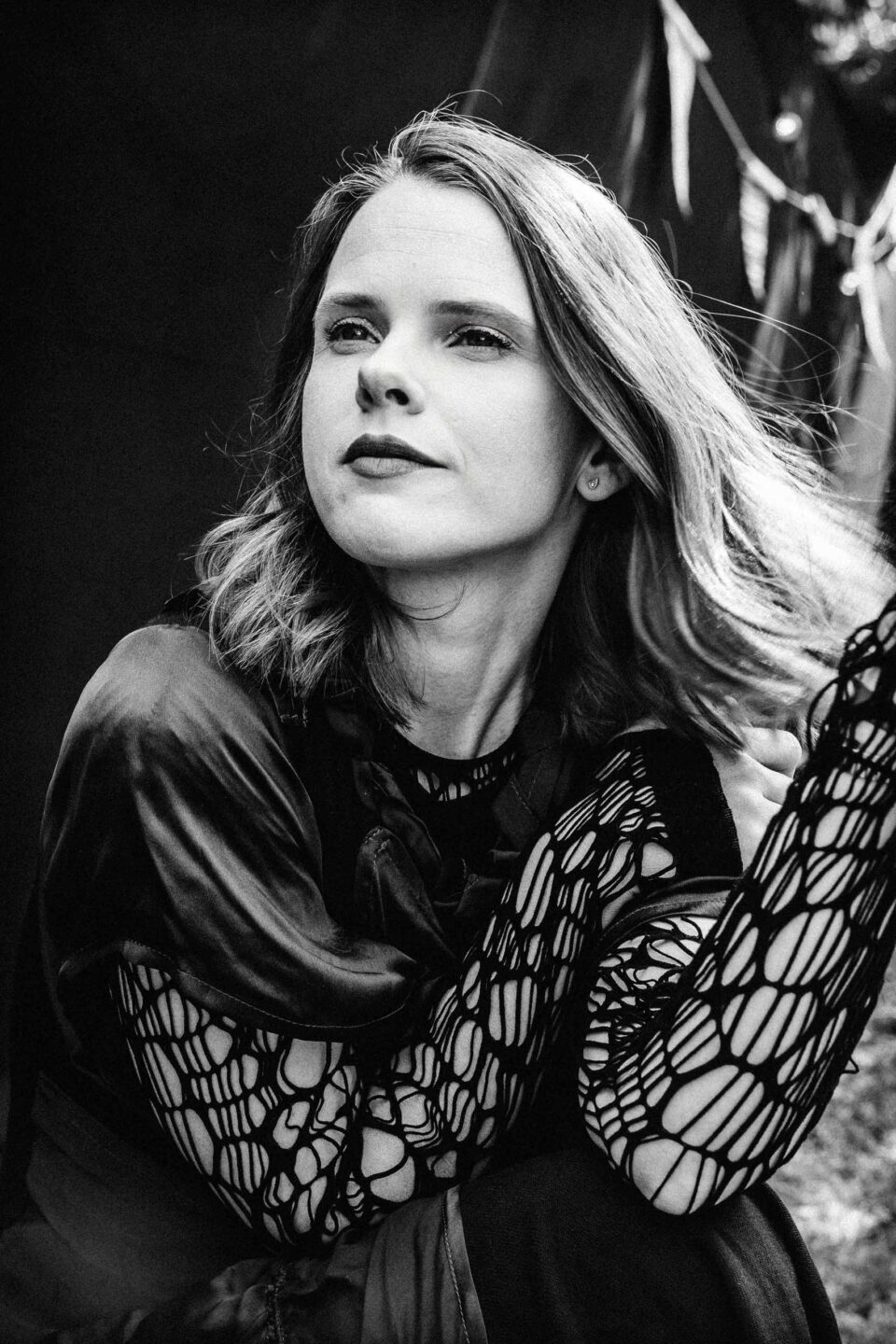
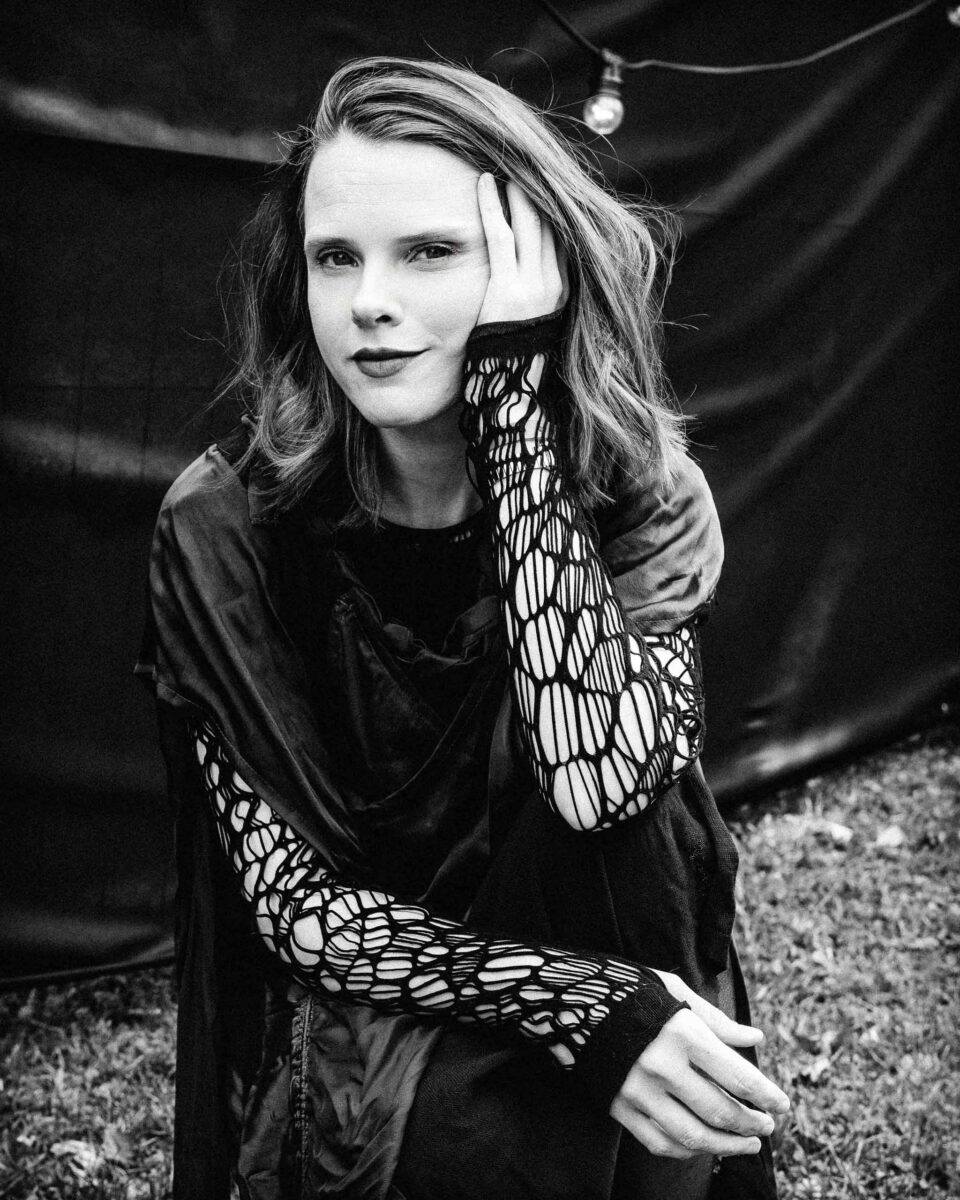 Cassandra Jenkins at Øya Fest 2025 / photo by Kimberley Ross
Eating disorders are often associated with bulimia or anorexia, and assumed to be illness experienced by skinny, privileged White girls, though that population is a narrow part of the spectrum. And that profile looked a lot like me growing up, so my individual needs and struggles were overlooked. Even I couldn’t understand why I went through periods of my life with irrational fears around common foods. I eventually learned about Avoidant Restrictive Food Intake Disorder (ARFID), which is an avoidant eating, often in response to trauma. Trauma is a word that has become widely used and discussed in every degree of its meaning, almost to the point of watering it down. And maybe that’s necessary for our culture to shed in order to turn towards its more nuanced meanings. It was a less common term when at eight years old I was already a sexual abuse survivor. I’ll never know a coming of age that wasn’t informed by that experience. When girls were getting their periods and getting really excited about it, I wanted nothing to do with it. I didn’t want to experience puberty or womanhood. I didn’t want to be a girl, let alone a woman. My sexual health was deeply compromised by something completely out of my control, yet I didn’t have the tools to know how to handle my experience. I remember being blindsided and frozen, unable to comprehend that something was wrong, and I remember knowing something had changed, knowing there was a “before” and I had entered some form of “after.” I didn’t have the words or tools to equate my experience with abuse, and I didn’t know how to overcome the experience, partly because it was never addressed as a problem.
There’s a strange backwards thinking that can happen as a survivor—we see examples of traumatic experiences, and sometimes discredit our own experience as being other than the examples we’re given. The thinking is something along the lines of “The xyz (abuse, for example) they are talking about is serious, and I just have this little thing that happened to me that doesn’t count as xyz.” In turn, that thinking can lead to “I can’t/won’t seek treatment or receive the kind of care or attention that those people receive because I don’t qualify or deserve it. They have it really bad, and I don’t.” In a way that thinking protects us from wrapping our heads around something that’s difficult to look at. I looked to other cases that are worse than mine and started to separate myself from not only the people who “need help” but also, the people around me who maybe haven’t had the same experience, which led to a lot of isolated thinking. In other words, you think of yourself as different from everyone else, but not different enough to deserve care. For example, if I wasn’t “violently” raped, I wasn’t sexually abused. I am not anorexic, so I don’t have an eating disorder. I prolonged seeking mental health support because I didn’t see myself as someone who needed it. On paper my life didn’t fit the bill as someone who needed it, according to the conditions I was raised in. I grew up in a very happy, healthy, comfortable household and I had a great education and support around me. The resounding question I asked myself was, “What are you complaining about?” Another catch-22 mindset that can occur with any kind of abuse is you’re strong enough to have endured abuse, but shame causes you to regard it as a weakness. I definitely didn’t have the self-awareness to see that thinking at play in my own life, and it’s still something I address in tough moments.
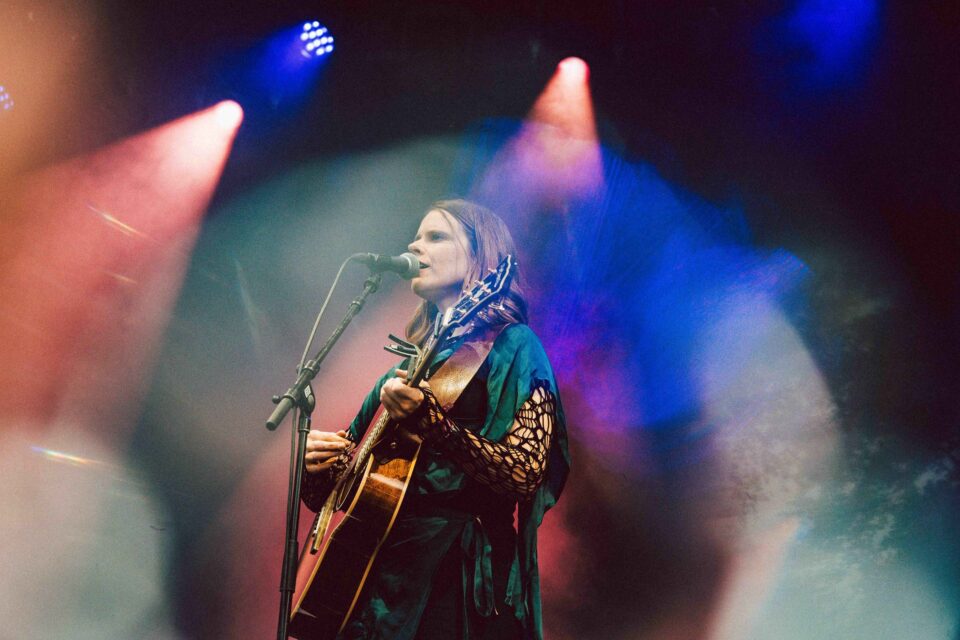 Cassandra Jenkins at Øyafestivalen 2025 / photo by Kimberley Ross
I didn’t seek therapy regarding sexual abuse until well into adulthood when I realized my childhood experiences were no longer something I could suppress. Unfortunately, I began noticing patterns of abuse in my adult relationships. I prefer not to discuss these experiences in detail for the time being. When friends began noticing I had become withdrawn, and expressed concern, suggesting I was in an unhealthy relationship, I brushed them off, and sometimes even felt offended. Until one of them took me to dinner and told me a story about a friend of his who was in an abusive relationship. As he described the situation in detail, I began making connections between his story and my circumstances, and I realized “If I were someone on the outside looking in, I would be able to recognize this as a serious issue, and I would tell them to leave.” That’s when I sought help. A real turning point for me was in the waiting room at my OBGYN clinic. I was in for an annual checkup, and I saw a flyer for the Sexual Assault and Violence Intervention program. The flyer read, ”Are you a survivor of childhood sexual abuse?” And I remember seeing that and thinking, “No, not…really, but maybe I can get some free therapy out of this.” When I showed up at the office, feeling like a survivor-fraud, and explained why I had come to them that day, they immediately brought me in. Within a few sessions, after hearing “you experienced sexual abuse as a child, and you are a survivor. We’re here to support you and help you recognize how that’s affecting you as an adult,” I began to wrap my head around something I had avoided for over twenty-five years.
It was hard. It’s still painful to see something for what it is, even if, and especially if it’s something you’ve been living with your whole life—because you have to begin the process of identifying with it. It was difficult to drudge up a lot of painful feelings that had been shoved under the rug repeatedly throughout my life, and to look at the patterns that developed and followed me into my adult life that revealed themselves in my relationships. And, as I gained support in this process as an adult, I was able to look back on difficult experiences through this lens of support that didn’t exist when I was younger.