
Despite headwinds, autism therapy leaders are projecting steady – if not substantial – growth for 2026.
And many are positioning their businesses to act on it.
In a recent Behavioral Health Business survey of autism services industry professionals, most respondents said that they expected revenue gains this year, with a sizable share forecasting double-digit growth.
Many also said they are considering service line diversification or expansion, a signal that autism therapy providers are looking beyond cost containment and toward new ways to add capacity, demonstrate value and adapt to market dynamics.
It’s a concept that many executives said would define 2026.
“In 2026, the market will be shaped most by our collective willingness to define and adopt shared outcome standards,” Timothy Yeager, chief clinical officer at Centria Autism, previously told BHB. “With funding pressures increasing, there is a growing temptation to make decisions based solely on cost. But cost alone doesn’t protect children, families or long-term system sustainability.”
BHB conducted its survey in April and early May as part of its Autism Investor Summit pre-conference outlook. Nearly 90% of respondents said they were employed by an autism services company or were independent clinicians. Respondents also included a large number of clinic owners, founders and high-level executives.
Revenue outlook tilts positive
Respondents largely anticipated revenue growth in 2026 compared to 2025.
About 83% said they expected revenue to increase by 11% or more in 2026. Roughly 42% projected growth of 11% to 20%, while another roughly 42% forecasted growth of more than 20%.
What are your revenue expectations for your organization in 2026 compared to 2025?
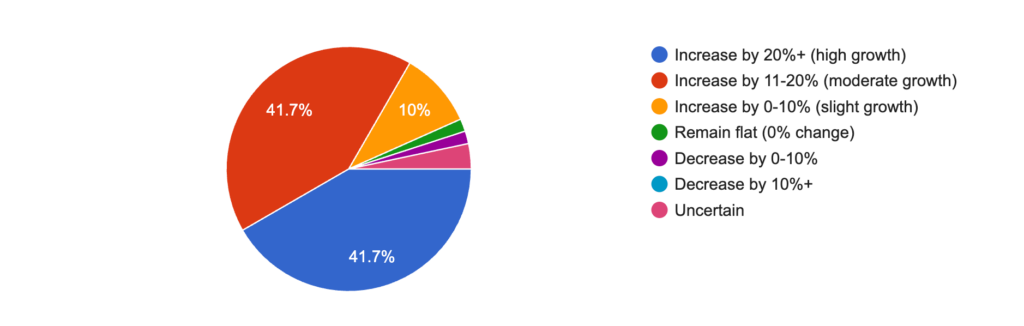
Only a small portion anticipated flat performance or a modest decline, and a small share said they were uncertain.
Those expectations suggest operators believe demand will remain strong, perhaps helping to mitigate emerging headwinds, including rate cuts and increased scrutiny. Some providers may believe they can translate that demand into sustainable volume, even with reimbursement and regulatory pressures.
Just one example of the very real payer pressures: In April, BHB reported that CareSource Georgia informed applied behavior analysis (ABA) providers that they’d be reimbursed at 80% of the current Georgia Medicaid fee schedule starting in May.
“ … [T]here’s really no way to be prepared for a 20% rate cut, because the wage market in the environment of ABA in Georgia is pretty well established,” Brett Blevins, a serial entrepreneur in the behavioral health space and former CEO of Commonwealth ABA, told BHB. “So to get a 20% rate cut, the only way to survive is to drastically cut salaries and wages for folks.”
Staffing remains a challenge for many as well.
“The No. 1 factor shaping the autism therapy market in 2026 will be reimbursement pressure paired with workforce shortages, especially in rural and mid-sized communities,” Eric Plunkett, the board chair for Axis Therapy Centers, previously told BHB.
Expansion plans point to a broader playbook
Revenue optimism is not the only positive signal.
Among respondents who answered BHB’s question on service-line diversification, about 68% said they were considering service line diversification or expansion in the next year. About 25% said they are not, and about 7% said they are unsure.
Of course, in the autism therapy industry, “expansion” can mean many things, such as opening new locations, entering new markets, adding diagnostic services, strengthening caregiver and parent supports, or building out school-based footprints. For some providers, it also means adding adjacent therapy lines that can broaden the care delivery offering and support whole-person strategies.
Among the survey participants, the most commonly offered service lines included ABA therapy (83.3%), parent training (61.7%), social skills counseling (36.7%) and diagnostic services (30%).
Respondents also expected M&A to remain in motion.
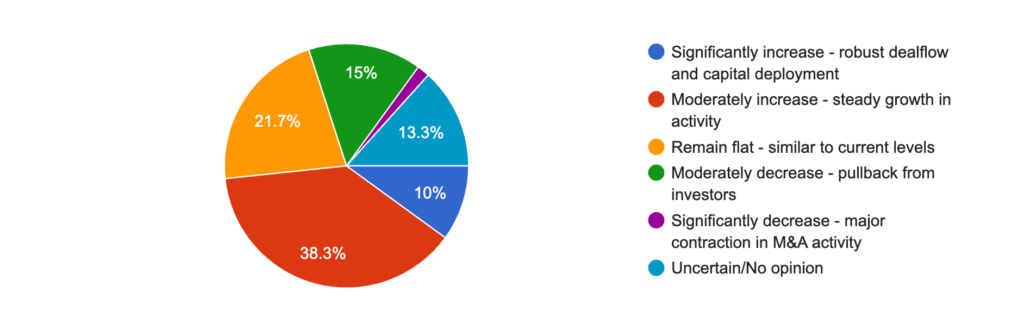
When asked about M&A trends, about 48% of those who took the survey said they believed M&A activity and investment in autism therapy will increase over the next 12 to 18 months. Most predicted a moderate increase.
On the other side of the coin, about 22% of respondents said they felt activity will remain flat, while about 17% predicted a decrease. About 13% said they were uncertain or had no opinion.
What is your outlook on M&A activity and investment in the autism therapy sector over the next 12-18 months?
That cautious optimism tracks with recent deal announcements.
In March, for example, private equity firm Momentum Health Partners acquired Arizona-based Advanced Autism Center for Treatment (AACT).
A month earlier, The Center for Social Dynamics announced plans to acquire the Behavior Change Institute, a New Mexico–based autism services provider.
And in January, Proficio Therapy Services, an autism therapy and speech and occupational therapy provider, acquired Child’s Play Therapy Services, a provider of occupational, speech and feeding therapy.