
Funding uncertainty, the controversy around the placement of solar farms and how some farmers say they need immigration reform all amount to a high amount of stress for those who make one of New York state’s largest industries function, and those challenges are impacting farmers’ mental health.
What You Need To Know
Without the right resources and outlets, uncertainty can lead to a crisis in the farming industry
Current events are only making things more uncertain for farmers
Chris Pawelski says he was thinking of taking his own life before he found Cornell’s NY FarmNet
Chris Pawelski has worked on an onion farm with his family for most of his life.
“I started working on the farm when I was 5 years old,” Pawelski said, “And I have a photograph of me holding up a crate of onions that was coming off the machine and then my first job was picking up the onions and putting them in the crates.”
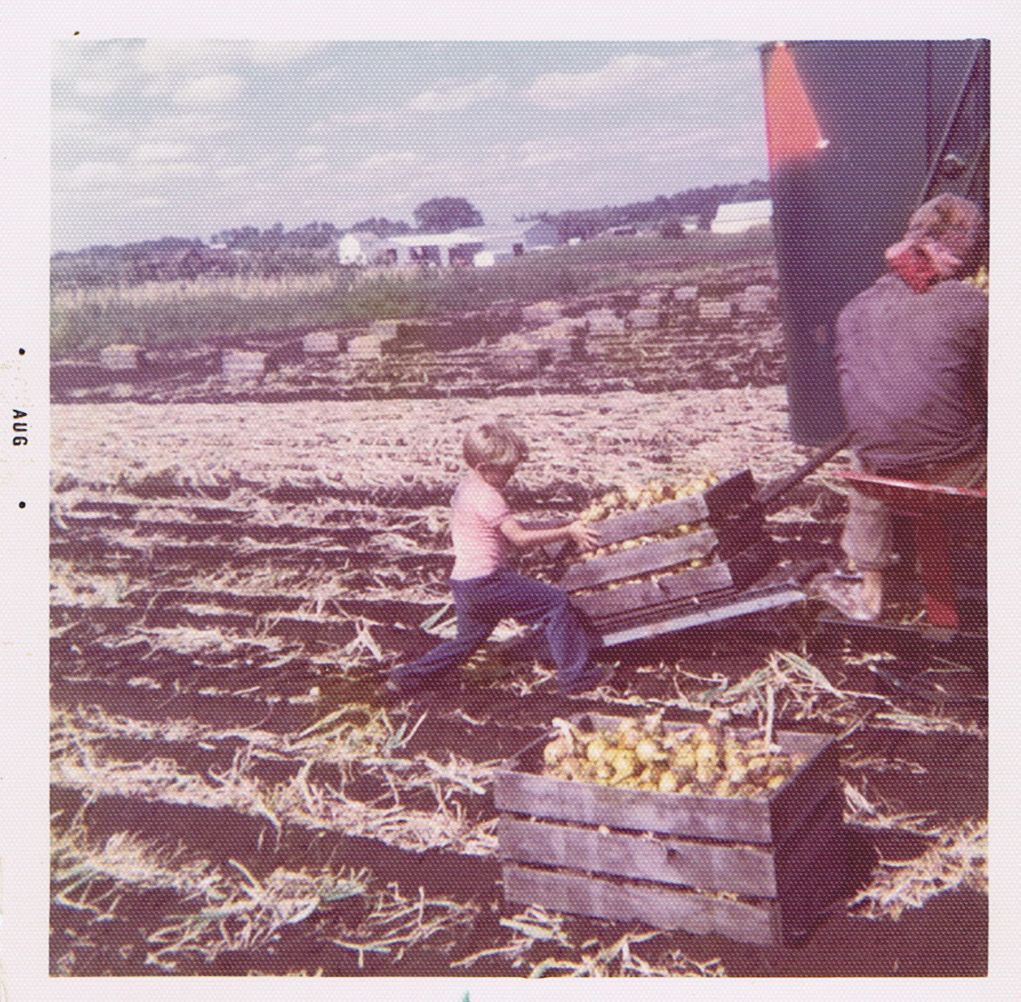
Pawelski, age five, catches onion on the family farm. (Chris Pawelski)
He loves the work.
“Don’t get me wrong, it’s dirty, it’s hard, it’s dangerous, it’s taking a toll on my body and my health at times,” Pawelski said, “But damn, I love it. It’s fun work.”
The fourth generation onion farmer is proud to continue his family’s legacy, but it’s a lot of pressure.
“I can’t emphasize how much of a weight that is,” Pawelski said.
In 2020, that weight became unbearable. His father was diagnosed with cancer and died just six months later. He became the primary caretaker for his mother while the farm struggled.
“It was just all at once crashing down,” Pawelski said.
It became so overwhelming that Pawelski believed there was only one way out.
“I would think about things that were very, very dark,” Pawelski said. “I’m on a busy highway and I think, what happens if I just, you know, slip here and as a car is coming and I get crushed.”
He says it’s the support of his wife, therapy and a Cornell-based organization called NY FarmNet that got him through.
“We’re one of the only organizations in farm support throughout the country where we actually deploy both a mental health component and a financial support component,” said Adam Howell, the outreach director for FarmNet.
Their service is a necessary resource.
According to the National Rural Health Association, the suicide rate among farmers is 3.5 times higher than the general population. Pawelski credits FarmNet with helping to keep him from becoming part of the statistic.
“Those meetings helped a great deal,” Pawelski said. “…The empathy, but also a lot of practical suggestions and such, how to make the changes and adjustments we needed to make.”
He says it’s a tough industry to begin with.
“We can’t control the price we pay for things, we can’t control the weather, you know, we have so many things that make things very difficult,” Pawelski said.
Current events aren’t helping.
“Prices, tariffs, the markets, fuel prices right now, all of that leads to uncertainty,” Howell said. “And uncertainty in a field that is already uncertain is one of the biggest detriments to farming.”
Pawelski is living proof that with the right resources, the job can still bring joy.
“It’s not just a job,” Pawelski said, “It’s an existence. It’s a way of life.”
If you or anyone you know is struggling with thoughts of suicide, call the 988 hotline.