
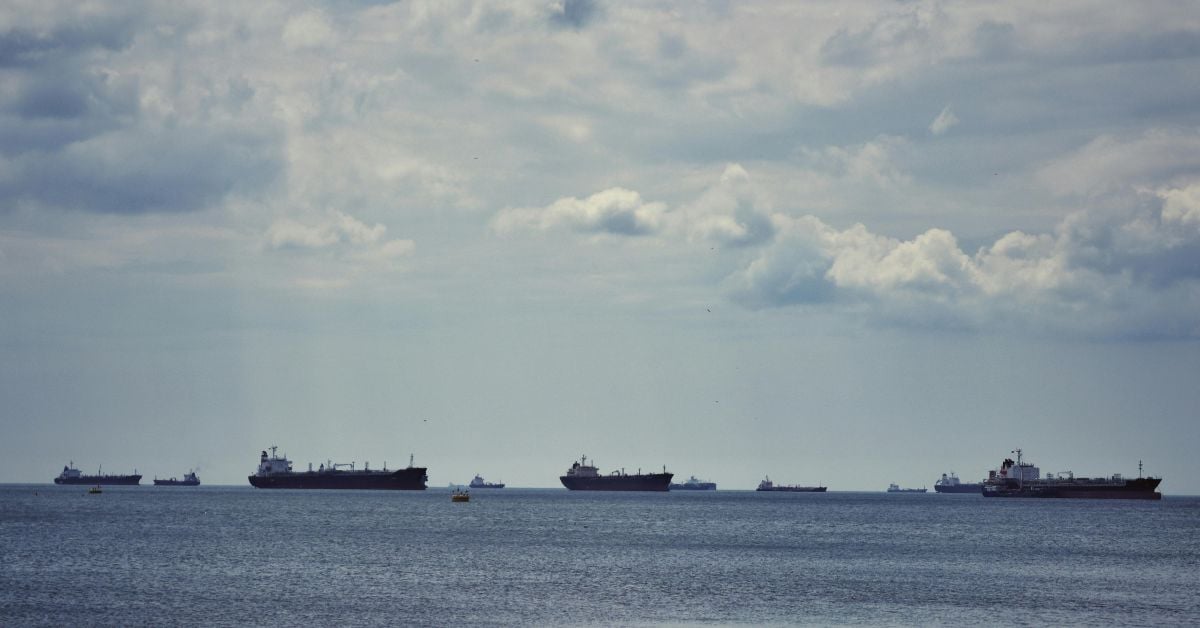
Image for representation purposes only
The biggest fear among the 20,000 seafarers stuck on 1500 ships in the Strait of Hormuz is not food or water, but death by a missile strike or resultant fire.
Stephen Cotton, general secretary of the International Transport Workers’ Federation, said in an interview with CBC News that seafarers suffer from poor mental health due to the constant fear of being killed on their ship.
Most of them have seen missiles blowing up ships near them, and this has ruined their mental health.
Most are unable to regularly communicate with their families and feel lonely and trapped.
The uncertainty of when the U.S.-Iran war will end and they will go home has added to their emotional burden.
Cotton added that all intercontinental vessels in the Gulf had been instructed to lay up anchor, which means they are sitting idle.
Due to the costs of bringing the crew members back and forth to and from the shore, they have been stuck on their ships for the past nine weeks.
He added that it is unlikely that the vessels will be allowed to pass through the strait any time soon.
Damien Chevallier, director of the maritime safety division at the UN’s International Maritime Organization (IMO), said in an interview that it is an unprecedented situation, something never faced before.
The Iranian Foreign Ministry is currently reviewing the US proposal to end the war, per a spokesperson. Still, the two parties remain deadlocked on many issues, including Iran’s nuclear program, control of the strategic Strait of Hormuz and Israel’s attacks on Lebanon.
Since the advent of war, over two dozen attacks on ships in the Persian Gulf and Hormuz Strait have been reported, per the IMO, leading to the deaths of 10 seafarers.
Mental Pressure Is The Biggest Challenge, Says Ship Captain
Captain Raman Kapoor, who has been stuck on an oil tanker ship since February, said that he and his crew members have been fortunate to receive enough water and food from their company.
He added that the crew takes turns to keep watch for missiles, drones or unidentified vessels since they live in fear of being attacked.
The crew members sometimes see 30 to 40 missiles fly over their heads in just 60 minutes, he added.
According to the Seafarers Happiness Index, which monitors seafarer satisfaction levels, seafarers have been living in a constant state of stress and worry.
“Whether there was a risk of attack or not, one can easily sense the fear and the uncertainty which seafarers are experiencing,” the report said.
The feeling of being invisible to the world
IMO Secretary-General Arsenio Dominguez said in a recent UN briefing that he had talked to a seafarer who had been stranded in the Gulf for over six weeks.
He played a recording from the conversation in which the seafarer expressed the feeling of being invisible to the world, like his ordeal did not matter, which has led to anxiety, depression and the feeling of helplessness amongst them.
The seafarer also added that most of the crew members trapped in the region cannot sleep at all, and even medication is sometimes not available to them.
Even in these conditions, they work every day to make sure the ship remains seaworthy.
Disclaimer :
The information on this website is for general purposes only. While efforts are made to ensure accuracy, we make no warranties of any kind regarding completeness, reliability, or suitability. Any reliance you place on such information is at your own risk. We are not liable for any loss or damage arising from the use of this website.
Disclaimer :
The information on this website is for general purposes only. While efforts are made to ensure accuracy, we make no warranties of any kind regarding completeness, reliability, or suitability. Any reliance you place on such information is at your own risk. We are not liable for any loss or damage arising from the use of this website.