
The Rev. Judith Van Kennen has a seemingly simple, yet powerful question that has been guiding her congregation throughout the years.
“If we don’t state who we are, then how will those in the community know?” she asks.
For the good people of Massena, New York, knowing exactly who the congregation of Emmanuel Congregational United Church of Christ is has not been cloaked in secrecy.
Since Van Kennen’s arrival in 2005, the church has become for those in New York’s northern hinterland a beacon of hope in the fight for racial, gender and economic justice.
And now, mental health justice as well.
As United Church of Christ congregations across the country gear up for Mental Health Sunday, observed in the denomination the third Sunday in May, Emmanuel does so with the celebratory designation as the 100th UCC W.I.S.E. congregation.
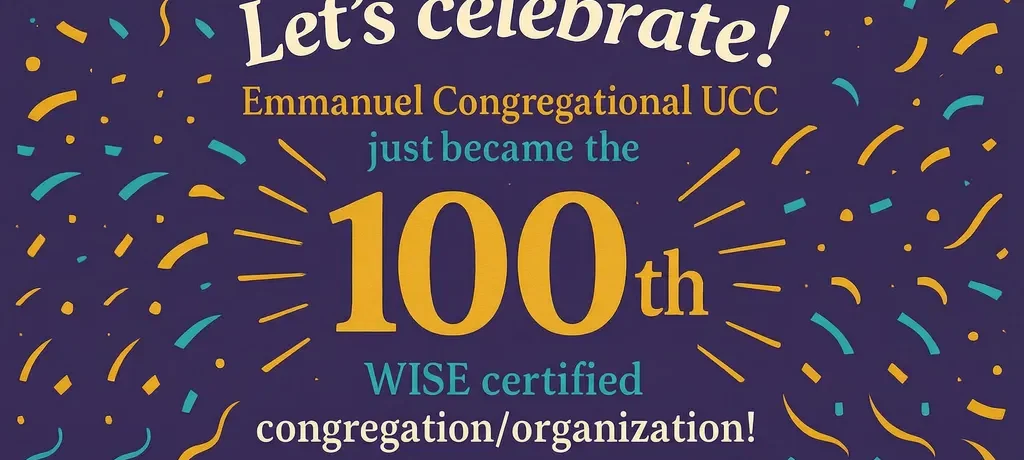 Emmanuel Congregational Church in Massena, New York, recently became the 100th UCC church to be certified a W.I.S.E. congregation.
The W.I.S.E. (Welcoming, Inclusive, Supportive and Engaged) certification, which has broadened its reach beyond the UCC, welcoming other denominations in advocating for those walking the valley of mental health struggles, was developed by the UCC Mental Health Network after the 30th General Synod in 2015 resolution titled “Welcoming, Inclusive, Supportive and Engaged Congregations for Mental Health” was adopted.
For Van Kennen, becoming a W.I.S.E. church grew organically out of the congregation’s commitment to being “intentional with our welcome.”
Make no assumptions
It was that intentionality that began almost three decades ago when Emmanuel became an Open and Affirming (ONA) congregation, said Van Kennen.
The pastor recalls how a same-sex couple came to the church one Sunday and, when seeing a sea of elderly worshippers, assumed that perhaps they wouldn’t be welcomed.
But welcomed they were.
“We can assume too easily, thus, the importance of stating clearly who we are out to the public,” said Van Kennen.
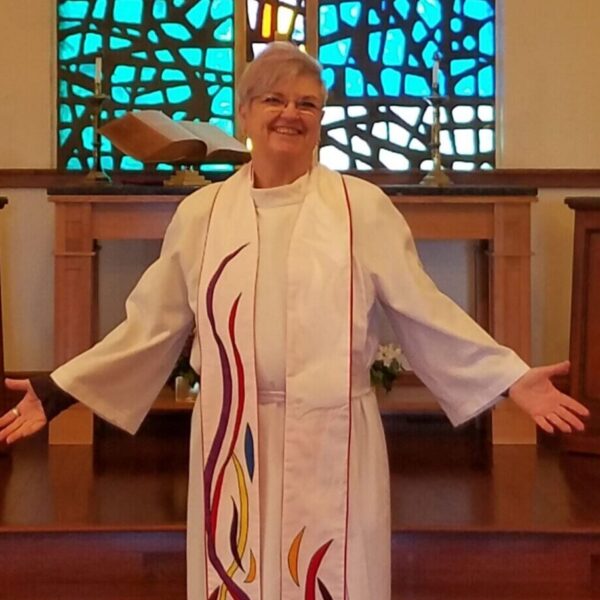 The Rev. Judith Van Kennen says her church’s mental health ministry evolved from the congregation’s quest to be intentional with their welcome to all.
It was this very couple who would become an integral part of Emmanuel’s journey into mental health ministries.
“There was a long-term mental health issue that they were dealing with. At first, they didn’t want to publicly ask for prayers as the they didn’t want the stigma that often comes with mental health issues,” said Van Kennen.
Eventually their fear of being stigmatized faded.
“It didn’t matter anymore to them that others knew about the struggles. The couple came to see that mental health challenges are like any other illnesses and that being open with requests for prayers would model that truth for the congregation,” said Van Kennen.
We all deal with challenges
Today, Emmanuel holds weekly conversations about mental health, clearly stating to the community that through its doors hope and healing, as well as acceptance and belonging, can be found.
And no, having a mental health ministry is not to bolster Sunday attendance, said Van Kennen. Rather, it is solely for creating wholeness in the larger community.
“While some people might find their way to a Sunday service through our weekly group, that is not the intent,” said Van Kennen.
The group ranges in ages, with Van Kennen noting that younger people often come for a shorter duration, addressing specific coming of age challenges, navigating peer acceptance to early career decisions to relationship angst.
The older members of Emmanuel’s weekly group are the regulars. They are there seeking connection and that “touch point” in life, said Van Kennen. Not surprising at all as the World Health Organization reports loneliness in older adults (50-80) is a health concern that can lead to a greater risk for depression.
Age aside, the reality is that that the need to talk more openly about mental health and destigmatize the topic remains a pressing one.
“We are all dealing with challenges where we are, especially considering today’s high levels of incessant anxiety,” sad Van Kennen.
Words matter
When Emmauel first began promoting its weekly mental health support group to the public it labeled the meeting just that: Mental Health Support Group.
“It was on all the flyers that were posted throughout Massena,” said Van Kennen.
Those in the group, though, had a gentle suggestion for the pastor to change “mental health support group” to “emotional support group.”
Van Kennen was happy to oblige.
“Language is important when walking alongside those who you are seeking to help,” she said.
The importance of language used in mental health ministries has recently taken centerstage with the Mental Health Network, acknowledging the power of words to either help or harm.
At last summer’s 35th General Synod in Kansas City, delegates approved the Resolution of the Continually-Evolving Language of Mental Health. The resolution, proposed by the Mental Health Network, cited the growing need for congregations to be aware of the ever-evolving language and the harm historically done by words.
“We want to honor the language that we use when talking about mental health experiences,” said the Rev. Sarah Lund, UCC’s Minister for Disabilities and Mental Health Justice.
In a recent Mental Health Sunday webinar, “Let’s Talk About It” (click below to watch), the Rev. Stephanie Niemela, who serves as the Associate Pastor for Disability and Mental Health Justice of Peoples Church in Flint, Michigan, stressed the importance of recognizing that mental health experiences vary with each person and, as such, there are many ways to name those experiences. Case in point is the very use of the word “challenges.”
“Perhaps what is seen as a challenge to one person is not experienced as such for another. By using ‘challenge’ we make a broad statement,” said Niemela.
She added just as there are many words used for God and love, so too, are there many words to apply to mental health experiences.
“We can have a broader vocabulary when talking about mental health,” said Niemela.
Beyond mental health month
A broader vocabulary will come in handy as Lund urges congregations to continue the mental health conversation beyond May, which was established as Mental Health Awareness month in 1949.
“Mental health awareness can be every Sunday for our congregations,” said Lund, who offered the following suggestions to spark the conversation: include mental health prayers during worship, invite mental health experts to deliver the sermon or host a panel discussion in lieu of a traditional sermon, offer resources in the worship bulletin such as posting the 988 helpline or contact information for organizations like Mental Health America and National Alliance on Mental Illness (NAMI). Other resources, including prayers and liturgy for worship, can be found on the UCC Mental Health Network website here.
“More people are realizing that the mental health conversation matters, and they are getting creative in how to start those conversations,” said Lund.
For Van Kennen, the mental health conversation has been one that has blessed her immensely, acknowledging that she has received more than she has given from those who have shared their journey openly and vulnerably with her.
“It’s ministry to each other on so many different levels,” she said.
UCC News wants to keep the mental health conversation going. If your congregation is observing Mental Health Sunday on May 17 in a creative new way or has a new mental health initiative to share, send to the news team at newsteam@ucc.org.
Content on ucc.org is copyrighted by the National Setting of the United Church of Christ and may be only shared according to the guidelines outlined here.
Categories:
United Church of Christ News