
Revenue, 2025 (US$B)
$1.3
Forecast, 2033 (US$B)
$3.4
Breathwork Therapy Market Summary
The global breathwork therapy market size was estimated at USD 1.3 billion in 2025 and is expected to reach USD 3.4 billion in 2033, growing at a CAGR of 12.8% from 2026 to 2033. This growth is driven by the rising prevalence of stress, anxiety, depression, and other mental health disorders globally, fueled by increasingly fast-paced lifestyles, occupational burnout, and growing psychological pressure across all age groups.
Key Market Trends & Insights
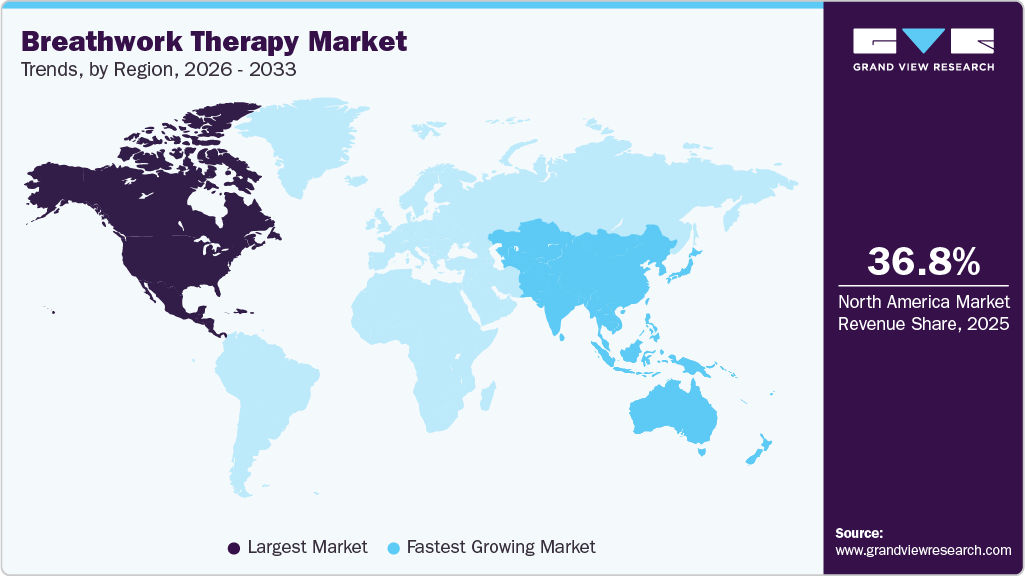
North America market dominated the global market in 2025 and accounted for the largest revenue share of 36.8%.
The U.S. market is anticipated to register the fastest growth during the forecast period.
In terms of technique, the diaphragmatic breathing segment held the largest revenue share in 2025.
Based on therapy type, the stress & anxiety management segment held a significant share of 35.5% in 2025.
Based on delivery mode, the in-person breathwork sessions segment held a significant share of 34.7% in 2025.
Market Size & Forecast
2025 Market Size: USD 1.3 Billion
2033 Projected Market Size: USD 3.4 Billion
CAGR (2026-2033): 12.8%
North America: Largest market in 2025
Asia Pacific: Fastest growing market
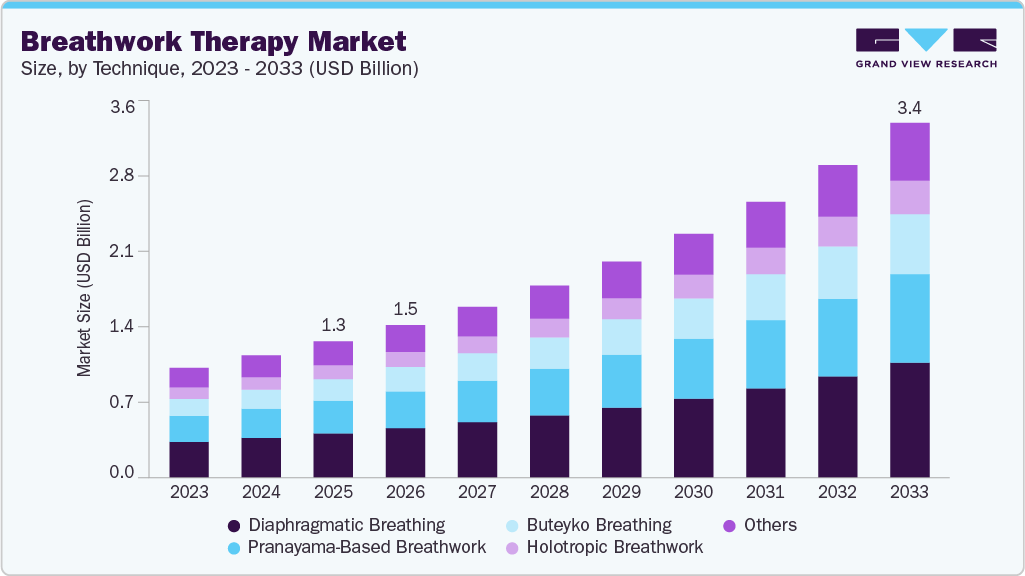
Greater awareness of the importance of mental well-being and the benefits of non-pharmacological, holistic interventions has significantly encouraged the adoption of breath-work-based therapies. The section below outlines the key factors driving the growth of the breathwork therapy industry, highlighting the rising prevalence of stress, anxiety, depression, and lifestyle-related mental health disorders, along with increasing awareness of the benefits of non-pharmacological and mind-body interventions. It also examines the growing demand for structured wellness practices, guided therapeutic breathing programs, and evidence-based stress management solutions.
Rising Prevalence of Stress and Mental Health Disorders:
The increasing incidence of stress, anxiety, depression, and burnout across both developed and emerging economies is a primary driver of the market. Fast-paced lifestyles, work-related pressure, and digital overload have significantly contributed to declining mental well-being, creating a strong demand for accessible, non-pharmacological interventions such as breathwork practices for emotional regulation and stress reduction. For instance, according to the 2024 Benefits Canada Healthcare Survey, the top stressors for Canadian employees include financial pressures (43%), heavy workload (30%), and health-related concerns (27%). Notably, stress levels are significantly higher among employees who feel disconnected from their workplace culture, highlighting the growing need for accessible stress-management interventions such as breathwork therapy.
Major stress triggers such as heavy workloads, financial pressures, job insecurity, and isolation at work, underscoring the widespread nature of occupational stress and the urgent need for effective stress-management solutions such as breathwork therapy. In April 2026, a report highlighted that structured breathwork programs such as SKY Breath are being adopted across corporate and educational settings in the U.S., with delivery supported by over 50,000 instructors globally across 182 countries, reflecting large-scale institutional expansion of breath-based interventions.
Growing Shift Toward Non-Pharmacological and Holistic Therapies:
There is a rising global preference for natural, non-invasive, and drug-free approaches to mental and emotional well-being. Breathwork therapy is increasingly being adopted as a complementary or alternative intervention due to its simplicity, accessibility, and ability to regulate the nervous system effectively. Highlighted in a Bloomberg report 2025, the global wellness industry, now valued at approximately USD 6 trillion, is increasingly shifting “from the mind to the body,” with breathwork emerging as the fastest-growing pathway to calm and emotional regulation. The article emphasizes that breathwork is gaining strong traction in wellness ecosystems because it provides an immediate physiological shift, where controlled breathing patterns can activate the parasympathetic nervous system and move the body out of stress-driven “fight-or-flight” states into relaxation.
Expansion of Digital Wellness Platforms and Corporate Wellness Programs:
The rapid expansion of digital wellness platforms and corporate wellness programs is significantly contributing to the growth and monetization of the industry. Increasing adoption of mobile-based wellness applications, AI-guided breathing tools, and wearable-integrated biofeedback systems is improving accessibility and personalization of breathwork interventions. At the same time, organizations are increasingly investing in employee well-being initiatives aimed at reducing burnout, improving productivity, and enhancing workplace engagement.
The Wellhub Corporate Wellness Report 2025 highlights that the growing adoption of corporate wellness partnerships is driving profitability in the fitness and wellness industry by improving business performance outcomes. The report found that 73% of wellness operators reported increased profitability, while 89% experienced higher member retention through corporate wellness partnerships. These findings underscore how structured corporate wellness programs are improving employee health outcomes and are creating sustainable revenue growth for wellness service providers.
Market Characteristics & Concentration
The chart below represents the relationship between industry concentration, characteristics, and industry participants. There is a moderate degree of innovation, moderate level of merger & acquisition activities, high impact of regulations, and moderate expansion of industry.
The industry is experiencing a moderate to high degree of innovation, driven by the integration of digital health technologies, AI-enabled personalization, and app-based therapeutic delivery models. Innovations are increasingly focused on improving accessibility, engagement, and real-time physiological feedback to enhance the effectiveness of breathwork-based interventions for stress, anxiety, sleep disorders, and emotional regulation.
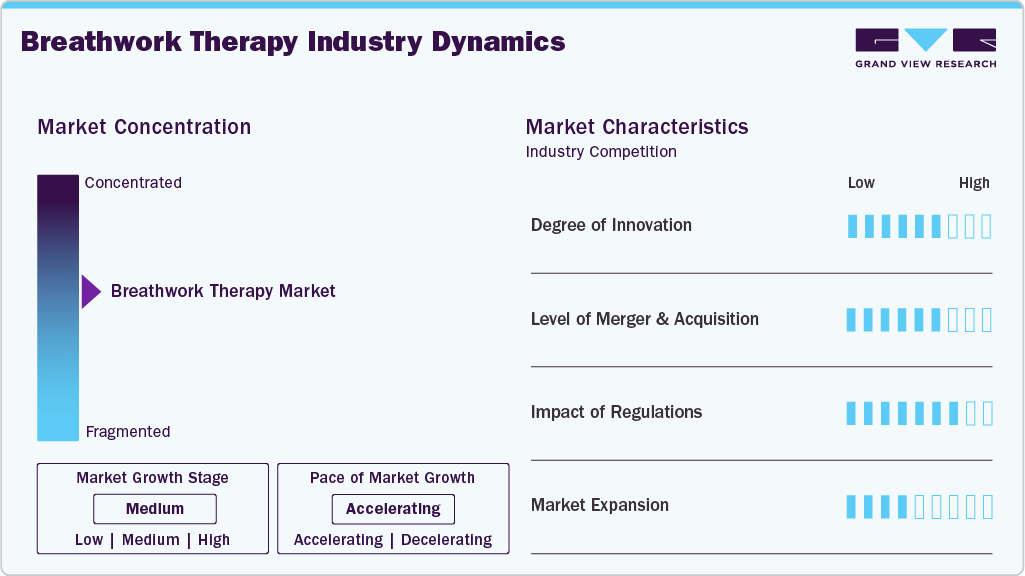
The industry is witnessing a moderate but steadily increasing level of mergers, acquisitions, and strategic partnerships, aimed at strengthening product portfolios, expanding user bases, and integrating complementary mental health solutions such as meditation, therapy, and breath-based interventions. Companies are actively consolidating capabilities in AI-driven wellness, behavioral health platforms, and holistic mind-body therapies to enhance competitiveness in a rapidly expanding market. In February 2026, a report by The Guardian highlighted the growing commercialization of breathwork, noting the rise of paid online and in-person sessions marketed for advanced psychological and wellness benefits. The article emphasized that while breathwork has evidence-based benefits such as stress reduction, similar outcomes can often be achieved through simple and low-cost breathing techniques, reflecting increasing debate around the commercialization and accessibility of wellness practices.
The regulatory frameworks governing digital health, mental wellness interventions, and behavioral therapy applications. In many regions, breathwork practices fall under broader complementary and alternative medicine (CAM) or digital wellness guidelines, while mental health-related applications are increasingly subject to digital health and telemedicine regulations. Governments and health authorities are gradually working toward standardizing digital therapeutic tools to ensure safety, efficacy, and ethical delivery of mental health interventions.
The industry is experiencing rapid expansion through the launch of dedicated wellness centers, digital platforms, and hybrid care models that combine physical and virtual therapeutic delivery. Increasing consumer demand for stress management, emotional regulation, and preventive mental healthcare is driving the establishment of specialized facilities and technology-enabled wellness ecosystems globally. In June 2025, Toronto-based wellness company Othership raised USD 11.3 million through a SAFE financing round to support its U.S. expansion, aiming to scale immersive wellness facilities integrating breathwork, sauna, and recovery experiences, particularly across key markets such as New York.
Technique Insights
Based on technique, diaphragmatic breathingsegments held a significant share of 32.6% in 2025, driven by the increasing adoption of structured breathing techniques for autonomic nervous system regulation, improved emotional control, and enhanced resilience against acute stress responses. Compared to more intensive or instructor-led techniques, diaphragmatic breathing offers ease of adoption, minimal training requirements, and the flexibility to be practiced across home, workplace, and clinical settings, making it highly accessible for a broad population base. In June 2025, a pan-India study by ICICI Lombard reported that 74% of millennials practiced yoga regularly, while 72% of respondents engaged consistently overall, reflecting the mainstream adoption of holistic wellness practices driven by rising stress and burnout levels.
The buteyko breathing segment is expected to grow at the fastest CAGR during the forecast period, driven by growing preference for non-invasive practices that directly modulate respiration patterns to improve heart rate variability, focus, and relaxation response. In July 2025, a clinical study led by Katrin Vagedes and Jan Vagedes demonstrated that the Buteyko breathing technique significantly improved asthma outcomes, receiving the prestigious Holzschuh Prize and highlighting growing clinical recognition of non-pharmacological respiratory therapies. Compared to conventional treatments, Buteyko breathing focuses on controlled, reduced breathing patterns aimed at improving carbon dioxide tolerance and optimizing oxygen utilization, making it particularly attractive for individuals seeking natural respiratory regulation methods.
Therapy Type Insights
Based on therapy type, the stress & anxiety management segment held a significant share of 35.5% in 2025. The growing global burden of stress and anxiety disorders is significantly driving the adoption of breathwork therapy as an accessible and non-pharmacological intervention for emotional regulation and mental well-being. Increasing workplace pressure, digital fatigue, and lifestyle-related stressors are accelerating demand for scalable and self-guided stress management solutions. For instance, in January 2026, a report by Mental Health UK revealed that 91% of employees experienced high or extreme stress levels, while one in five workers took time off due to poor mental health, rising to 39% among individuals aged 18 to 24. The study also highlighted that workload pressures (42%) and overtime (33%) were key contributors to stress, reinforcing the growing demand for effective stress-management interventions such as breathwork therapy.
The mindfulness & relaxation therapy segment is expected to grow at the fastest CAGR during the forecast period. The growing demand for mindfulness-based and experiential wellness solutions is a key driver of the market, as consumers prioritize mental well-being, relaxation, and holistic lifestyle practices. Rising interest in personalized wellness experiences, particularly those integrating movement, meditation, and breathing techniques, is accelerating the adoption of breathwork across both leisure and therapeutic settings.
Delivery Mode Insights
Based on delivery mode, the in-person breathwork sessions segment held a significant share of 34.7% in 2025. The growth of in-person breathwork sessions is driven by increasing consumer preference for guided, immersive, and community-based wellness experiences. Many users seek real-time instructor support, personalized breathing corrections, and deeper emotional release experiences that are often more effectively delivered in physical settings. The expansion of wellness studios, retreats, rehabilitation centers, and corporate wellness workshops is further supporting demand for instructor-led breathwork programs. In February 2026, an article published by The Guardian highlighted the growing commercialization of breathwork, with increasing availability of paid online and in-person sessions. While evidence supports benefits such as stress relief and mood regulation, experts noted that similar outcomes can often be achieved through simple, low-cost breathing practices.
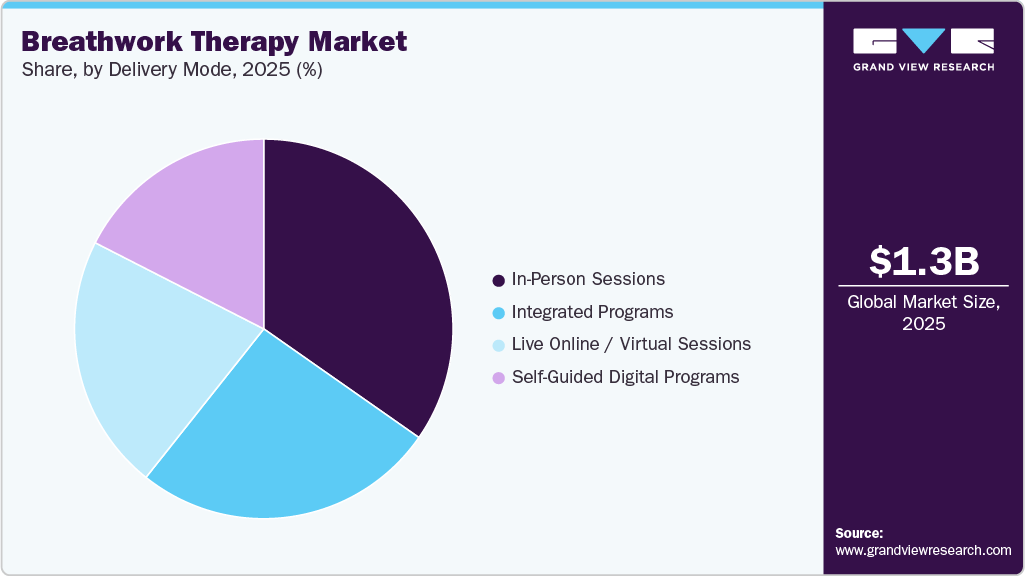
The self-guided digital programs segment is witnessing strong growth due to the rising adoption of mobile wellness applications and demand for on-demand, personalized mental health solutions. These platforms enable users to access guided breathing exercises anytime, enhancing convenience, scalability, and long-term engagement. For instance, in 2025, Healthcare Triangle, Inc. launched an AI-driven self-care therapy platform, Zoranex, designed to provide personalized mental wellness support, demonstrating the growing role of app-based and AI-enabled digital interventions in expanding access to breathwork and related therapies.
Regional Insights
North America breathwork therapy market held the largest revenue share of 36.8% in 2025, driven by increasing awareness of mental health and the growing adoption of non-pharmacological wellness interventions. The region benefits from a well-established digital health ecosystem, a strong presence of wellness technology providers, and the rising integration of breathwork into behavioral healthcare and corporate wellness programs. Government support for mental health initiatives and expanding access to telehealth services are further strengthening adoption across the region.
U.S. Breathwork Therapy Market Trends
The breathwork therapy market in the U.S.is experiencing significant growth, driven by the widespread adoption of digital wellness platforms and increasing demand for scalable stress-management solutions. The integration of breathwork into app-based mental health ecosystems and workplace wellness programs is enhancing accessibility and engagement. Industry insights highlight that continuous digital engagement tools, including guided breathing applications and AI-enabled wellness platforms, are improving adherence, personalization, and long-term mental well-being outcomes.
Asia Pacific Breathwork Therapy Market Trends
The breathwork therapy market in Asia Pacific is expected to grow at the fastest CAGR during the forecast period. This growth is attributed to increasing awareness of mental health, rising stress levels due to urbanization, and strong cultural alignment with traditional mind-body practices such as yoga, meditation, and controlled breathing techniques. Countries such as China, India, Japan, and Australia are witnessing increased adoption of preventive healthcare and holistic wellness solutions.
India breathwork therapy marketis driven by the growing technological developments and approvals in the country. India is emerging as a key market driven by the mainstream adoption of yoga and breathing practices. This expanding user base spans millennials, Gen X, and diverse urban demographics, creating a broad and resilient participation ecosystem. As yoga becomes increasingly integrated into daily life in India, participation is growing across both online and offline sessions. Users are not just taking one-time classes; they are increasingly opting for recurring sessions and program upgrades. Preferences for guided instruction, flexible timings, and holistic practices are fueling sustained growth in India’s yoga market. According to the data published in June 2025, about 74% of millennials in India practice yoga regularly, followed by Gen X at 70%.
Europe Breathwork Therapy Market Trends
The breathwork therapy market in Europe is expected to witness substantial growth owing to strong healthcare systems, increasing focus on preventive care, and rising adoption of mental wellness solutions. The region is seeing growing integration of breathwork into psychotherapy, rehabilitation programs, and corporate wellness initiatives. In addition, increasing demand for experiential wellness, including retreats and mindfulness-based travel, is supporting market expansion.
Germany breathwork therapy marketis expanding asGermany’s well-established healthcare system and emphasis on preventive care are driving the adoption of complementary therapies, including breathwork. Increasing clinical validation of breathing techniques is supporting their integration into rehabilitation and mental health programs. In April 2026, wellness tourism trends in Germany highlighted the growing popularity of nature-based therapies such as barefoot walking, particularly in regions such as the Black Forest. These experiences emphasize sensory engagement, mindfulness, and physical well-being, reflecting a broader shift toward immersive, holistic wellness practices that integrate breathing, relaxation, and mind-body therapies.
Latin America Breathwork Therapy Market Trends
The breathwork therapy market inLatin America is expected to register considerable growth over the forecast period, driven by improving healthcare infrastructure and increasing awareness of mental health and stress-related conditions. The expansion of private wellness providers and digital health platforms is enhancing access to alternative therapies, including breathwork.
In January 2026, wellness industry insights highlighted that Latin America is rapidly emerging as a major destination for holistic and nature-based wellness retreats, with countries such as Costa Rica, Peru, and Mexico offering immersive programs that integrate breathwork, mindfulness, and ancestral healing practices. These retreats emphasize nature-connected therapies and community-based healing environments, reflecting growing regional and international demand for experiential and holistic mental wellness solutions.
Brazil breathwork therapy marketis witnessing increasing integration of complementary therapies such as breathwork, yoga, and meditation into mainstream healthcare and wellness practices. Growing acceptance of non-pharmacological approaches for stress management and chronic conditions is driving demand for breath-based interventions.
Middle East And Africa Breathwork Therapy Market Trends
The breathwork therapy market inthe Middle East & Africa is witnessing gradual growth, supported by increasing awareness of mental health, rising urbanization, and improving access to wellness services. Growing demand for stress management solutions, particularly among urban populations and expatriates, is driving the adoption of breathwork therapy across the region.
The UAE breathwork therapy market is expanding due to the rising adoption of premium wellness services and the integration of holistic therapies into luxury hospitality and techniques. Wellness centers and resorts are increasingly offering breathwork sessions alongside yoga, meditation, and spa therapy, supported by government initiatives promoting health, well-being, and preventive care.
Key Breathwork Therapy Companies Insights
The market is fragmented, with the presence of many region & country level breathwork therapy market providers.The market players undertake several strategic initiatives, such as partnerships & collaborations, product launches, mergers & acquisitions, and geographical expansion to maintain their position and grow in the market.
Key Breathwork Therapy Companies:
The following key companies have been profiled for this study on the breathwork therapy market.
Headspace
Calm
Othership
Breathwrk Inc
SOMA Breath
Insight Timer
Prana Breath
Breathe2Relax
Open
Ultrahuman
Recent Developments
In 2025, Headspace introduced an AI-powered companion “Ebb” along with personalized care pathways and CBT-based guided programs to enhance user engagement and deliver more tailored mental health and breath-based interventions.
In 2025, Othership raised USD 11.3 million to expand its immersive wellness spaces in the U.S., integrating breathwork, sauna, and recovery experiences into hybrid physical-digital wellness environments.
“We’re incredibly proud of what we’re building with Othership: creating spaces that support emotional wellness, community connection, and transformation”
-Co-founder Robbie Bent wrote in a statement to The Logic
Breathwork Therapy Market Report Scope
Report Attribute
Details
Market size in 2026
USD 1.5 billion
Revenue forecast in 2033
USD 3.4 billion
Growth rate
CAGR of 12.8% from 2026 to 2033
Actual data
2021 – 2025
Forecast period
2026 – 2033
Quantitative units
Revenue in USD million/billion, and CAGR from 2026 to 2033
Report coverage
Revenue forecast, company ranking, competitive landscape, growth factors, and trends
Segments covered
Technique, therapy type, delivery mode, region
Regional scope
North America, Europe, Asia Pacific, Latin America, MEA
Country scope
U.S.; Canada; Mexico; Germany; UK; France; Italy; Spain; Norway; Denmark; Sweden; China; Japan; India; South Korea; Australia; Thailand; Brazil; Argentina; Saudi Arabia; South Africa; UAE; Kuwait
Key companies profiled
Headspace; Calm; Othership; Breathwrk Inc; SOMA Breath; Insight Timer; Prana Breath; Breathe2Relax; Open; Ultrahuman
Customization scope
Free report customization (equivalent up to 8 analysts working days) with purchase. Addition or alteration to country, regional & segment scope.
Pricing and purchase options
Avail customized purchase options to meet your exact research needs. Explore purchase options
Globlal Breathwork Therapy Market Report Segmentation
This report forecasts revenue growth at global, regional, and country levels and provides an analysis of the latest industry trends in each of the sub-segments from 2021 to 2033. For this study, Grand View Research has segmented the global breathwork therapy market report based on technique, therapy type, delivery mode, and region.
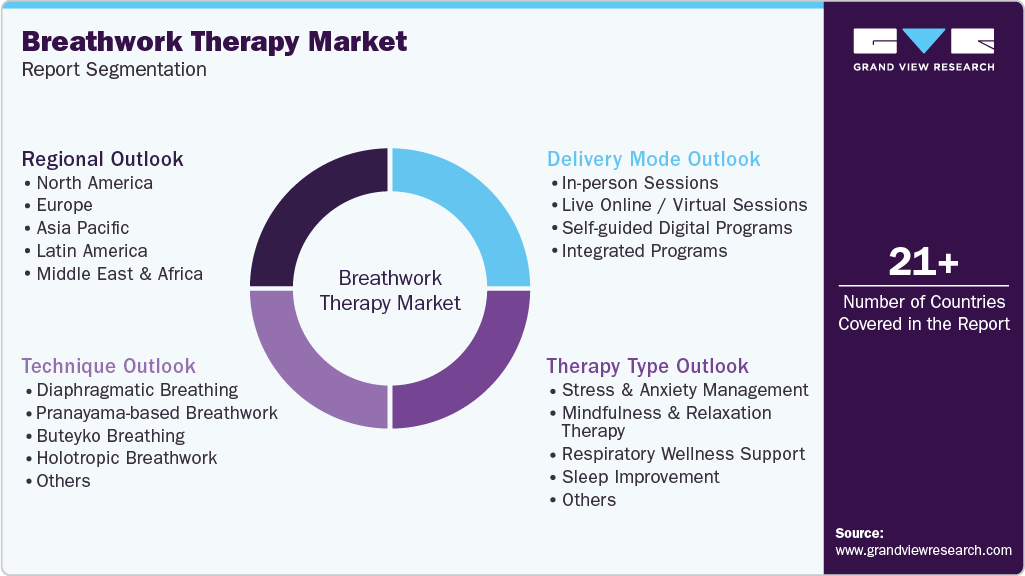
Technique Outlook (Revenue, USD Billion, 2021 – 2033)
Therapy Type Outlook (Revenue, USD Billion, 2021 – 2033)
Stress & Anxiety Management
Mindfulness & Relaxation Therapy
Respiratory Wellness Support
Sleep Improvement
Others
Delivery Mode Outlook (Revenue, USD Billion, 2021 – 2033)
Regional Outlook (Revenue, USD Billion, 2021 – 2033)
Frequently Asked Questions About This Report
b. The global breathwork therapy market size was estimated at USD 1.3 billion in 2025 and is expected to reach USD 1.5 billion in 2026.
b. The global breathwork therapy market is expected to grow at a CAGR of 12.8% from 2026 to 2033. The demand in the market is expected to reach USD 3.4 billion in 2033.
b. The diaphragmatic breathing segments held a significant share of 32.6% in 2025, driven by the increasing adoption of structured breathing techniques for autonomic nervous system regulation, improved emotional control, and enhanced resilience against acute stress responses.
b. The market growth is driven by the rising prevalence of stress, anxiety, depression, and other mental health disorders globally, fueled by increasingly fast-paced lifestyles, occupational burnout, and growing psychological pressure across all age groups.
b. Key players in the market include Headspace, Calm, Othership, Breathwrk Inc, SOMA Breath, Insight Timer, Prana Breath, Breathe2Relax, Open, Ultrahuman.