
The Sangamon County Board appointed seven members to the county’s newly formed Mental Health Board during a May 12 board meeting.
Members will decide which programs the county’s upcoming limited 0.5% sales tax levy will fund. The levy goes into effect July 1 but funding is not expected to be disbursed until October, giving the mental health board time to establish procedures, consider initial program applications and decide if it wants to hire administrative staff. The board is expected to hold its initial meeting within the next 30 days.
The county’s inaugural Mental Health Board includes: Jennifer Douglas, a re-entry coordinator for the Illinois Department of Corrections; Janice Gambach, former CEO of Memorial Behavioral Health; William Moredock, president of Sacred Heart-Griffin High School; Steve Nardulli, a retired central Illinois judge; Margaret Seymour, a psychiatric clinician; Leigh Steiner, former CEO of then-Andrew McFarland Mental Health Center; and Brian Wojcicki, a lobbyist and lawyer.
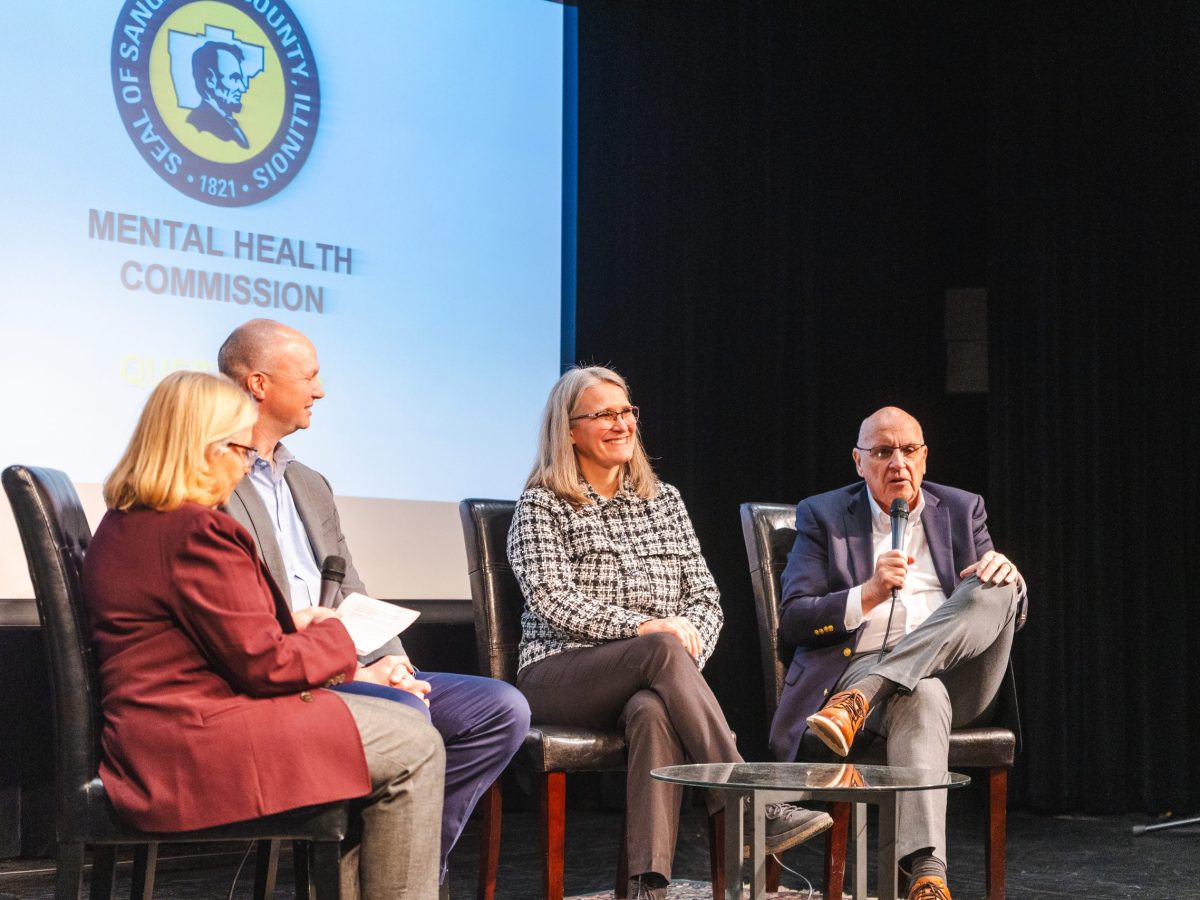
Gambach and Wojcicki both served on county commissions that met throughout most of last year, the Mental Health Commission and the Massey Commission, respectively. The Mental Health Commission formally endorsed the county’s March referendum language and recommended ways to manage the board late last year.
Once seated, the seven-member board is expected to appoint two additional members: Michael Gaines, corrections coordinator for the Illinois Department of Public Health, and David Racine, former executive director of the Center for State Policy and Leadership at University of Illinois Springfield. That will bring the board to a maximum of nine members.
The county received more than 100 applications from potential board members, resulting in a 9% acceptance rate for the Sangamon County Mental Health Board, which is in line with some of the country’s top universities. The review committee was comprised of seven individuals, five of whom served on last year’s Mental Health Commission.
The full review committee consisted of Deborah Grant, vice president of the Sangamon County Board of Health; Chris Jones, a Springfield police officer who led the inaugural homeless outreach team; Gina Lathan, District 22 board member; Mike Murphy, president and CEO of the Greater Springfield Chamber of Commerce; James Schackmann, District 11 board member; Melissa Warwick, an Auburn school social worker; and Dr. Kari Wolf, chair of psychiatry at SIU School of Medicine. Only Grant and Warwick weren’t on the county’s 2025 Mental Health Commission.
Sangamon County Board Chair Andy Van Meter told the County Board in November, “It won’t be allocation by politicians. This will be allocation by professionals in the field.”
However, only two of the board’s nine appointees currently work in mental health-focused fields, although some have previously worked in the mental health field. A majority have executive-level experience.
In March, members of the Sangamon County Recovery Oriented Systems of Care Council, which supports individuals in recovery from substance use, told Illinois Times there should be multiple people with lived experience on the Mental Health Board.
“We can make all of these grand plans and I could come up with what I think utopia should look like on paper,” said Austin Dambacher, a ROSC coordinator. “However, if that utopia – the planning of it – doesn’t involve the people that it serves being all of Sangamon County, then (we are) probably going to be doing them a disservice and an injustice.”
Whitney Devine, another ROSC coordinator, said such a move would also signal to people who are in need that their concerns are being taken seriously.
“When community members are seeing that the work is done, there’s a certain level of trust there to know, ‘Oh, there are people on this board who actually lived this,’” she said.
Comparison
Sangamon is the latest county in Illinois to adopt a mental health board, something similar-sized counties such as Champaign County have used for decades. Sangamon County administrator Brian McFadden said the new sales tax levy, which will not apply to groceries or medication, should bring in around $14.7 million annually.
Related
Champaign County, which is close in population size to Sangamon County, utilizes a property tax to fund nearly 40 programs with about $6 million. Among other programs, the Champaign County Mental Health Board is currently funding crisis co-response teams, reentry housing vouchers for people exiting prison, general affordable housing vouchers and programs that hire specialized therapists such as counselors for pregnant women, children or survivors of sexual assault.
In 2024, McHenry County voters approved switching from a property tax to a sales tax to fund local mental health services. That resulted in an increase in mental health funding and allowed the county’s mental health board to commit around $10 million to more than 30 different organizations.
In 2020, Winnebago County voters overwhelmingly approved a sales tax referendum to fund local mental health services. Winnebago, where Rockford is located, is in its second year of a three-year, almost $60 million plan to fund more than three dozen social service programs that focus on mental health treatment, case management, crisis response, housing and more.
Last year’s Sangamon County Mental Health Commission recommended that a mental health board adopt a similar strategy of planning three years ahead along with current fiscal year budgeting.
Related