
New research finds language, farm culture contributes to erasure of women in agriculture
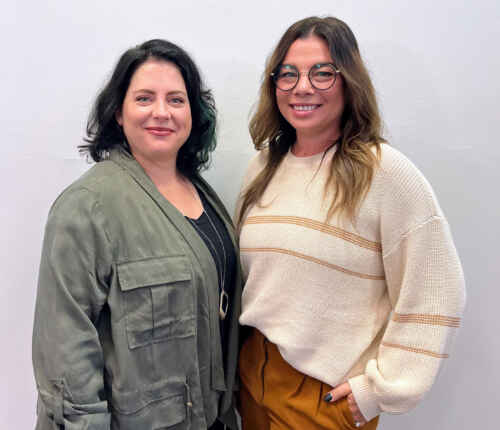
Drs. Andria Jones and Briana Hagen
In her exploration of farmer mental health, Dr. Andria Jones and her team have uncovered a myriad of factors – climate change, the pandemic, an unstable economy – that leave those in the profession experiencing heightened levels of chronic stress, depression and anxiety.
New research from the team at the University of Guelph reveals another contributor to the negative impacts of farmer mental health – gender. Women, specifically.
“What we found is that women’s contributions remain undervalued,” says Jones, professor in the Department of Population at the Ontario Veterinary College. “Their mental health is further strained by visible and invisible workloads, and the expectation to safeguard family and community well-being rests primarily on them.”
In a study published in Occupational Health, Jones, former PhD student Dr. Briana Hagen and their co-authors examine qualitative data that addresses a gap in research. They say the mental health of women farmers is more negatively impacted than men. These gendered differences are pervasive and affect farmers on both the individual and community level.
The ‘triple shift’ and its impact on women
Hagen, now CEO and lead scientist at the Canadian Centre for Agricultural Wellbeing, interviewed 74 farmers (37 women, 37 men), many at home on Ontario farms spanning grain, oilseed, beef, poultry, swine, sheep, goat, fruit and vegetable operations.
Three major themes emerged: identity, workload and mental health support.
The women who shared their experiences described persistent struggles to be recognized as farmers. They reported disproportionate workloads that brought overwhelm and exhaustion. Many felt the onus was on them to find mental health support for themselves and their families.
The story many women shared is what researchers call the “triple shift” – working on the farm, working off the farm and working in the home. Speaking to these roles, Hagen found women were hesitant or reluctant to value the work they do to keep a farm running.
“Something that was clear right away in these interviews is how mental health was a woman’s job,” says Hagen. Her goal is to change that, to empower men to take ownership of their own mental health and that of their families.
“Women talk about running the farm while also keeping watch on their husbands who are struggling,” she explains. “Men should also be able to recognize when their wives are struggling and help.”
Jones adds: “We need men to be able to talk about their feelings.”
30% of Canadian farmers are women
Traditionally, farm culture has been very male-focused. “We are inundated with images and language that are he/him focused,” Hagen says. “In children’s books, the farmer is depicted as a man. Advertising to recruit farmers or showcase agricultural associations typically depicts a white man.”
Gender-assumptive and dismissive language exacerbated existing mental health challenges, making some women reluctant to claim ownership of their farms.
“Women are so often referred to as ‘a farmer’s wife,’ they have a hard time declaring themselves farmers, but they have been working the land just as long as men,” Hagen says.
This is critical in a profession like farming, Jones points out. “It isn’t just a job; it’s an identity.”
There are approximately 190,000 farms in Canada with a farm population of roughly 590,000 people, according to Statistics Canada. Women make up 30%.
For decades, women could not enter agriculture, unable to secure loans and start farming practices. Progress has been made for women in Canadian agriculture, but the culture and its impact remain.
“Women are incredibly smart and capable and should be in farming,” Hagen says, “which is particularly important now with many people leaving the profession as younger generations choose not to continue the business of family farms.”
It concerns Jones, who wonders: “Without greater inclusivity in agriculture, where are we headed in terms of agriculture sustainability and food supply?”
If you or someone you know is struggling, contact the National Farmer Crisis Line at 1-866-327-6701. To learn about In The Know, a mental health literacy program developed by Jones and Hagen for farmers and their families visit CCAW.ca/in-the-know/
This research is supported by the Ontario Agri-Food Innovation Alliance, a collaboration between the Government of Ontario and the University of Guelph, with additional support from Egg Farmers of Ontario, Ontario Pork, Ontario Sheep Farmers and the Ontario Federation of Agriculture.