
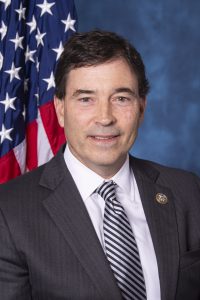
Rep. Troy Balderson
Two proposed bipartisan bills spearheaded by U.S. Rep. Troy Balderson (R-OH) aimed at improving healthcare access for youth, received approval on May 21 from the U.S. House Energy and Commerce Committee and now move to the full House for action.
Specifically, the committee marked up and approved the Accelerating Access to Dementia and Alzheimer’s Provider Training (AADAPT) Act, H.R. 3747, and the School-Based Health Centers Reauthorization Act, H.R. 8209.
If enacted, H.R. 3747, would reauthorize the Project ECHO Grant Program to establish grants and to disseminate knowledge and build capacity to address Alzheimer’s disease and other dementias, according to the text of the bill, which Rep. Balderson sponsored in June 2025 with cosponsors U.S. Reps. Darin LaHood (R-IL) and Nanette Diaz Barragan (D-CA).
“Alzheimer’s disease and dementia continue to impact millions of families across the country, including more than 236,000 Ohioans,” Rep. Balderson said. “In many rural communities, primary care providers are on the front lines of dementia care but often lack consistent access to specialists and advanced training resources.
“The AADAPT Act helps address that challenge by giving providers the tools and clinical support they need to identify cognitive decline earlier, improve care coordination, and connect patients and families to treatment options sooner — regardless of where they live,” said the congressman.
H.R. 8209, which Rep. Balderson cosponsored on April 6 alongside bill sponsor U.S. Rep. Paul Tonka (D-NY), would amend the Public Health Service Act to reauthorize the school-based health centers grant program, which helps provide students with access to primary care, mental health services, preventive screenings, and chronic disease management directly at school.
“School-based health centers help students and families access care in a convenient, familiar, and trusted setting,” Rep. Balderson said. “In many rural and underserved communities, provider shortages and transportation barriers can make it difficult for families to access timely pediatric and behavioral health services.
“Reauthorizing this program expands access to preventive care, mental health support, and early intervention services so students can stay healthy and be better positioned to succeed both inside and outside the classroom,” he said.
Both measures now head to the full U.S. House of Representatives for consideration.
Post navigation
← Previous Article