
Mental health is no longer a peripheral issue for the crane, rigging and specialized transport sectors – it’s a growing reality that continues to demand attention at every level of the industry. In response, SC&RA has sharpened its focus on the topic in recent years, recognizing that awareness alone is not enough without action, education and leadership-driven engagement.
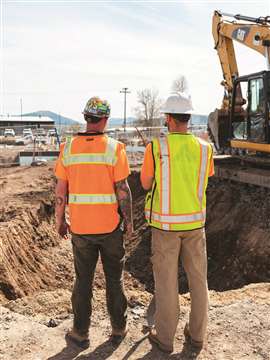 From the jobsite to leadership, SC&RA members are advancing conversations around mental health as a critical component of safety and performance.
As the conversation evolves, one point has become clear: progress begins with the willingness to speak up. For many member companies, that means creating environments where discussions around mental health are not only accepted, but expected – and where leaders are equipped to respond.
According to Eric Steiner, Marketing Director at Bigfoot Construction Equipment, while he is seeing growing awareness, mental health is still stigmatized in practice.
“The term itself can carry a certain weight that makes people hesitant to engage with directly, so it’s often left unspoken rather than intentionally supported.”
Grasping the urgency
Part of it comes down to perspective, said Steiner. “Mental health, like physical health, affects everyone, but not everyone has experienced it in a way that makes its impact immediately visible. Without that firsthand exposure, it can be difficult to fully grasp the seriousness or urgency behind it.”
At the same time, Steiner noted that within construction environments, “There’s a constant underlying pressure tied to responsibility. Operators and crews are making decisions that carry real consequences, whether that’s equipment integrity, jobsite safety or financial outcomes. Even when everything goes right, the weight of that responsibility does not fully turn off at the end of the day.”
Layered onto that is a culture built on toughness and reliability – qualities that serve the industry well, Steiner acknowledged, but can also discourage individuals from speaking up.
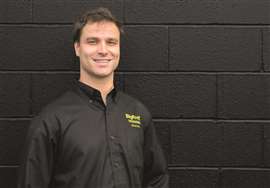 Eric Steiner, Marketing Director at Bigfoot Construction Equipment
“Recognizing these pressures is a critical step toward building a culture where mental well-being is viewed as part of overall job performance – not separate from it.”
Bridging the gap
The connection between awareness and action becomes critical in the field, where mental fatigue can quickly translate into increased exposure, indicated Kevin Kelley, Owner and CEO of Environmental Health & Safety Solutions, Inc.
“Early recognition remains the most effective line of defense,” he emphasized. “Mental fatigue and stress, when identified by co-workers and/or supervision, can be addressed prior to any incidents, near misses or decision-making breakdowns. ‘See something, say something’ can and does save lives.”
Kelley pointed out that this responsibility applies across all levels of the workforce, from new hires to experienced supervisors, and requires a collective approach. A proactive mindset, he added, depends heavily on training – both with recognition and response.
“Training your craft, safety professionals and supervision on the proper steps to follow is especially important. And if a team member doesn’t have their head and hands in the same place, they should follow the company’s stop-work authority program and report it to safety and supervision immediately.”
 Kevin Kelley, Owner and CEO of Environmental Health & Safety Solutions, Inc.
Additionally, said Steiner, making support more tangible and easier to access will remain a crucial step for companies moving forward. “One opportunity is identifying and sharing trusted local counselors, therapists or support networks,” he said. “Telehealth may be a better fit for some individuals. Also, reinforcing that seeking professional help is not only acceptable, but encouraged, can go a long way.”
At the same time, he underscored – while colleagues can listen and offer empathy, they’re not a substitute for trained professionals. “Creating a culture that recognizes that distinction, while still fostering openness internally, can help bridge the gap between awareness and action.”
Education is key
PSC Crane & Rigging has been directly impacted by mental health challenges in recent times, reinforcing the need for greater awareness across the organization and highlighting how far-reaching the effects can be.
“Life is precious,” said Randy Sever, COO at PSC, as well as chair of SC&RA’s Crane & Rigging Safety, Education & Training Committee. “We all have a part in this – to help identify symptoms, see the signs and understand how to talk to people and deal with it if you do see something.”
At the same time, Sever emphasized that the path forward is not always clear. “None of us are doctors – we’re all trying to learn. There’s an awareness piece, an education piece, identifying the issue, and then how to cope – how to point someone in the right direction and make sure they get the help they need,” he said.
For PSC, that learning process is ongoing. “Quite honestly, as a company, we’re in the process of training our personnel – company-wide – right now on the signs to look for and what to do accordingly,” said Sever.
Part of the challenge, he added, is that the signs aren’t always obvious. “I’ve personally asked our team – before you start your daily activities, get everybody together. Take an assessment. Walk around, look your crew members in the eye and ask them, ‘How are you doing today? How are things going? Did you have a good night? How’s the family?’”
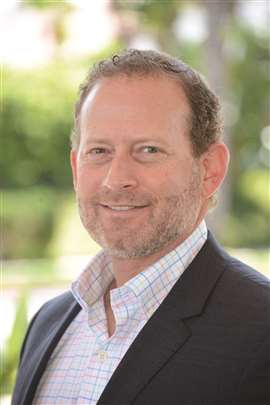 Randy Sever, COO at PSC Crane & Rigging
The goal, he noted, is not to slow the work, but to create awareness. “Just have a short, personable conversation. Realizing you’ve got a lot of guys in your crew – but you need to have a check-in. See how they’re doing and how they’re coping. You might be surprised what someone tells you.” A similar emphasis on leadership and daily engagement is taking shape within other member companies. For Kelan Bragg, Vice President, Crane Services Division at Bragg Companies, that starts with accountability at every level of the operation.
“Like anything with safety and the work we’re involved with, I think it comes down to being your brother’s keeper and holding each other accountable,” he said. “You’re a team.”
He noted that Bragg Companies has undergone a significant shift in how it approaches safety and communication, reinforcing a culture where awareness is shared and reinforced across the workforce.
Leading by example
“Safety-wise, we’re bringing on some top safety professionals, and it all revolves around culture and accountability,” he explained. “We’ve also implemented a mobile app – Safety Mojo – so we’re staying on top of near misses and things like that. When you start with something that’s hard to do, like reporting near misses, and you hold each other accountable, everything else kind of falls in line.”
That visibility, added Bragg, is already making an impact. “You can actually see it in people’s demeanor – how they talk and how they interact when we get together. We do bimonthly all-hands meetings at four in the morning, and open communication is key. It’s like any relationship – with friends or family – staying in constant communication and making sure people feel comfortable talking is huge.”
At the center of that effort, he highlighted, is a willingness to lead by example.
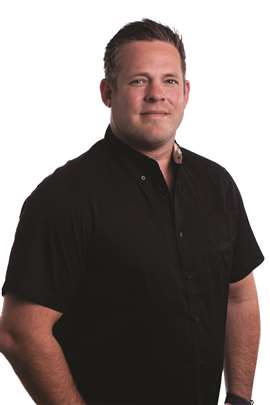 Kelan Bragg, Vice President, Crane Services Division at Bragg Companies
“I think being vulnerable on the leadership side helps other people be vulnerable. If you’re leading a safety meeting, mental health should be part of every single meeting. And if a leader is willing to be vulnerable and talk about issues they’ve had, I think guys will be more open and transparent. That’s a huge step in the right direction.”
For more information and mental health resources, visit www.scranet.org/support