
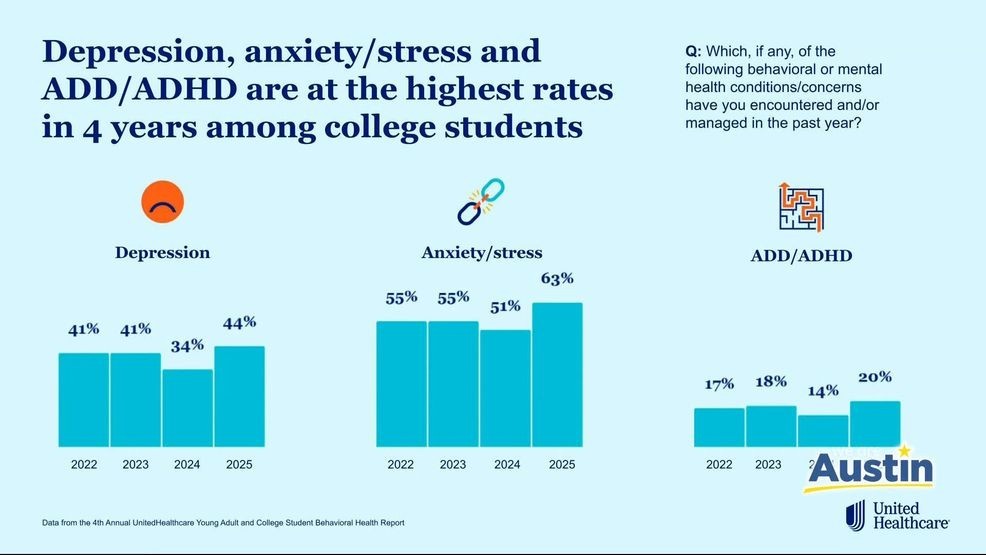
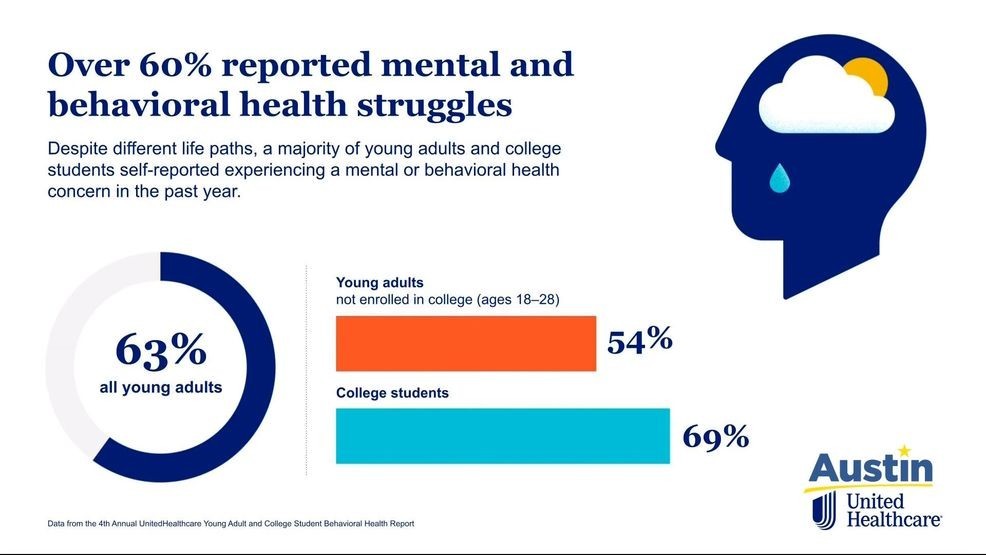
Mental health challenges among young adults and college students continue to rise, and experts say the numbers are too significant to ignore. According to recent research from UnitedHealthcare, more than 6 in 10 young adults and college students experienced a mental or behavioral health concern in the past year, with anxiety, stress, and depression remaining especially common among college-aged individuals.
An Ongoing Challenge
Dr. Puja Dutta with UnitedHealthcare says the data shows these concerns are not temporary.
“The highest rates of mental and behavioral health concerns are during the college years,” Dutta said. “And these levels have remained consistently high over several years.”
In Texas alone, nearly 1 in 5 adults between 18 and 44 reported their mental health was not good for two weeks or more during the past month.
UnitedHealthcare shares how young adults are facing a growing mental health crisis
A Disconnect Between Students and Parents
One major issue highlighted in the research is the gap between what young adults are experiencing and what parents believe they’re experiencing.
That disconnect can make it harder for students to feel understood or seek support.
Instead of focusing on having the “perfect” response, Dutta says parents and caregivers should prioritize listening.
“Showing empathy, asking questions, and simply being present can go a long way,” she said.
UnitedHealthcare shares how young adults are facing a growing mental health crisis
The Growing Role of AI and Digital Support
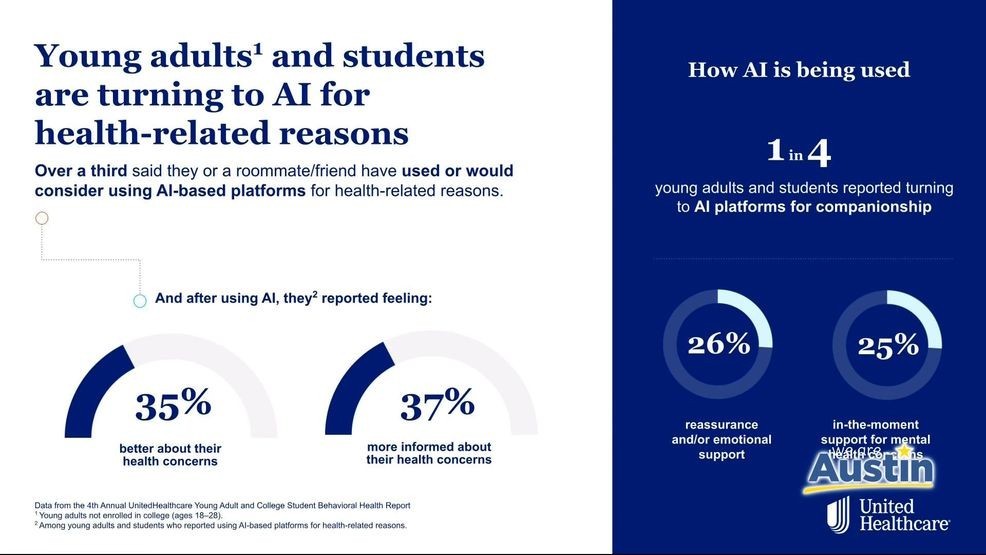
The study also found that many young adults are turning to digital tools and AI for emotional support, symptom research, and coping strategies. About one-third of respondents reported using these platforms in some capacity.
While these tools can be helpful, Dutta emphasizes they should complement, not replace, professional care and real human connection.
UnitedHealthcare shares how young adults are facing a growing mental health crisis
For those unsure how to seek help, experts recommend starting with a primary care doctor or reviewing available resources through a health insurance provider.
Many health plans now offer:
24/7 support linesVirtual therapy optionsDigital self-care toolsAccess to in-person mental health servicesWhen to Seek Professional Help
Dutta says it’s important to seek support when anxiety, depression, or stress begin interfering with daily life.
“Early support can make a big difference,” she said.
And for anyone in immediate distress, the 988 Suicide & Crisis Lifeline is available 24 hours a day for confidential support.
For additional mental health resources and support options, visit UHC.com.