
THANKS TO OUR COMMUNITY PARTNERS
CASPER, Wyo. — Children’s Hospital of Colorado hosted the Wyoming Pediatric Mental Health Symposium; a first-of-it’s-kind event designed to shine a light on adolescence mental health in Wyoming and beyond.
The event, which took place over a two-day course on May 13 and 14, was “designed for mental health, school, and healthcare professionals seeking to deepen their expertise in pediatric mental health.”
According to the FDA, pediatrics include those aged 0-21, and that’s exactly who mental health professionals who attended the symposium wanted to reach. Professionals from across a wide spectrum gathered at the Best Western Downtown to learn more about counseling and crisis centers, schools, hospitals, primary care practices, and outpatient services. They received clinical updates and engaged in discussions regarding current, evidence-informed issues that impact the care of pediatric patients and mental health needs.
And, according to the professionals, there are a lot of mental health needs in Wyoming.
“We’re here to work with folks in Wyoming about pediatric mental health concerns,” said Sandra Fritsch, MD, MSEd, DFAACAP. “May is mental health awareness month so what a great two days to be here to talk about that during this time, as well as the challenges for access to care for pediatric mental health that exists nationally.”
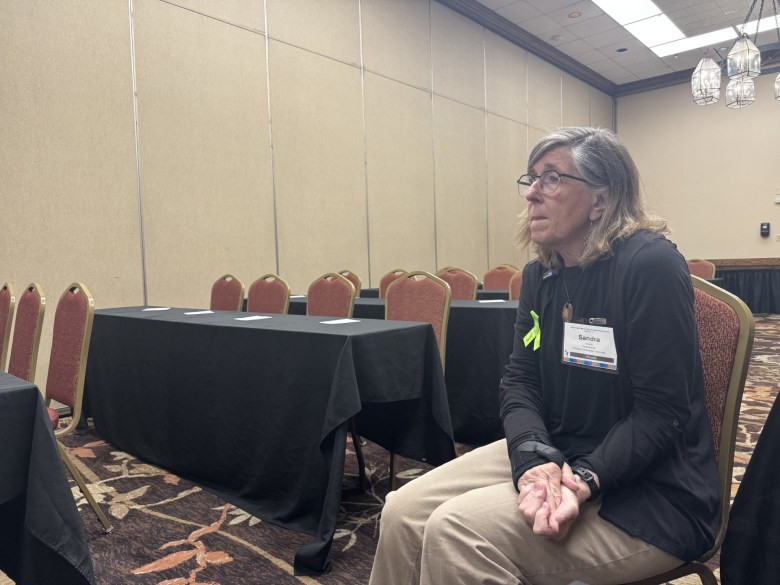 Sandra Fritsch, MD, MSEd, DFAACAP (Nick Perkins, Oil City News)
Fritsch said the goal of herself and her peers was to increase knowledge and awareness for everyone who attended the conference, whether they work at a school or a hospital or they’re a community health worker. She said she wanted to begin to open awareness and find a commitment in the community to have real, open conversations about pediatric mental health.
Geographic densities are big reasons that mental health assistance is so hard to find in Wyoming, Fritsch said. But they’re not the only reasons.
“I think awareness and then knowing the resources you can tap into is really important when it comes to pediatric mental health,” she said. “I do think that we need to have a dedicated approach to increasing the workforce, and that’s the workforce of everyone, whether it be a community health worker who can do screenings, therapists who can be in schools, traditional therapists, child psychiatrists, or psychiatric nurse practitioners who can help assess and treat. I think building workforce is something that’s really essential.”
Fritsch said that the suicide rate in Wyoming is staggering, especially for youth. The pandemic, she said, reminded people about the notion of mental health and its importance among the community.
“It actually created awareness and opportunities for a conversation that more people are willing to engage in,” she said. “And the other thing, too, is the notion of putting the head back on the body. Looking at the whole being is really important, and seeing more of that from a prevention and early intervention standpoint. That’s what I would love to see a lot more of.”
Early prevention in adolescence, Fritsch said, begins with parents.
“How are we working with families before they’re even having kids?” she asked. “Being a parent is the hardest job in the world. It’s an apprenticeship program. It’s trial by fire. You think you’ve got it straight with one kid and then you get the next one and it could be completely different. So how do we help support that as well?”
Fritsch said there are no simple solutions, no easy answers. But there there are things people can try.
“One thing I would want is for families to have plans for how they’re together and when they’re together, how they’re off screen, etc.,” she said. “So family meal times, family activity times, things like that. And working on ensuring good quality sleep I think is really important for all concerned, from that standpoint.”
She also said it’s important to help caregivers meet kids where they’re at, developmentally and moving forward from that standpoint.
“It’s about understanding that and promoting positive success and celebrating those successes and moving forward from that standpoint,” she said. “The other thing, too, is earlier identification and treatment for mild to moderate conditions. You can have anxiety as a preschooler. It’s different than what it looks like as an adult, but being able to address that may offset that depression you would otherwise have when you’re a teenager.”
Fritsch herself spoke at the symposium, leading a talk called “Assessment and Treatment of Depression in Pediatric Primary Care.” The following day, she gave a talk called “Putting Evidence Into Practice: Approaches for Pediatric Anxiety and Trauma Related Disorders.”
Both of these presentations offered insight into mental health needs across Wyoming, Colorado, and the entire country.
“I just want people to have an awareness of the breadth of what our understanding of mental health is for the youth population,” she said. “How it can play out in the school setting, how it can play out in the primary setting, how it can play out in the community. And then I want to bring that information back to where they’re at and come up with some commitments to how they way want to do things differently based on what they’ve learned.”
For more information on pediatric mental health, visit https://www.childrenscolorado.org/
Related