
Get We Are The Mighty’s Weekly Newsletter
Military culture and entertainment direct to your inbox with zero chance of a ‘Reply All’ incident
Military families are built tough, but some everyday habits are quietly burning them out. Here’s what’s really going on behind all that “we’re good” energy.
Military families don’t always fall apart dramatically like your favorite reality show. Most of the time, it looks like normal family behavior. Schedules handled. Kids fed. When asked how they are doing, the response is, “We’re good.”
Also Read: The invisible weight of loving a service member while protecting yourself
But if you’ve been in this life long enough, you know the truth. “We’re good” is sometimes just code for, “We haven’t had time to fall apart yet.” And during Mental Health Awareness Month in May, it’s worth calling out the habits that feel normal in military life—but are quietly draining the people living it.
Here are five of the biggest ones.
1. “We’re Fine” Syndrome (aka Emotional Suppression)
Military families are elite at pushing through. Deployments, no problem. PCS chaos, handled. Last-minute field problems, not an issue. But somewhere along the way, “handling it” turns into not feeling it. Nobody wants to be the one who makes things “harder,” so emotions get tucked away like CIF gear you swear you’ll clean later. And just like that gear, unprocessed emotions start to stink. The problem isn’t that military families feel less; it’s that they’ve mastered the art of postponing those feelings indefinitely, because when is there ever a good time to process emotions/feelings?
How to Course-Correct: Start Talking Before It Explodes
Build in a weekly check-in for everyone to express their feelings without “filter.” Not a therapy session, but a few minutes where everyone can say what’s actually going on without needing to fix it, minimize it, or turn it into a lecture. Keeping it simple allows for less pressure and more honesty.
2. Constant Restart Mode (PCS Whiplash)
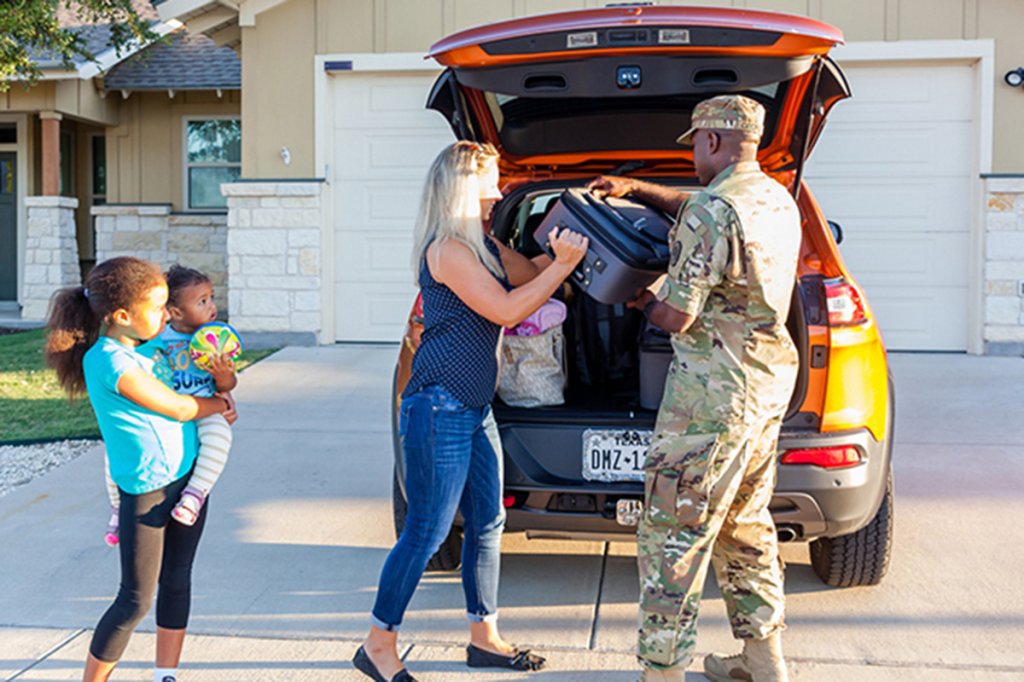 Military families handle PCS moves like true pros, but that doesn’t discount how stressful they can be. (U.S. Army)
Every few years, military families hit the reset button on their lives. New house. New job. New school. New friends (if you are lucky). It’s like being forced to start a new season of the show…, but you’re the only one who didn’t watch the previous episodes.
At first, it feels exciting. Fresh start. New city (or country). New opportunities. By the third or fourth move? Life starts to feel like the same song on replay. Kids get used to saying goodbye before they’ve fully said hello while spouses rebuild identities like it’s a side hustle. Everyone becomes really good at pretending that constant loss is just “part of the adventure.”
It is, but that doesn’t mean it’s easy.
How to Course-Correct: Create “Anchors” That Don’t Move
Pick two or three things that stay consistent, no matter where you PCS. Home-base habits can be simple things such as pizza night, game night, family devotional time, or some activity your family enjoys together. These anchor habits allow for a little peace and consistency when everything else is constantly changing.
3. Over-Functioning Spouse Syndrome (Doing the Job of 2.5 Adults)
When one partner is deployed, training, or just gone often, the other one steps up. They become and do everything. Parent. Planner. Chauffeur. Counselor. Crisis manager. Occasional electrician. Definitely the IT department. It’s impressive. It’s necessary. It’s borderline superhero behavior. But even superheroes have a weakness. For some, that weakness is burnout, especially when nobody acknowledges that they’re carrying the whole operation solo.
And here’s the kicker: Military spouses are so used to being “strong” that asking for help feels like a system failure rather than maintenance. Once a spouse said, “Asking for that ride was hard,” when her husband was away on duty.
How to Course-Correct: Stop Running a Solo Operation
Sometimes it’s not so easy to build a village everywhere you go, but having a micro-support system of two or three people can make the life of a milspouse a whole lot easier. Your system can include another spouse who can swap kid pickups, a teen babysitter, or community child-care options. Don’t forget that one friend you can text “I’m at capacity” without explaining to jump in. A micro-support system eradicates the one-person army and gives you reliable help.
4. Isolation Disguised as Independence
Military life teaches you to be self-sufficient. No family nearby, but I’ll figure it out. No consistent support system. Adapt. Need help? … Never mind, I got it. Over time, independence turns into isolation with a polished label and a nice social media presence. Because who wants to show their kryptonite when you can do everything alone?
Humans weren’t built for solo life. Even special operations teams don’t roll alone—and they’re actually trained for chaos. If your whole life is “I got it,” there’s a good chance you’re carrying way more than you should.
How to Course-Correct: Schedule Connection
Add connection time on your calendar like it’s a non-negotiable. Whether it’s a monthly coffee or brunch date, weekly fitness class, small group meeting or a standing FaceTime call with a friend back home, connection must be built in. Connection doesn’t just “happen” in military life; you have to build it on purpose.
5. Achievement Over Emotion (Especially for Kids)
 Naval Base San Diego hosted its annual Color Run in honor of Month of the Military Child, April 25, 2026. (U.S. Navy/Interior Communications Electrician 2nd Class Ulrika Mendiola)
Military kids are resilient. That’s the headline everyone loves (including myself). And it’s true. They adapt fast, make friends quickly, and learn how to navigate change better than most adults. But here’s the part people don’t talk about: Sometimes that resilience comes at the cost of emotional expression. And who wants to talk about that?
Kids learn early:
“Don’t stress Mom out.”
“Don’t make things harder while Dad’s gone.”
“Be strong.”
So they perform, achieve, and adjust without always processing. Years later, that bottled-up emotion shows up in unhealthy ways. Resilience is powerful, but it shouldn’t replace being human.
How-to Course-Correct: Teach Kids to Feel, Not Just Perform
Normalize emotional check-ins with your kids. Don’t be quick to try to fix things. Instead, ask simple questions aimed to allow emotional expression. A simple question might be, “What was the hardest part of your day?” Show them how their feelings are safe by sharing your response. “Today was hard for me because…” goes a long way toward making your kids feel safe sharing.
The Bottom Line
Military families are some of the toughest people walking the planet. They adapt faster, endure more, and carry heavier loads than most will ever understand. Small, consistent adjustments remind your family that life is more than survival mode. Staying mission-ready is great, but staying mentally and emotionally healthy is how you win in the long term.
Don’t Miss the Best of We Are The Mighty
• 7 hard truths military spouses wish they knew in the beginning
• How military couples can ‘armor up’ for love and war
• PCS season means carrying what matters, finding who matters
The silent identity shift that military spouses undergo to survive the lifestyle
Tamika Sherman is an active duty military spouse with a dynamic background in social media strategy, content coaching, and the founder of Artistically Graced Consulting, a social media management agency. Her deep commitment to empowering families through budget coaching allows her to combine real-life experiences and financial wisdom to inspire long-term financial stability.
Her experience includes working on military bases directly with soldiers, which has given her a comprehensive understanding of military family dynamics from various perspectives. With expertise in business management and social strategy, she adds a creative dimension to her approach in content creation. Holding an MBA, she leverages her extensive knowledge to drive impactful results.
Tamika is also passionate about serving and volunteer work. She chairs a non-profit organization that advocates for and provides services to combat mental health issues in the BIPOC community. Additionally, she serves on the committee of a Christian Women’s Business Coaching Organization, where she supports and mentors women in their entrepreneurial journeys.
Beyond her professional pursuits, Tamika is a dedicated mother to two athletic children, a 15-year-old daughter, and a 10-year-old son. Married to her high school sweetheart for 16 years, her life is grounded in faith, family, and financial advocacy.
As a Budget & Money Mindset Coach, her mission is to empower families to break free from bad spending habits and poor money management, fostering financial freedom and abundance. Her vision is to create a society equipped with the knowledge and tools to make wise financial choices, ultimately building a legacy of wealth. Through her multifaceted expertise and unwavering faith, she is committed to transforming the financial lives of families.