
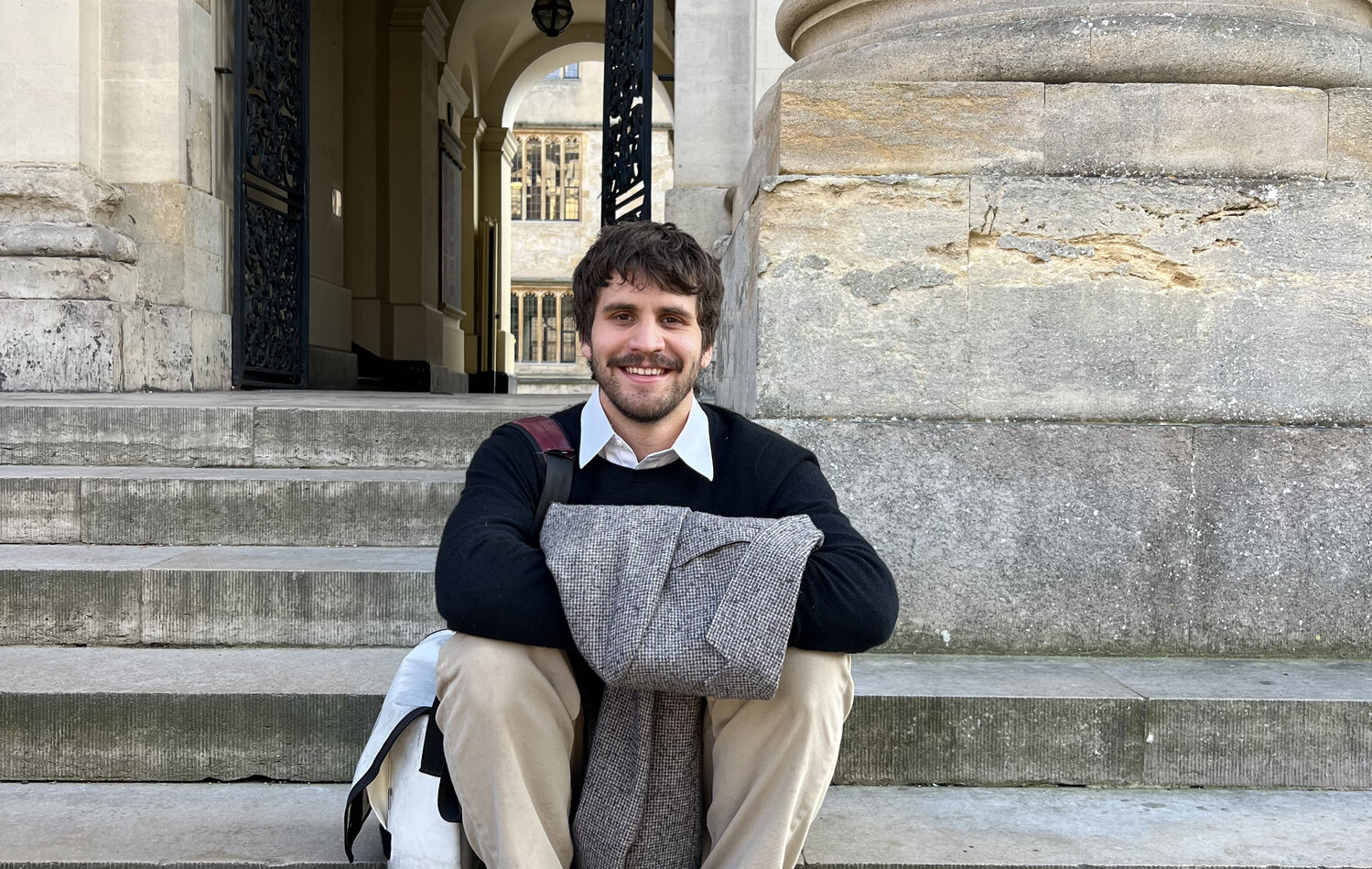
Scholar-Elect Will Smith will study whether Indigenous practices can solve some of the psychological problems we have today.
I decided to turn psychology on its head and look at the Indigenisation of psychology and what Western societies can learn from Indigenous perspectives.
Will Smith
When Will Smith [2026] was studying in Canada during his undergraduate degree, his lecturer, Professor Pablo Irizar, on a Mexican philosophy course took a different approach to the subject of colonisation.
Instead of focusing on how Indigenous people in Mexico were affected by Christian traditions brought in by the Spanish, he talked about how Christianity had been ‘Mexicanised’ as a result. “It was about the way two worlds had collided and it spoke to me,” says Will, whose father is Aboriginal. “I decided to turn psychology on its head and look at the Indigenisation of psychology and what Western societies can learn from Indigenous perspectives,” he says.
Growing up, Will had witnessed the gap between how health systems serve Indigenous peoples and how Indigenous communities understand their own wellbeing. It was this disconnect that drew him to study psychology at undergraduate level and, now, to his MPhil in Health, Medicine and Society, which he begins in the autumn.
Growing up
Will was born in Melbourne in 1999 and grew up on Bunurong Country in Victoria. His mother’s family is from the UK and his father is from the Wiradjuri and Wemba Wemba Country. His parents had him and his younger brother when they were very young. There is a chain of young mothers in his family and his maternal great great grandmother was still alive in the first years of his life. His mother works in real estate like her late mother and his father is a concreter who has worked across construction and excavation. The family grew up in a home in a lower socioeconomic area, which was leased to them through an Aboriginal housing programme. Will went to his local primary school and really enjoyed it. By high school, his family had moved to a more middle-class suburb, and he attended Kambrya College.
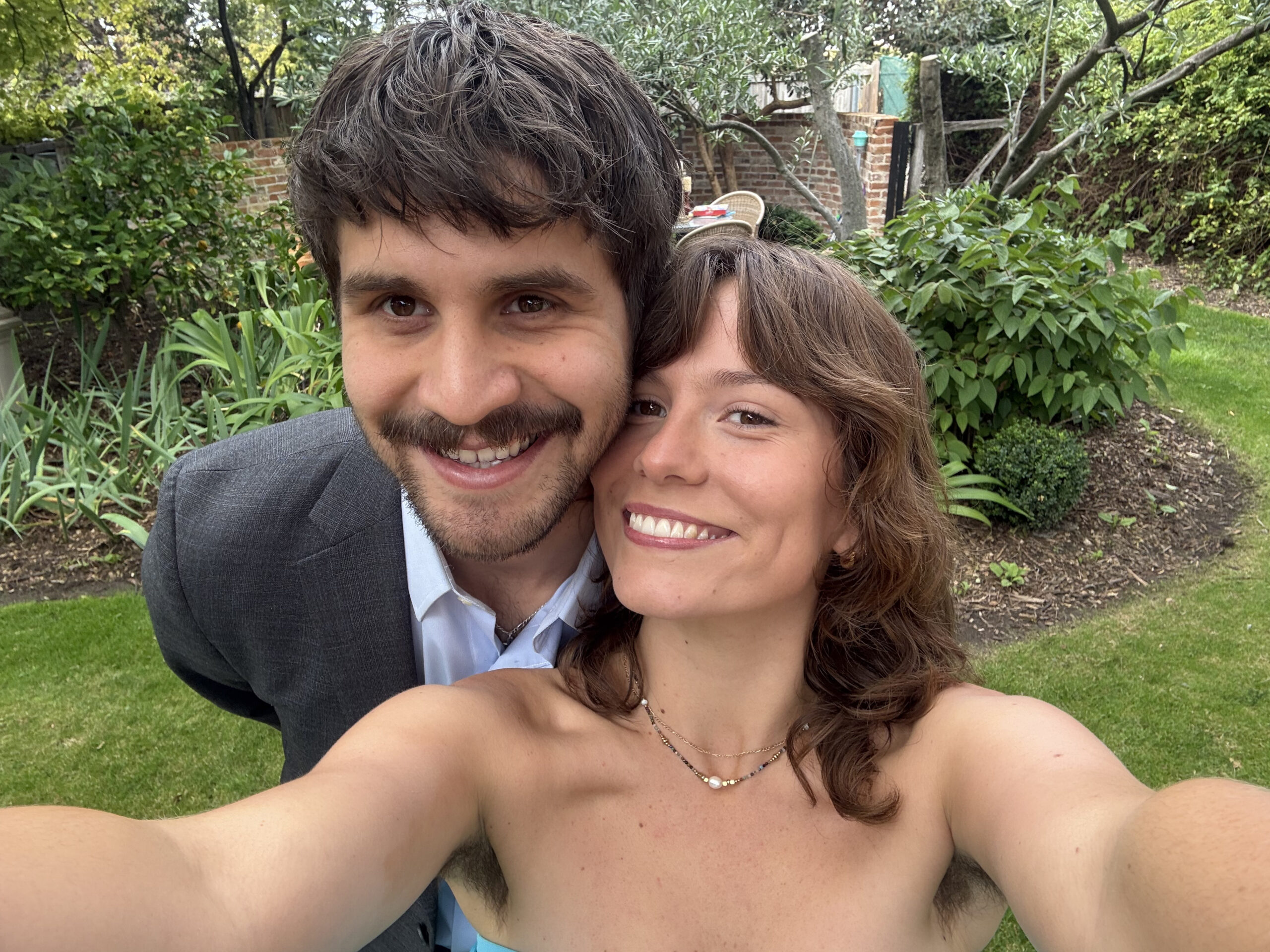 Will describes himself as a “super curious kid” who was interested in everything. He spent a lot of his childhood outside playing, riding around on his bike and imagining he was in a race. He was heavily involved in sports and highly competitive. “I wanted to be really good at things and push myself to the limit,” he says. “I knew from an early age that life is short.”
He says he had a devil-may-care attitude to life [he was later diagnosed as having ADHD], testing how fast he could ride his scooter and skateboard down his hill of a driveway and into his garage, taking a few head knocks in the process. He loved books and regularly took part in the Victorian Premier’s annual reading challenge.
In high school, he almost got lost in the wrong crowd, but his love of sport, his academic curiosity and his closest friends, Nisal and Nihal, motivated him to maintain focus on his grades, and were instrumental in developing his love for education. His maths teacher – his favourite teacher – Ms Day encouraged his intellectual questioning of everything, but by the end of school, he began to feel that he wasn’t being challenged enough.
The road to Psychology
At the University of Melbourne, starting in 2018, Will studied for a degree in History and the Philosophy of Science, but realised soon after that it wasn’t what he wanted to do. He was becoming more and more interested in Philosophy so he took a gap year in 2019. He had seen a photo of the Faroe Islands searching for the best spots to hike in the north, and decided he needed to see it for himself. So, in 2019, he took up a job as a concreter for 10 months and saved enough money to travel to the Faroe Islands, but also to many more countries across Europe. “In retrospect, it was the most brilliant life decision I made,” he says.
He ended up on a Faroe Islands beach, with black sand, looking out to sea, surrounded by fjords, grass and puffins. “It gave me a sense of wonder about the world. I realised that this is what life is,” he says. It was also here that he was able to consider, at a distance from the academy, what he wanted to do with his life. This space for contemplation made him realise that he wanted to be a psychologist so that he could have a positive impact on the world, and it connected two of his greatest interests, acting as a bridge between science and the humanities.
He returned home in December to start his degree, majoring in Psychology and Philosophy at Trinity College, University of Melbourne, just before the Covid lockdown. The 2020 lockdown had a profound effect on Will. He wrote about feeling like he was on Noah’s Ark as everyone seemed to be pairing off. He speaks about the toxicity of the reaction to Covid, given Australians tend not to like rules. “It was fascinating how people reacted. It cemented my interest in psychology,” he says.
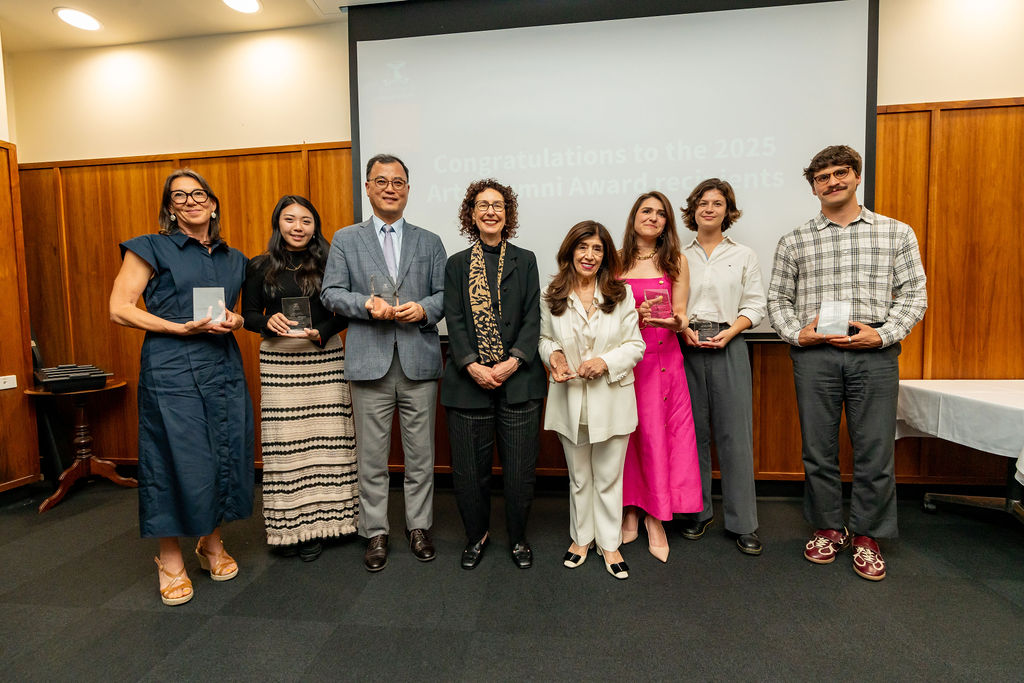
Will at Arts Alumni of the Year Award Ceremony, 2025
During his degree, he spent a year at McGill University in Canada doing a Philosophy credit, mainly studying Mexican and 18th-century German philosophy and Canadian Studies. In addition to studying the colonisation of Mexico and the Indigenisation of Christianity, he learned more about the colonial experience in French Canada, about land rights and about Indigenous people having to decide which oppressor to side with and seeing how all of this was still having an impact on some of the Indigenous people he encountered in Montreal.
On his return to Australia in 2023, Will studied cognitive psychological memory under the supervision of Associate Professor Meredith McKague, and how Indigenous people have passed knowledge and stories down the centuries, including memories of trauma, using rhyme, geographical spaces, sacred sites and more to store memory and communicate a narrative. “Indigenous people used the stars as a map. The universe was their university,” says Will. “We have lost that connection with the world through our efforts to control it. It is what is missing in contemporary psychology, and I believe we need to reawaken our minds to the wisdom of the past.”
An Indigenous clinician-academic
After completing his honours degree, Will took some time off from academia and worked at Trinity College to try to expand the number of Indigenous students studying there.
Having published in The Lancet Psychiatry and the Medical Journal of Australia on Indigenous knowledges and evidence-based practice, he started teaching first-year students at the university’s Medical School about the impact of colonialism on Indigenous people’s health, for instance, the impact of racism and policies such as forced removal and sterilisation, resulting in a deep level of mistrust in the medical system and leading to ongoing impacts of intergenerational trauma on poor health, including alcoholism and mental ill health. As such, he aims to embed culturally safe frameworks into medical education, shaping how future doctors understand and respond to Indigenous health issues.
By that point, he had discovered the Aurora Foundation, which funds Indigenous Australians to study in the US and UK and in 2024, he was selected to go to the US. There, he met and started networking with a community psychologist at Harvard, Professor Joe Gone. “We spoke about culture as a healing practice,” he says.
After the US general election, Will was funded to travel to the UK, where he was invited to a talk at Oxford University by an Indigenous Brazilian academic, Felipe Tuxa, speaking about imagining a future with the Tuxá community of São Francisco River, Brazil. These two experiences gave him insight into the breadth of Indigenous experiences across the world, further motivating him in understanding the wide-sweeping impacts of colonisation, and the First Nations principles that require elevation for the benefit and success of Indigenous populations.
He then travelled to Cambridge, and he fell in love with the place, including the river, the landscape and the old cobblestone paths. He had the opportunity to meet with Dr Mikkel Kenni Bruun, a social and medical anthropologist, and the two walked through Cambridge for what felt like many hours, speaking openly about a plethora of evidence-based psychological approaches to mental health. It was after this discussion that Will decided to apply.
His MPhil will examine how health knowledge is produced and what genuine culturally safe care looks like, with a focus on comparative Indigenous health governance. He will seek to find where there are overlaps and whether Indigenous practices can solve some of the psychological problems we have today. The MPhil will also give him the chance to conduct a literature review in preparation for his PhD back in Melbourne, with the hopes of working with senior researcher Associate Professor Graham Gee and Professor Gone.
His long-term goal is to become an Indigenous clinician-academic “to ensure future psychologists and doctors are equipped to deliver care that honours Indigenous epistemologies and ontologies”.
He says: “I want to bring together some principles from Indigenous cultural practices and hold them to Western academic light. I think this can revolutionise how we think about mental health. It’s not a panacea, but it is like holding up a small diamond and seeing what light it might bring, and about taking the Indigenous perspective seriously.”