
Life offers plenty of nice, concrete, mostly attainable goals for us to chase and boxes to check – good job, life-partner, maybe a house, maybe kids. But that’s also the classic recipe for a midlife crisis: you work your butt off to get a bunch of those boxes checked only to find yourself exhausted and unfulfilled. Or wondering, “Now what?”
So, how do we ground our goals to make sure we’re putting our energy into things that really matter?
This episode of On Human Optimization, we are joined by Bridget Berkland, Manager of Employee Well-being at Mayo Clinic in Rochester, MN. She’s a National Board-Certified Health & Wellness Coach, and she’s here to help us learn to combat burnout by aligning our daily actions with our deepest personal and professional values.
The three big questions we discuss with Bridget are:
1. What are personal values and what role do they play in our daily life?
2. Why do so many of us struggle to define our values and put them into action?
3. What practical steps can we take to clearly articulate our values and then use them to drive meaning and inform behavior in our lives?
Listen to How to define your personal values
Read the transcript:
Bridget Berkland, M.A.: When we have clear values and we live them out during times of adversity, it actually increases our resilience and decreases and lowers our anxiety, burnout, depression.
Christopher Camp, M.D.: This is Mayo Clinic “On Human Optimization,” a podcast where we break down the science of human potential to help you understand how purpose-driven effort leads to high-level performance and long-term well-being. I’m Dr. Christopher Camp, Director of High Performance for the Minnesota Twins and a sports medicine surgeon with Mayo Clinic.
Life offers plenty of nice, concrete, mostly attainable goals for us to chase and boxes to check. Good job, life partner, maybe a house, maybe kids. But that’s also the classic recipe for a midlife crisis. You work your butt off to get a bunch of those boxes checked only to find yourself exhausted and unfulfilled or wondering, “Now what?”
So how do we ground our goals to make sure we’re putting our energy into things that really matter? In this episode, we’re joined by Bridget Berkland, Manager of Employee Well-Being at Mayo Clinic in Rochester. She’s a national board-certified health and wellness coach, and she’s here to help us learn to combat burnout by aligning our daily actions with our deepest personal and professional values.
The three big questions we have for her today are: number one, what are personal values and what role do they play in our daily lives? Number two, why do so many of us struggle to define our values and put them into action? And then, in our third section, we’ll get into some solutions when we ask, what practical steps can we take to clearly articulate our values and then use them to drive meaning and inform behavior in our lives?
Christopher Camp, M.D.: Bridget, thank you so much for joining us today. We’re really excited to have you on and talk about this.
Bridget Berkland, M.A.: Thank you, Chris. It’s an honor to be here with you, and I’m grateful for the opportunity to talk with you about values.
Christopher Camp, M.D.: Well, I think this topic is really foundational, and it sort of sets the stage for all the other topics, so let’s get started here in our first section, and I like to start with definitions. So I want to hear from you: what exactly are personal values in practical terms?
Bridget Berkland, M.A.: So I have a simple definition and an expanded version. So the simple definition: our values are deeply-held beliefs that define what matters most. I would add to that that they create a GPS of what we think, feel, do, which forms our identity to live a purpose-driven life and reach our highest potential.
Christopher Camp, M.D.: That does a really good job of putting some sort of concrete terms into what I think most people feel is a very abstract thing. One of the problems with it being somewhat abstract is that it’s very easy to get it confused with a lot of other things in this area. So I kind of want to ask you about a few things that I think are commonly confused for values.
So can you tell me how values are different from personal preferences?
Bridget Berkland, M.A.: Those are things we like, and values are really what behaviors that we can apply across situations.
So maybe I value, which I do, well-being. And a preference, what I like to support that well-being, might be I prefer to drink green tea over some maybe sugary drink. But that preference could change throughout time.
Christopher Camp, M.D.: The preference could change even if the value stays the same.
Bridget Berkland, M.A.: Correct.
Christopher Camp, M.D.: OK. So next, how are values often confused with goals?
Bridget Berkland, M.A.: So I like to say there’s two different types of goals. There’s “doing goals” that can be completed, and then there’s “being goals” which are ongoing. So I think values can be confused with what I call “doing goals.” They’re time-bound.
So again, say I value, which I do, a growth mindset. A “doing goal” might be: I am going to complete one training this month to support that value or listen to one of your podcasts to grow and learn.
Christopher Camp, M.D.: OK, and I’ve always heard that you can arrive at a goal, but you never finish living a value.
Bridget Berkland, M.A.: Correct.
Christopher Camp, M.D.: Is that fair to say?
Bridget Berkland, M.A.: It’s ongoing.
Christopher Camp, M.D.: OK, great. All right, what about personality traits? So I know values need to be individualized. But how are they different from personality traits?
Bridget Berkland, M.A.: So personality traits are an innate disposition, so I’m introverted, extroverted, or I’m creative. However, they can also support our values, so maybe I’m just naturally creative, and it supports my value of being, you know, creative in my professional and personal life.
Christopher Camp, M.D.: OK, and then my last one for you, how are values different from our interest? So things that we like, enjoy, or we find interesting.
Bridget Berkland, M.A.: So maybe temporary hobbies. So for example, if I value well-being, a temporary hobby might be, like, pickleball. Have you tried pickleball?
Christopher Camp, M.D.: I have.
Bridget Berkland, M.A.: OK. I’ve tried it. Stay out of the kitchen. I know there’s a rule there.
Christopher Camp, M.D.: I see why it’s addictive.
Bridget Berkland, M.A.: It’s passing interest, so maybe I’m playing pickleball for a few months and then transition to some other type of activity. So it’s a temporary hobby, and that’s what makes it different.
Christopher Camp, M.D.: OK, great, and I think all of these things can be interconnected, right?
So our interests and our hobbies and our personal traits and our preferences can all go into shaping what our values are. And probably vice versa. Our values shape those things as well. OK. A few of the other related concepts that we talked about in addition to values are vision, purpose, and mission. And we have separate episodes dedicated to each of those, so we won’t go in too deep into what those things are, but I think it’s at least worth distinguishing how values are related to those things, but maybe different than. So you defined values for us. What are your thoughts on vision? How is that related?
Bridget Berkland, M.A.: Yeah. I think in order to maybe differentiate each of those, maybe I’ll just share a little bit about my personal story and how it’s shaped my values, and then just give a little definition of each of those.
I’ve been at Mayo Clinic since 2007, all in the well-being space — designing, leading well-being initiatives to support our staff. And then in November of 2017, I’d say winter in Minnesota, cold, and my husband was struggling to catch his breath, so we just simply thought he had a respiratory bug. And through a series of medical appointments, our lives literally went from normal to not so normal when he was diagnosed with stage 4 melanoma.
And he had tumors throughout his lung area, making it difficult to breathe, but also tumors throughout his body, and it even had metastasized to his brain. And so that cancer diagnosis literally catapulted us into the patient-care world, where I got to see firsthand the compassion, excellent care given to patients like my husband, which have formed my core values as well.
In November of 2017, transparently, he was only given about three months to live. However, I would say, due to many answers to prayers and the compassion and excellent care at Mayo Clinic, instead of three months, he actually lived three years and eight months. And so each day past that three-month mark was just a tremendous gift to our family.
There were family members, friends, strangers who helped out our family, and so I have tremendous gratitude for all of them. And so, really, I have, like, this fuel of gratitude to just want to give back to Mayo Clinic and the people around me.
And so that ties into the definition of purpose. Purpose is the fuel. Why do I do what I do? For me, as an expression of my gratitude, I support people through compassion and excellent care, OK? So that is my fuel, I just want to give back.
Then we think about vision. That’s the destination. What future do I want to help create? And it’s not about just me individually making that vision. It’s a collective, but I’m going to do my part. So an example of a future vision might be a compassionate culture where people feel valued, supported, and able to flourish.
And then the mission is the how, the daily actions. What daily actions do I need to take to accomplish that vision? So an example might be to support people through compassionate interactions, evidence-based initiatives, and servant leadership. So that is “the how” to build that compassionate culture to make people feel valued and supported.
So if I had to define the differentiation — so values is the GPS: it guides our behaviors. Purpose is the fuel: why do I do what I do? Vision is the destination: what future do I hope to create? And then mission: daily actions. What daily actions do I take to accomplish that vision?
Christopher Camp, M.D.: OK. So that’s an incredible summary, and what an unbelievable story what you’ve been through, and I can’t imagine how challenging that must have been for you.
And it does seem that so often our values are either tested or solidified or, maybe, originate or develop when we have to go through difficult times, whether that’s, you know, medical challenges or life challenges or stress or anything like that. Oftentimes that can really be a time that helps us figure out who we are, what’s important to us, what we want to do, why we’re here — all of those different things. So what are some of the other key qualities that you think well-thought-out and well-articulated values will embody?
Bridget Berkland, M.A.: I would say four qualities: authentic, aligned, actionable, and then also they serve as anchors. So I’ll just break those down. So authentic: Are they personal to you? Do they resonate with you? So I enjoy coaching others, and I was meeting with an individual I’ll just call Julie, and Julie had a very busy clinical schedule, and during her free time, she wanted to devote time to her family, and yet she was feeling this tension because colleagues were, in their free time, doing research and publishing papers.
And so Julie, you know, felt this kind of guilt and anxiety. She wasn’t focused on that during her family time. And so I just asked Julie, you know, “What matters to you most during your free time?” And she’s like, “It’s time with my family.” And so really making that an authentic goal. I say comparison robs us of contentment, so do the best version of you.
And so she just let that, you know, professional growth, just paused it during that season of raising her kids. So make sure it’s authentic. The next I would say is actionable. I like to look at my values and then how can I create what I call a “being goal” to live out that value? So for example, for me, a growth mindset is a value, and I love brainstorming. I love learning. And an observation about myself, if I’m having a conversation, say, about changes that need to happen, I can feel my amygdala fire, you know? Fear, fear. And yet I still want to live out that value of a growth mindset. So a little “being” statement I can say to myself is, “I practice my value of a growth mindset by being open to others’ ideas and committed to learning.”
And I’ll even check my body posture. Are my arms open during this conversation? Because I know great things can happen through brainstorming and change. So that’s another quality is, are your values actionable?
Third, I would say aligned. Are they aligned with your purpose, mission, and vision?
And then fourth, I would say anchors. Is it serving as an anchor? So in the middle of all the changes you might be experiencing, are your values anchoring you to guide you through? What you think, feel, and do.
Christopher Camp, M.D.: There’s a lot in there. I think a lot of that is going to be challenging for us to do as people. It’s going to take a lot of introspection for us to really figure out who we are and sort through this. You’re going to tell us how to do that in the third section so I’m excited to hear that.
OK. So can you tell me why we should be doing this? Like, what are the benefits of having well-defined values? What’s in it for me?
Bridget Berkland, M.A.: Well, we’ve talked about a few. First, they can guide our behaviors. Second, they can inform our mission, vision, purpose. A few other ones I’ll add is they help with energy management. We all have just so much time, and so I have a little saying: There is good and there’s best.
So, for example, I was invited to join a committee, a good opportunity. However, as I looked at my values and my other commitments to other committees and projects, I just realized it would not be best for me to say yes. And so I declined, saying, “Now is not the best time. Check back with me in the future.”
And that way I can devote my energy to focusing on what is best versus just the good. So it helps with energy management. It also helps to inform our decisions. Are we going down the right path? So I have a dear friend I’ll just call Lisa, and Lisa’s a leader at another organization, and she had an opportunity from her manager to take a different leadership position that would require her to move.
She got to travel, and there’s some luxury items — a condo, a traveling vehicle — and she was headed down that direction thinking, “Yes, I’m going to take this position.” And I just simply asked her, you know, “In a typical week, what do you value most?” And she’s like, “Well, time with my family. I love mentoring my staff, and I love growing through these organizations I’m involved in my city.”
And I’m like, “OK, play the movie forward. If you take this new position, how does it support your family?” She’s like, “Well, I’m going to be in a different state, so I’m not going to see them as much.” “What about mentoring?” “This new position does not have any mentoring opportunities.” Third, “what about the growth opportunities?” “Well, the organizations I’m currently plugged into, since I’m moving to a different state, I’m going to have to find new opportunities.” So she ended up declining the position, and a few months later I checked in and asked, “How are you feeling about that decision?” And she’s like, “I’m so grateful that I did not take it because it wouldn’t truly support my values.”
And so that can really help us inform are we going in the right direction? And then, lastly, I’ll just throw out that our values can really help us to navigate in conflict with one another because it changes our focus from positions to what really matters most to each person.
So for example, you’re planning a family trip. One family member wants to register for all these shared events. The other one is, like, a little maybe resistant to, you know, all these activities. Just asking, “What matters most to you during this shared vacation?” One might be saying, “As many shared activities and fun adventures.” The other would be like, “Stewardship of our finances.”
So can we find the happy medium between those values?
Christopher Camp, M.D.: That’s a great list. So guide our behaviors, define our vision, purpose, mission, energy management, which I’m always in support of. Inform our decisions, navigate conflict, and then I’m going to add one more. You mentioned this earlier, but I want to call it back out because I don’t want people to miss it. I think shaping our identity. Because I think our values are a way for us to intentionally set out to determine our identity beforehand rather than doing it in a reactive way.
We talked a lot about well-being. You’re a champion. You’re a professional at it. Can you tell me how our values are connected to well-being?
Bridget Berkland, M.A.: Yeah. Well, there’s a few research studies. So a research study by Edwards and Cable called “The of Value of Value Congruence” looked at when our personal values are aligned with the organization’s values that we work at, it actually improves people’s engagement, increases meaning and purpose.
I say when your values align with your organization’s values, you never have to work another day in your life because it becomes like a calling. Another study by Kevin Hochschild looked at when we have clear values and we live them out during times of adversity, it actually increases our resilience and decreases and lowers our anxiety, burnout, depression.
And then, lastly, a recent study in 2025, in the Journal of Brain Sciences, looked at growth-oriented values, so the willingness to change or self-transcendence, which thinks of the greater good and how we’re helping them, really is associated with just overall greater well-being because it improves your sense of meaning in life when you’re looking at how you’re helping the greater good.
So those are just a few of the outcomes of how our values can help us with our well-being.
Christopher Camp, M.D.: So a lot of wins in the well-being column for living out our values and understanding. On this podcast, we talk a lot about how we want to increase our well-being and improve our performance simultaneously, which I think can be done. So we know that, in knowing our values, we can improve our well-being. Now let’s talk about performance. How do understanding and living out our values improve our performance?
Bridget Berkland, M.A.: So in a study by Sheldon and Elliot, they looked at how values-aligned goals or self-congruent goals can really help us in those areas of giving us greater grit and motivation to persevere, which helps with a higher rate of goal achievement, and then it also improved greater overall well-being and life satisfaction.
Also important to note that just accomplishing goals does not necessarily improve our well-being unless the goals are aligned with our values. And as a wellness coach, I really like helping individuals to look at their goals and how it supports their overall values. So for instance, I was working with an individual I’ll call David, who was really, his value was his physical health, and he set a goal of running two times a week for two miles.
And I said, “David, if you complete that running goal, what values are you supporting?” And he’s like, “Well, my value of shared experiences with my kids. I want to be the type of parent who can run up the steps to the top of the water slide and go down with them versus being winded or waiting at the bottom. And I value being a healthy role model to my kids. So if I can complete these running goals, I’m serving as a healthy role model.”
Christopher Camp, M.D.: So really in the goal space, you’re saying that understanding our values and living them out will not only help us achieve those goals, but it’ll really help us make sure that we are aiming for the right goals Right? So both, we’ll have better goals, and we will be more likely to achieve them.
Bridget Berkland, M.A.: Yes.
Christopher Camp, M.D.: Both of which are wins.
Bridget Berkland, M.A.: I would suggest when you are setting goals, just ask yourself, “Well, what values am I supporting by completing this goal?”
Christopher Camp, M.D.: Let’s jump into the second section, and we’ll talk about why so many of us struggle to define our values and put them into action. So you talk to folks about this a lot. When you talk to people about it, do you feel that most of us have a clearly articulated list of values or is it pretty rare that people have done the work to figure it out?
Bridget Berkland, M.A.: So in my experience as a wellness coach, I would say most people find it challenging to list a core list of their values. Transparently, I’ve worked in the well-being space for many years, and I’ve had seasons where I didn’t have my values clearly defined or even lost track of them because I’m on autopilot with the busyness of life.
It kind of reminds me of a road trip where I think I know how to get to the destination, so I don’t turn on the GPS, and I start driving, and I end up lost and going in the wrong direction. And much like my life, when I’ve lost track of my values, I have felt lost and have headed down the wrong direction.
So I would say if you’re listening to this podcast and you do not have a clear list of your values, give yourself the gift of self-compassion and just know that you’re not alone, that many people do find it challenging.
Christopher Camp, M.D.: Yes. But the good news is, you’re not in it alone. And you’re going to give us the answers so we’re going to teach you how to do it. OK. So in doing this, I think one of the problems is we don’t fully understand them, but also I think we just make a lot of mistakes in trying to figure out what our values are, a lot of misconceptions. So what are common mistakes and misconceptions you see people making when it comes to knowing and articulating their values?
Bridget Berkland, M.A.: Well, common mistakes I see others make, and I’ve made myself, I’ll share my list. So don’t see the value in our values. So we lose sight of all the wonderful benefits of how they can help guide us, help with energy management, improve our well-being.
Another second mistake is adopting values versus having them being authentic to you, so adopting the values of the culture and the people around us. And then the third mistake I would say that I’ve experienced is just not reviewing them, not having an intentional plan to review the values just to understand are they actionable or, you know, are they kind of needing a chance to be edited?
Christopher Camp, M.D.: This is great, and I think the concept of adopting others’ values is really easy to do because if you look at a list of values or ask anybody, I’m sure, you know, if you tell me your values, I’m going to say, “Oh, I like all of those things,” right? Most of them are going to be admirable and positive. But that doesn’t necessarily mean they’re specific to me. And so you don’t want to take a value, just because a value sounds positive and helpful doesn’t necessarily mean that it’s linked to your core being and who you are. So you have to be careful with that.
So why do you think most of us haven’t really taken the time to sit down and reflect on this and figure this out and sort it out for ourselves?
Bridget Berkland, M.A.: Well, you said its keyword, time. It takes time and intentionality, and also if we don’t see the value and the benefits, we’re not going to do it. So I think that is probably the biggest barrier.
Christopher Camp, M.D.: I think also, as a society, it’s just not something that we talk about or ask people about. It’s very rare that we talk to our kids about what are your values? It’s very common for someone to say, “What do you want to be when you grow up?” Or, “What are your goals?” Good conversations to have, but we don’t say, “Hey, what’s important to you? What makes you tick?” “What makes you come alive? What brings you energy?” We don’t really say that to young people. And so I think that’s challenging. People just haven’t been asked. So they don’t know that it’s something that they can or should be doing.
And I’m often surprised when I talk to groups of highly, highly successful people, and I ask them, you know, “What are your values?” And we talk about them, and they say, “Well, how do I figure those out? I don’t know how to do it.” And I look and say, “Wow, by all external metrics of the world, you’ve been incredibly successful, and it’s amazing how far you’ve gotten not really knowing what your values are, which is great. Just imagine if you nail this, how much more successful you can be.” Another question for you: How do people confuse aspirational values that sound great with the actual lived values that we should be living and experiencing?
And what I’m getting at with that is sometimes can our values be too aspirational or can my standards for myself be a little too high? Do I need to set a low bar with my values so that I have a better chance of actually achieving them?
Bridget Berkland, M.A.: Yeah. So aspirational values are different from actionable values.
So differentiating, so aspirational are more future-related, but it’s still attainable, and then actionable is what I see myself consistently doing. I think there’s a concept called the zone of proximal development that they use in learning that can be applied to aspirational values. So you want it aspirational enough to provide growth, and yet actionable enough that you can attain it, and it might be in increments of, like, I’m 10% there, 20% there, 30% there.
I can give you an example. I have on my list of values, travel. So I want to travel, being an explorer of, you know, new states and countries, and yet if I check in with myself of where I’ve traveled lately, it’s usually, like, I’ve traveled to work, the grocery store, the health club, and maybe some family events.
So that’s the extent of my travel. However, if I look at where I have traveled in, say, the past few months, I’ve definitely traveled more in the past few months than I have the last couple of years, and so I’m moving in that direction of increments. So that is the difference between aspirational actionable. I’m not there quite yet. And then it’s also good to just observe that maybe it’s not even aspirational. It’s not in your zone. It’s just unattainable and to take that off of your list.
Christopher Camp, M.D.: And as we’re talking about determining our values, we’re obviously going to have multiple values.
One of the things I worry about is anytime we’re doing something that has multiple components to it is can those components start to compete with one another?
So for instance, if I have one value that says family is very important to me, I want to spend a lot of time with them, my next value is professional success and I spend a lot of time at work. OK, some people may say, “Wait a minute, those two things are going to compete.”
Bridget Berkland, M.A.: Yes.
Christopher Camp, M.D.: So how can I look across my values and set them up so that they don’t create that inner tension and confusion for me?
Bridget Berkland, M.A.: So this is common. I see this with individuals, especially with that work-life balance. It’s because both values seem right, and yet it creates this tension because, say, you’re investing in your family, but your mind is thinking about work and you’re feeling anxious, or then you decide to work in the evening, and you’re feeling a sense of loss because you’re not with your family. So there’s this inner tension.
I worked with an individual who, you know, we devised a solution, and one of the solutions was changing the narrative that I can achieve and live out both values, just not at the same time. Not at the same time. And the second solution was to create some protected time. So for this individual, what they did is made from, like, 5 to 8 was family time, and when the kids went to bed, dedicated from 8 to 9 as dedicated work time.
So thinking about solutions that work for you, like how can you attain both values, just maybe not necessarily at the same time, and what does that look like?
Christopher Camp, M.D.: So if we’re starting to feel that tension or pull in our lives between our values, then that’s a great tip or strategy to say, “OK, how can I keep these things?”
Maybe scale one or both of them back a little bit. How can I schedule them so that they’re not directly battling with each other all the time? Or adjust them, make them more specific or more aligned with one another.
Christopher Camp, M.D.: So we’ve sort of talked about this a little bit about how people can actually do it, but let’s do it formally here as we jump into the third section, where we’ll talk about some practical steps that folks can take to do it.
So when well done, what should a list of values look like? Is there one right way to do this, or is there some flexibility in that?
Bridget Berkland, M.A.: Well, definitely we talked about authentic, so personal to you, and then actionable so that you see them consistently lived out in your life.
And a short list, so recommendations between maybe three and seven, you know, short, concise words. And then I would add, once you have that, though, really going down to ask yourself, how can you turn these into action — think, feel, and do? So that’s where these “being goals” can come into play and can be very helpful.
Christopher Camp, M.D.: So can you tell us a little bit more about your process on how you created your own personal values and maybe even share what some of your personal values are?
Bridget Berkland, M.A.: Sure. There’s five steps, and I’ll just name the steps and just define a little bit about each one.
So self-awareness, step one, just taking time to observe my story and what, you know, energizes me or feels intrinsically rewarding.
And then the second step was to just gather information and just generate a list of my potential values.
So there’s a variety of ways you can gather information. Here’s a few sources I have found helpful. There’s some free online assessments to take a values questionnaire.
Second is just reflecting on what I call meaningful moments, and paying attention to the tension. So meaningful moments are those moments with maybe family members who have shaped you, groups, sports teams, faith communities, our workplace. Just looking at all of those values, which ones really resonate with you, and putting them on the list, along with meaningful experiences, as I mentioned, my husband’s cancer journey, and adding those to the list.
Then, paying attention to the tension. So those are those moments where, like, ugh, just a little unsettling. I don’t know if you’ve ever had experience, and a few days later I’m like, “That’s still bothering me.” Just observing maybe what values were not lived out in that situation. Add those to your list. We can also gather information from feedback from family members, friends. Look at your performance reviews. What were some of the key, you know, values or themes that you saw? And place those on the list. So just generating a list, and maybe you have, like, 15 to 20 values on that draft.
Christopher Camp, M.D.: And I like that you said meaningful experiences. So this is not necessarily just positive experiences or just negative experiences. We talked about sometimes both positive or negative experiences can really reveal a lot about who we are. So you maybe want to look for both of those. When are some of the times that I felt the greatest and most alive? Or when are some of the times I was most frustrated or annoyed at other people, or suffering due to tragedy? Whatever. Yes. So kind of look at both of those.
Bridget Berkland, M.A.: And then, from there, step three was to create these “being goals,” like, how am I going to live this out?
So for example, I practice my value of a growth mindset by being open to others’ ideas and committed to learning. That’s a tangible action. So we’re in a meeting, and all of a sudden you start brainstorming. I can remind myself, “just be open to ideas, committed to learning at this moment.”
From those “being goals,” step four is to test it and edit it.
So live a few weeks, and then go back to that list and just ask, “Have I consistently lived out this value?” Whatever it is. It’s hope. “Yes, I have.” Or if you haven’t, then just ask yourself, “Is this more aspirational? It’s a stretch value. It’s within reach, or is it just unattainable and it needs to be taken off the list?”
And then, step five is review and reiterate. And, transparently, I’ve struggled with this. So just placing it, have what I call environmental cues. Where do you see your values on a typical day? Are they on your phone or your computer screen, on a Post-it note? And then reviewing them. Set a cadence that works for you. So is it weekly? Is it monthly? Is it a few times a year? I have found even just making an appointment with a friend to go through them holds me accountable to go through. And then just reflecting, have I consistently lived out this value, yes or no?
If no, what is one small step I need to take to bring myself into realignment so I don’t get way off track, or do I need to reiterate and edit this value and pause it? Maybe it’s more aspirational or it’s just unattainable.
Christopher Camp, M.D.: I have found that, for me personally, I’ve been doing this for a few years; early on, I needed to do that reviewing and reiterating very often.
And sometimes it felt like, even weekly, I was trying to scratch it out and redo it and, you know, rip the sheet off and rewrite. And then as I go and they become more solid, that I have to do less editing, that they seem to be more consistent, but I probably need to do more reminding because I stay busy, and so I need, “Oh, yeah, that’s right. You have to keep being, staying grounded in that.” And also just to connect those values to the work I’m actually doing to give it the meaning. So I would encourage folks to revisit them often.
Bridget Berkland, M.A.: So that has been my process. So for example, one of my core values is well-being, and so I have some “being goals” for me personally and for my family, but also on how I contribute well-being to those around me. So I’ll write, I have a “being goal” around that I practice my value of well-being by being a wellness coach who leads initiatives to support people to thrive.
That’s something that’s tangible. On a typical week, I can check, have I led any initiatives? If so, yes, it has helped me to just really check in and keep my energy focused on living out that value to help others.
Christopher Camp, M.D.: As you go through this process of determining your own values and refining your own values, What does it teach you about yourself?
Bridget Berkland, M.A.: Well, it has taught me that I can get easily distracted, right? There’s many good opportunities out there, so it really helps me to have a clear, you know, focus on where I want to spend my energy to live a purpose-driven life. And what do I want to be known for, you know, it shapes my identity.
Christopher Camp, M.D.: One of the things that I really learned about myself in doing this, and I went through the same process that I did it myself probably four or five years ago and wrote out my list, was that initially I felt sort of lost.
Like I didn’t know what it was. But then as I started asking the questions, I realized all of the answers were in there. They were in there somewhere. I just wasn’t asking the right questions to bring them out. And so hopefully that may be a little bit of encouragement to our audience.
If you think, “I don’t know where to start. I have no idea. I’m totally lost,” I will tell you, the answers are in there. You just have to ask yourself the right questions to get them out and then bring it and put it down on paper. So don’t be discouraged by that. I know I was initially, but I was surprised as I went through the process, like, “Oh, this is actually becoming pretty clear for me,” and I had great clarity around it. It took a little while. It was a bit of a struggle, multiple versions. But it gave me phenomenal clarity that I did not anticipate.
Bridget Berkland, M.A.: And I’m curious, what is a core value of yours?
Christopher Camp, M.D.: So for me, it was really challenging. I, you know, made some of this, I had a massive list. Oh, there’s so many good things, you know, I want to be. But ultimately I was able to sort of boil it down to five. OK. So five main core values for me, and actually I brought my list here today just in case. So one is hope. Next is growth. Third is wisdom. Fourth is joy, and the final one is simplicity.
And what I mean by that, and I think another mistake we can make, too, is taking these words and phrases but not really knowing exactly what they mean or how they apply to your life. I think you can make it a single word or you can make it a phrase, whatever, but it needs to be something that you really understand.
So for instance, for me, hope. Hope I think of it as an optimistic view of the future and confidence that things will turn out for the better, but that I have some ability to act on that and control it and I have agency in the situation.
So that inspires me to act in a way to create that positive future that I’m hoping for myself and others.
Growth, my second one, is that I never want to stand still or stagnate. I always want to try to be improving or growing in whatever direction I’m going.
Wisdom is an important one for me. As, you know, somebody who’s a physician and going through high school, college, and kind of an achiever, I wanted to be smart, and I needed to make the test score. I needed the GPA. You know, I needed to get to the next level, but I realized smarts and intelligence are a little different than wisdom. And so I really want to make sure that I’m trying to do more than just learn material. I actually want to be wise in how I apply it to my life and how I use it.
And then joy is that, to me, that’s one of the core essentials that I think we all need, and that if we can’t enjoy the process and we can’t enjoy things, we can’t find the good in what we do, then what’s the purpose?
Bridget Berkland, M.A.: Right.
Christopher Camp, M.D.: So I constantly try to challenge myself to look for joy even in difficult times and even in challenges.
And then lastly, simplicity is my last one, and this one I recognize by looking at other people who really inspire me. And I was always fascinated by folks who could take really challenging concepts and simplify them down so that anybody can understand them.
So those are my values, and I continue to revisit them and update them as we go, but it’s helpful, really helpful for me.
Christopher Camp, M.D.: Another question I have is, is it OK for my values to change over time, or should they be relatively consistent across my life?
Bridget Berkland, M.A.: Well, research shows that some values will stay consistent over our lifetime, and as we go through transitions and changes, our life experiences shape our values. So you may have some consistent values for your lifespan and some of them that change throughout your lifespan as well. So that’s why it’s so important to revisit them.
Christopher Camp, M.D.: OK, good. So that takes a little bit of pressure off of us as we’re trying to come up with our initial list. Like, this doesn’t have to be if you’re, you know, 25 years old doing this, you don’t have to necessarily commit to what you put down on paper until you’re 85. There is going to be some room for evolution here so don’t put too much pressure on yourself. OK.
Now that I actually have my list of values, how do I live them out in my everyday life?
Bridget Berkland, M.A.: So a couple suggestions that I’ve found helpful, like I mentioned, just having them in view.
Where are you placing them to remind yourself of your GPS to guide what you think, feel, and do? Creating what we call those “being goals,” so I practice my value of ___ by being ___ and fill in the blank. What actions would you like to see yourself taking? So those are, are some, and then just really making sure that they align with your mission, vision, and purpose, along with reviewing them at a cadence that works for you.
Christopher Camp, M.D.: And so would you encourage folks that after they have really solidified their values to then take the next step in really thinking through their vision, purpose, and mission afterwards? And I think oftentimes those can reinforce the values and the values are reinforced, so you get this sort of positive synergy, and you continue to update all of these things.
Some other advice that somebody gave me once that I think was really helpful, when you’re trying to assess whether or not you’re living out your values would be to look at how your time is being spent. Audit your calendar and see what you’re doing. And is the time that you’re designated to different things, does that align with your values?
Bridget Berkland, M.A.: That’s excellent feedback.
Christopher Camp, M.D.: And another tip that I’d never thought about but makes sense is to analyze your spending as well to see, are you putting your money where your values lie?
Bridget Berkland, M.A.: That’s great feedback.
Christopher Camp, M.D.: Which I think can be really challenging for a lot of us.
OK. Once I do this, how do you think my life will start to change?
You mentioned a bunch of positive benefits earlier. Am I going to start seeing those immediately, or do those sort of slowly play out over time? What can I expect? What should I be looking for?
Bridget Berkland, M.A.: Well, definitely you may experience some immediate benefits of just having clarity. We all know what it feels like to be lost when you’re driving, right?
So just to have clarity on these are my core values can help with so many, you know, different decisions we have to make in life. Where are we going to spend our energy, inform our decisions we talked about. They can inform our mission, vision, and purpose as well. In addition, just thinking about how you can use those values to help you navigate through conversations and identifying, you know, what matters to you most in this conversation so just thinking about how our values really are role modeling and just this shared experience of our values can help us just feel a greater sense of connection with one another as well and improve our relationships.
Christopher Camp, M.D.: That’s wonderful, Bridget. Thank you so much. So as we’ve been talking, I’ve been taking a lot of notes here. I’d like to take a quick minute to recap those if we can. So here’s what I’ve learned today.
Your definition of values is deeply-held beliefs that define what matters most. And they influence how we think, feel, and what we do, which ultimately shapes our identity.
We talked about how values are really sort of the foundation for us to later set up what are our vision, purpose, and mission. And vision is what future do you want to create? Your purpose is your why, and the mission is what you’re actually going to do. All of those need to be founded on your values.
We talked about good qualities in values, so they should be, number one, authentic; number two, actionable; number three, aligned with who you are; and number four, well-anchored. Good values should be aspirational enough to provide some growth, but actionable enough that you can actually attain it.
Some of the common benefits of having well-articulated and lived-out values are that they guide your behaviors, they’ll define your vision, mission, and purpose. They help with energy management, they inform decisions, help you navigate conflict, help shape your identity, they increase well-being and increase performance and goal achievement, and also help you better define those goals.
And then you outlined five great steps for us in trying to determine our values. Step number one is self-awareness. Step number two is gather info and generate a list. Step number three is create your “being goals,” which is the action part of those values. Number four, test and edit. Number five, review and reiterate. And we talked about how you should give yourself permission to edit liberally, very aggressively, and keep revisiting so that they stay top of mind.
Typically, we should aim to have somewhere between three to seven values. You want to make sure that they’re short and concise, and that you really understand them. They can be a single word or a small phrase, but just make sure that you really understand it very well and have the ability to live it out.
And remember, if you’re struggling to do this, you have all of the answers inside of you. You just have to make sure you’re asking the right questions, and you gave us a bunch of questions that we can use.
So that’s my summary, and I’ll let you wrap us up here. What do you think is the most important thing you want people to take away from our discussion today?
Bridget Berkland, M.A.: Well, the lesson I learned that I would share with everyone is that there’s real value in knowing our values, because they create a GPS which forms our identity to live a purpose-driven life, reach our highest potential, support our well-being, and give our best back to this world.
Christopher Camp, M.D.: Oh, that’s fantastic.
All right. We always like to end with a challenge or a call to action. You set us up well when you gave us the steps. You know, step number one is self-awareness. I’m hoping a lot of our audience has done that. We’ve had sessions dedicated specifically to self-awareness, so if you haven’t seen those, go check out those past episodes.
Now, I want you to do the second step, which is gather the info and generate a list. And you gave a lot of great examples, that there’s online tools you can do. You can, you know, search to generate a list, ask other friends, think about experiences in the past that have been very positive or maybe very negative for you.
So put that initial list together, put it down on paper, and then you can follow through with the remainder of the steps.
Bridget, it’s been a great discussion. Thank you so much for joining us.
Bridget Berkland, M.A.: Yeah. Thank you for this opportunity, Chris.
Christopher Camp, M.D.: If you liked this episode, please share it with a friend and leave us a review on your podcast app. It really helps others find the show. Got feedback, a question, or a topic idea? Email us at optimize@mayo.edu, or leave us a voicemail at (507) 538-6272. We might even feature your voice on the show. For more “On Human Optimization” episodes and resources, check us out online at ce.mayo.edu/optimize.
Remember, long-term well-being starts with the habits you build today. Live intentionally, perform exceptionally.
I’m Dr. Christopher Camp. Thanks for listening.
Learn more about On Human Optimization and access Pod-Club questions at
https://ce.mayo.edu/content/mayo-clinic-human-optimization
Instagram: @MayoHumanOptimization
YouTube: On Human Optimization – YouTube
Email: optimize@mayo.edu
Sign up to receive Mayo Clinic Press emails.
Find us online at Mayo Clinic Press for more health and wellness articles, podcasts and books.
Do you have feedback, questions or topic suggestions? Email us at mcppodcasts@mayo.edu.
Relevant reading
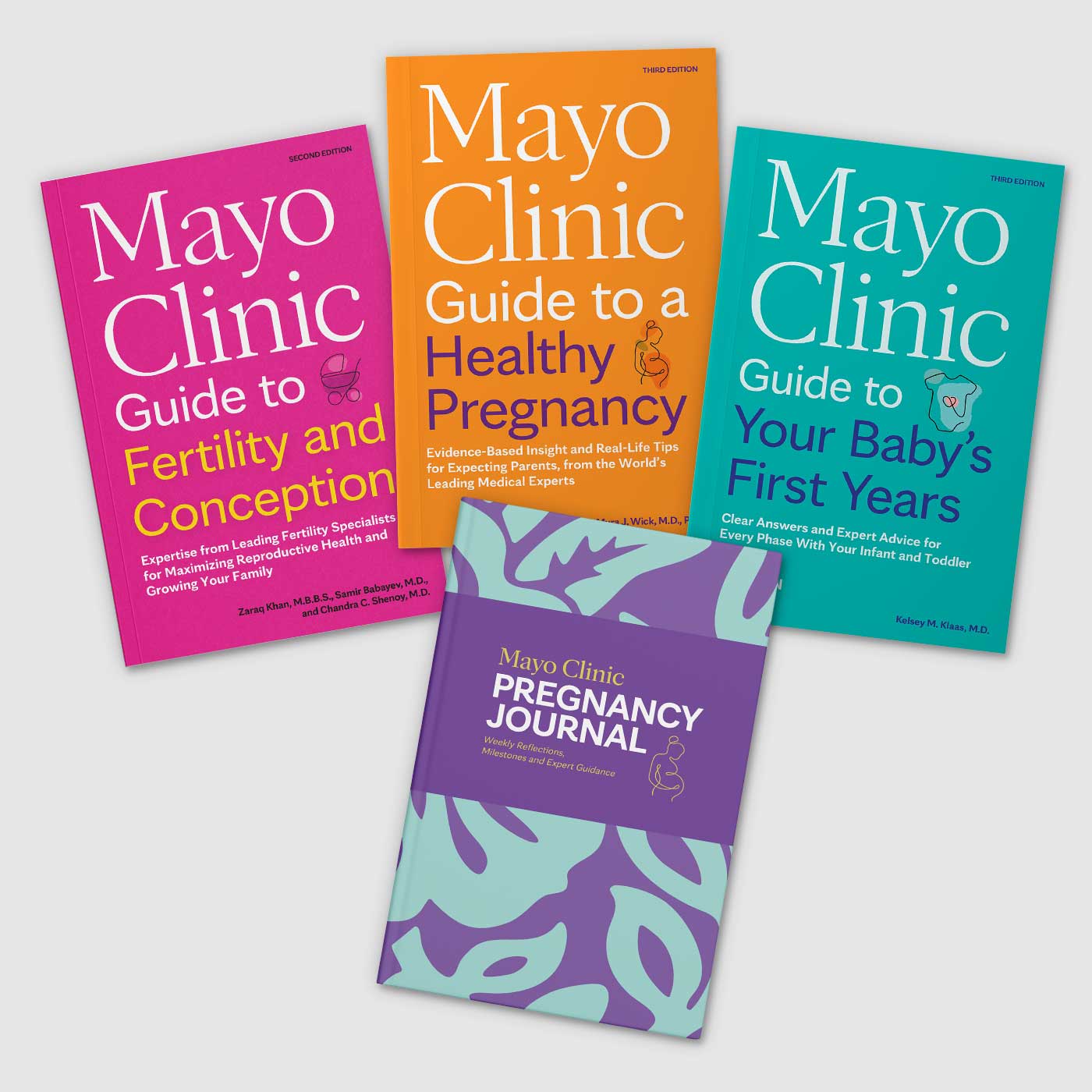
Parenthood Essential Bundle
The Parenthood Essentials Bundle is a compassionate, expert-driven guides that supports families through every stage of the parenting journey — from preparing for conception, to navigating pregnancy, to confidently caring for a growing baby and toddler. Written by leading Mayo Clinic specialists who combine medical expertise with real-life parenting experience,…