
Young Israel of Oak Park’s fourth annual Mental Health Shabbos brings vital conversations to the community over Kiddush.
Unfortunately, traditionally there has been much stigma around mental health issues, but Young Israel of Oak Park is working to combat that. One way is with its yearly Mental Health Awareness Shabbos, co-sponsored by Lev Detroit, a branch of Jewish Family Service.
Now in its fourth year, the event involves breakout sessions given by four or five local Jewish clinicians after Shabbat morning services. Young Israel members and the wider Jewish community are invited to fill their plates with delicious hot cholent and potato kugal and then sit at the tables in turn while the clinicians give a short talk about their field of expertise and take a few questions.

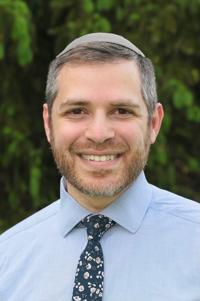
Rabbi Shaya Katz
“The sessions are short but they’re long enough to touch on the concepts and how these issues affect people,” explained Rabbi Shaya Katz, Young Israel of Oak Park’s rabbi and the event organizer. “Hopefully, it’s enough to dispel some preconceived notions and increase sensitivity to what others might be going through.”
Some of the mental health issues they cover are well known and understood, while others are less common issues. Previous topics included self-esteem, relationships, ADHD, bipolar disorder, religious OCD, infertility, insomnia and PTSD.
This year’s Mental Health Shabbos took place on May 9 and was, as usual, extremely well attended. Molly Cohen, LLMSW, spoke about words that can be damaging or painful for a new mother during the postpartum period; Dr. Shoshana Katz, Ph.D., talked about a psychological approach to pain management; Daniel Kotsias, LMSW, discussed personality disorders; and Zalman Pollack, LMSW, talked about the constructive management of our aggressive instincts.
On Shabbat afternoon, the conversation continued with a longer panel by Dr. Jeremy Baruch and Rabbi Shaya Katz as they explored the nature of anxiety. In previous years, the panel discussions have covered shame, maintaining healthy boundaries when consuming media and current events, and dealing with addiction.
The community response to the program has been overwhelmingly positive.
Franci Feld of Southfield, who has attended the Mental Health Shabbos every year since its inception, said, “The speakers were great this year, leading subjects that were of interest. I always come away learning something new.”
According to Rabbi Katz, this type of program and its goals of shining a light on mental health issues are a fundamental part of being a good Jew in today’s day and age.
“Jewish law says to take care of ourselves and that means mentally as well as physically,” Rabbi Katz said. “As a rabbi, my responsibility is not only to take care of obvious topics like Jewish law and lifecycle events, but also to help Jews develop themselves in a healthy way, holistically, understanding themselves, their environment and helping them access the resources that can help them be their best selves.”
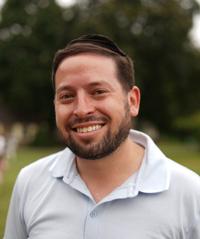
Bentzion Belen
Some participants have told the organizers that they had never heard of some of these mental health issues before; it is the hope that a new awareness that these issues exist can hopefully increase sensitivity to those who may be struggling privately.
More importantly, the event is to help those who need it and don’t know where to turn by giving them a friendly, first easy point of contact.
“We see people every day who waited too long to ask for help because they didn’t know who to call or worried about what others would think,” explained Bentzion Belen, director of Lev Detroit and a member of the JFS Resource Center and crisis response team. “A Shabbos like this opens up the conversation in a space people already trust, which is often what finally gets someone to pick up the phone and reach out for help.”
The Detroit Jewish News has been supported by readers like you since 1942. Support independent, local, Jewish journalism with a donation today.